Wasteland 1 - The Original Classic similar games & best alternatives
Wasteland 1 - The Original Classic
2013
Related articles
Quick resume
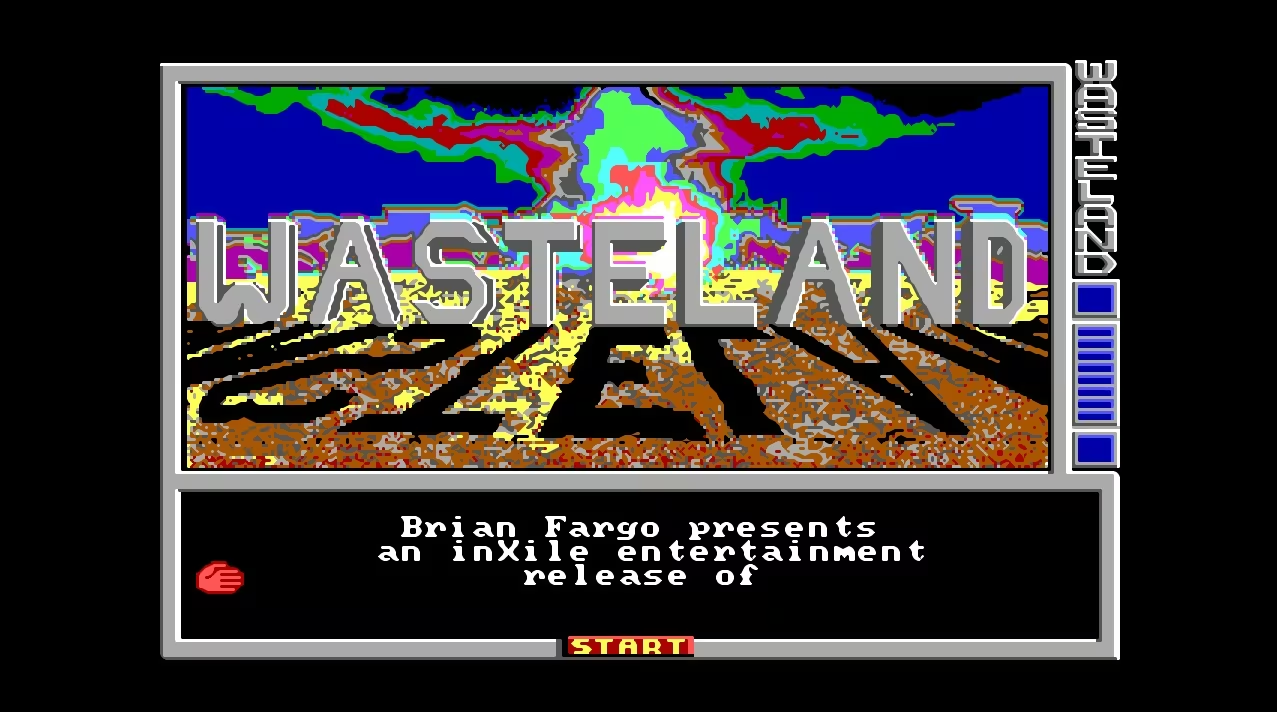
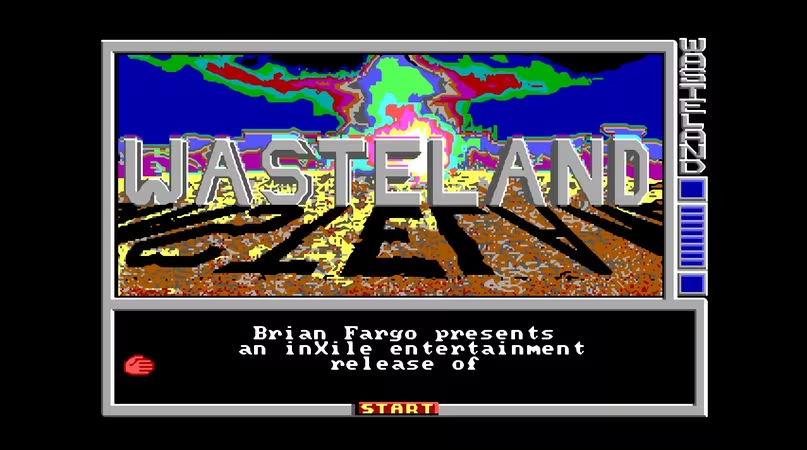
For the first time in over 20 years, we are heralding the return of a much loved piece of gaming history with the classic RPG, Wasteland! Mutants. Again. Even more than there were last time: they seem to materialize out of the very grains of the radioactive desert sand. Venomous yellow eyes.
Global score
79/100
Genres
Adventure, Indie, Role-playing (RPG), Strategy
Similar games
Pros
- Deep and immersive post-apocalyptic world
- High player freedom and multiple quest solutions
- Challenging and rewarding gameplay
- Strong narrative and atmosphere
- Nostalgic value and historical importance
Cons
- Dated graphics and interface
- Steep learning curve and difficulty
- Frequent random encounters can be frustrating
- Some bugs and clunky controls
- Lack of modern quality-of-life features
Analysis
A very typical example of its motivational profile. Motivations that often define this kind of title include Leadership, Survival, Violence, Strategy. Here, the score leans higher than usual among comparable games on Cooperation, Exploration. It leans lower than usual among comparable games on Relaxation.
How to use the graph
Similar games map
Each dot is a game. They are arranged from the same motivation profile as in the “Motivations” section below. Closer dots usually mean more similar reasons to play (exploration, competition, relaxation, etc.)—not that one game is “better” than another.
- Larger dot with a light outline: the game you are viewing.
- Colour: groups of games with comparable motivation patterns (statistical clusters).
- Hover a dot to see the game name; click to open its page.
- Scroll or double-click the chart to zoom out and see more games.
Why don’t the axes read like a score? This view uses t-SNE: it only keeps who is close to whom. The scales are not “good to bad” or hours played—they separate groups on the map. Read distance between dots, not the axis numbers.
Motivations
-
Autonomy4
"Players have significant freedom to choose character skills, solve quests in multiple ways, and explore the world non-linearly."
-
Competence3
"The game is challenging with a steep learning curve, requiring skillful management of party, combat tactics, and puzzle solving."
-
Competition-4
"Focus is on individual party progress and exploration, with no evidence of player-vs-player or leaderboard competition."
-
Continuation3
"Players report returning to the game repeatedly despite its difficulty and age, indicating habitual engagement."
-
Cooperation1
"Party-based gameplay involves coordinating multiple characters, but no multiplayer cooperation is mentioned."
-
Creativity2
"Character customization and multiple quest solutions encourage creative problem solving and party builds."
-
Domination-3
"Interactions emphasize shared party dynamics and player choice rather than exerting control over others."
-
Escapism4
"Players use the immersive post-apocalyptic world and narrative to escape and engage their imagination."
-
Expectation-4
"Players engage voluntarily out of interest and nostalgia, with no indication of obligation or external pressure."
-
Experimenting3
"Multiple ways to solve quests and varied character builds encourage experimentation with mechanics."
-
Exploration4
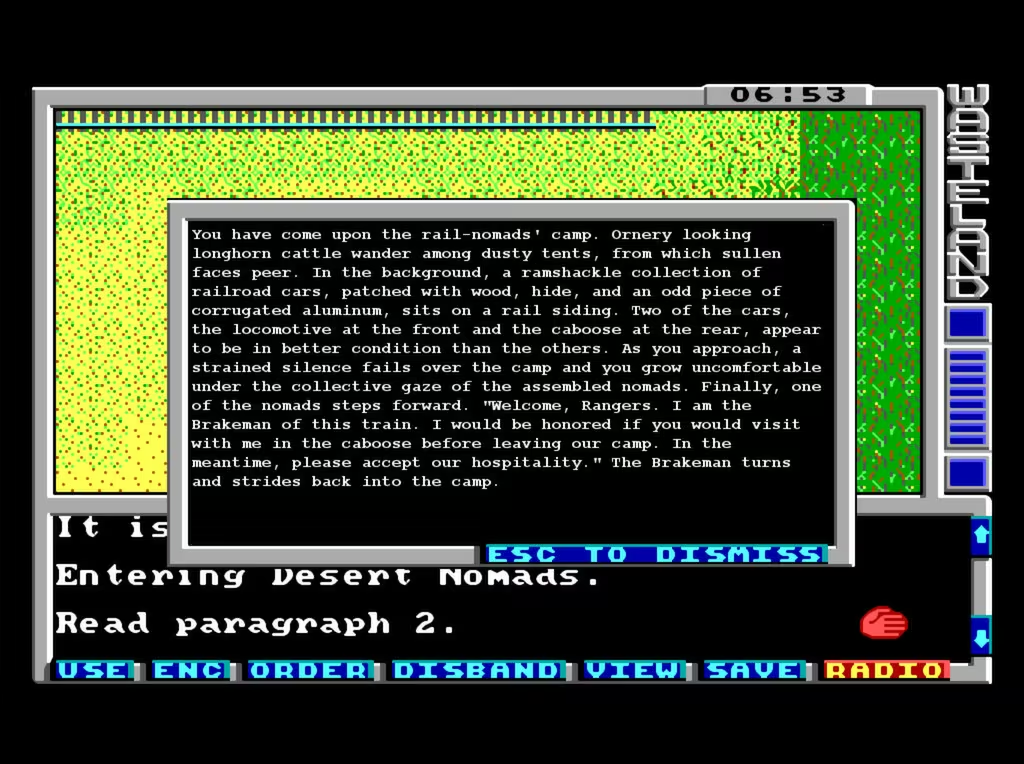
"Exploring a detailed post-apocalyptic world with many locations and secrets is a core aspect."
-
Expression2
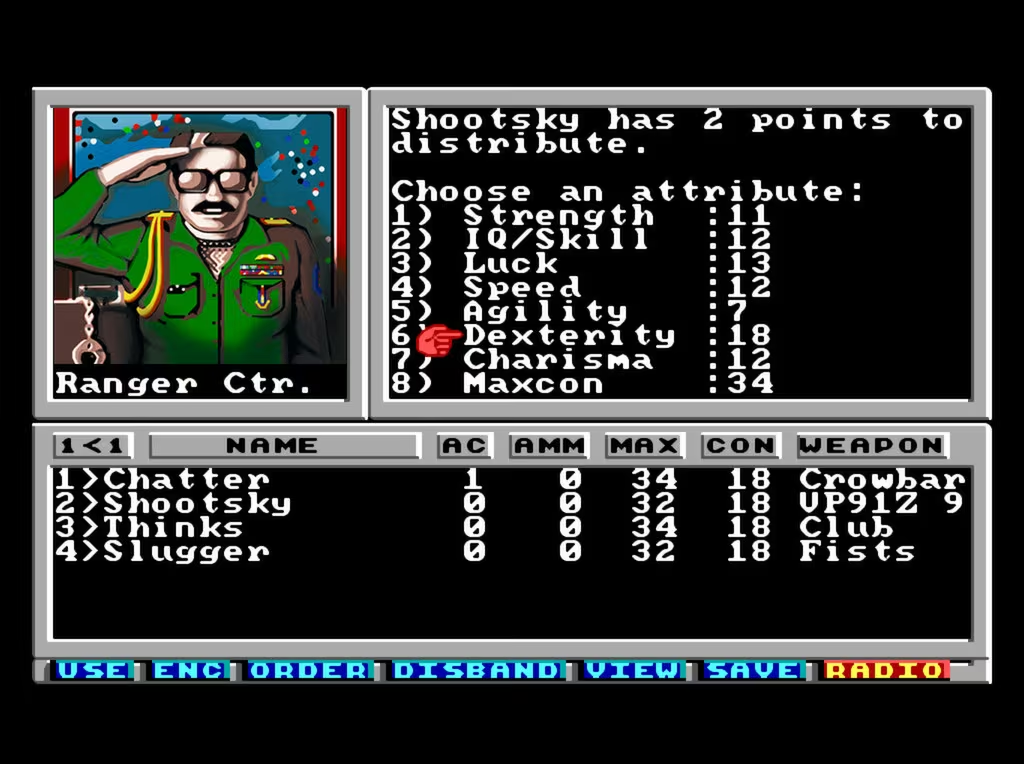
"Character creation and skill allocation allow for personal expression within the party."
-
Fantasy3
"The game features a fictional post-nuclear setting with imaginative characters and scenarios."
-
Fellowship-3
"The game is primarily a single-player experience with minimal social or community interaction."
-
Growth4
"Players develop skills, learn game mechanics, and improve strategies over time."
-
Health-5
"No physical activity or health-related gameplay elements; typical sedentary computer game."
-
Idle-4
"Requires focused attention and strategic planning; not suitable for casual or background play."
-
Intimacy-4
"Social interactions are limited to in-game NPCs with no evidence of close emotional relationships."
-
Leadership2
"Player leads a party of characters, making strategic decisions and managing resources."
-
Progression4
"Character leveling, skill acquisition, and item collection drive player progression."
-
Relaxation-2
"The game is challenging and sometimes frustrating, requiring concentration rather than relaxation."
-
Sensation1
"Music and atmosphere contribute to engagement, but sensory stimulation is limited by dated graphics."
-
Status-4
"No social recognition or ranking systems; focus is on personal achievement."
-
Story4
"Strong narrative immersion with detailed lore, quests, and character interactions."
-
Strategy4
"Turn-based combat and puzzle solving require planning, resource management, and tactical thinking."
-
Thrill3
"The game's difficulty and permadeath create suspense and tension during gameplay."
-
Value4
"Players find the game offers substantial content and replayability for its price."
-
Violence3
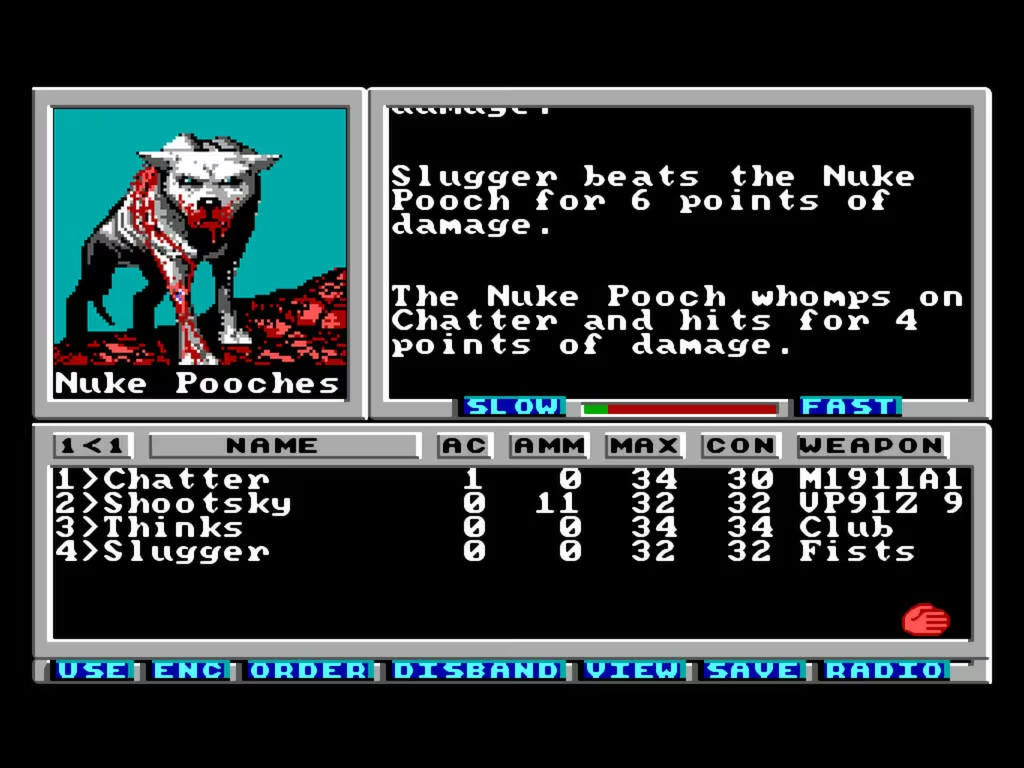
"Combat and destruction are central gameplay elements, with frequent battles against enemies."
-
Survival4
"Players must manage resources, avoid death, and overcome threats in a harsh environment."
Last update: 29/04/2026