7 Billion Humans similar games & best alternatives
7 Billion Humans
2018
Related articles
Quick resume
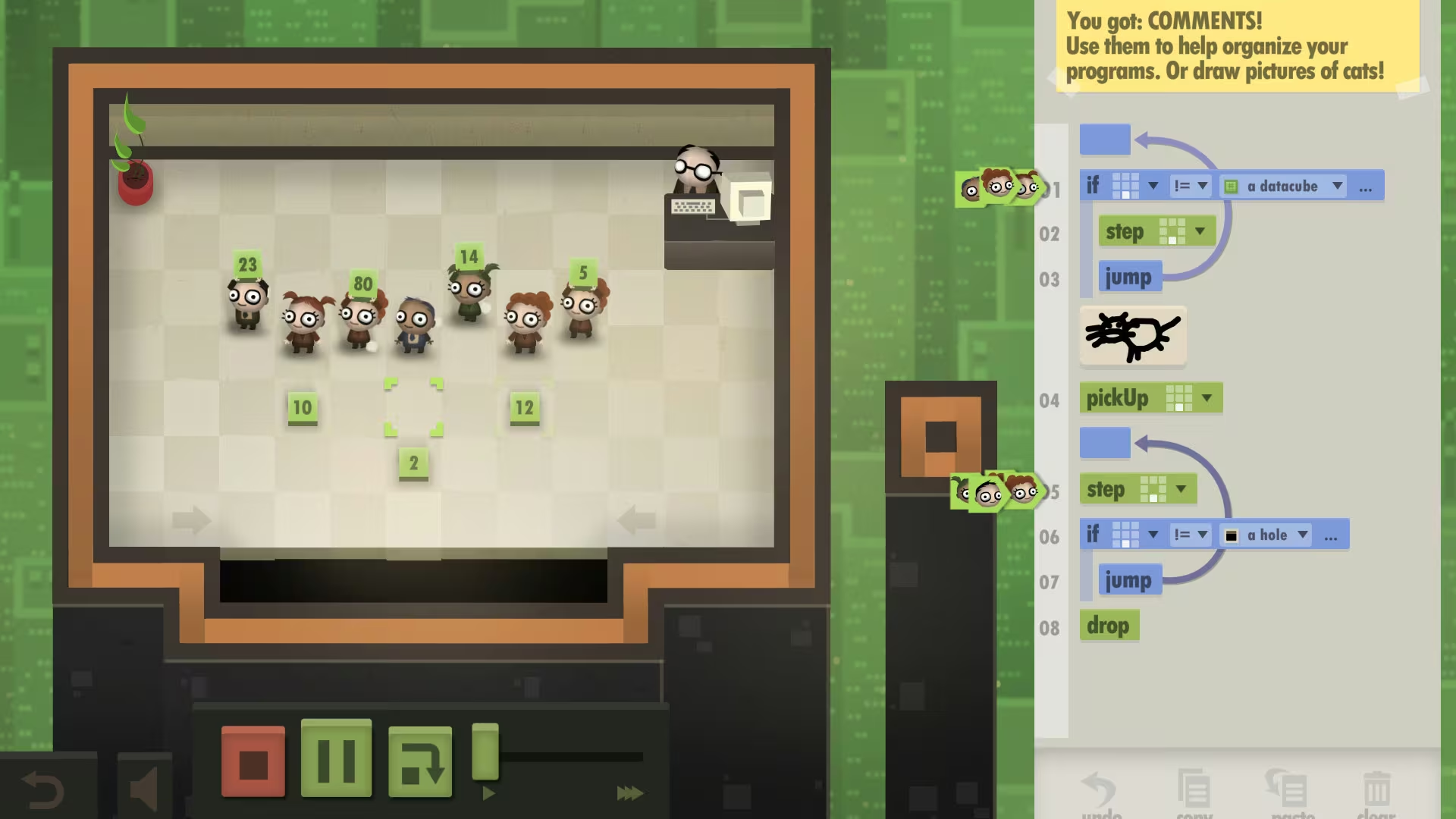
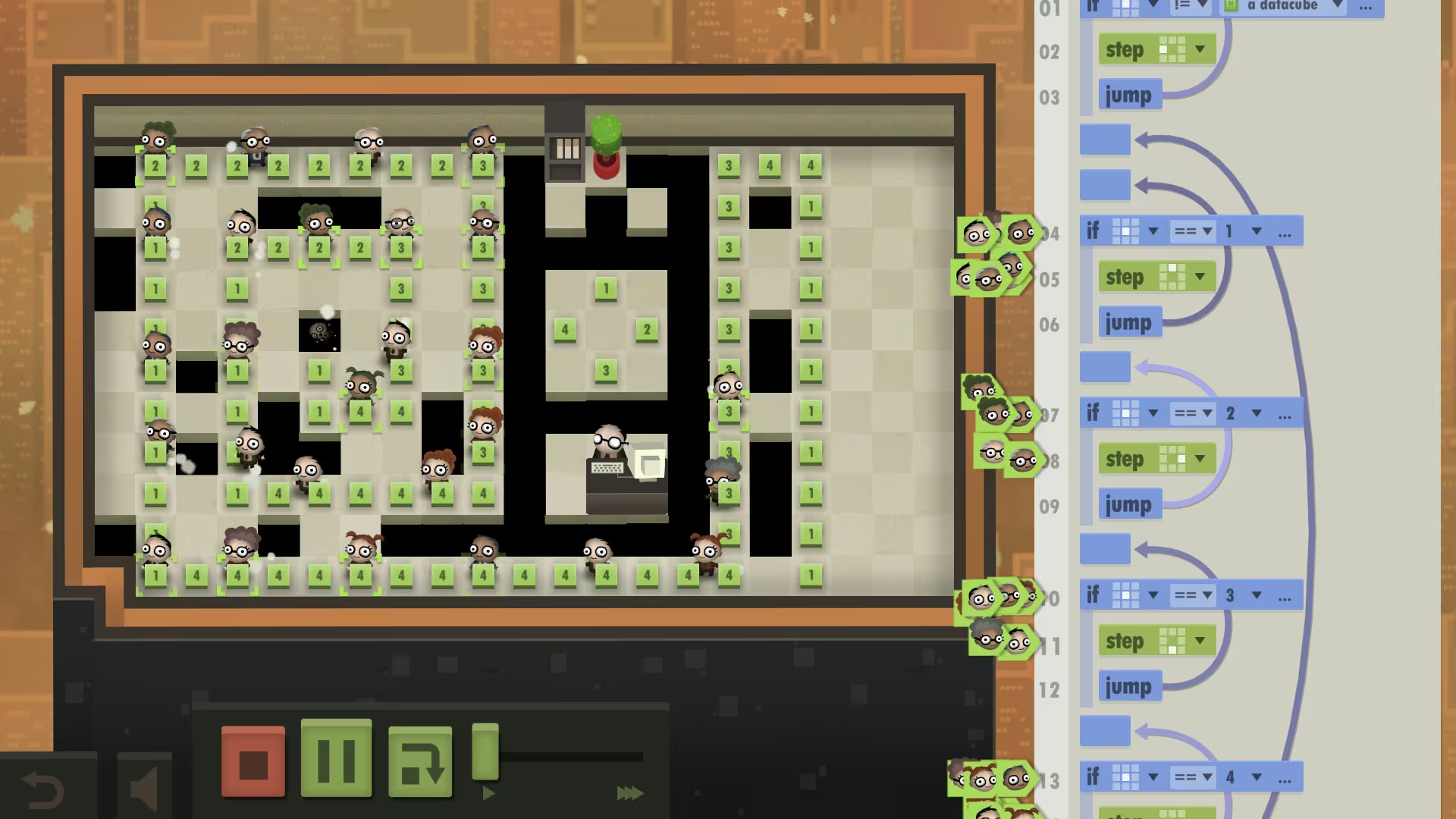
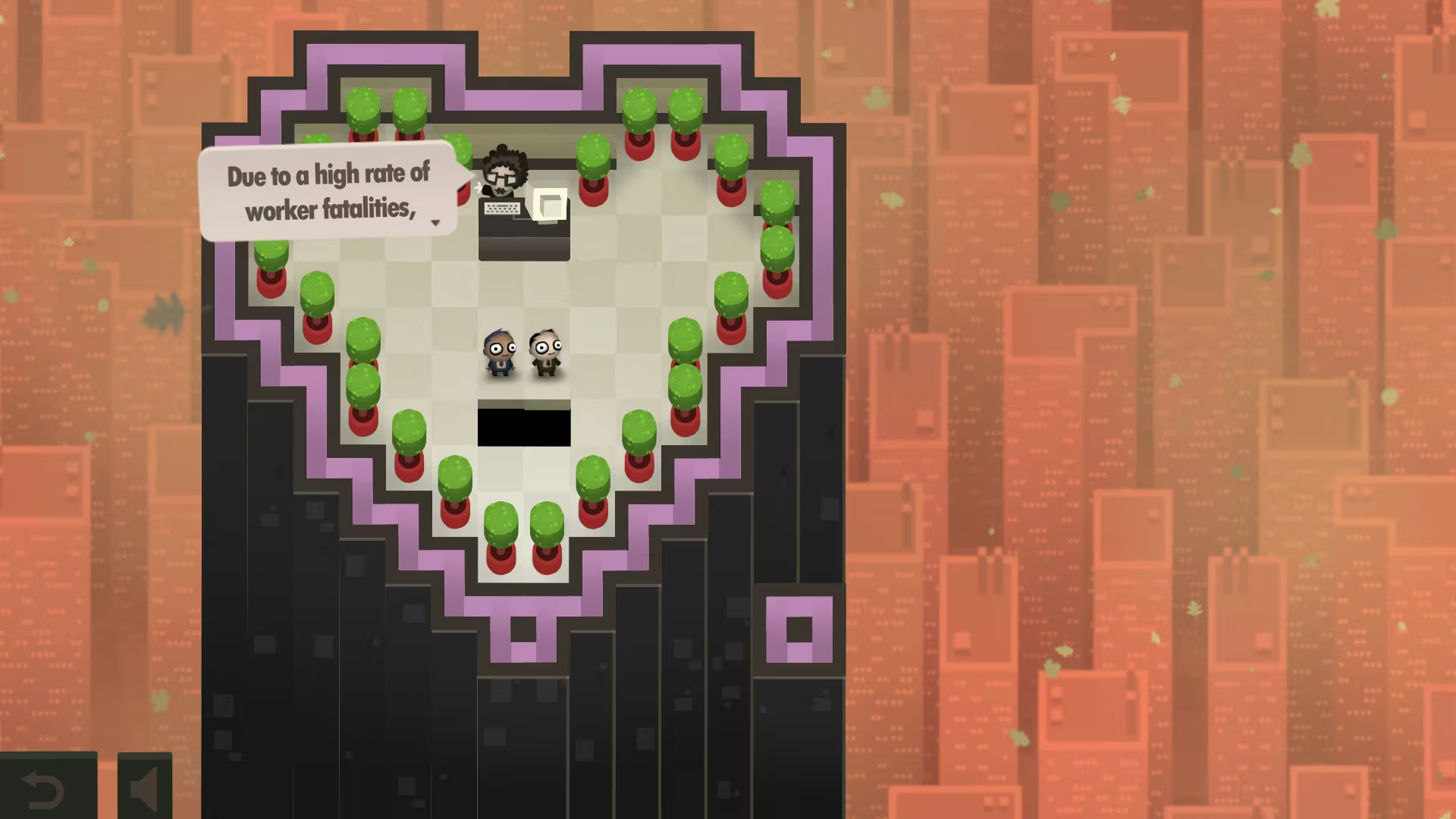
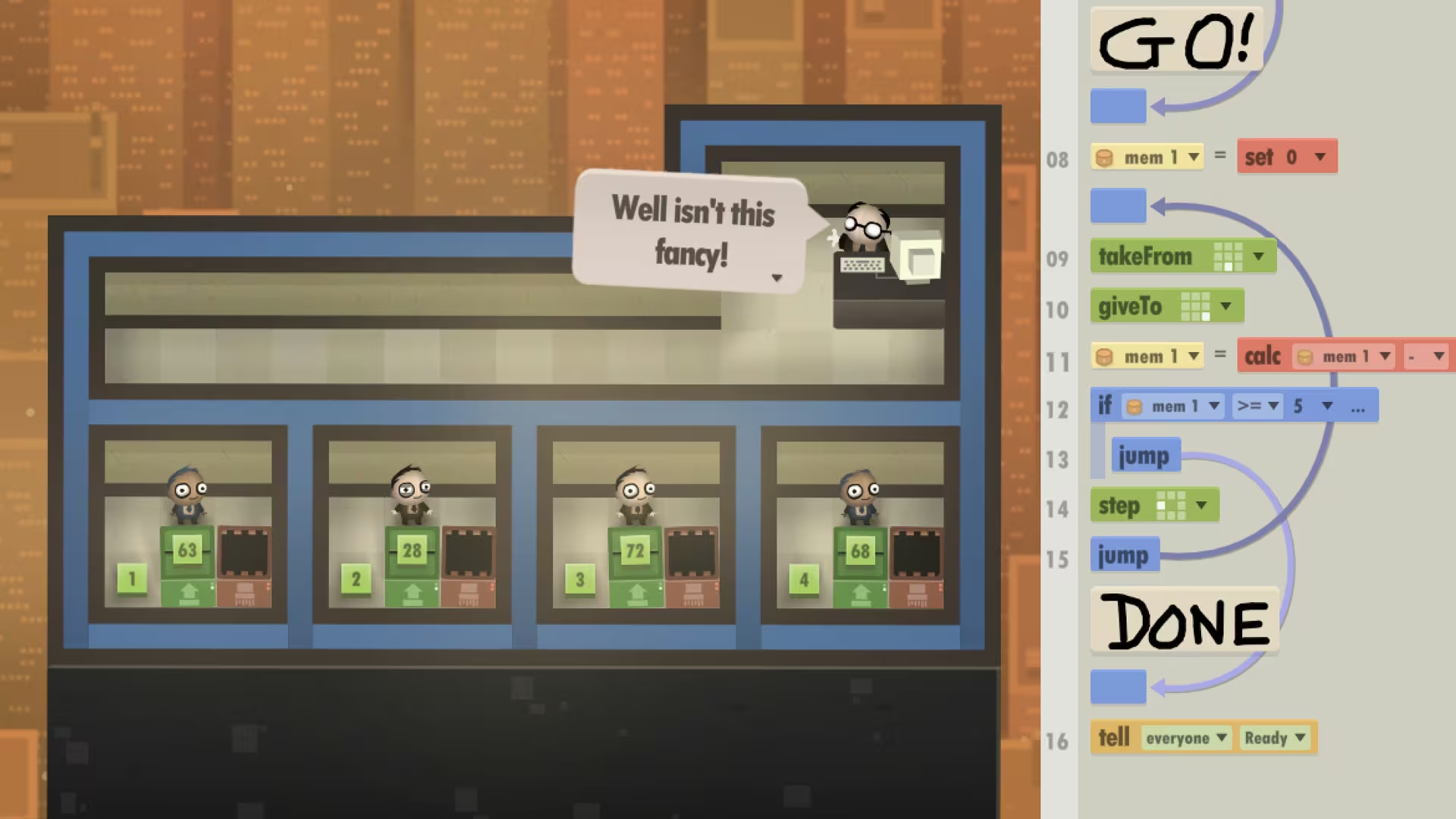
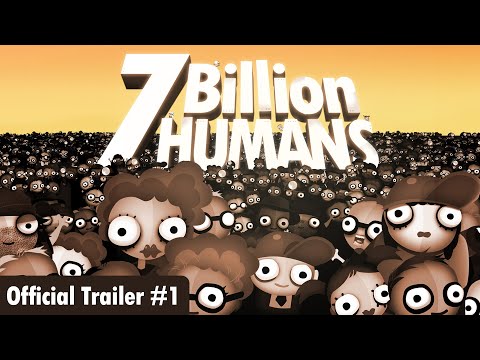
Automate swarms of office workers to solve puzzles inside your very own parallel computer made of people. A thrilling followup to the award winning Human Resource Machine. Now with more humans!
Global score
94/100
Genres
Indie, Simulator, Strategy, Puzzle
Similar games
Pros
- Challenging and rewarding programming puzzles
- Engaging learning tool for coding concepts
- Humorous and charming art style and story
- Well-polished user interface and controls
- Good replay value with optimization challenges
Cons
- Steep difficulty curve for non-programmers
- Some ui limitations (e.g. no redo, limited debugging)
- Randomness in puzzle execution can cause frustration
- Lack of multiplayer or social features
- No volume or sound settings in-game
Analysis
Less representative of its motivational profile, with noticeable differences. Motivations that often define this kind of title include Fantasy, Violence, Story, Thrill. Here, the score leans higher than usual among comparable games on Leadership, Story, Fantasy.
How to use the graph
Similar games map
Each dot is a game. They are arranged from the same motivation profile as in the “Motivations” section below. Closer dots usually mean more similar reasons to play (exploration, competition, relaxation, etc.)—not that one game is “better” than another.
- Larger dot with a light outline: the game you are viewing.
- Colour: groups of games with comparable motivation patterns (statistical clusters).
- Hover a dot to see the game name; click to open its page.
- Scroll or double-click the chart to zoom out and see more games.
Why don’t the axes read like a score? This view uses t-SNE: it only keeps who is close to whom. The scales are not “good to bad” or hours played—they separate groups on the map. Read distance between dots, not the axis numbers.
Motivations
-
Autonomy4
"Players write their own code to control multiple workers in parallel, allowing freedom in problem-solving and optimization approaches."
-
Competence5
"The game provides challenging programming puzzles with optimization goals that require skillful coding and logical thinking."
-
Competition1
"There are leaderboards and speed/size optimization challenges, but competition is not the main focus; players mostly compete against their own solutions."
-
Continuation3
"Players engage in long sessions to solve puzzles and optimize solutions, often returning to improve performance and complete optional challenges."
-
Cooperation-3
"Gameplay centers on individual puzzle solving and programming; no multiplayer or cooperative elements are present."
-
Creativity4
"Players create custom programs with multiple approaches to solve puzzles, encouraging creative problem-solving and code design."
-
Domination-4
"Interactions are with AI workers controlled by the player’s code; no social dominance or power over other players."
-
Escapism3
"The game offers a humorous, fictional dystopian setting and engaging puzzles that provide distraction and mental engagement."
-
Expectation-4
"Players engage voluntarily out of interest in programming and puzzles, with no external pressure or obligation."
-
Experimenting4
"Players experiment with different coding strategies, optimization techniques, and parallel programming concepts."
-
Exploration-2
"The game is level-based with fixed puzzles; exploration is limited to discovering puzzle solutions rather than new areas."
-
Expression-3
"Customization is minimal; focus is on programming logic rather than avatar or environment personalization."
-
Fantasy2
"The game features a whimsical, satirical fictional world with robots and office workers, but grounded in programming logic."
-
Fellowship-4
"The game is primarily a single-player experience with minimal social or community interaction within gameplay."
-
Growth5
"Strong emphasis on learning programming concepts, problem-solving skills, and improving coding efficiency."
-
Health-5
"Sedentary gameplay requiring focused mental effort; no physical activity involved."
-
Idle-4
"Requires continuous attention and active problem solving; not suitable for passive or background play."
-
Intimacy-5
"No social or emotional relationship building; gameplay is solitary and logic-focused."
-
Leadership3
"Players direct multiple workers simultaneously through their code, effectively leading their actions."
-
Progression4
"Players progress through levels and unlock new commands and concepts, improving their programming capabilities."
-
Relaxation1
"While some find it relaxing and rewarding, others report frustration and mental strain from difficult puzzles."
-
Sensation1
"Enjoyable art, music, and animations provide sensory pleasure, but stimulation is moderate and focused on cognitive engagement."
-
Status0
"Some recognition via leaderboards and achievements, but social status is not a major motivator."
-
Story2
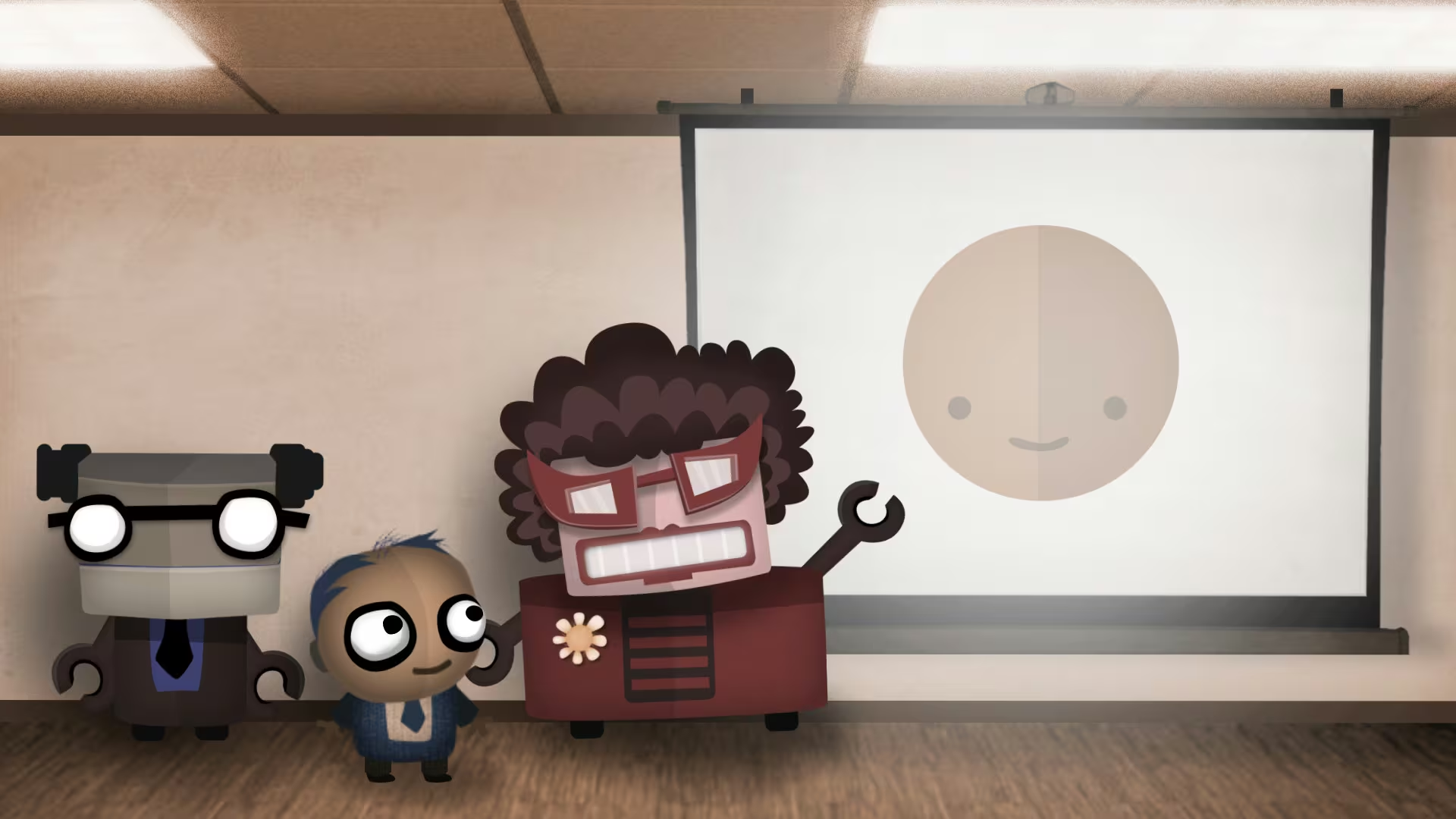
"Contains a light, humorous narrative and cutscenes that provide context and entertainment."
-
Strategy5
"High mental challenge requiring logical reasoning, planning, and optimization of code and parallel processes."
-
Thrill-1
"Puzzles provide intellectual challenge rather than suspense or risk; emotional tension is low to moderate."
-
Value4
"Players report good value for time spent due to engaging puzzles, learning opportunities, and replayability."
-
Violence-4
"No real violence; some humorous depictions of workers being destroyed but gameplay focuses on constructive programming."
-
Survival-3
"No survival mechanics; gameplay occurs in stable, controlled puzzle environments."
Last update: 29/04/2026