EXAPUNKS similar games & best alternatives

EXAPUNKS
2018
Related articles
Quick resume
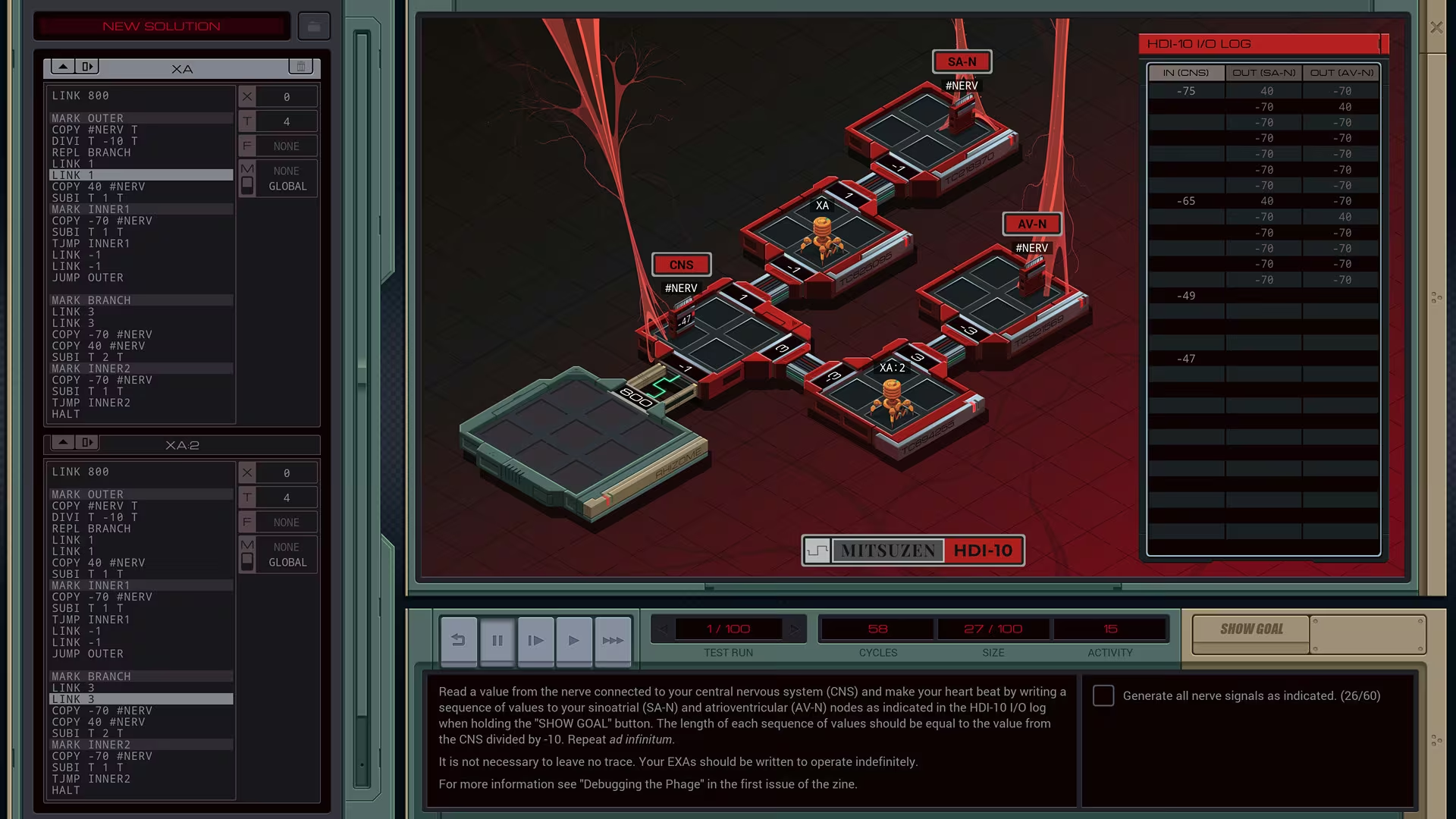
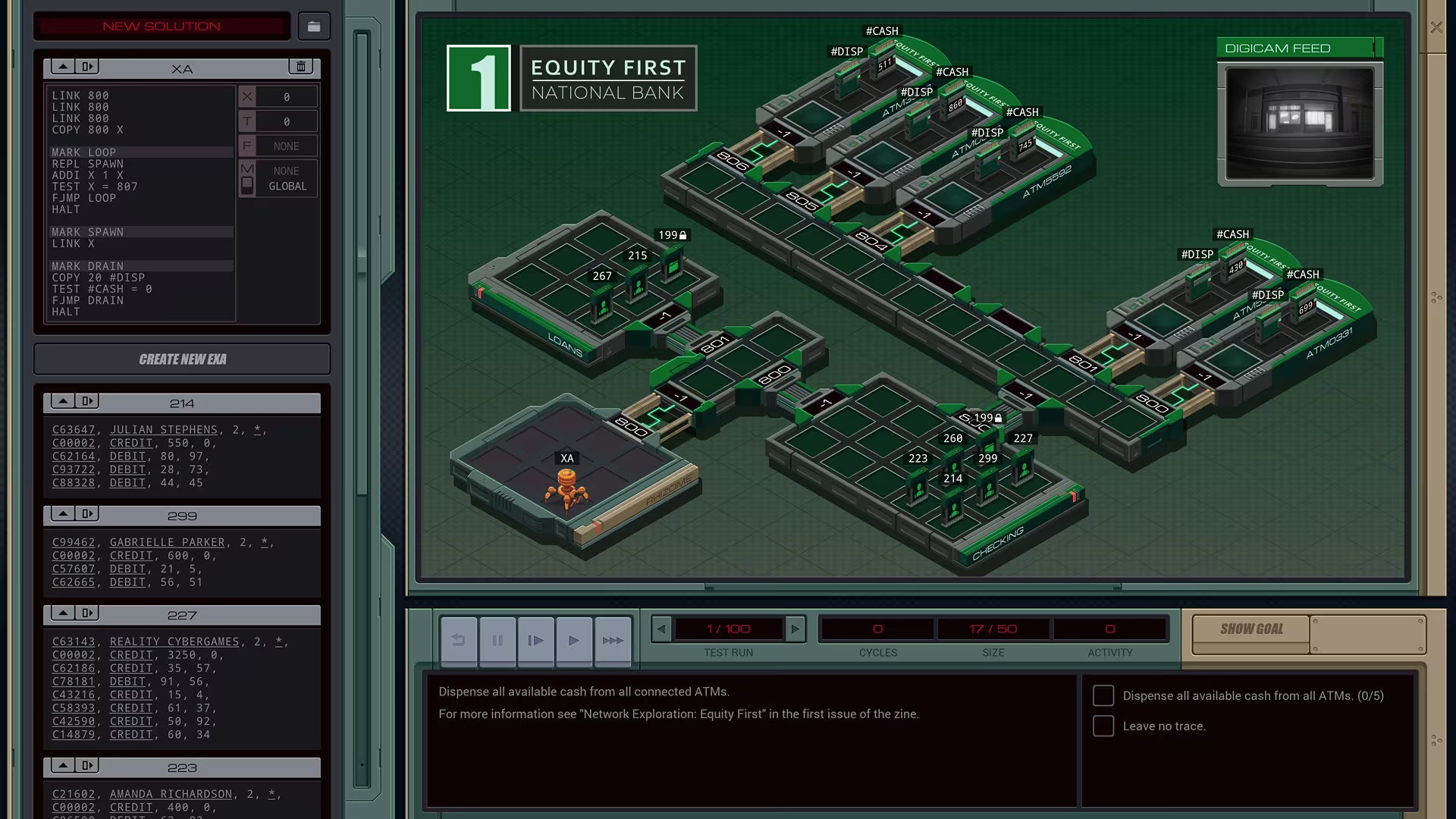
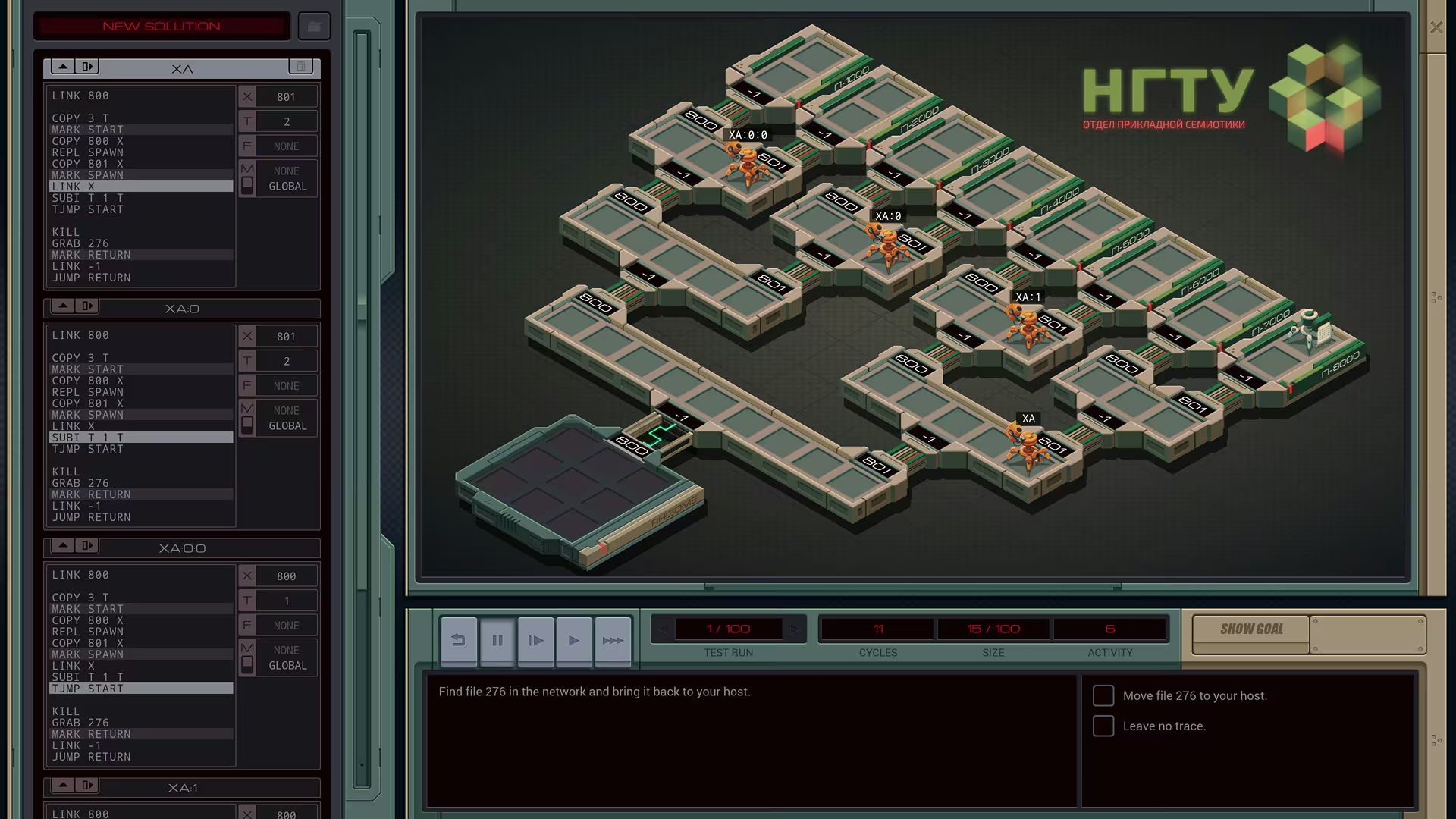
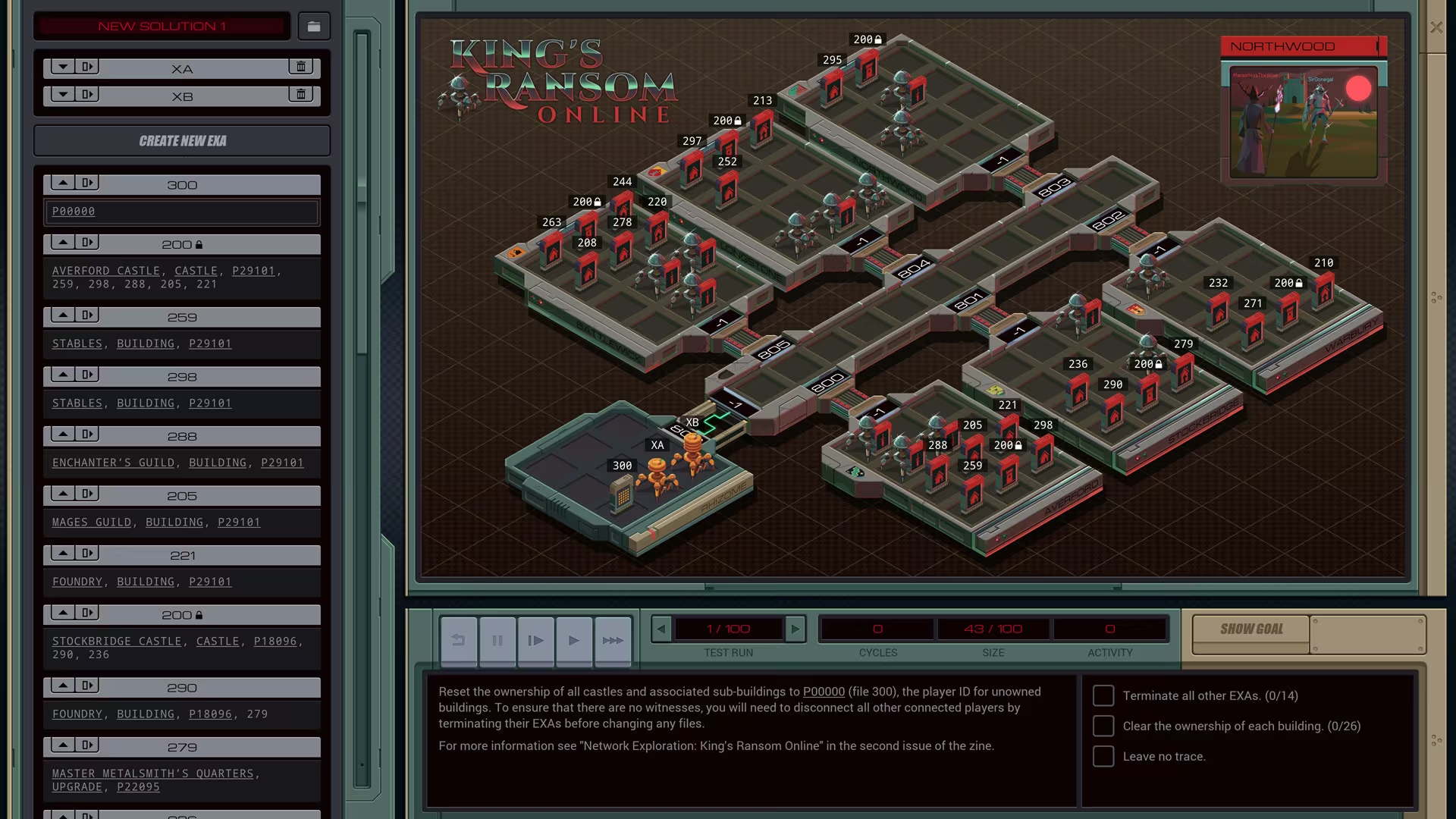
The year is 1997. You used to be a hacker, but now you have the phage. You made a deal: one hack, one dose. There’s nothing left to lose… except your life.
Global score
95/100
Genres
Indie, Simulator, Puzzle
Similar games
Pros
- Deep and challenging programming puzzles
- Immersive cyberpunk story and atmosphere
- High replayability with optimization and multiplayer
- Well-designed tutorial and documentation
- Strong community and user-generated content support
Cons
- Steep learning curve for non-programmers
- Limited social and cooperative gameplay
- Can be frustrating due to difficulty
- Requires focused attention, not casual play
- Some players find story and dialog limited
Analysis
Less representative of its motivational profile, with noticeable differences. Motivations that often define this kind of title include Competition, Status, Story, Expression. Here, the score leans higher than usual among comparable games on Story. It leans lower than usual among comparable games on Relaxation, Survival.
How to use the graph
Similar games map
Each dot is a game. They are arranged from the same motivation profile as in the “Motivations” section below. Closer dots usually mean more similar reasons to play (exploration, competition, relaxation, etc.)—not that one game is “better” than another.
- Larger dot with a light outline: the game you are viewing.
- Colour: groups of games with comparable motivation patterns (statistical clusters).
- Hover a dot to see the game name; click to open its page.
- Scroll or double-click the chart to zoom out and see more games.
Why don’t the axes read like a score? This view uses t-SNE: it only keeps who is close to whom. The scales are not “good to bad” or hours played—they separate groups on the map. Read distance between dots, not the axis numbers.
Motivations
-
Autonomy4
"Players have high freedom to design their own code solutions and approaches to puzzles, with multiple ways to solve each problem."
-
Competence5
"The game challenges players with complex programming puzzles requiring skill, optimization, and problem-solving, providing strong feedback and a sense of mastery."
-
Competition3
"Includes leaderboards and asynchronous multiplayer hacker battles encouraging comparison and competition with others."
-
Continuation4
"High replayability with optimization challenges, bonus puzzles, and user-generated content encourage long-term engagement."
-
Cooperation-3
"Gameplay primarily focuses on individual puzzle solving and programming; multiplayer is asynchronous and competitive rather than cooperative."
-
Creativity5
"Players create custom code solutions with open-ended design space and can even program mini-games on an in-game device."
-
Domination-4
"Interactions emphasize personal skill and competition without evidence of trash talk or exerting authority over others."
-
Escapism4
"Immersive cyberpunk setting and story provide a strong escape from real life through engaging narrative and atmosphere."
-
Expectation-4
"Players engage voluntarily out of intrinsic interest and enjoyment of programming puzzles and cyberpunk themes."
-
Experimenting5
"Encourages exploration of programming mechanics, optimization strategies, and creative problem solving."
-
Exploration3
"Players explore new puzzle challenges, story elements, and in-game environments, including hidden secrets and lore."
-
Expression3
"Customization mainly through code solutions and some cosmetic elements like printable zines and in-game chat, but limited avatar personalization."
-
Fantasy4
"Strong cyberpunk fiction setting with dystopian narrative and hacker culture immersion."
-
Fellowship-2
"Limited social interaction focused on asynchronous competition rather than community or cooperative play."
-
Growth5
"Players learn programming concepts, improve coding skills, and develop problem-solving abilities."
-
Health-5
"Sedentary gameplay with no physical activity or health-related features."
-
Idle-4
"Requires focused attention and active problem solving; not suited for casual or background play."
-
Intimacy-4
"Social interactions are surface-level and limited to chat and asynchronous competition without close relationships."
-
Leadership-3
"No evidence of leading others; players act independently or compete without managing groups."
-
Progression3
"Progression through unlocking new puzzles, story chapters, and features like multiplayer and sandbox programming."
-
Relaxation-2
"Challenging puzzles can cause frustration and sustained mental effort rather than relaxation or flow."
-
Sensation3
"Enjoyable retro-style visuals, music, and sound design provide moderate sensory stimulation."
-
Status3
"Leaderboards and rankings provide social recognition and status among players."
-
Story4
"Engaging cyberpunk narrative with voice acting, cutscenes, and immersive world-building."
-
Strategy5
"Requires logical thinking, planning, and optimization to solve complex programming puzzles."
-
Thrill1
"Some suspense in solving puzzles and competing, but overall controlled and predictable gameplay."
-
Value4
"High perceived value due to extensive content, replayability, and educational benefits."
-
Violence-4
"Gameplay focuses on programming and puzzle solving rather than combat or destruction."
-
Survival-3
"No survival mechanics; gameplay occurs in stable, low-risk environments."
Last update: 29/04/2026