Bitburner Thumbnail

Bitburner similar games & best alternatives

Bitburner

PC (Microsoft Windows), Mac, Linux • 2021

Related articles

Quick resume

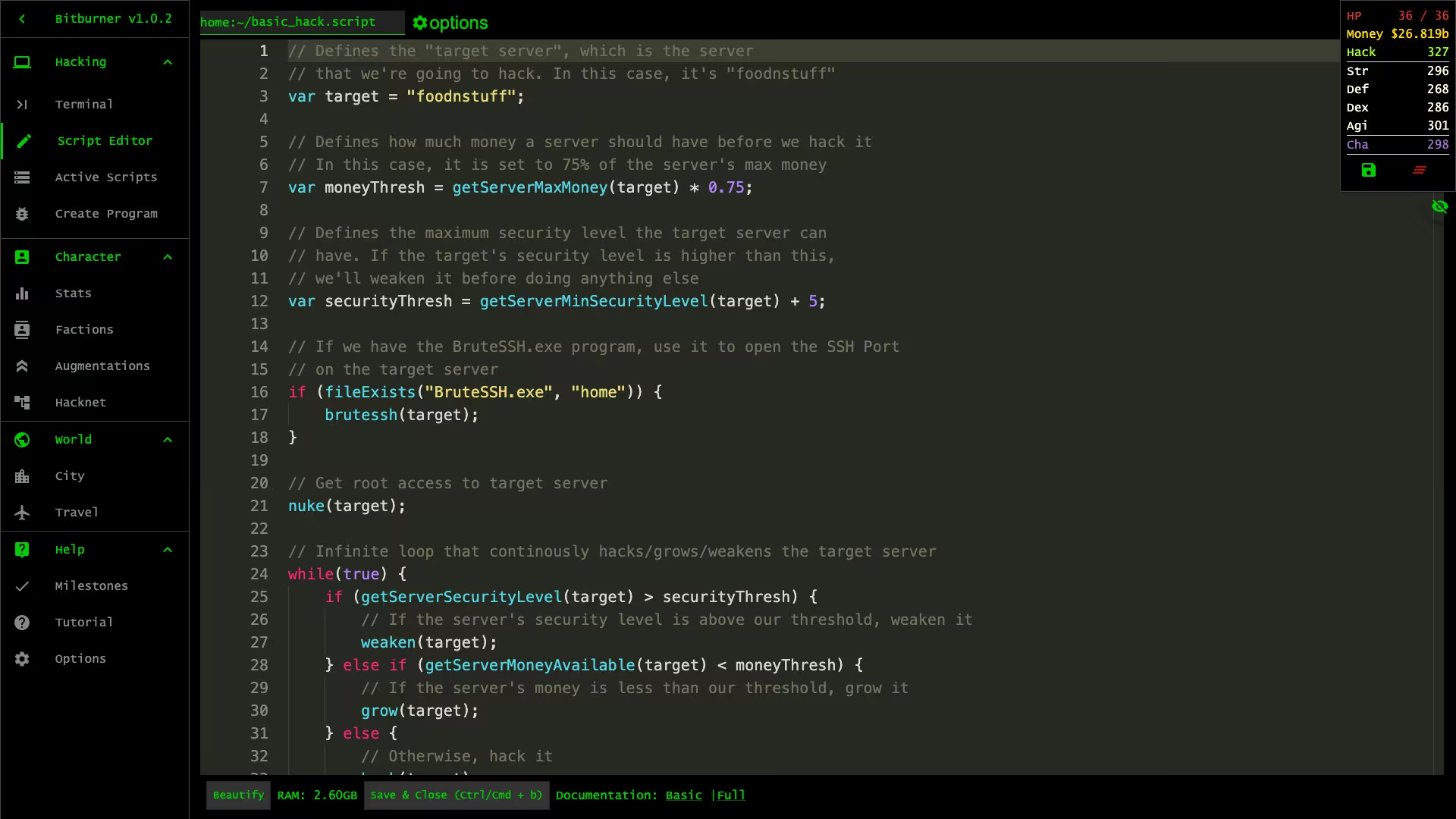
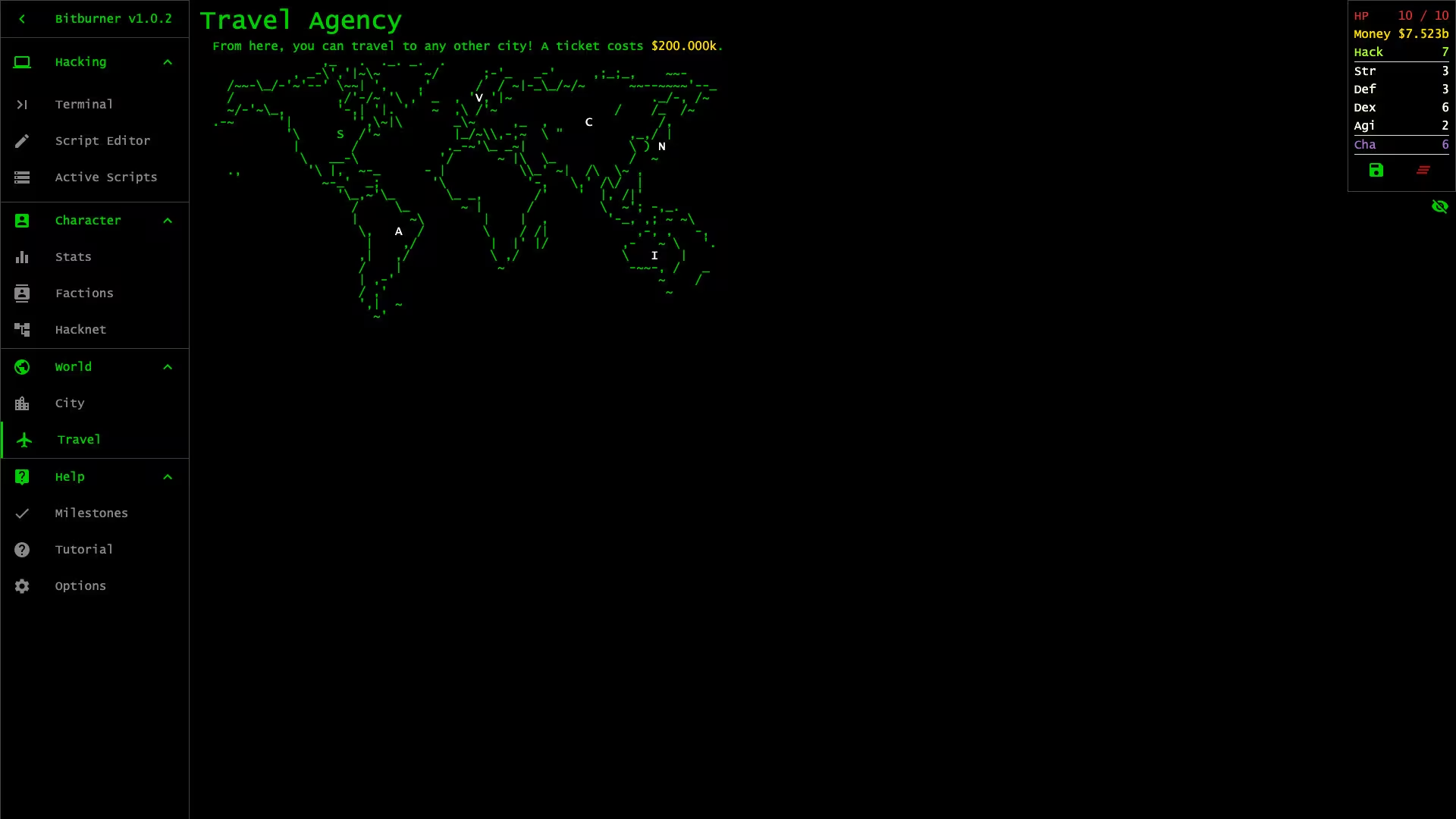
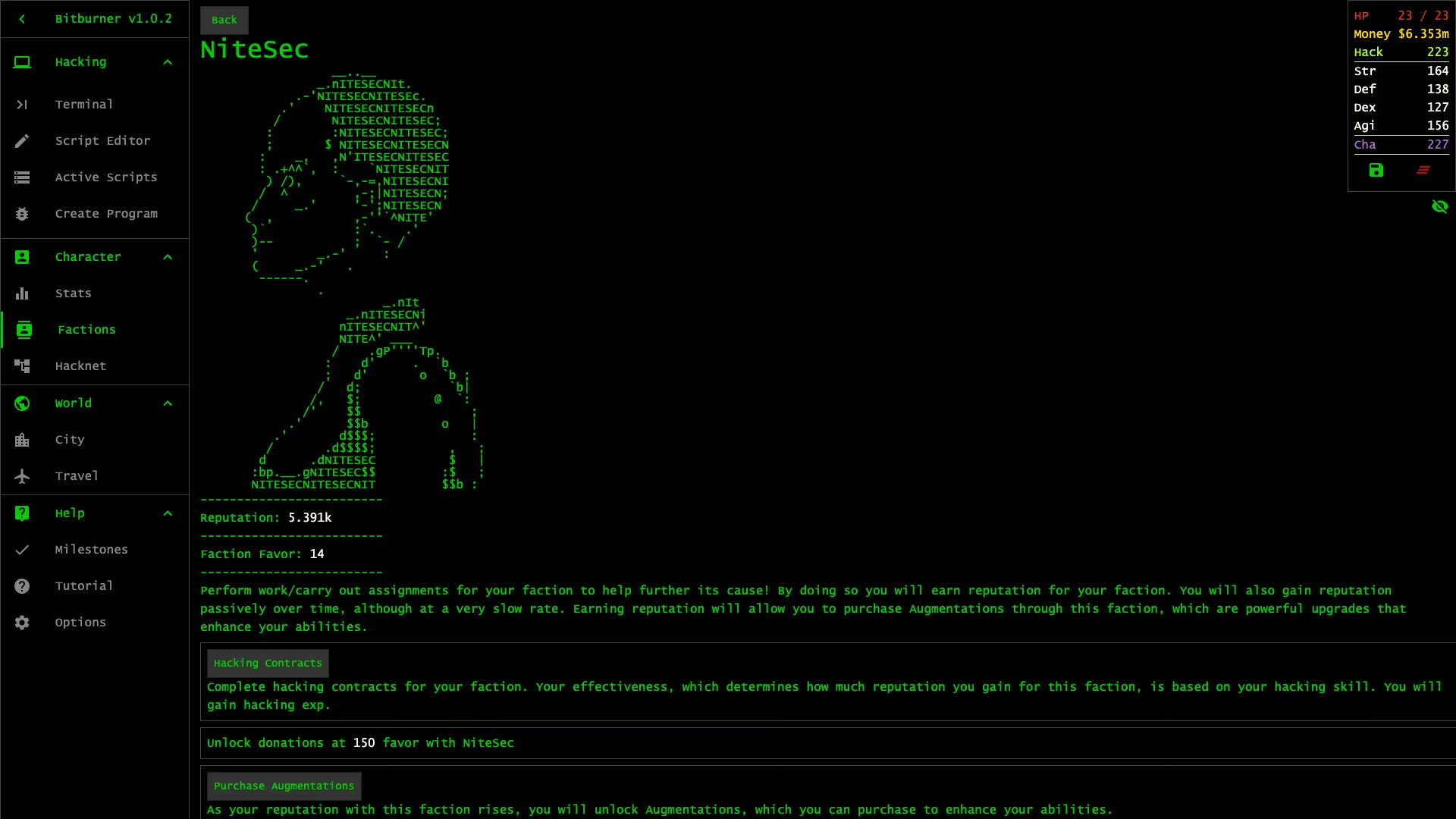
Bitburner is a programming-based incremental game. Write scripts in JavaScript to automate gameplay, learn skills, play minigames, solve puzzles, and more in this cyberpunk text-based incremental RPG.

Global score

95/100

Genres

Free To Play, Strategy, Role-playing (RPG), Simulator, Indie, Puzzle

Similar games

    Pros

    • Free to play
    • Authentic programming experience using real javascript
    • Deep and flexible automation mechanics
    • Strong learning and personal growth opportunities
    • Engaging cyberpunk narrative and world

    Cons

    • Steep learning curve for beginners
    • Minimal audiovisual stimulation
    • Limited social and cooperative gameplay
    • Some grind and repetitive elements
    • Documentation and tutorials can be overwhelming or outdated

    Analysis

    Less representative of its motivational profile, with noticeable differences. Motivations that often define this kind of title include Idle, Thrill, Violence, Survival. Here, the score leans higher than usual among comparable games on Story, Strategy. It leans lower than usual among comparable games on Sensation.

    How to use the graph
    Similar games map

    Each dot is a game. They are arranged from the same motivation profile as in the “Motivations” section below. Closer dots usually mean more similar reasons to play (exploration, competition, relaxation, etc.)—not that one game is “better” than another.

    • Larger dot with a light outline: the game you are viewing.
    • Colour: groups of games with comparable motivation patterns (statistical clusters).
    • Hover a dot to see the game name; click to open its page.
    • Scroll or double-click the chart to zoom out and see more games.

    Why don’t the axes read like a score? This view uses t-SNE: it only keeps who is close to whom. The scales are not “good to bad” or hours played—they separate groups on the map. Read distance between dots, not the axis numbers.

    Motivations

    • Autonomy
      5

      "Players write their own scripts in real JavaScript to automate and control gameplay, offering full freedom in approach and problem solving."

    • Competence
      5

      "The game requires skillful coding, optimization, and problem solving, with clear feedback on script effectiveness and progression."

    • Competition
      -3

      "Focus is primarily on personal progress and self-improvement rather than direct competition or leaderboards."

    • Continuation
      4

      "Players report long sessions, habitual play, and a strong desire to keep improving scripts and automations."

    • Cooperation
      -4

      "Gameplay is largely single-player and independent, with limited direct collaboration; community support exists but is external."

    • Creativity
      5

      "High creativity in coding solutions, script design, and automation strategies; players create and modify their own code extensively."

    • Domination
      -4

      "Interactions are cooperative or solo-focused without exerting control or superiority over others."

    • Escapism
      3

      "Players use the game as a mental challenge and distraction, sometimes to relax or escape real-life stress."

    • Expectation
      -4

      "Engagement is driven by intrinsic interest in programming and problem solving rather than obligation or pressure."

    • Experimenting
      5

      "Players experiment with new scripts, APIs, and automation techniques to optimize and explore game mechanics."

    • Exploration
      3

      "There is discovery of new game systems, APIs, and story elements as players progress and unlock content."

    • Expression
      3

      "Players express themselves through unique coding styles and script designs, though no cosmetic customization."

    • Fantasy
      2

      "Set in a cyberpunk hacking world with some narrative elements, but grounded in realistic programming."

    • Fellowship
      -3

      "Community exists but gameplay is mostly solitary with minimal social interaction within the game."

    • Growth
      5

      "Strong emphasis on learning programming, improving coding skills, and personal development."

    • Health
      -4

      "Primarily a sedentary, computer-based experience with no physical activity."

    • Idle
      4

      "Designed as an idle game with automation allowing for background play and intermittent engagement."

    • Intimacy
      -4

      "Minimal social or emotional connections formed through gameplay; interactions are mostly technical."

    • Leadership
      -4

      "No leadership or management roles; players act independently without directing others."

    • Progression
      5

      "Clear progression through unlocking APIs, augmentations, servers, and scripting capabilities."

    • Relaxation
      3

      "Some players find the coding and automation relaxing and meditative despite the mental challenge."

    • Sensation
      -2

      "Sensory stimulation is minimal, with a text-based interface and limited audiovisual feedback."

    • Status
      -3

      "Achievements and progress are mostly personal; limited social recognition or visibility."

    • Story
      3

      "Contains a cyberpunk narrative and lore that unfolds as players progress, adding context to gameplay."

    • Strategy
      5

      "Requires planning, problem solving, and strategic coding to optimize automation and resource management."

    • Thrill
      -2

      "Gameplay is low risk and predictable, focusing on steady progress rather than suspense or tension."

    • Value
      5

      "Highly praised for educational value, depth, and being free, offering great return on time invested."

    • Violence
      -5

      "No combat or destructive gameplay; focus is on constructive coding and automation."

    • Survival
      -4

      "No survival or threat mechanics; stable environment focused on growth and automation."

    Last update: 29/04/2026