Increlution Thumbnail

Increlution similar games & best alternatives

Increlution

PC (Microsoft Windows), Mac, Linux • 2021

Related articles

Quick resume

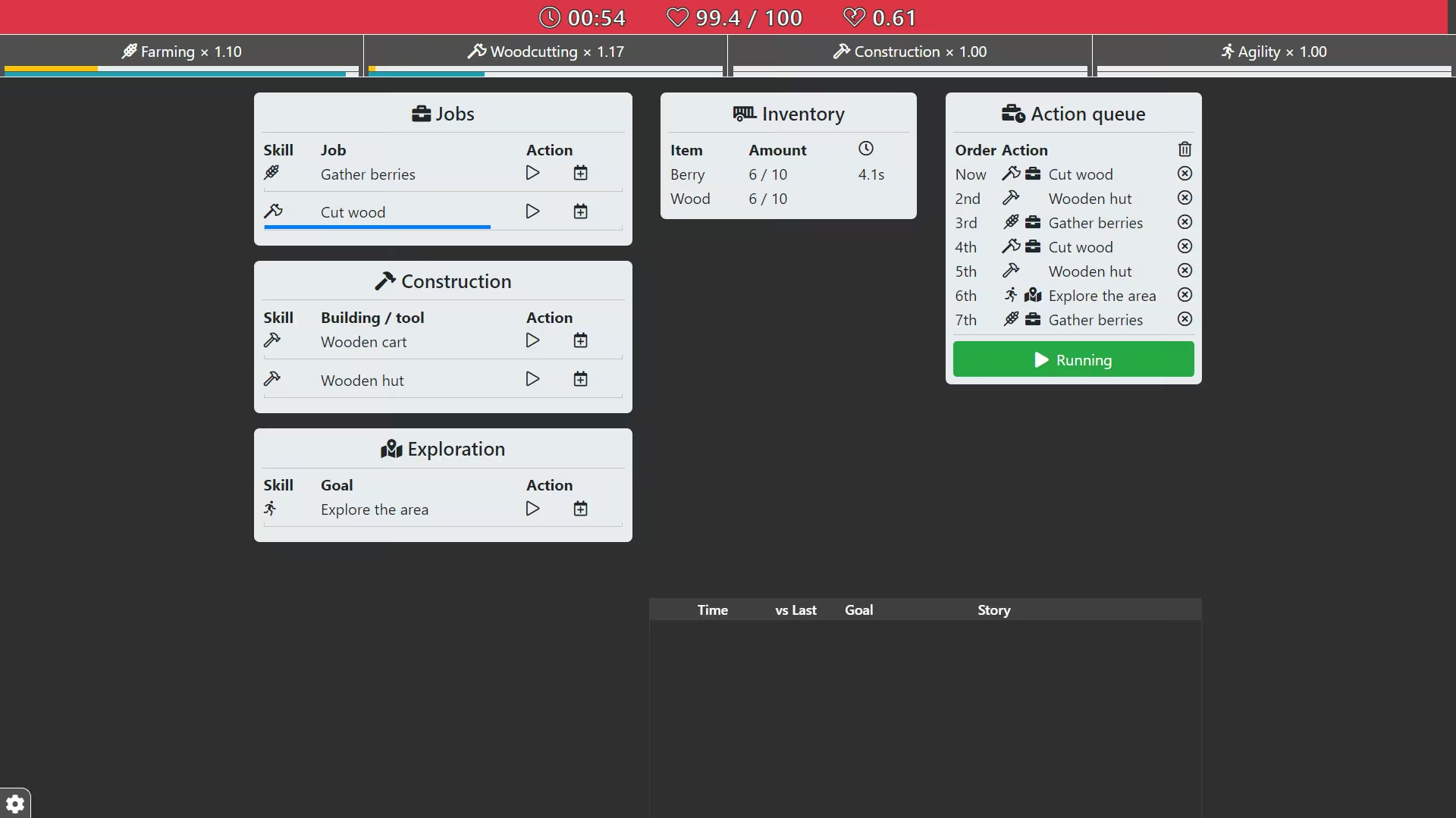
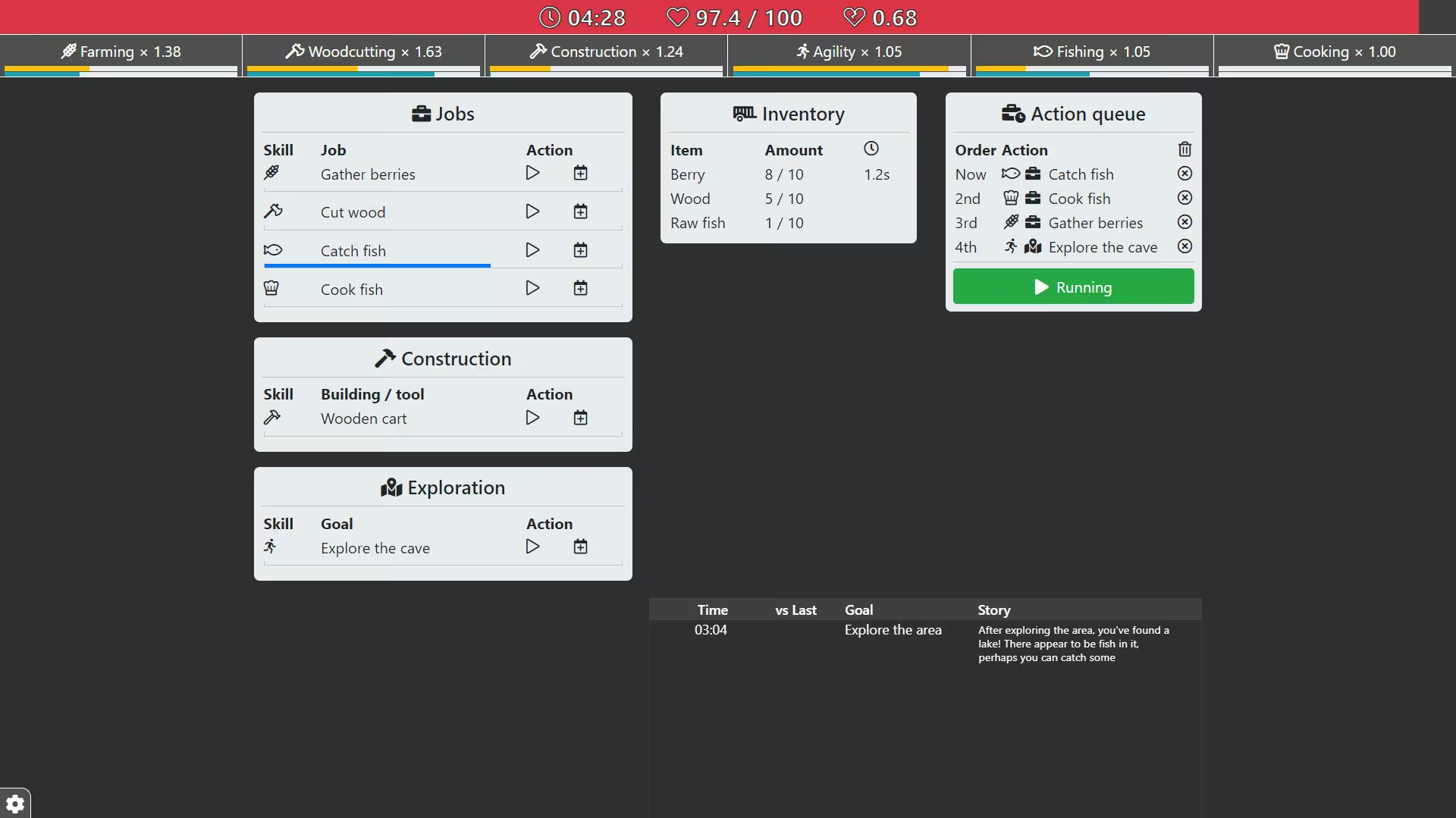
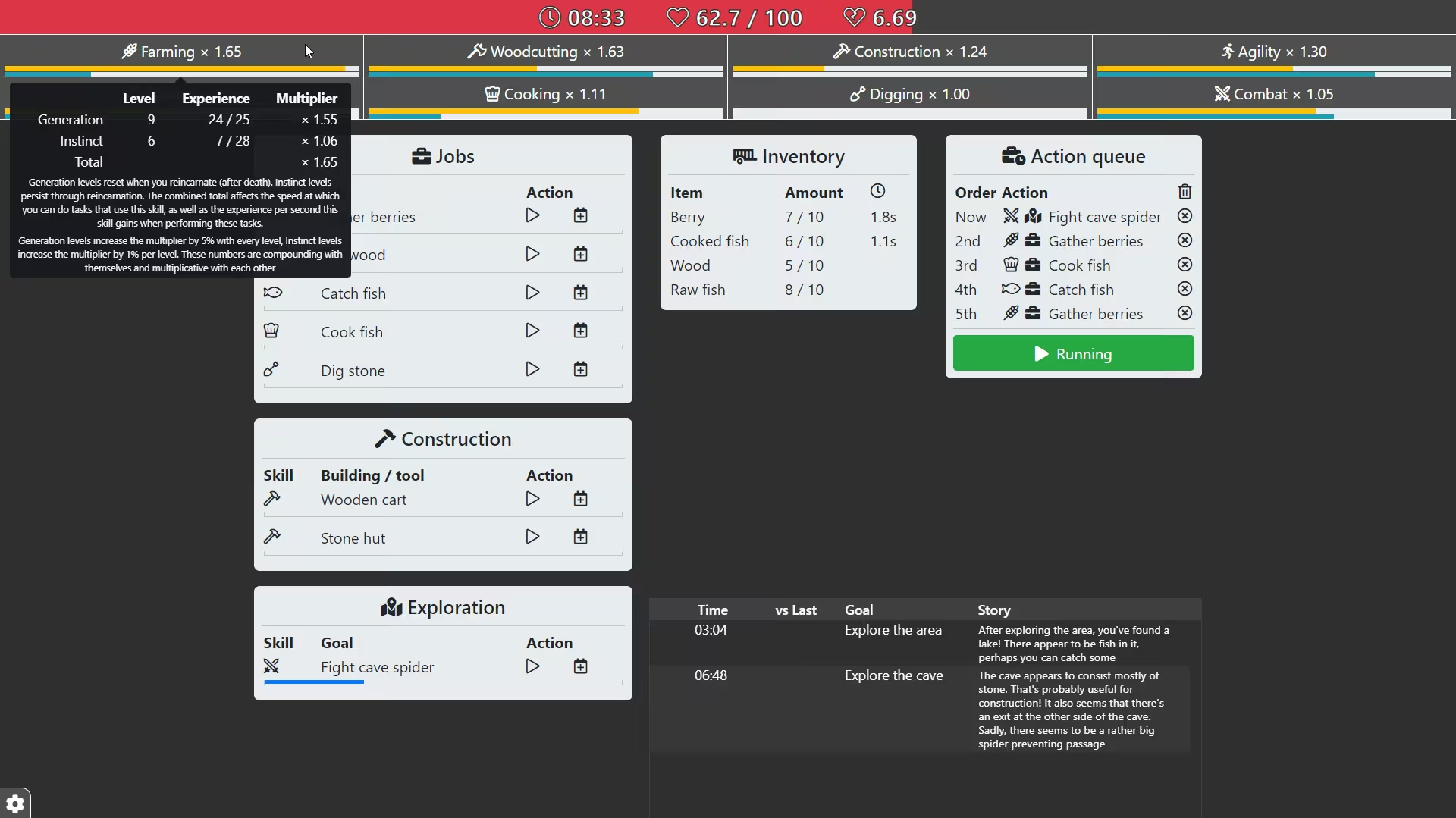
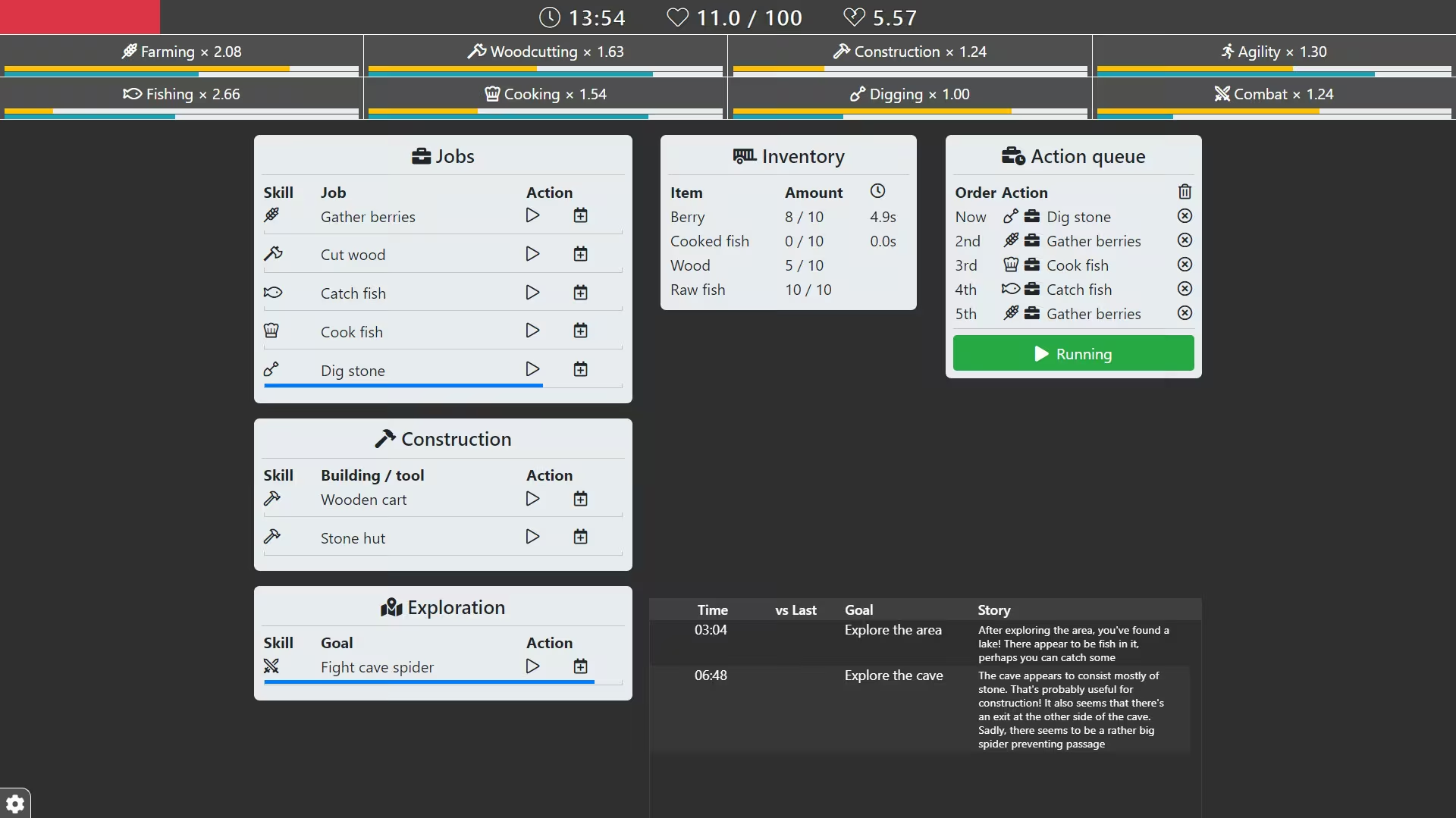
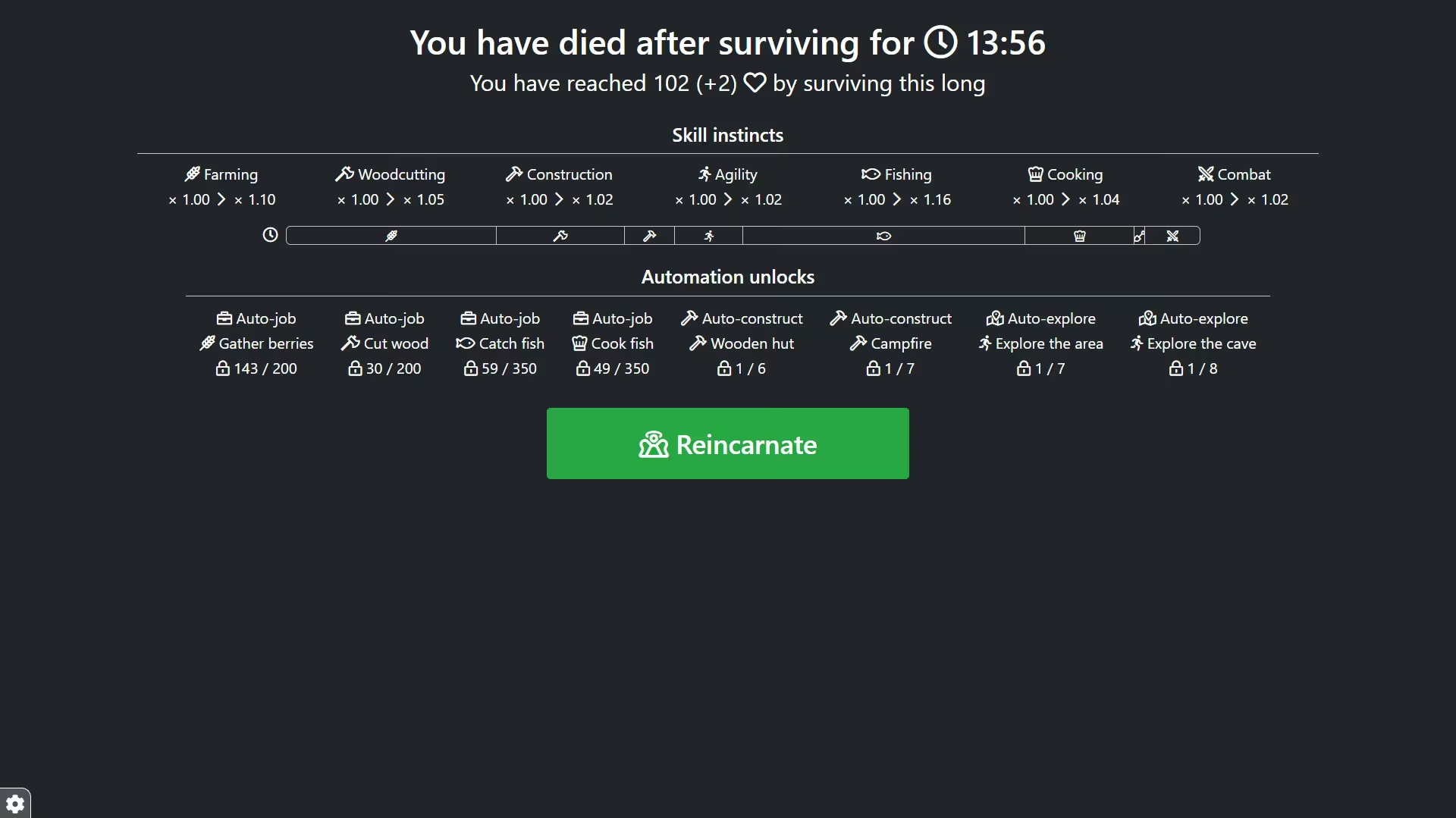
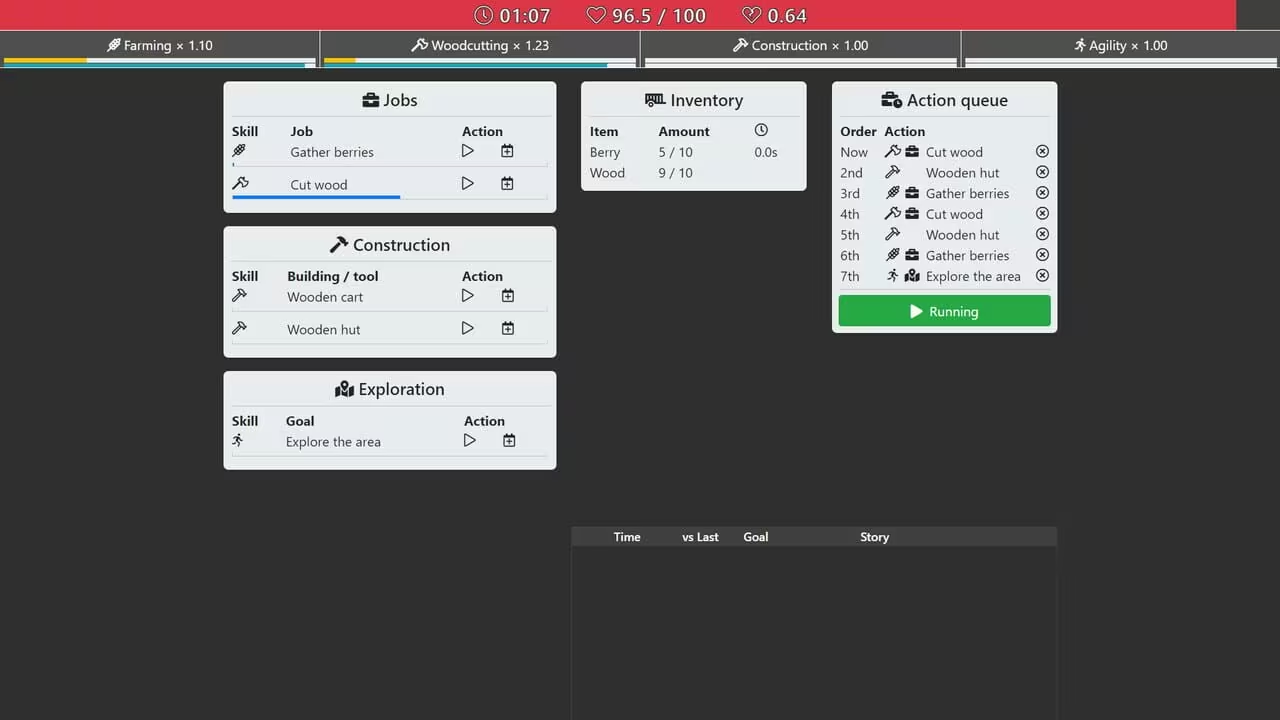
Survive the ever increasing pressure of time for as long as you can! A minimalistic incremental game about time management that takes inspiration from roguelite games, with a focus on meta-progression. Every generation has a better chance at survival, because previous lives influence its instincts

Global score

85/100

Genres

Indie, Early Access, Point-and-click, Strategy, Role-playing (RPG)

Similar games

    Pros

    • Addictive incremental gameplay with strong progression
    • Well-balanced automation and active play
    • Engaging narrative with branching paths
    • Excellent value for price
    • Developer responsiveness and updates

    Cons

    • Game can feel repetitive and grindy in later stages
    • Automation requires repeated manual actions before unlocking
    • Limited offline progression and idle features
    • Lack of social or multiplayer elements
    • Slow update cadence and unfinished content

    Analysis

    Less representative of its motivational profile, with noticeable differences. Motivations that often define this kind of title include Fantasy, Violence, Story, Thrill. Here, the score leans higher than usual among comparable games on Story, Survival. It leans lower than usual among comparable games on Expression.

    How to use the graph
    Similar games map

    Each dot is a game. They are arranged from the same motivation profile as in the “Motivations” section below. Closer dots usually mean more similar reasons to play (exploration, competition, relaxation, etc.)—not that one game is “better” than another.

    • Larger dot with a light outline: the game you are viewing.
    • Colour: groups of games with comparable motivation patterns (statistical clusters).
    • Hover a dot to see the game name; click to open its page.
    • Scroll or double-click the chart to zoom out and see more games.

    Why don’t the axes read like a score? This view uses t-SNE: it only keeps who is close to whom. The scales are not “good to bad” or hours played—they separate groups on the map. Read distance between dots, not the axis numbers.

    Motivations

    • Autonomy
      3

      "Players can choose task priorities and automate actions, but gameplay loops are somewhat fixed and repetitive."

    • Competence
      4

      "Progression through skill leveling and overcoming incremental challenges provides a strong sense of effectiveness."

    • Competition
      -3

      "Focus is on personal progression and optimization without direct comparison or competitive elements."

    • Continuation
      5

      "Players report hundreds to thousands of hours invested, with addictive gameplay loops encouraging long-term engagement."

    • Cooperation
      -5

      "Game is single-player with no cooperative or multiplayer features."

    • Creativity
      2

      "Some customization of automation priorities and strategy in task management, but within predefined systems."

    • Domination
      -5

      "No elements of exerting control or superiority over others; purely individual experience."

    • Escapism
      4

      "Players use the game as a relaxing distraction and stress relief, often playing it in the background."

    • Expectation
      -4

      "Players engage voluntarily out of intrinsic interest and enjoyment, with no obligation or pressure."

    • Experimenting
      3

      "Players experiment with automation priorities and strategies to optimize runs and progress."

    • Exploration
      3

      "Game includes branching story paths and new areas to discover, motivating curiosity-driven play."

    • Expression
      -4

      "Minimal character or environment customization; gameplay focuses on task management rather than self-expression."

    • Fantasy
      2

      "Game features a fictional narrative and incremental progression but grounded in simple, plausible mechanics."

    • Fellowship
      -5

      "No social or community features; play is entirely solo and independent."

    • Growth
      5

      "Strong focus on learning, skill acquisition, and improving performance through repeated runs."

    • Health
      -5

      "Sedentary gameplay with no physical activity or health-related mechanics."

    • Idle
      -2

      "Requires periodic player input and attention; not fully idle but semi-idle with active phases."

    • Intimacy
      -5

      "No social or emotional relationship building; interactions are minimal and surface-level."

    • Leadership
      -5

      "No leadership or group management elements; entirely individual gameplay."

    • Progression
      5

      "Core gameplay revolves around accumulating skills, upgrades, and unlocking automation for faster progress."

    • Relaxation
      4

      "Players describe the game as relaxing and satisfying, suitable for background play and stress relief."

    • Sensation
      1

      "Simple visuals and sound; some enjoyment from watching progress bars and incremental growth."

    • Status
      -5

      "No social recognition or status systems; achievements are personal and not publicly visible."

    • Story
      3

      "Includes a narrative with branching paths and story progression that engages players."

    • Strategy
      4

      "Requires planning automation priorities and optimizing runs, involving strategic thinking."

    • Thrill
      -2

      "Gameplay is low risk and predictable; lacks suspense or high tension moments."

    • Value
      5

      "Players report excellent value for money with hundreds of hours of content for a low price."

    • Violence
      -5

      "No emphasis on combat or destruction; gameplay centers on constructive task completion."

    • Survival
      3

      "Health decay and resource management create a survival challenge within each run."

    Last update: 29/04/2026