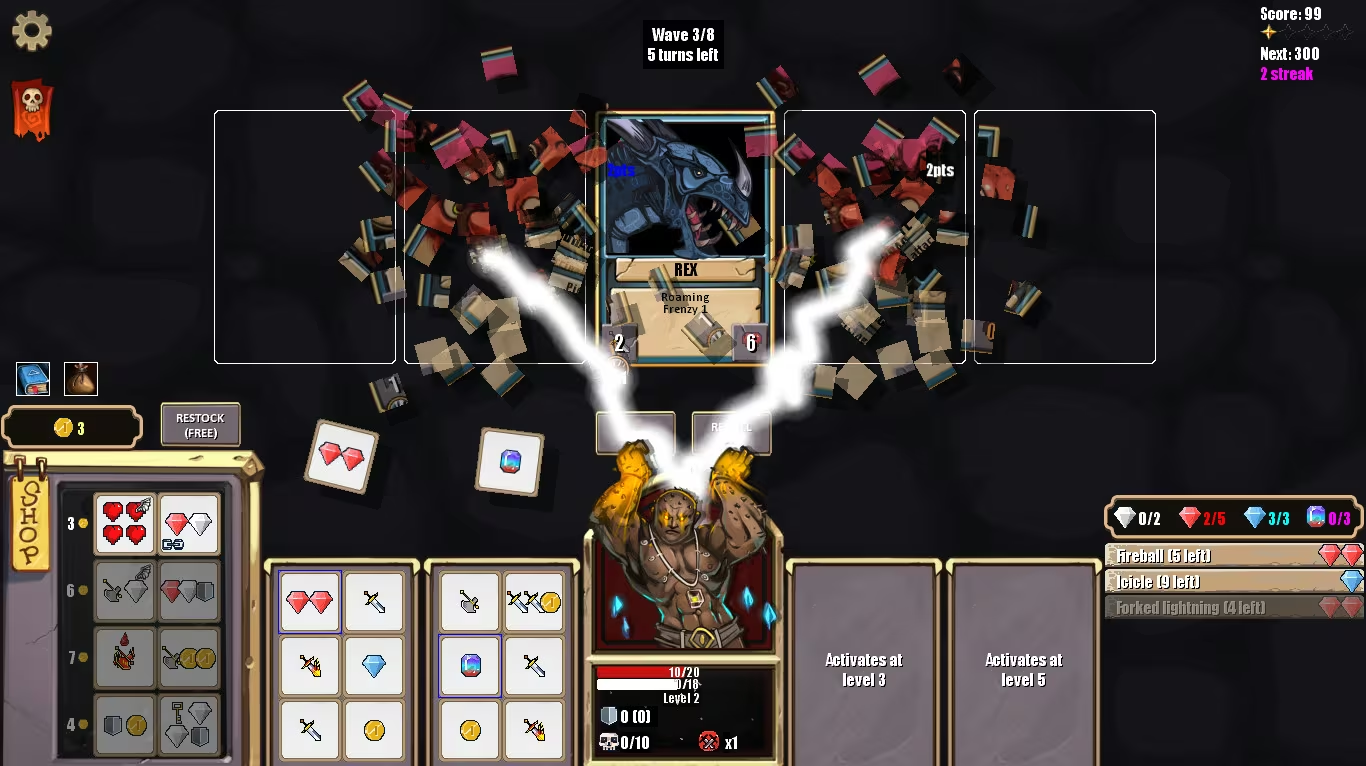
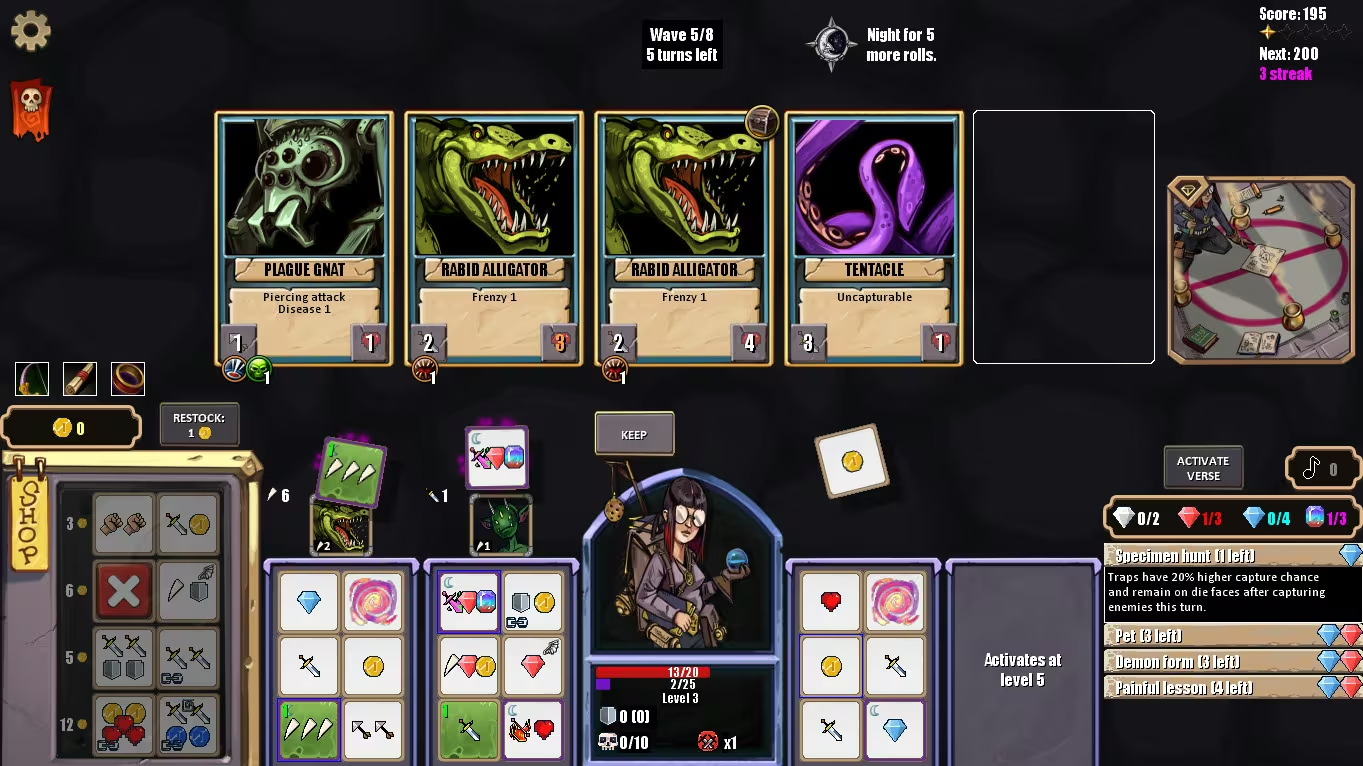
Circadian Dice Thumbnail

Circadian Dice similar games & best alternatives
Circadian Dice

PC (Microsoft Windows) • 2022

Related articles

Quick resume

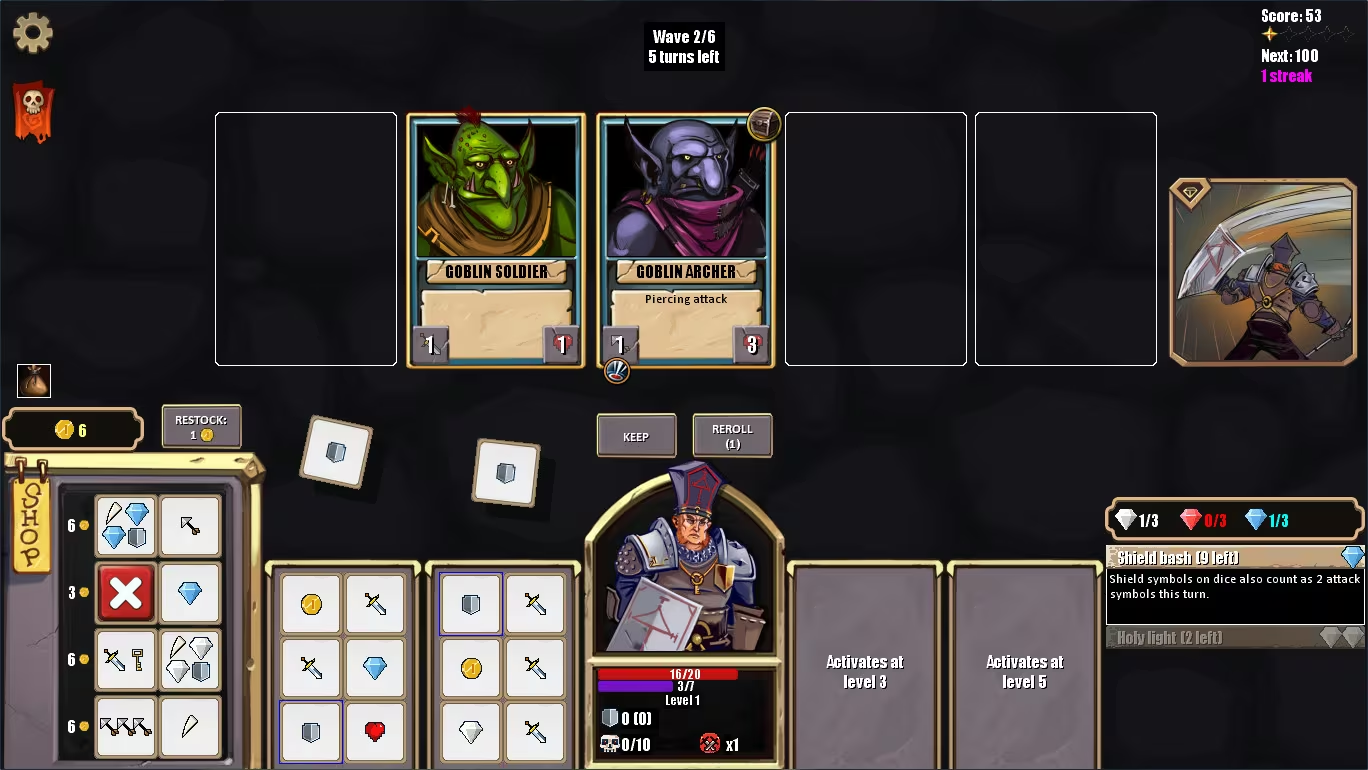
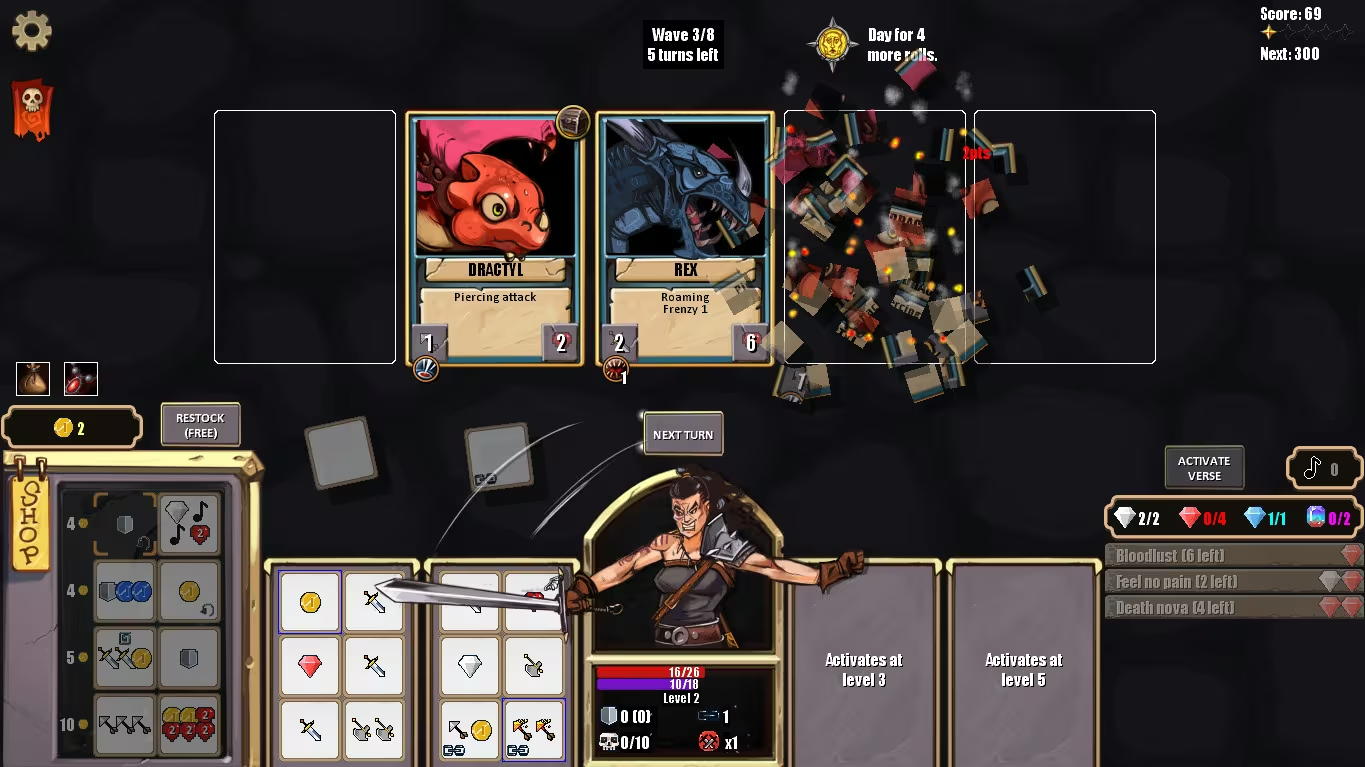
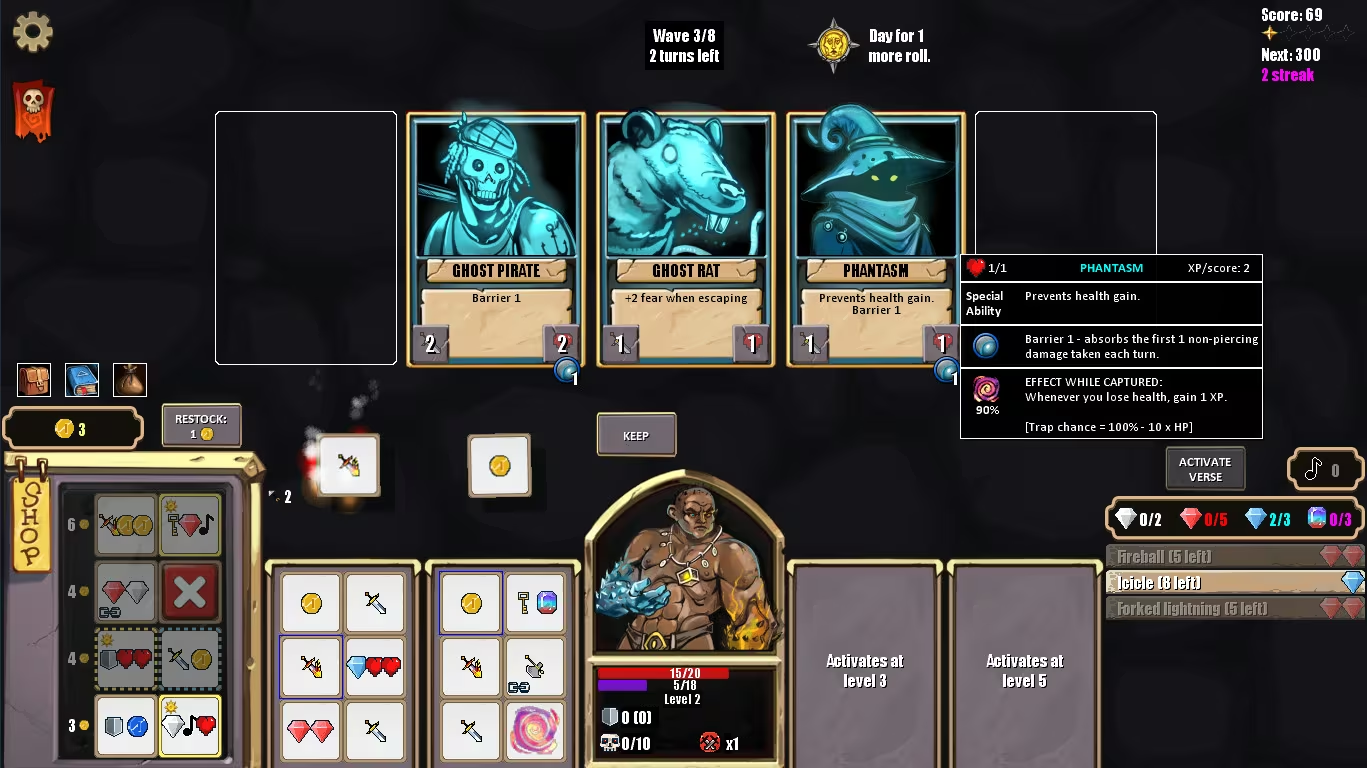
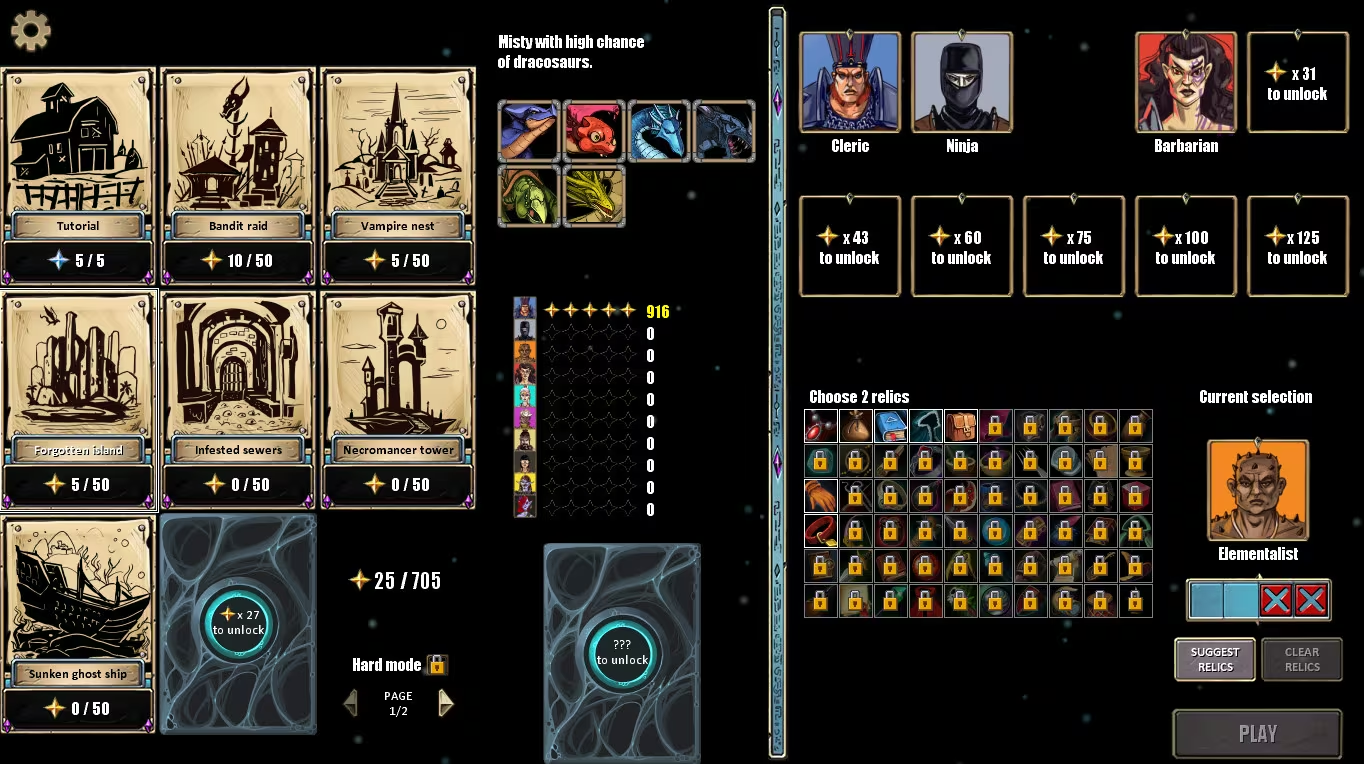
Circadian Dice is a game inspired by single-player deck-building games, but instead of upgrading a deck, you build up a set of dice! Use 10 different heroes and 60 game-warping relics to take on 13 hand-crafted scenarios, in runs that take 10-30 minutes. Lots of secrets and unlocks to discover!

Global score

95/100

Genres

Strategy, Turn-based strategy (TBS), Indie, Role-playing (RPG)

Similar games

    Pros

    • Deep and addictive gameplay
    • Extensive customization and progression
    • Short, replayable runs
    • Varied characters and strategies
    • Excellent value for price

    Cons

    • Low-budget graphics and ui
    • Some rng frustration
    • Minimal narrative or story
    • Score system can force suboptimal choices
    • No multiplayer or social features

    Analysis

    Broadly representative of its motivational profile, with a few distinct shifts. Motivations that often define this kind of title include Competition, Status, Story, Expression. Here, the score leans higher than usual among comparable games on Violence. It leans lower than usual among comparable games on Fellowship, Cooperation.

    How to use the graph
    Similar games map

    Each dot is a game. They are arranged from the same motivation profile as in the “Motivations” section below. Closer dots usually mean more similar reasons to play (exploration, competition, relaxation, etc.)—not that one game is “better” than another.

    • Larger dot with a light outline: the game you are viewing.
    • Colour: groups of games with comparable motivation patterns (statistical clusters).
    • Hover a dot to see the game name; click to open its page.
    • Scroll or double-click the chart to zoom out and see more games.

    Why don’t the axes read like a score? This view uses t-SNE: it only keeps who is close to whom. The scales are not “good to bad” or hours played—they separate groups on the map. Read distance between dots, not the axis numbers.

    Motivations

    • Autonomy
      4

      "Players have significant control over dice customization, ability choices, and strategic decisions during runs, allowing personal freedom in playstyle."

    • Competence
      4

      "The game offers deep strategic choices and skillful dice management, rewarding effective play and learning over time."

    • Competition
      1

      "While there are score leaderboards and star ratings, the focus is mostly on personal improvement rather than direct competition with others."

    • Continuation
      5

      "Highly addictive with many unlocks and short runs encouraging repeated play and habitual engagement."

    • Cooperation
      -5

      "Single-player focused with no cooperative multiplayer or team-based mechanics."

    • Creativity
      5

      "Strong emphasis on customizing and upgrading dice faces and combining abilities to create unique builds."

    • Domination
      -5

      "No evidence of exerting control or superiority over others; gameplay is individual and self-directed."

    • Escapism
      4

      "Players use the game as a quick, engaging distraction with immersive mechanics and progression."

    • Expectation
      -4

      "Players engage voluntarily driven by intrinsic interest and enjoyment rather than obligation."

    • Experimenting
      5

      "Encourages trying new dice builds, abilities, and strategies with many unlocks and mechanics introduced gradually."

    • Exploration
      3

      "Players explore different scenarios, enemies, and character abilities, though environments are mostly fixed."

    • Expression
      3

      "Customization of dice faces and relics allows some self-expression, though character visuals are fixed and minimal."

    • Fantasy
      3

      "Set in a fantasy-themed world with mythical creatures and characters, though gameplay is abstract and tactical."

    • Fellowship
      -5

      "No social or community gameplay elements; entirely solo experience."

    • Growth
      5

      "Strong metaprogression and learning curve with new mechanics and characters unlocking over time."

    • Health
      -5

      "Typical sedentary gameplay with no physical activity or health-related features."

    • Idle
      -4

      "Requires focused attention during runs; short sessions but active decision making throughout."

    • Intimacy
      -5

      "No social or emotional relationship building; purely individual gameplay."

    • Leadership
      -5

      "No leadership or group management roles; solo play only."

    • Progression
      5

      "Extensive progression system with unlocking characters, relics, dice faces, and abilities."

    • Relaxation
      3

      "Gameplay balances challenge and flow, providing satisfying tension release without excessive stress."

    • Sensation
      2

      "Visuals and audio are functional but not highly stimulating; focus is on gameplay rather than sensory excitement."

    • Status
      1

      "Some recognition through scores and stars, but limited social visibility or popularity aspects."

    • Story
      -3

      "Minimal narrative or lore; gameplay is mostly context-free and focused on mechanics."

    • Strategy
      5

      "High mental challenge with complex decision making, planning, and problem solving."

    • Thrill
      3

      "Tension from dice randomness and risk/reward decisions provides moderate thrill and suspense."

    • Value
      5

      "Players perceive excellent value for time and money given the depth, content, and price."

    • Violence
      2

      "Combat involves attacking enemies and defeating foes, but is abstract and tactical rather than graphic or destructive."

    • Survival
      3

      "Players must manage health and resources to avoid failure, with strategic defense and risk management."

    Last update: 29/04/2026