Don't Disturb Thumbnail

Don't Disturb similar games & best alternatives

Don't Disturb

PC (Microsoft Windows), Mac, Linux • 2016

Related articles

Quick resume

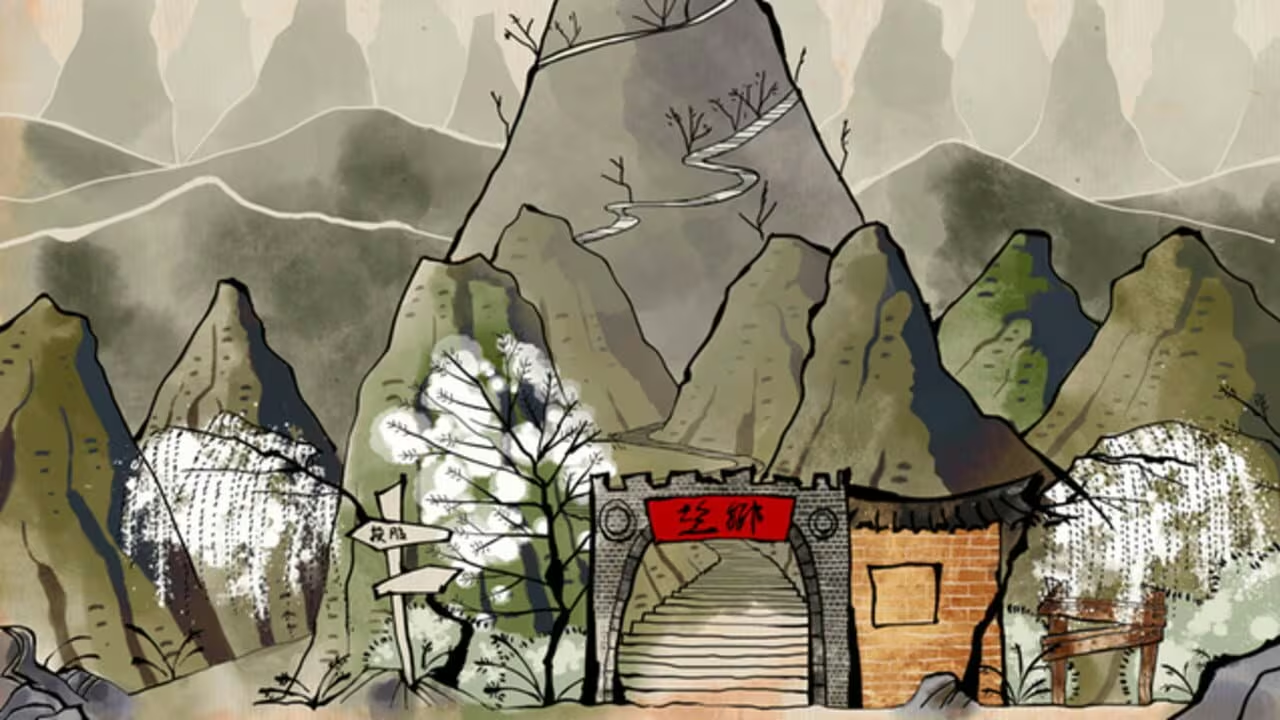
Single-player puzzle adventure with a beautiful, distinctive art style and a genuinely emotional story. As a lonely dog wandering the afterlife searching for his dead master, 'Don't Disturb' explores traditional Asian views on death and the underworld.

Global score

84/100

Genres

Indie

Similar games

    Pros

    • Beautiful and unique watercolor art style
    • Emotional and touching story about loss and afterlife
    • Soothing and culturally appropriate soundtrack
    • Simple and accessible gameplay
    • Two different endings offering narrative choice

    Cons

    • Very short gameplay duration (15-30 minutes)
    • Frequent bugs and glitches reported
    • Poor english translation and text formatting
    • Minimal puzzle challenge and gameplay depth
    • Lack of fullscreen support and ui issues

    Analysis

    Less representative of its motivational profile, with noticeable differences. Motivations that often define this kind of title include Strategy, Survival, Competence, Violence. Here, the score leans higher than usual among comparable games on Intimacy. It leans lower than usual among comparable games on Continuation, Growth.

    How to use the graph
    Similar games map

    Each dot is a game. They are arranged from the same motivation profile as in the “Motivations” section below. Closer dots usually mean more similar reasons to play (exploration, competition, relaxation, etc.)—not that one game is “better” than another.

    • Larger dot with a light outline: the game you are viewing.
    • Colour: groups of games with comparable motivation patterns (statistical clusters).
    • Hover a dot to see the game name; click to open its page.
    • Scroll or double-click the chart to zoom out and see more games.

    Why don’t the axes read like a score? This view uses t-SNE: it only keeps who is close to whom. The scales are not “good to bad” or hours played—they separate groups on the map. Read distance between dots, not the axis numbers.

    Motivations

    • Autonomy
      3

      "Players control a dog character exploring the afterlife with freedom to move and interact, but the game is linear with limited choices (only one major ending decision)."

    • Competence
      -2

      "Puzzles are very simple and easy, mostly serving to advance the story with minimal challenge or skill required."

    • Competition
      -5

      "No competitive elements or comparison with others; purely a personal, narrative experience."

    • Continuation
      -4

      "Very short game (15-30 minutes), with many players noting quick completion and low replay value beyond seeing both endings."

    • Cooperation
      -5

      "Single-player experience with no multiplayer or cooperative gameplay."

    • Creativity
      4

      "Unique watercolor art style and cultural storytelling show creative expression, though gameplay is straightforward."

    • Domination
      -5

      "No elements of exerting control or superiority over others; cooperative and equal interactions with NPCs."

    • Escapism
      4

      "Players use the game as an emotional and artistic escape, reflecting on themes of death, loss, and afterlife."

    • Expectation
      -4

      "Players engage voluntarily for emotional and artistic interest, not out of obligation or pressure."

    • Experimenting
      -3

      "Gameplay is linear and puzzle solutions are straightforward; limited exploration of mechanics or novel strategies."

    • Exploration
      2

      "Players explore different afterlife locations and meet various characters, though environments are limited and linear."

    • Expression
      -4

      "No character customization or player-driven aesthetic changes; presentation is fixed and standardized."

    • Fantasy
      4

      "Strongly rooted in imaginative fiction and traditional Asian afterlife mythology with supernatural elements."

    • Fellowship
      -5

      "Solo experience with minimal social interaction or community involvement."

    • Growth
      -3

      "Limited learning or skill development; mostly a narrative journey with simple puzzles."

    • Health
      -5

      "Sedentary gameplay with no physical activity or health-related features."

    • Idle
      3

      "Short sessions with some players idling the game for trading cards; gameplay does not demand constant attention."

    • Intimacy
      3

      "Emotional connection to story and characters, especially the dog-owner bond, but limited social interaction."

    • Leadership
      -5

      "No leadership or management roles; player follows a linear path without directing others."

    • Progression
      2

      "Some item collection and puzzle completion advance the story, but no complex progression or upgrades."

    • Relaxation
      4

      "Calm, meditative atmosphere with soothing music and art style, promoting relaxation and emotional flow."

    • Sensation
      3

      "Visual and auditory aesthetics provide sensory enjoyment, though gameplay is low intensity."

    • Status
      -5

      "No social recognition or status elements; focus is on personal experience."

    • Story
      4

      "Narrative-driven game with emotional story about loss, afterlife, and loyalty, though story is brief and simple."

    • Strategy
      -4

      "Minimal strategic or problem-solving depth; puzzles are easy and straightforward."

    • Thrill
      -4

      "No suspense or risk; gameplay is calm and predictable."

    • Value
      -1

      "Mixed perceptions of value; many note the game is short and better purchased on sale, but art and story justify cost for some."

    • Violence
      -5

      "No violent or destructive gameplay; focus on exploration and narrative."

    • Survival
      -5

      "No survival or threat elements; stable and safe game environment."

    Last update: 29/04/2026