Invisible Mind Thumbnail

Invisible Mind similar games & best alternatives

Invisible Mind

PC (Microsoft Windows) • 2016

Related articles

Quick resume

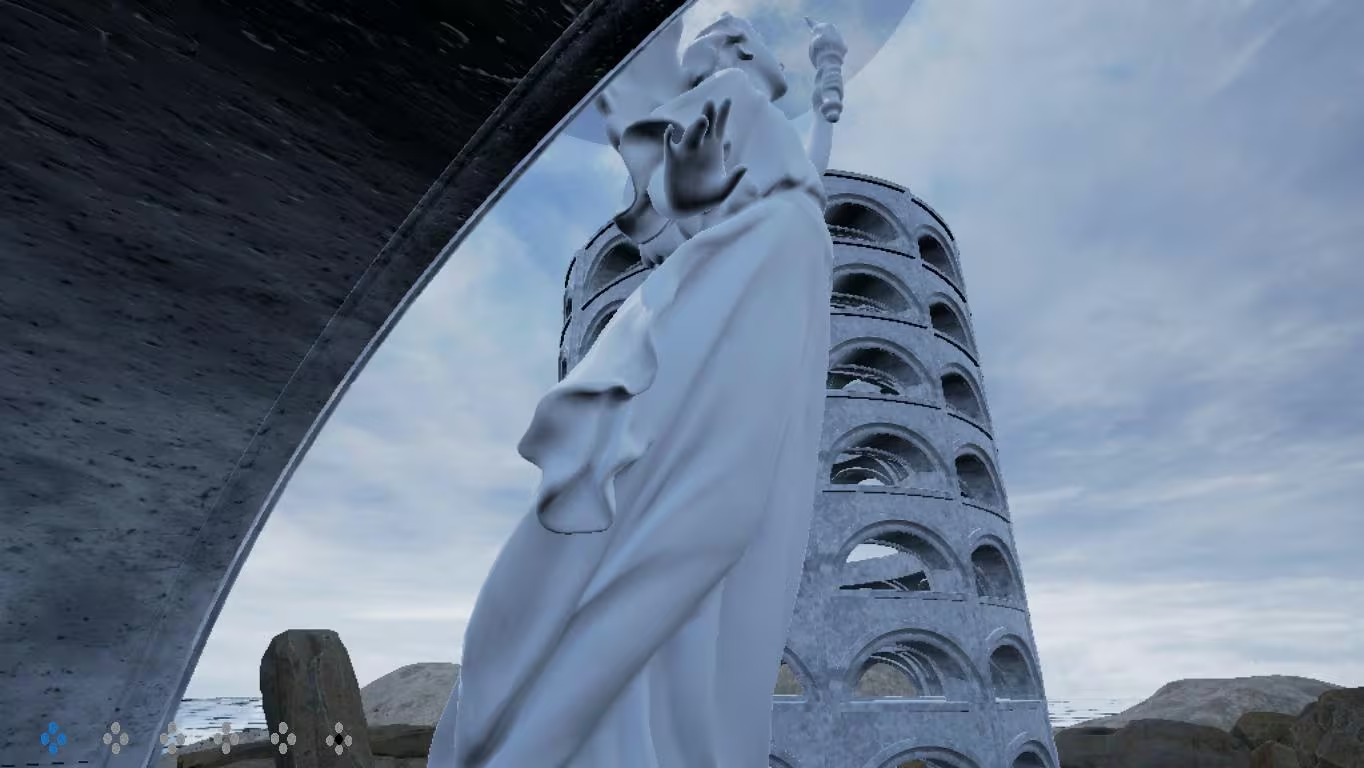
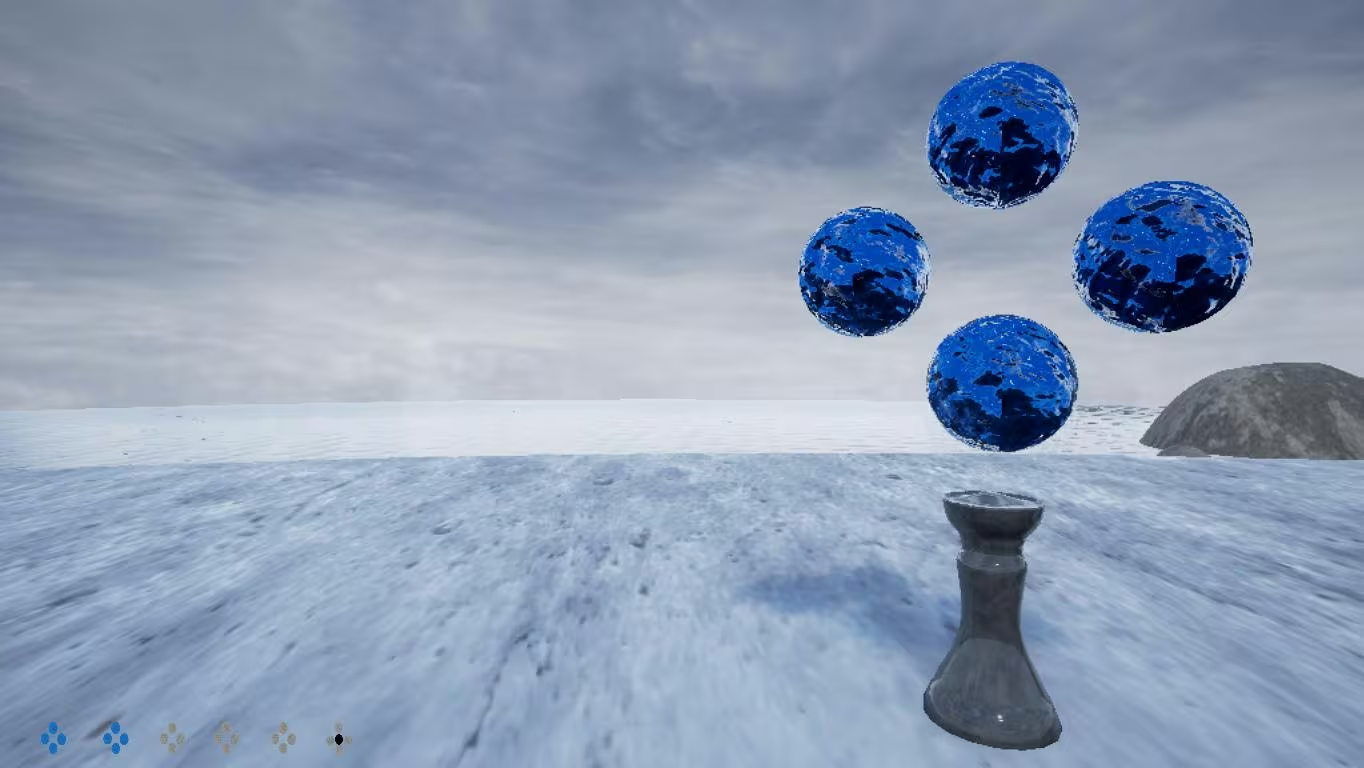
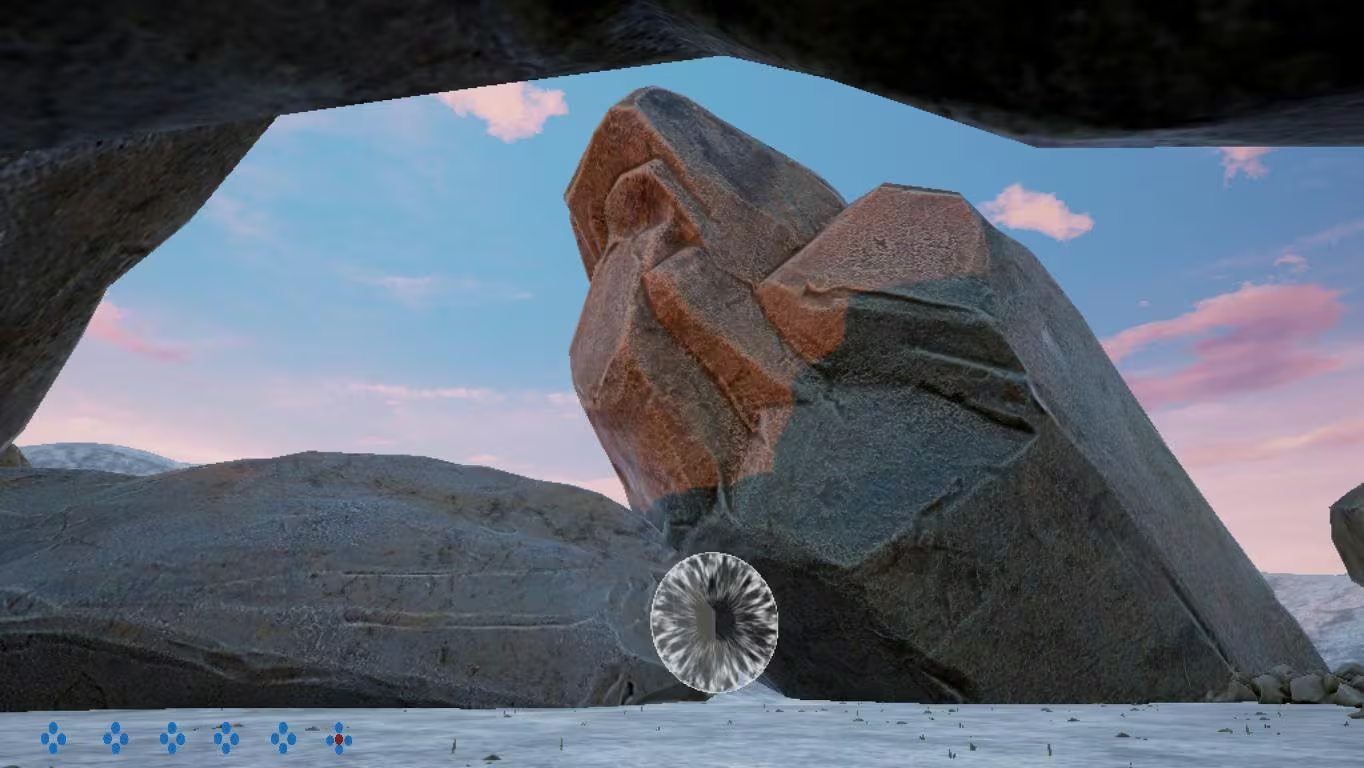
Go on a trip around the worlds created by your own mind and learn yourself.

Global score

44/100

Genres

Adventure, Indie

Similar games

    Pros

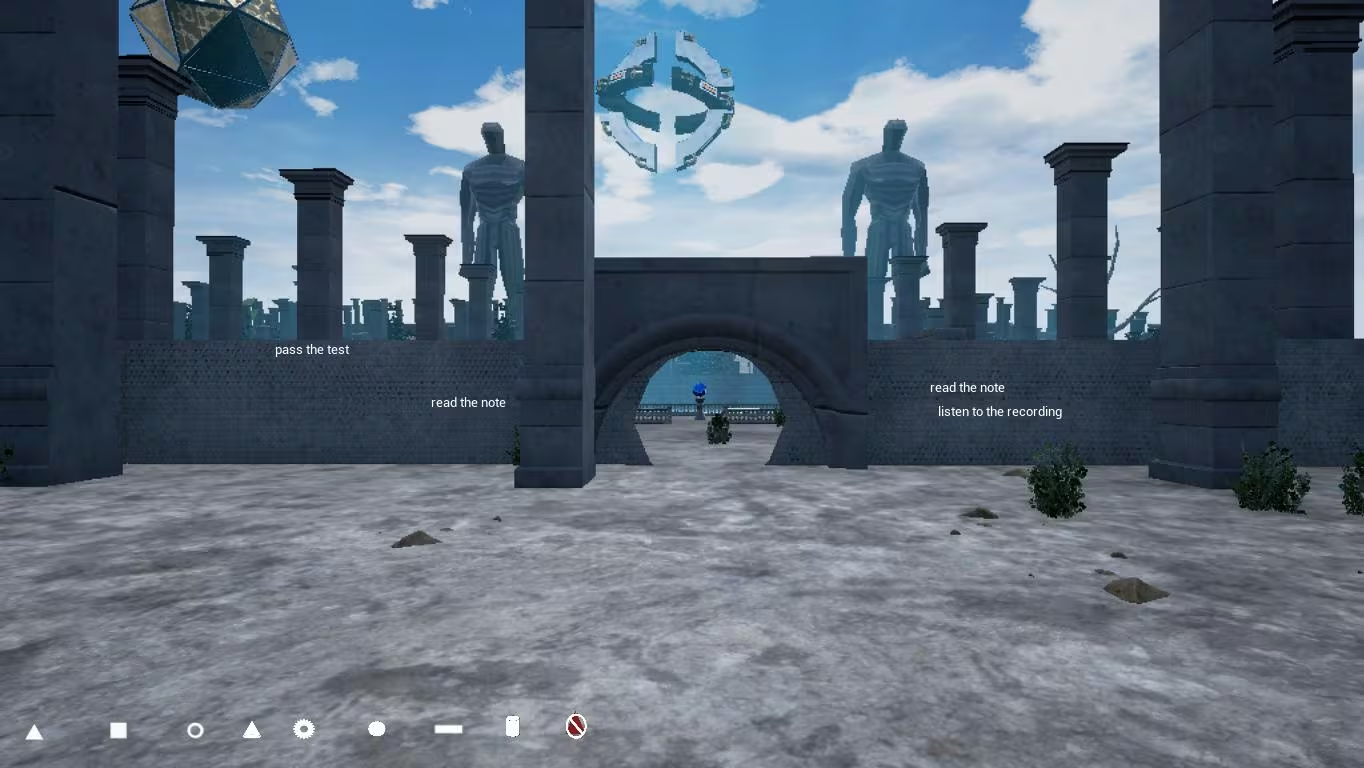
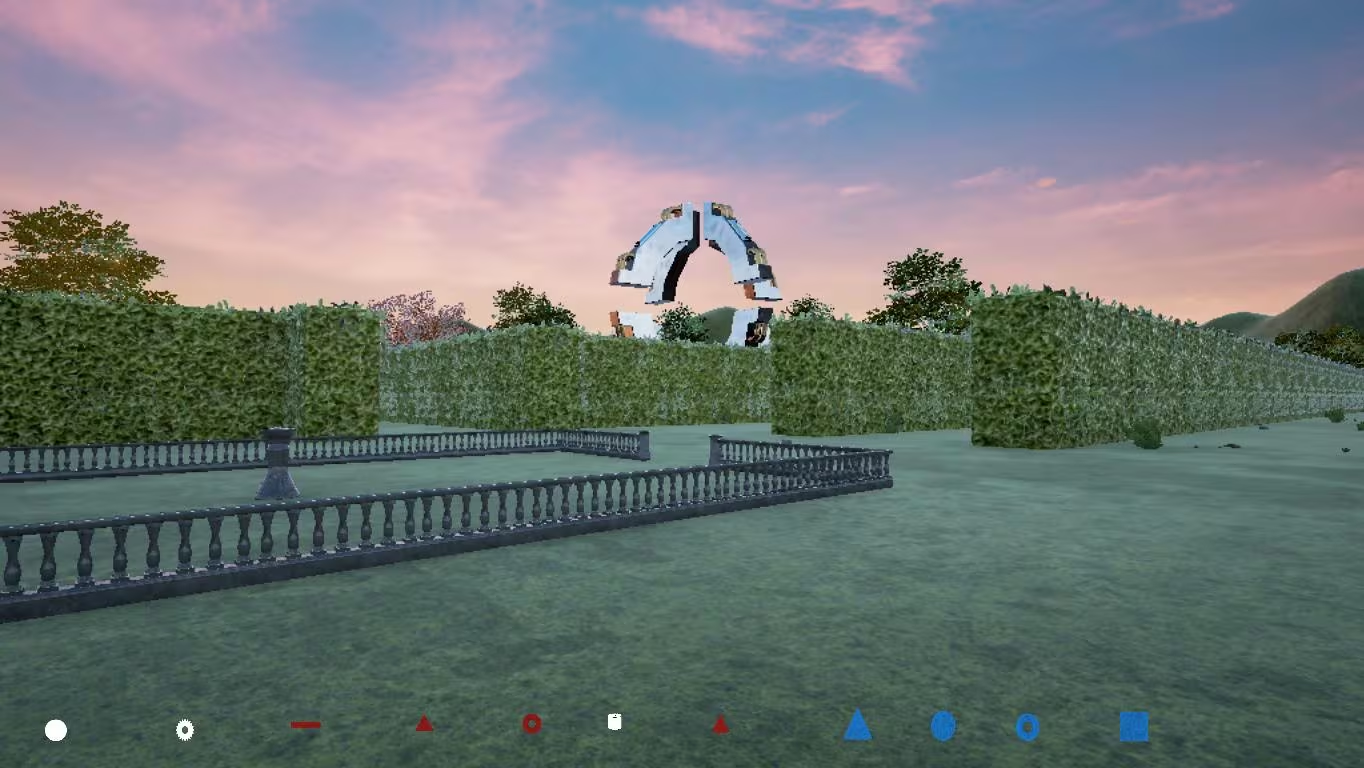
    • Unique surreal and abstract art style
    • Atmospheric ambient music
    • Philosophical and psychological themes
    • Simple controls
    • Some players found it relaxing and thought-provoking

    Cons

    • Poor technical quality and bugs
    • Repetitive and unpolished level design
    • Confusing and minimal story presentation
    • Lack of meaningful gameplay challenge
    • Low value for price

    Analysis

    Less representative of its motivational profile, with noticeable differences. Motivations that often define this kind of title include Strategy, Survival, Competence, Violence. Here, the score leans higher than usual among comparable games on Exploration. It leans lower than usual among comparable games on Value, Continuation.

    How to use the graph
    Similar games map

    Each dot is a game. They are arranged from the same motivation profile as in the “Motivations” section below. Closer dots usually mean more similar reasons to play (exploration, competition, relaxation, etc.)—not that one game is “better” than another.

    • Larger dot with a light outline: the game you are viewing.
    • Colour: groups of games with comparable motivation patterns (statistical clusters).
    • Hover a dot to see the game name; click to open its page.
    • Scroll or double-click the chart to zoom out and see more games.

    Why don’t the axes read like a score? This view uses t-SNE: it only keeps who is close to whom. The scales are not “good to bad” or hours played—they separate groups on the map. Read distance between dots, not the axis numbers.

    Motivations

    • Autonomy
      3

      "Players can freely explore surreal environments and choose their own path with minimal guidance, indicating moderate autonomy."

    • Competence
      -3

      "Gameplay is described as simple, repetitive, and lacking meaningful challenge, with puzzles mostly involving key collection and maze navigation."

    • Competition
      -5

      "No evidence of competitive elements; focus is on solo exploration and personal experience."

    • Continuation
      -4

      "Many reviews mention boredom, frustration, and quitting early; low attachment and short play sessions are common."

    • Cooperation
      -5

      "No multiplayer or cooperative gameplay; entirely single-player experience."

    • Creativity
      2

      "The game features surreal, abstract, and artistic environments, but gameplay and level design are heavily copy-pasted and unpolished."

    • Domination
      -5

      "No indication of exerting control or superiority over others; purely individual experience."

    • Escapism
      3

      "Some players found the game relaxing and a way to escape real-life stress, though others found it frustrating."

    • Expectation
      -4

      "Players engage voluntarily out of curiosity or interest in surreal exploration; no obligation or pressure reported."

    • Experimenting
      -2

      "Limited novelty or experimentation; gameplay is mostly routine walking and item collection with little variation."

    • Exploration
      4

      "Strong emphasis on exploring surreal, abstract environments and maze-like areas, though environments are repetitive."

    • Expression
      -5

      "No customization or personalization features reported; standard presentation throughout."

    • Fantasy
      4

      "Game presents surreal, dreamlike, and abstract worlds with philosophical and psychological themes."

    • Fellowship
      -5

      "No social or community features; purely solitary experience."

    • Growth
      -2

      "Some light puzzle solving and philosophical reflection, but overall limited learning or skill development."

    • Health
      -5

      "No physical activity or health-related gameplay elements."

    • Idle
      3

      "Gameplay involves slow walking and wandering, suitable for casual, low-attention sessions."

    • Intimacy
      -5

      "No evidence of forming close relationships or emotional social interactions."

    • Leadership
      -5

      "No leadership or group management elements present."

    • Progression
      2

      "Progression mainly through collecting geometric objects and unlocking new areas, though minimal and repetitive."

    • Relaxation
      3

      "Some players found the game relaxing and calming, while others experienced frustration."

    • Sensation
      2

      "Visuals and ambient music provide some sensory stimulation, but technical issues and glitches detract from experience."

    • Status
      -5

      "No social recognition or status elements."

    • Story
      1

      "Abstract and minimal story with philosophical themes; many players found it confusing or poorly presented."

    • Strategy
      -4

      "Gameplay involves straightforward tasks like item collection and maze navigation with minimal strategic depth."

    • Thrill
      -3

      "Some horror elements attempt to create suspense, but generally the game lacks real thrill or tension."

    • Value
      -4

      "Many players felt the game was poor value for money due to bugs, lack of polish, and shallow gameplay."

    • Violence
      -5

      "No combat or destructive gameplay; focus on exploration and puzzle solving."

    • Survival
      -5

      "No survival mechanics or threat avoidance present."

    Last update: 29/04/2026