Dungeon of the ENDLESS™ similar games & best alternatives
Dungeon of the ENDLESS™
2014
Related articles
Quick resume
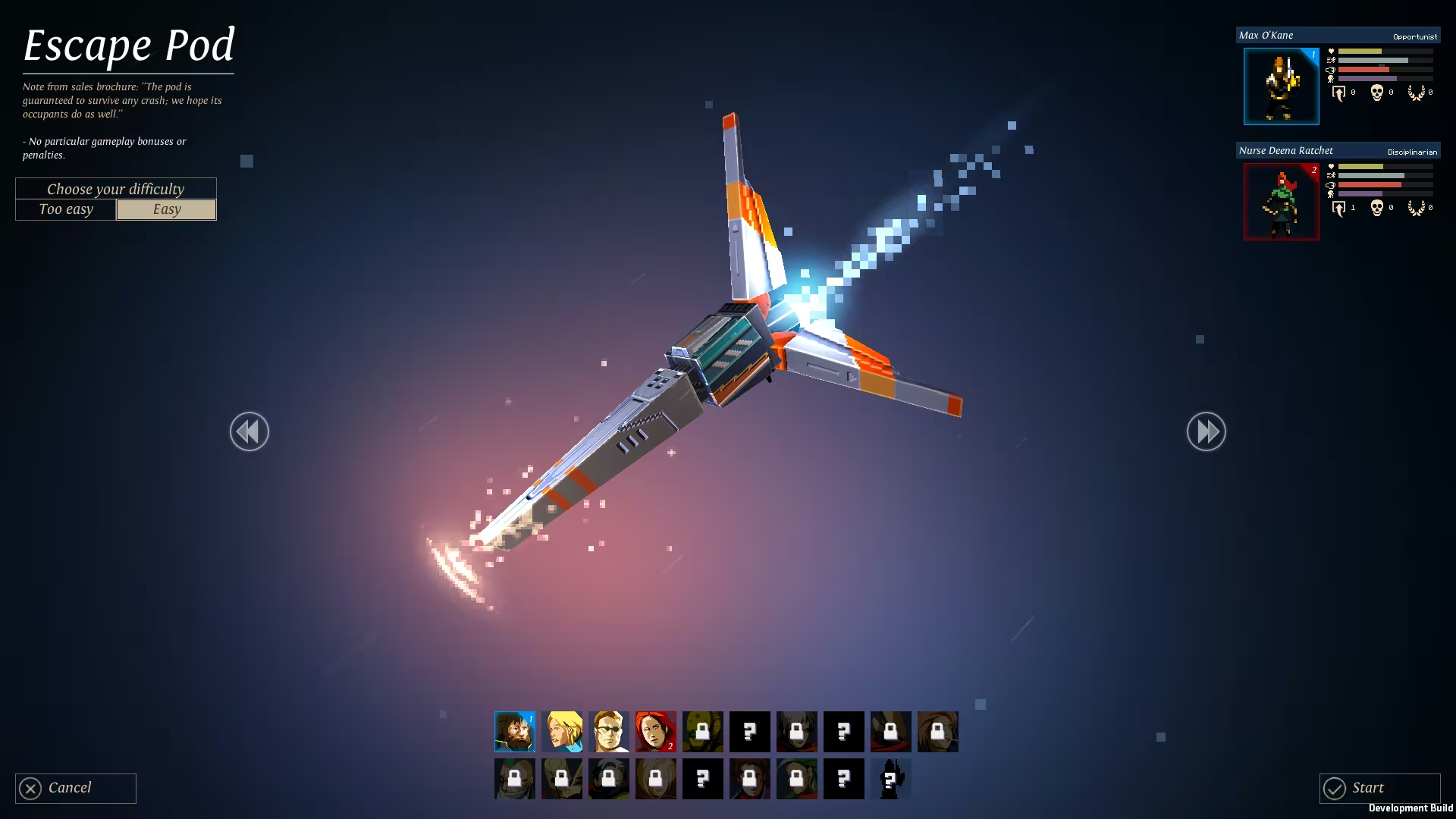
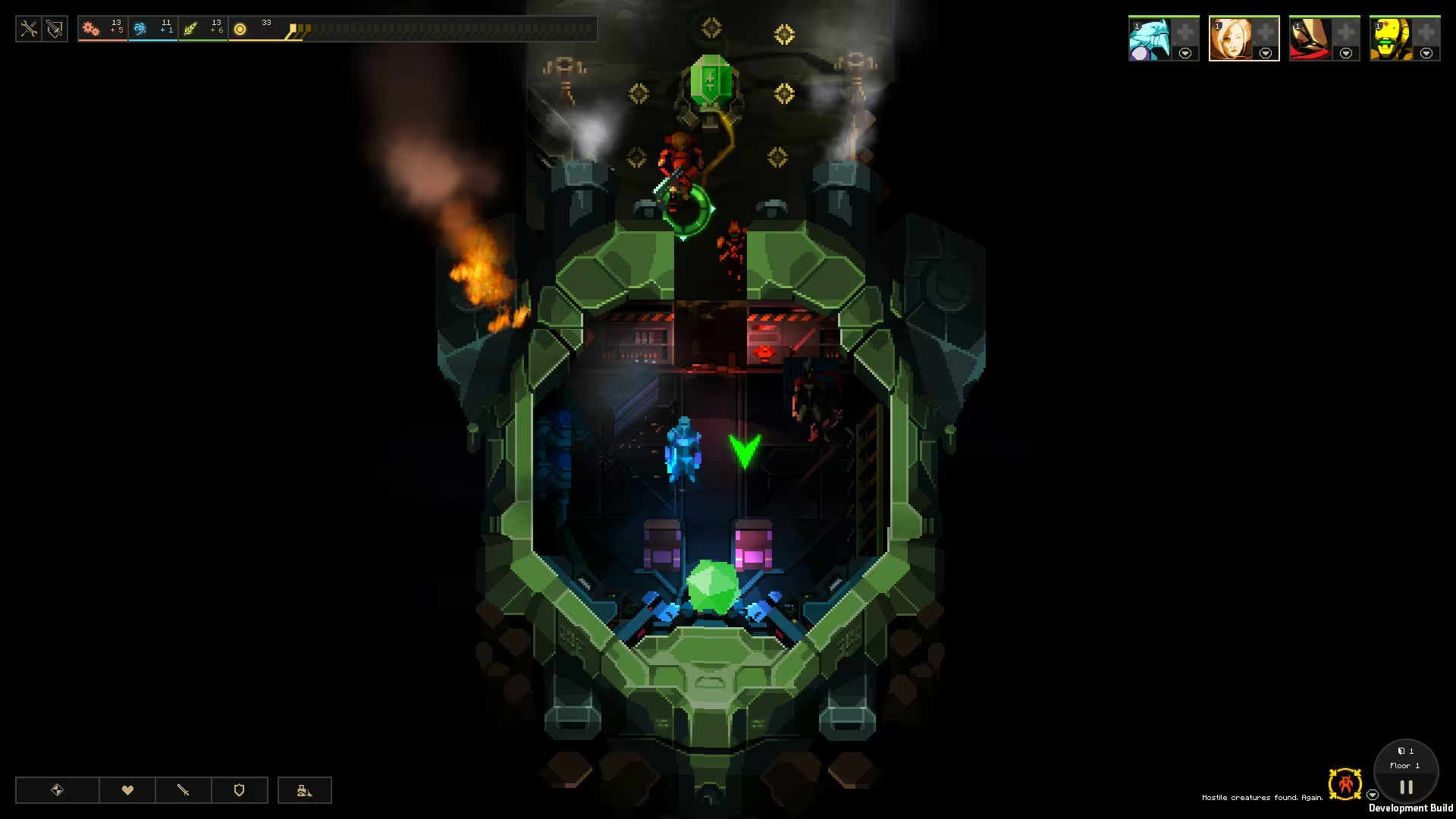
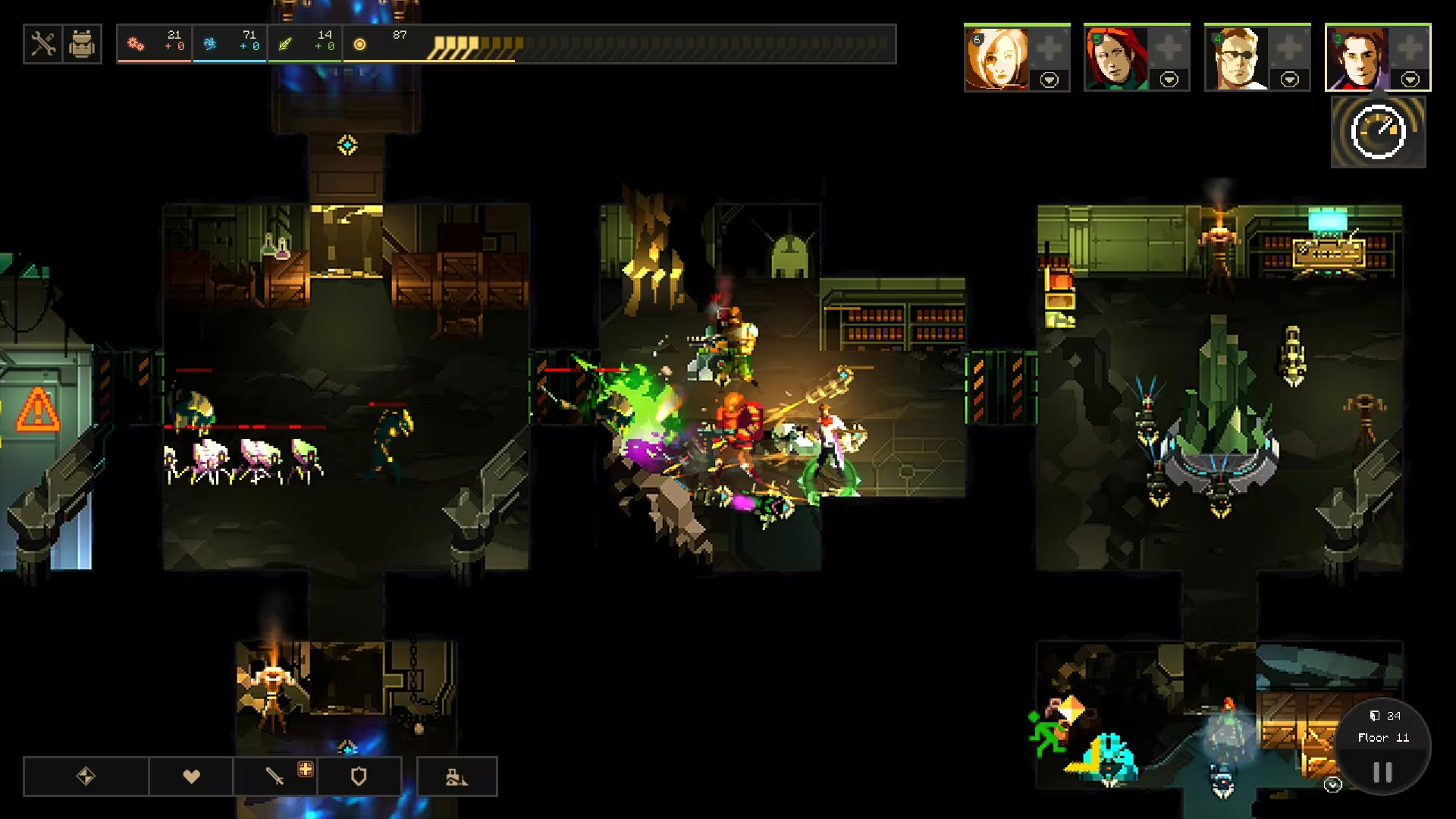
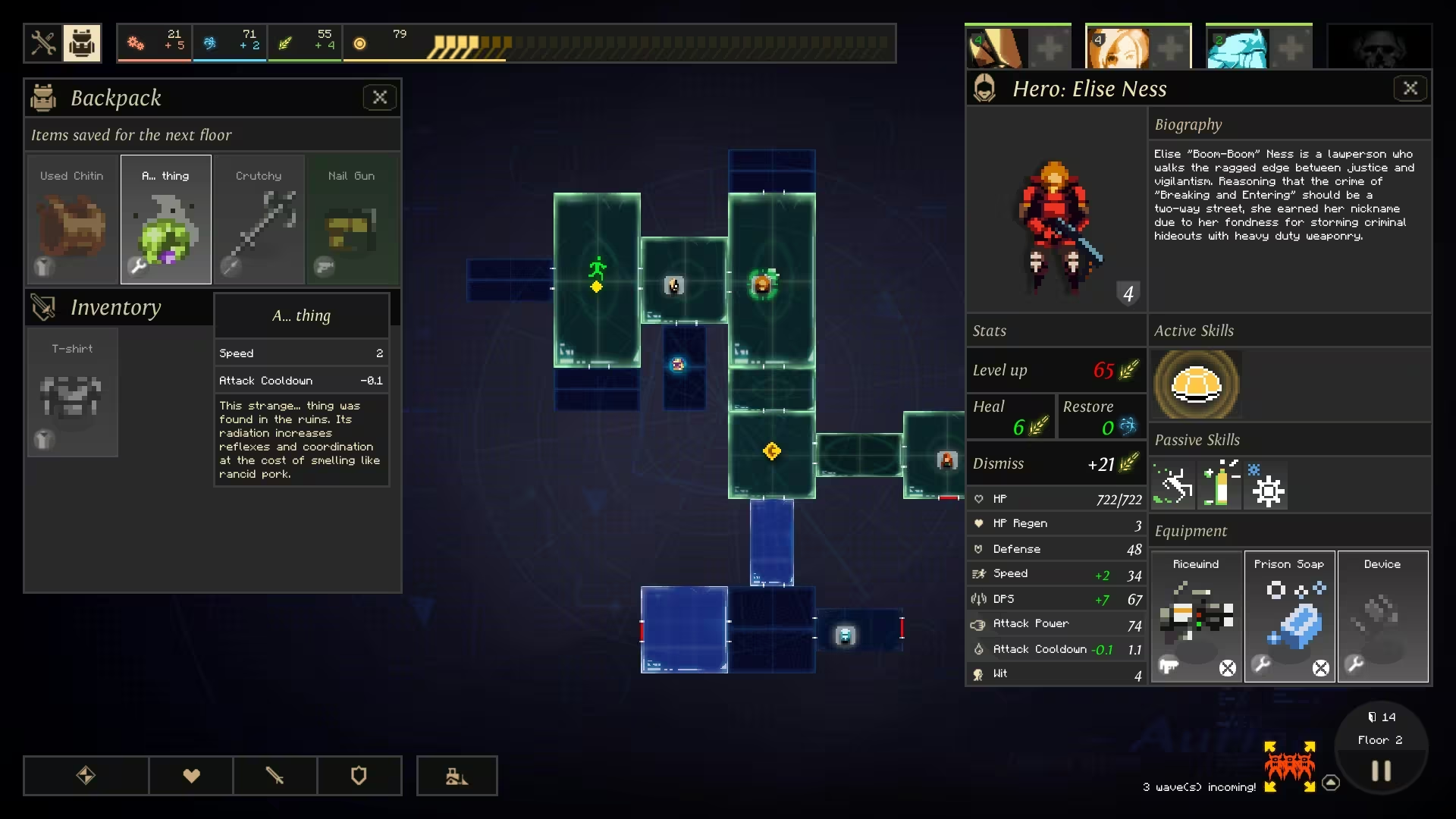
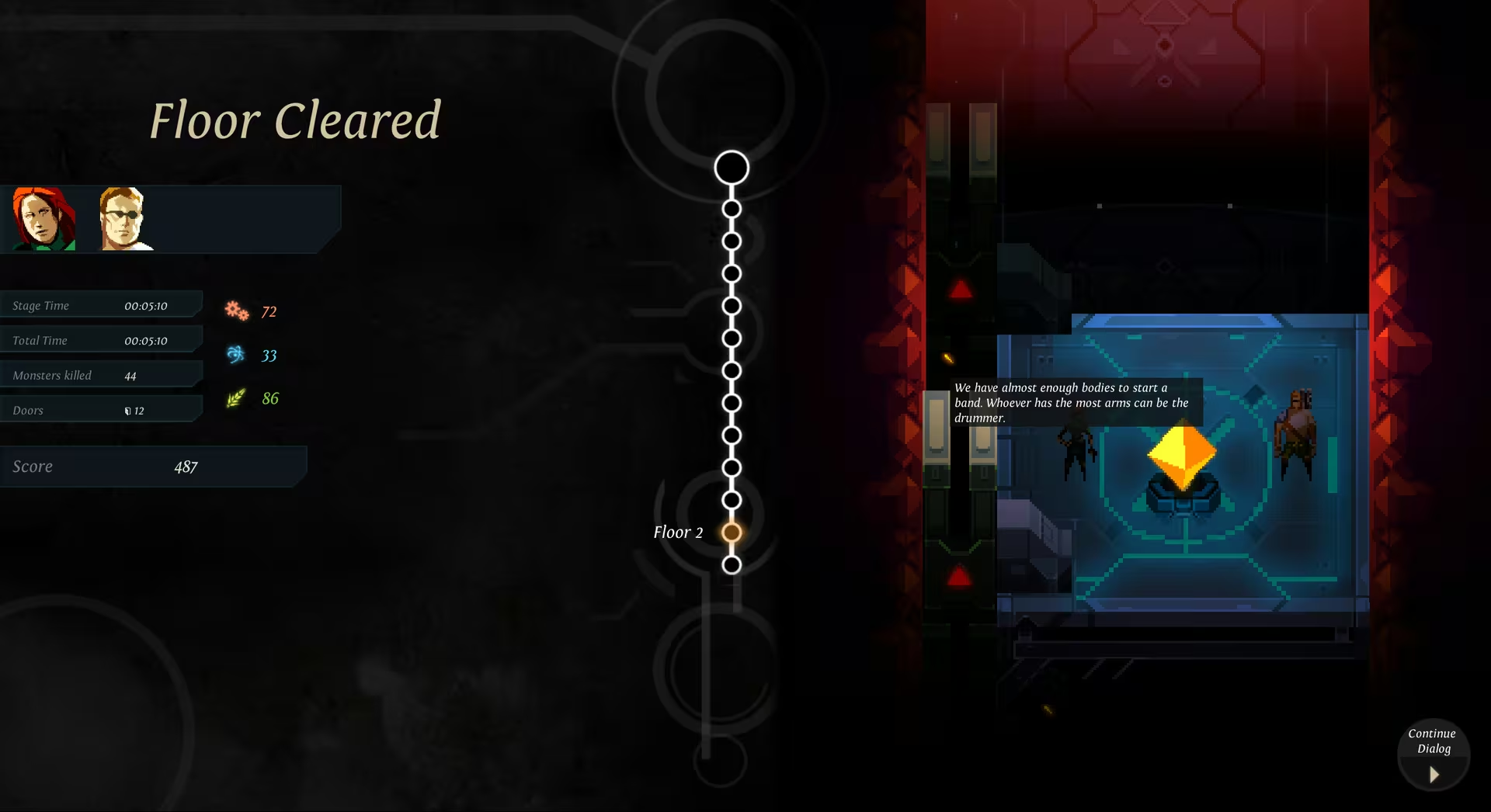
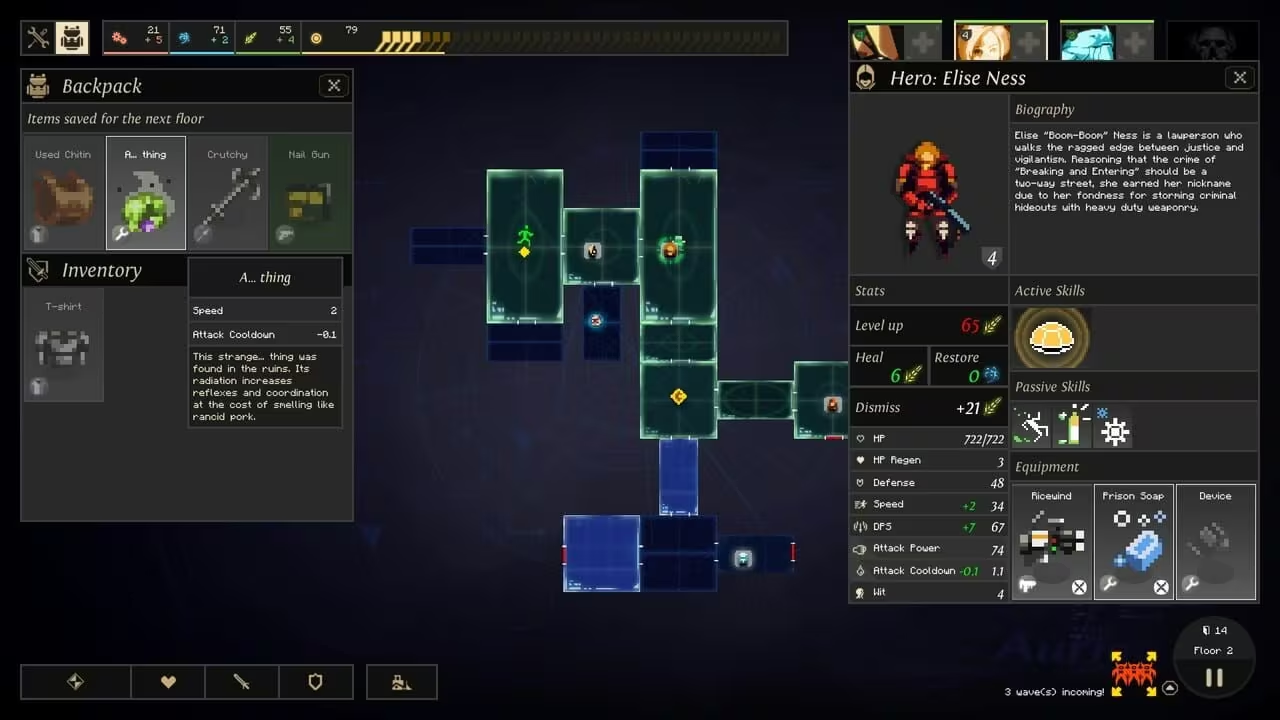
Dungeon of the ENDLESS™ is a Rogue-Like Dungeon-Defense game, in which the player and their team of heroes must protect the generator of their crashed ship while exploring an ever-expanding dungeon, all while facing waves of monsters and special events as they try to find their way out...
Global score
85/100
Genres
Adventure, Indie, Role-playing (RPG), Strategy
Similar games
Pros
- Unique blend of roguelike, tower defense, and rpg elements
- High replayability with randomized dungeons and unlockables
- Challenging and rewarding strategic gameplay
- Strong developer support and frequent updates
- Engaging pixel art style and atmospheric music
Cons
- Steep learning curve and high difficulty may frustrate some players
- Multiplayer can be unstable and lacks some features
- Randomness can sometimes lead to unfair situations
- Limited story depth and character interaction
- No physical activity, purely sedentary gameplay
Analysis
A very typical example of its motivational profile. Motivations that often define this kind of title include Cooperation, Fellowship, Intimacy, Leadership. Here, the score leans higher than usual among comparable games on Survival, Exploration. It leans lower than usual among comparable games on Relaxation.
How to use the graph
Similar games map
Each dot is a game. They are arranged from the same motivation profile as in the “Motivations” section below. Closer dots usually mean more similar reasons to play (exploration, competition, relaxation, etc.)—not that one game is “better” than another.
- Larger dot with a light outline: the game you are viewing.
- Colour: groups of games with comparable motivation patterns (statistical clusters).
- Hover a dot to see the game name; click to open its page.
- Scroll or double-click the chart to zoom out and see more games.
Why don’t the axes read like a score? This view uses t-SNE: it only keeps who is close to whom. The scales are not “good to bad” or hours played—they separate groups on the map. Read distance between dots, not the axis numbers.
Motivations
-
Autonomy4
"Players make strategic decisions on resource allocation, room powering, hero placement, and exploration order, reflecting high control over actions."
-
Competence4
"The game requires skillful management of resources, tactical planning, and adapting to random dungeon layouts, providing challenging and rewarding gameplay."
-
Competition-3
"Focus is primarily on individual or cooperative play with no strong emphasis on ranked or leaderboard competition."
-
Continuation4
"High replayability with randomized dungeons, unlockable heroes and ships, and addictive gameplay encourage long and repeated play sessions."
-
Cooperation3
"Supports up to 4-player co-op with coordinated team play important for success, though solo play is also viable."
-
Creativity3
"Players customize defenses, choose heroes and their equipment, and plan unique strategies for each run, allowing creative problem solving."
-
Domination-4
"Interactions emphasize teamwork and shared objectives rather than exerting superiority or control over others."
-
Escapism4
"Immersive dungeon exploration and survival in a sci-fi fantasy setting provide strong escapism from real life."
-
Expectation-4
"Players engage voluntarily out of intrinsic interest and enjoyment rather than obligation or external pressure."
-
Experimenting4
"Randomized levels, multiple heroes, and varied strategies encourage experimentation and trying new approaches."
-
Exploration5
"Core gameplay revolves around discovering new rooms, secrets, and paths in procedurally generated dungeons."
-
Expression2
"Players customize hero equipment and build defenses, allowing some degree of personal expression within gameplay."
-
Fantasy4
"Set in a sci-fi fantasy universe with unique heroes, monsters, and lore, providing imaginative fiction."
-
Fellowship3
"Community engagement through multiplayer co-op and developer interaction fosters a sense of belonging."
-
Growth4
"Players learn game mechanics, improve strategies, and develop skills to progress through increasingly difficult levels."
-
Health-4
"Primarily a sedentary game with no physical activity elements."
-
Idle-3
"Requires continuous attention and strategic planning; not designed for idle or background play."
-
Intimacy1
"Some social interaction in multiplayer and character dialogues, but limited emotional depth in relationships."
-
Leadership2
"Players manage their team and resources, but multiplayer leadership is informal and cooperative."
-
Progression4
"Strong progression through leveling heroes, unlocking characters and ships, and acquiring resources and equipment."
-
Relaxation-2
"Gameplay is tense and challenging with moments of high pressure, though pauses allow some relief."
-
Sensation2
"Enjoyable pixel art visuals and atmospheric music provide moderate sensory stimulation."
-
Status-3
"Little emphasis on social recognition or popularity; focus is on personal or cooperative achievement."
-
Story3
"Narrative elements and character backstories enrich immersion, though story is not the main focus."
-
Strategy5
"Core gameplay demands complex mental challenge, resource management, and tactical decision making."
-
Thrill4
"High tension from managing resources, defending against waves, and risk of permanent death creates suspense."
-
Value4
"Players perceive strong value from gameplay depth, replayability, and developer support for price paid."
-
Violence3
"Combat against monsters and use of turrets involve destruction, though within a strategic and defensive context."
-
Survival5
"Central motivation is to survive waves of enemies, manage resources, and protect the crystal to progress."
Last update: 29/04/2026