Kingdoms Reborn similar games & best alternatives
Kingdoms Reborn
2020
Related articles
Quick resume
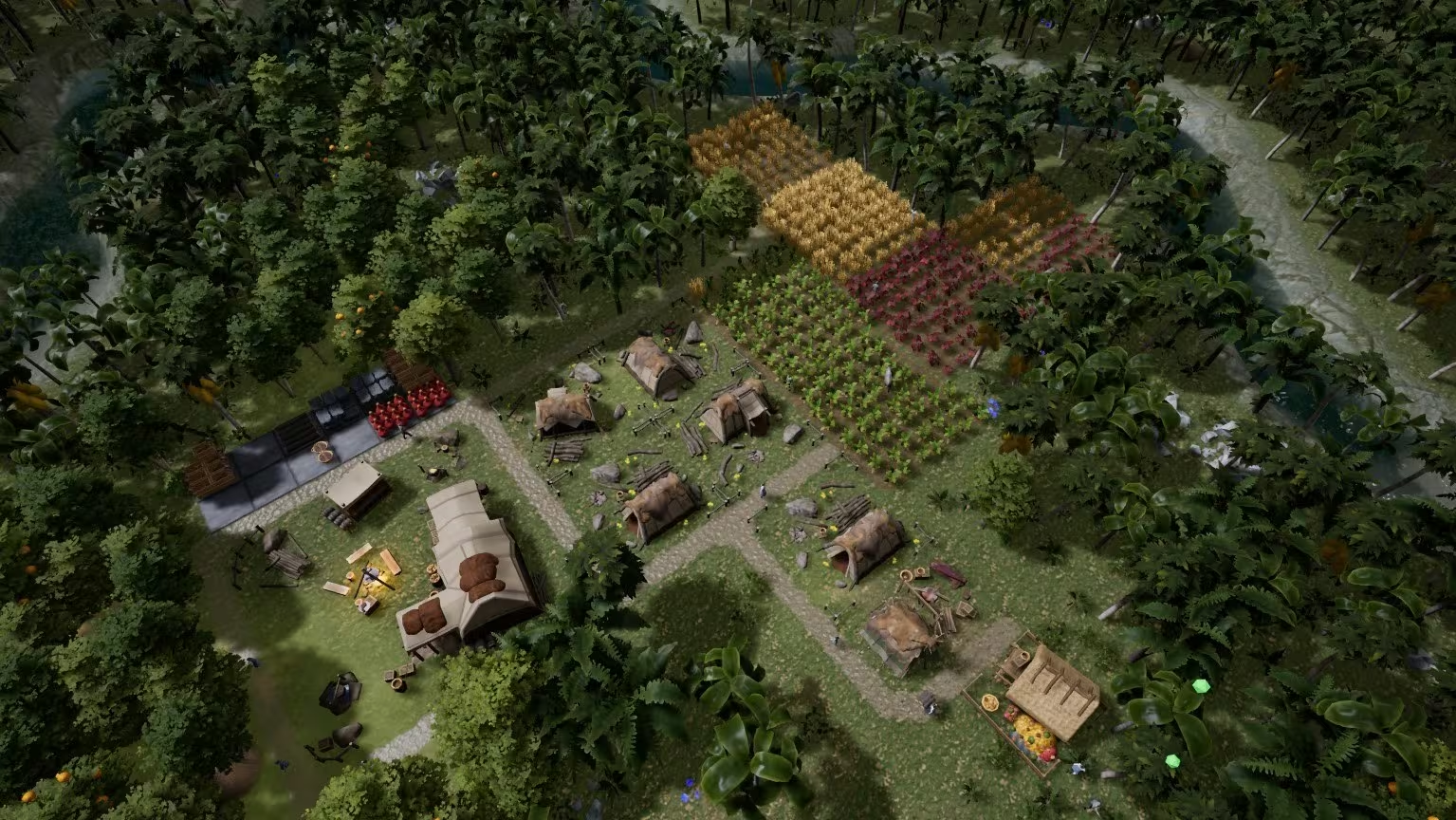
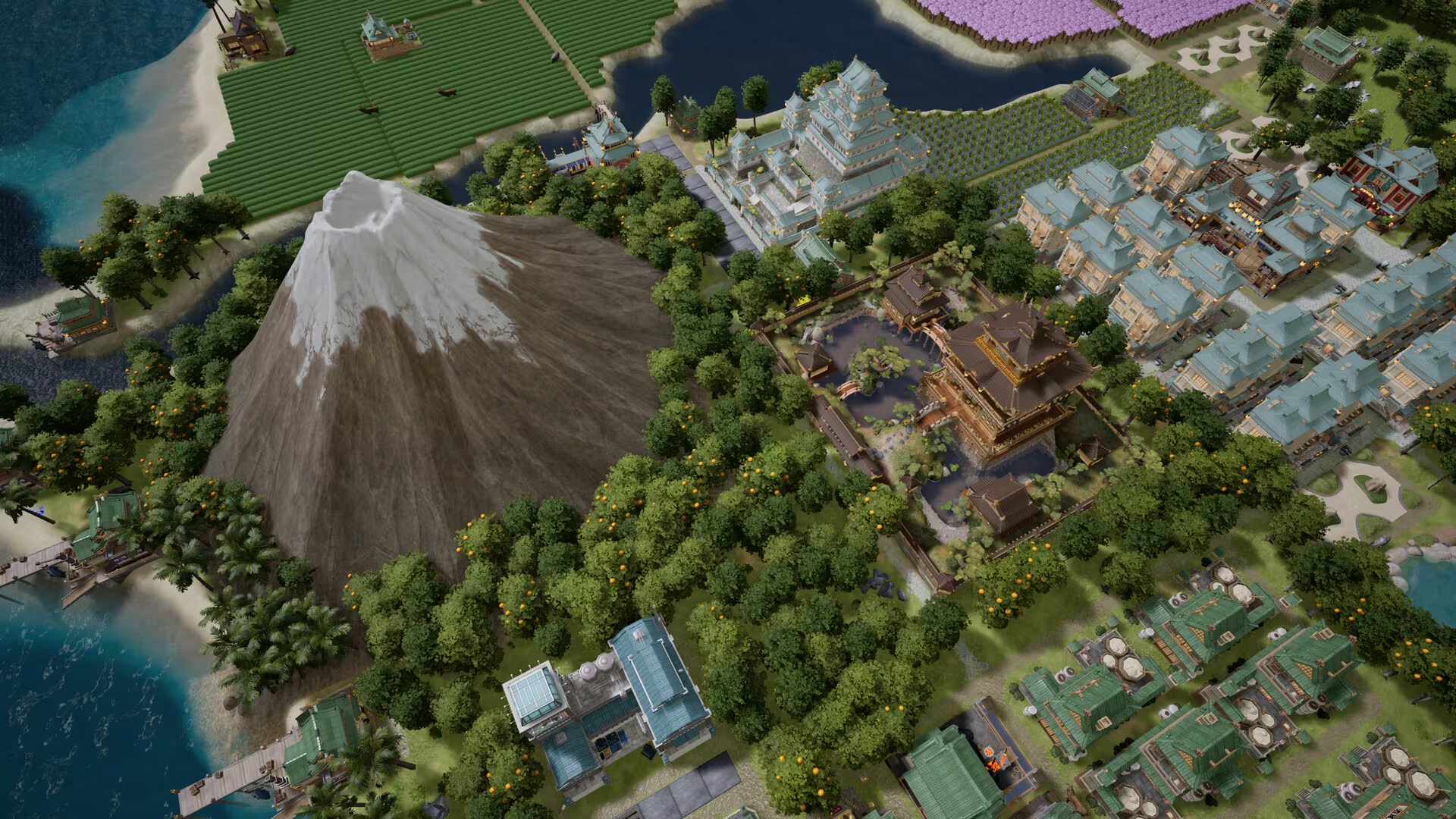
A city builder with simulated citizens, set in a procedurally-generated world map. Grow your kingdom through the eras from a tiny medieval hamlet into a prosperous global empire! Cooperate or compete in real-time with your friends in multiplayer mode.
Global score
91/100
Genres
Indie, Simulator, Strategy, Early Access
Similar games
Pros
- Addictive and engaging city building
- Deep resource and production management
- Cooperative multiplayer support
- Strong progression and tech tree
- Pleasant music and visuals
Cons
- Performance issues at high population
- Limited ai challenge and diplomacy
- Card system can feel redundant late game
- Combat system is simplistic and clunky
- Some ui and logistics frustrations
Analysis
Broadly representative of its motivational profile, with a few distinct shifts. Motivations that often define this kind of title include Competition, Fellowship, Domination, Status. Here, the score leans higher than usual among comparable games on Relaxation, Leadership. It leans lower than usual among comparable games on Fantasy.
How to use the graph
Similar games map
Each dot is a game. They are arranged from the same motivation profile as in the “Motivations” section below. Closer dots usually mean more similar reasons to play (exploration, competition, relaxation, etc.)—not that one game is “better” than another.
- Larger dot with a light outline: the game you are viewing.
- Colour: groups of games with comparable motivation patterns (statistical clusters).
- Hover a dot to see the game name; click to open its page.
- Scroll or double-click the chart to zoom out and see more games.
Why don’t the axes read like a score? This view uses t-SNE: it only keeps who is close to whom. The scales are not “good to bad” or hours played—they separate groups on the map. Read distance between dots, not the axis numbers.
Motivations
-
Autonomy4
"Players have significant control over city building, resource management, and strategic decisions including card-based building choices and tech tree progression."
-
Competence4
"Game offers complex resource logistics, city management, and strategic challenges with difficulty levels from easy to deity, requiring skillful planning and adaptation."
-
Competition2
"Includes multiplayer with competitive elements such as raiding, territory conquest, and resource stealing, but AI opponents are weak and multiplayer is more cooperative or casual."
-
Continuation4
"Players report long play sessions, addictive gameplay, and habitual return to the game, with hundreds of hours logged and ongoing engagement."
-
Cooperation3
"Supports cooperative multiplayer campaigns with shared goals and trading, fostering teamwork among players."
-
Creativity3
"Players design and customize cities, manage production chains, and choose building placements, though constrained by card system and block placement."
-
Domination2
"Some players enjoy exerting control over others via raiding and resource stealing in multiplayer, but interactions are mostly balanced and respectful."
-
Escapism3
"Players use the game as a relaxing and immersive city-building experience, often as a stress relief and enjoyable distraction."
-
Expectation-3
"Players engage voluntarily out of personal interest and enjoyment rather than obligation; some mention playing with friends or for fun."
-
Experimenting3
"Players try different strategies, building layouts, and difficulty settings; the card system encourages adapting to available options."
-
Exploration2
"Game features large maps with multiple territories to discover and conquer, though exploration is mostly strategic rather than narrative."
-
Expression2
"Players customize cities and choose building placements, but limited avatar or cosmetic customization is noted."
-
Fantasy-2
"Game is grounded in realistic city-building and resource management with historical-inspired civilizations; minimal fantasy elements."
-
Fellowship3
"Strong community and multiplayer features foster social connections and shared gameplay experiences."
-
Growth4
"Players learn complex mechanics, improve strategies, and develop skills over time; tech tree and progression systems support growth."
-
Health-4
"Primarily sedentary gameplay with no physical activity; some players note long sessions and addictive play."
-
Idle-3
"Requires active management and attention; players must continuously monitor resources and city status."
-
Intimacy1
"Some social interaction in multiplayer and community, but limited evidence of close emotional relationships formed through the game."
-
Leadership3
"Players lead their cities and armies, make strategic decisions, and guide development; multiplayer may involve leadership roles."
-
Progression5
"Strong emphasis on technological advancement, city growth, resource accumulation, and unlocking new buildings and abilities."
-
Relaxation3
"Many players find the game relaxing and enjoyable, with a chill atmosphere and pleasant music."
-
Sensation2
"Visuals and music are praised as good and pleasant, providing sensory enjoyment without overwhelming stimulation."
-
Status1
"Some recognition through multiplayer and community, but limited focus on social status or popularity."
-
Story-2
"Minimal narrative or lore; gameplay focuses on mechanics and strategy rather than story immersion."
-
Strategy5
"Core gameplay involves deep strategic planning, resource management, and problem solving."
-
Thrill2
"Some tension from survival elements and combat, but overall gameplay is more relaxed than suspenseful."
-
Value4
"Players generally feel the game is worth the price with extensive content and replayability."
-
Violence1
"Combat exists but is minimal and automated; violence is not a central focus."
-
Survival3
"Survival elements like managing food, fuel, and population health are important gameplay aspects."
Last update: 29/04/2026