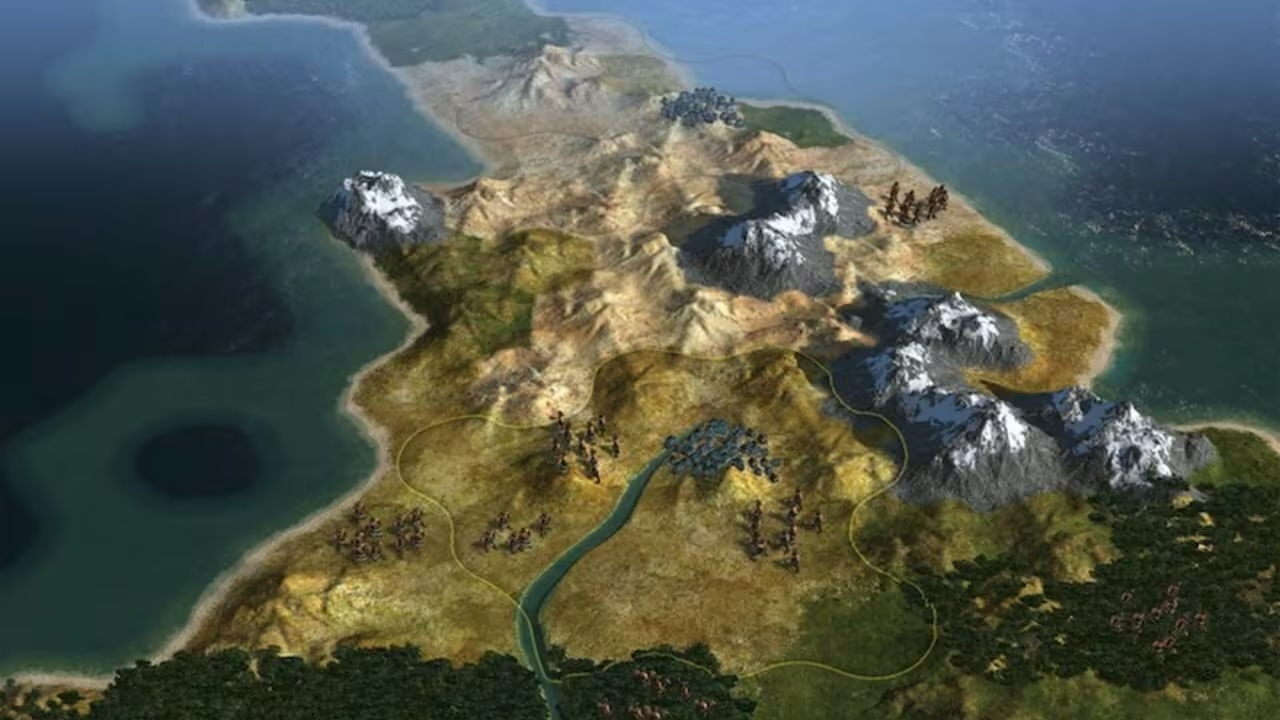
Sid Meier's Civilization® V Thumbnail

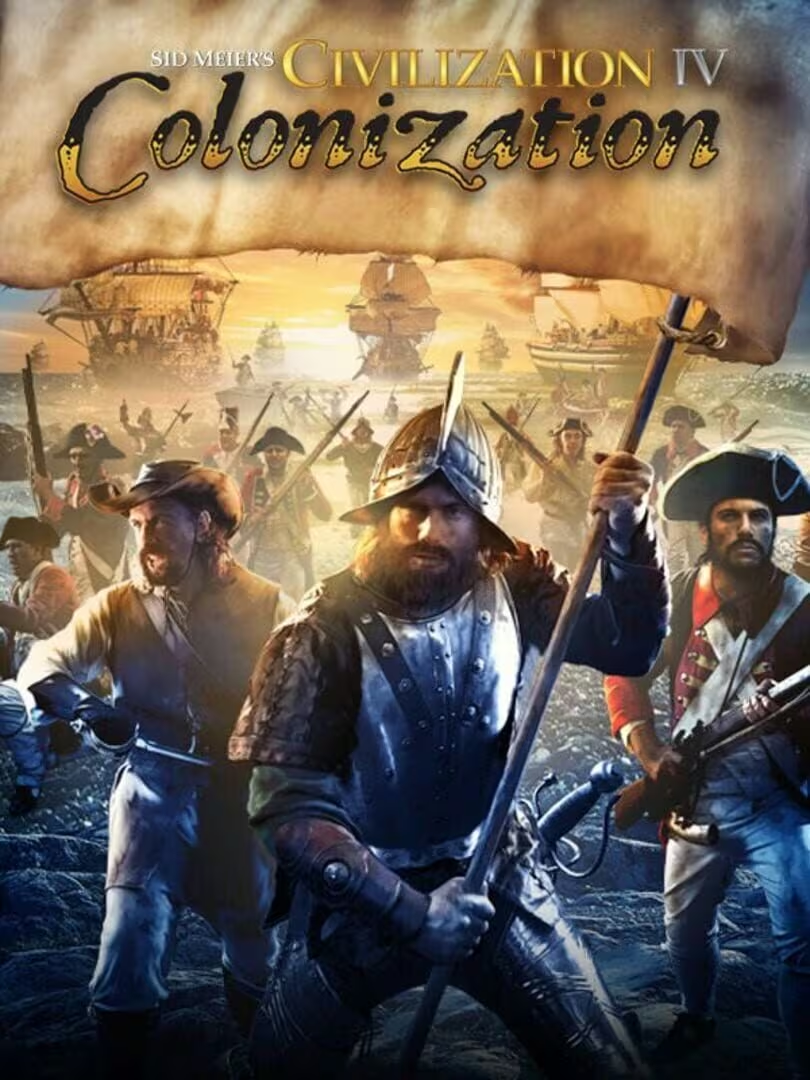
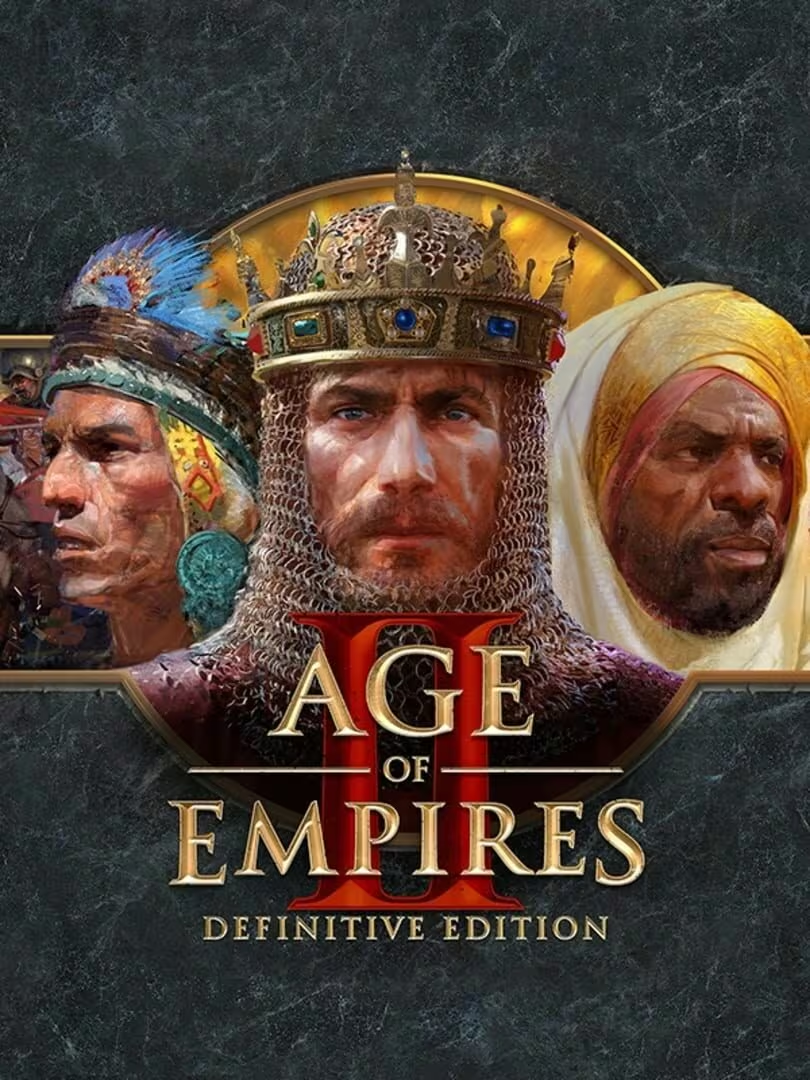
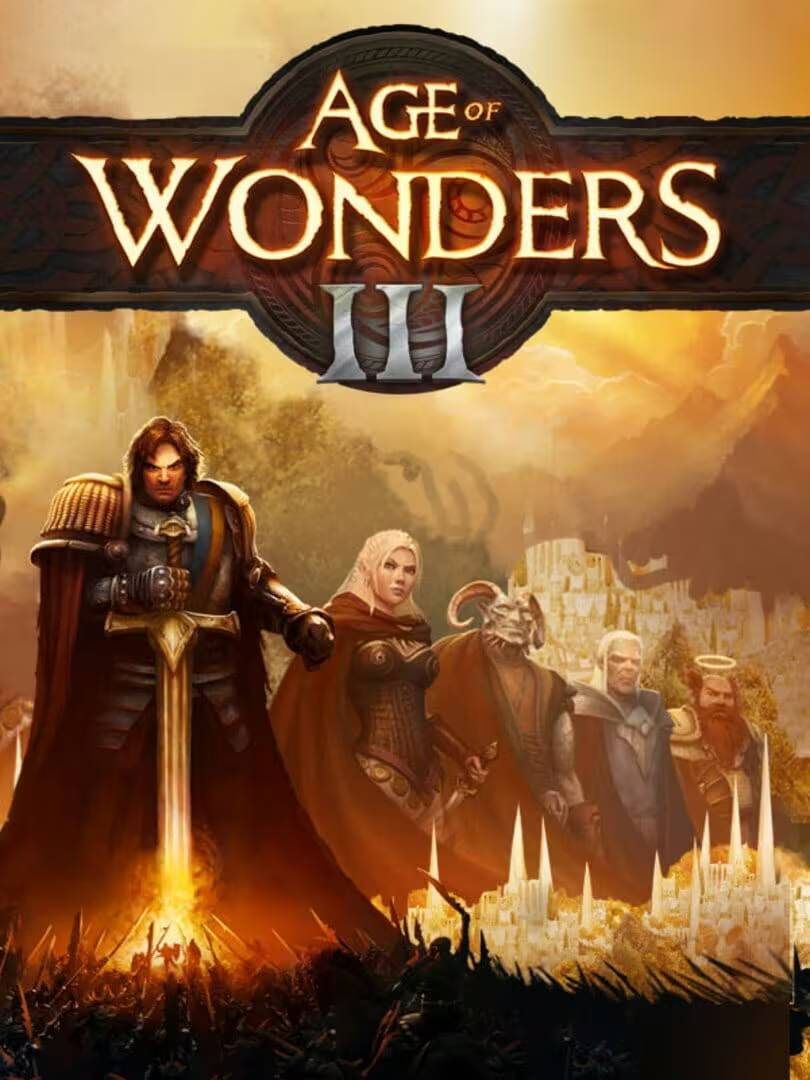
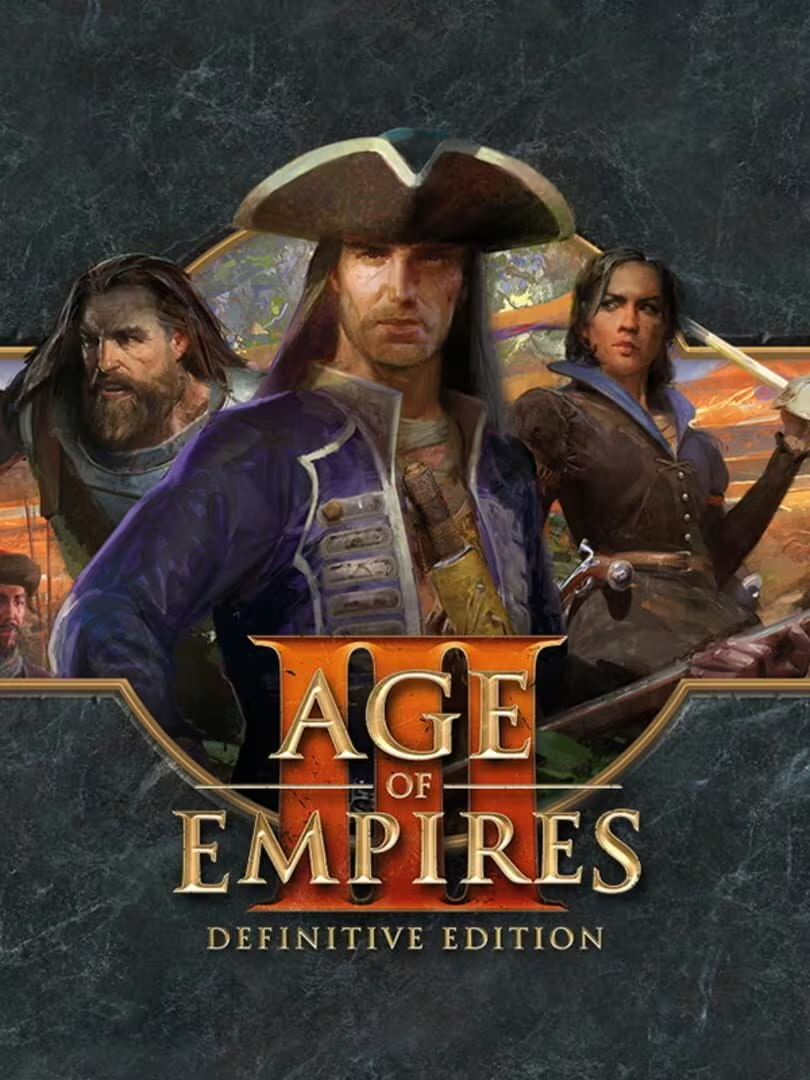
Sid Meier's Civilization® V similar games & best alternatives

Sid Meier's Civilization® V

PC (Microsoft Windows), Mac, Linux • 2010

Related articles

Quick resume

Create, discover, and download new player-created maps, scenarios, interfaces, and more!

Global score

96/100

Genres

Strategy, Turn-based strategy (TBS), Simulator

Similar games

    Pros

    • Deep and addictive strategic gameplay
    • Multiple victory paths and civilizations
    • High replayability with varied scenarios
    • Engaging diplomacy and warfare systems
    • Strong mod and dlc support

    Cons

    • Steep learning curve for new players
    • Long game sessions can be time-consuming
    • Ai can be unpredictable or flawed
    • Requires dlc for full content experience
    • Multiplayer can suffer from technical issues

    Analysis

    Broadly representative of its motivational profile, with a few distinct shifts. Motivations that often define this kind of title include Competition, Fellowship, Domination, Status. Here, the score leans higher than usual among comparable games on Leadership, Exploration. It leans lower than usual among comparable games on Story.

    How to use the graph
    Similar games map

    Each dot is a game. They are arranged from the same motivation profile as in the “Motivations” section below. Closer dots usually mean more similar reasons to play (exploration, competition, relaxation, etc.)—not that one game is “better” than another.

    • Larger dot with a light outline: the game you are viewing.
    • Colour: groups of games with comparable motivation patterns (statistical clusters).
    • Hover a dot to see the game name; click to open its page.
    • Scroll or double-click the chart to zoom out and see more games.

    Why don’t the axes read like a score? This view uses t-SNE: it only keeps who is close to whom. The scales are not “good to bad” or hours played—they separate groups on the map. Read distance between dots, not the axis numbers.

    Motivations

    • Autonomy
      5

      "Players have full control over their civilization's development, decisions, and strategies with multiple victory paths and playstyles."

    • Competence
      4

      "The game challenges players to master complex strategy, diplomacy, and resource management with skill-based outcomes."

    • Competition
      4

      "Strong competitive elements exist through multiplayer, AI opponents, and leaderboards with rival civilizations."

    • Continuation
      5

      "Highly addictive gameplay with long sessions and players reporting losing track of time repeatedly."

    • Cooperation
      2

      "Some cooperative multiplayer modes and alliances exist, but much gameplay is focused on individual empire management."

    • Creativity
      4

      "Players create and customize their civilization’s culture, cities, policies, and strategies extensively."

    • Domination
      3

      "Players often engage in domination and warfare to control others, with power struggles and betrayals common."

    • Escapism
      4

      "Players use the game as a deep immersive escape, losing track of real time and engaging in alternate histories."

    • Expectation
      -4

      "Players engage voluntarily out of interest and enjoyment rather than obligation or external pressure."

    • Experimenting
      4

      "The game encourages trying new strategies, civilizations, and victory conditions with high replayability."

    • Exploration
      4

      "Exploration of maps, discovery of new territories, and uncovering secrets are core gameplay elements."

    • Expression
      3

      "Players express themselves through civilization choices, city placement, and strategic development."

    • Fantasy
      2

      "While based on historical civilizations, the game includes fantastical elements like futuristic tech and alternate histories."

    • Fellowship
      3

      "Community and multiplayer interactions foster a sense of belonging, though solo play is common."

    • Growth
      5

      "Strong emphasis on learning, skill development, and mastering complex systems over long play."

    • Health
      -5

      "Gameplay is sedentary with long sessions and no physical activity involved."

    • Idle
      -4

      "Requires sustained attention and strategic planning; not suited for casual or background play."

    • Intimacy
      0

      "not enough data"

    • Leadership
      4

      "Players lead entire civilizations, manage diplomacy, and guide decision-making."

    • Progression
      5

      "Players accumulate technologies, wonders, cities, and military power to progress toward victory."

    • Relaxation
      2

      "While engaging, the game can be tense and challenging, especially in competitive or war scenarios."

    • Sensation
      2

      "Enjoyable visuals and music enhance experience but focus is on strategic depth rather than sensory thrills."

    • Status
      3

      "Recognition through multiplayer achievements and leaderboards provides social status."

    • Story
      -3

      "No fixed narrative; players create emergent stories through gameplay and interactions."

    • Strategy
      5

      "Core gameplay revolves around deep strategic planning, problem solving, and tactical decision-making."

    • Thrill
      3

      "Tense moments arise from warfare, diplomacy, and competition, providing excitement and suspense."

    • Value
      4

      "High replayability and depth provide excellent value for time and money invested."

    • Violence
      3

      "Combat and conquest are significant gameplay elements, including nuclear warfare and destruction."

    • Survival
      3

      "Players must manage threats, defend cities, and maintain resources to survive and thrive."

    Last update: 29/04/2026