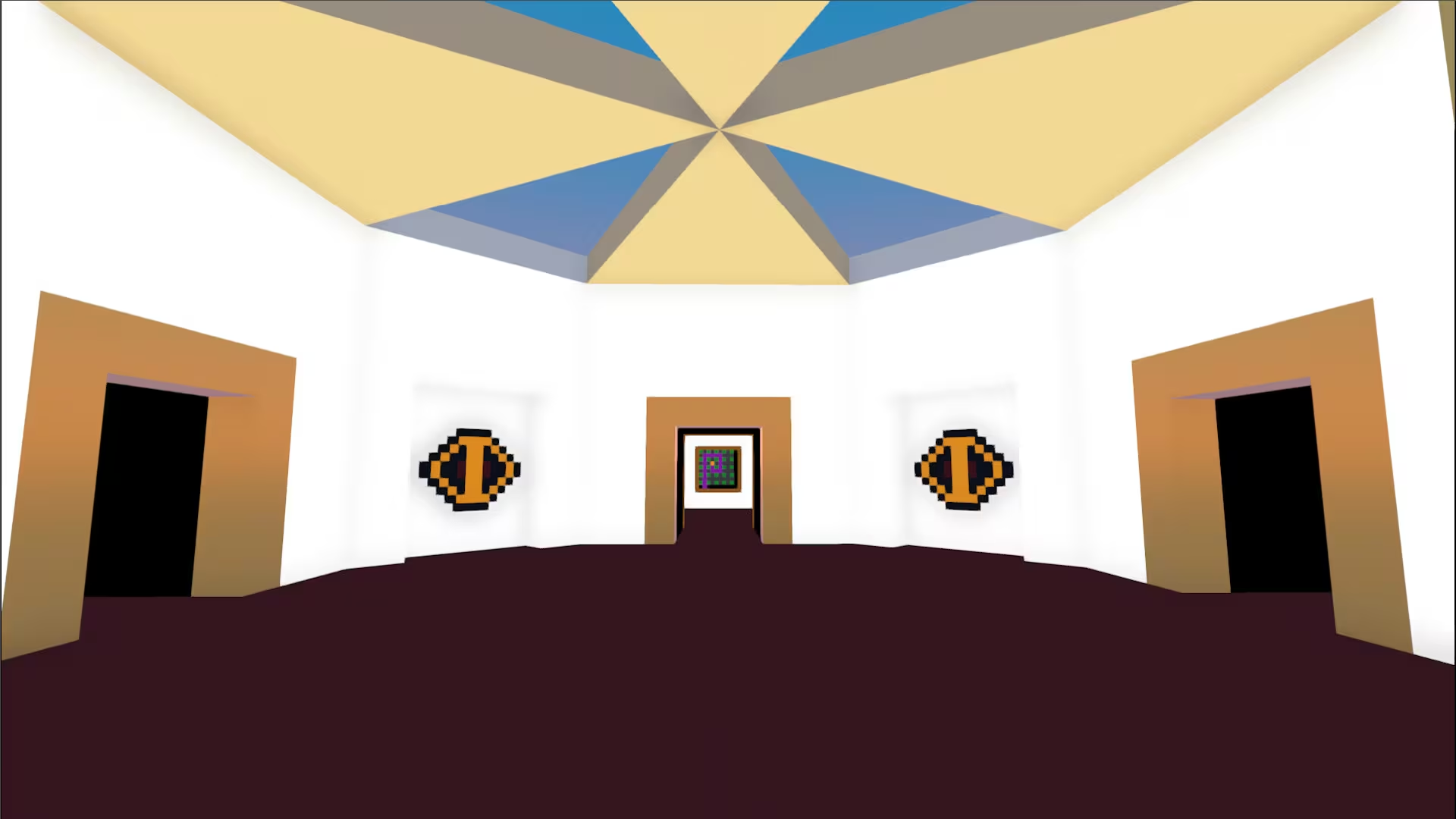
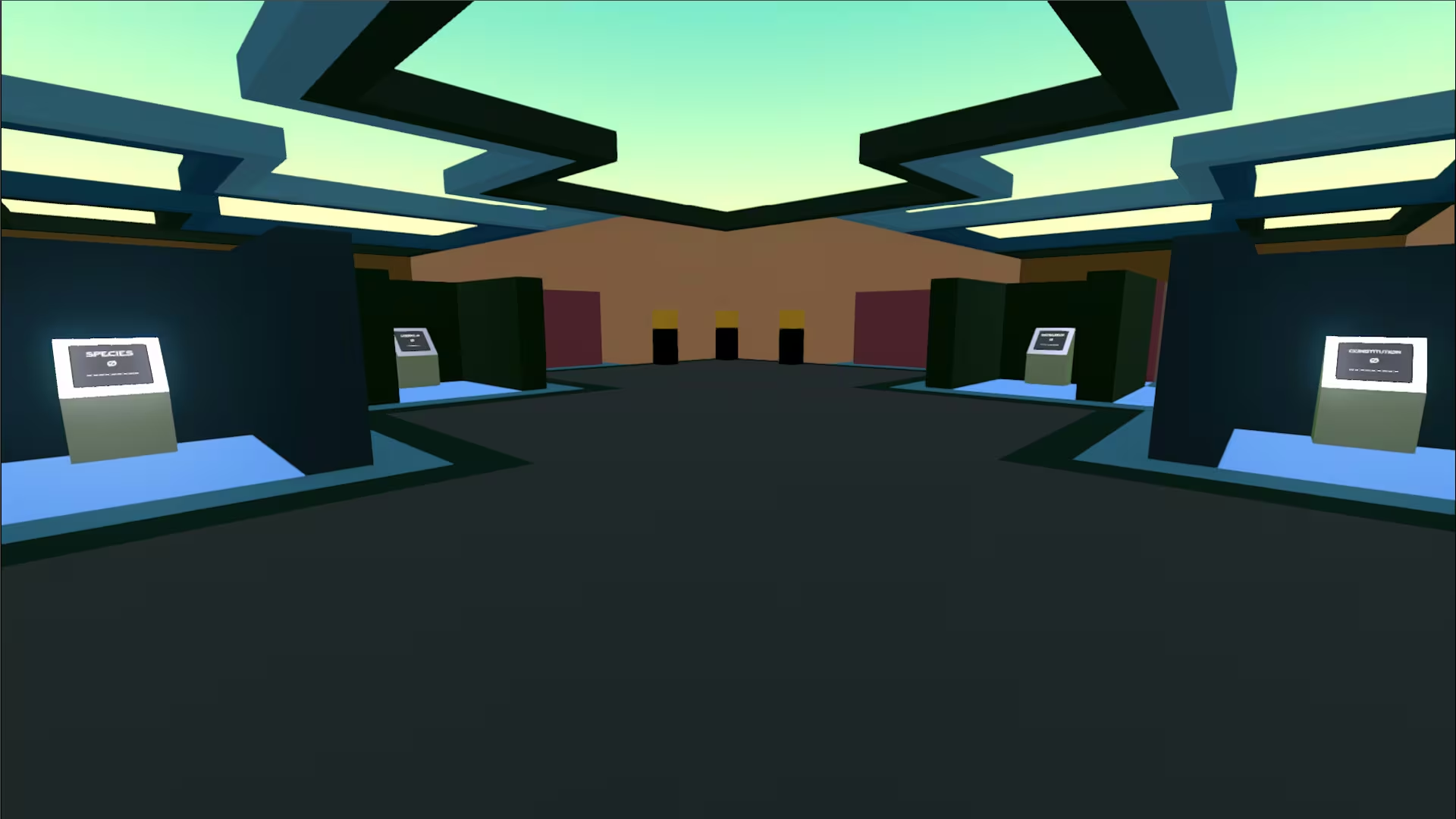
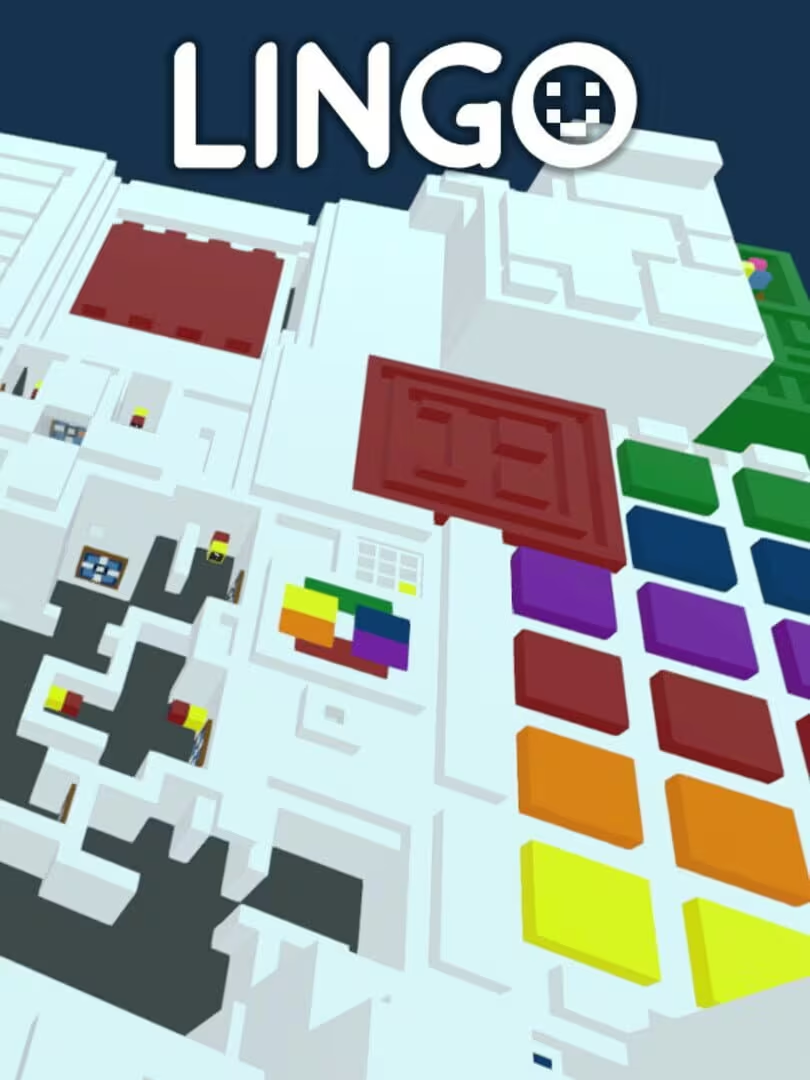
Lingo 2 Thumbnail

Lingo 2 similar games & best alternatives

Lingo 2

PC (Microsoft Windows) • 2025

Related articles

Quick resume

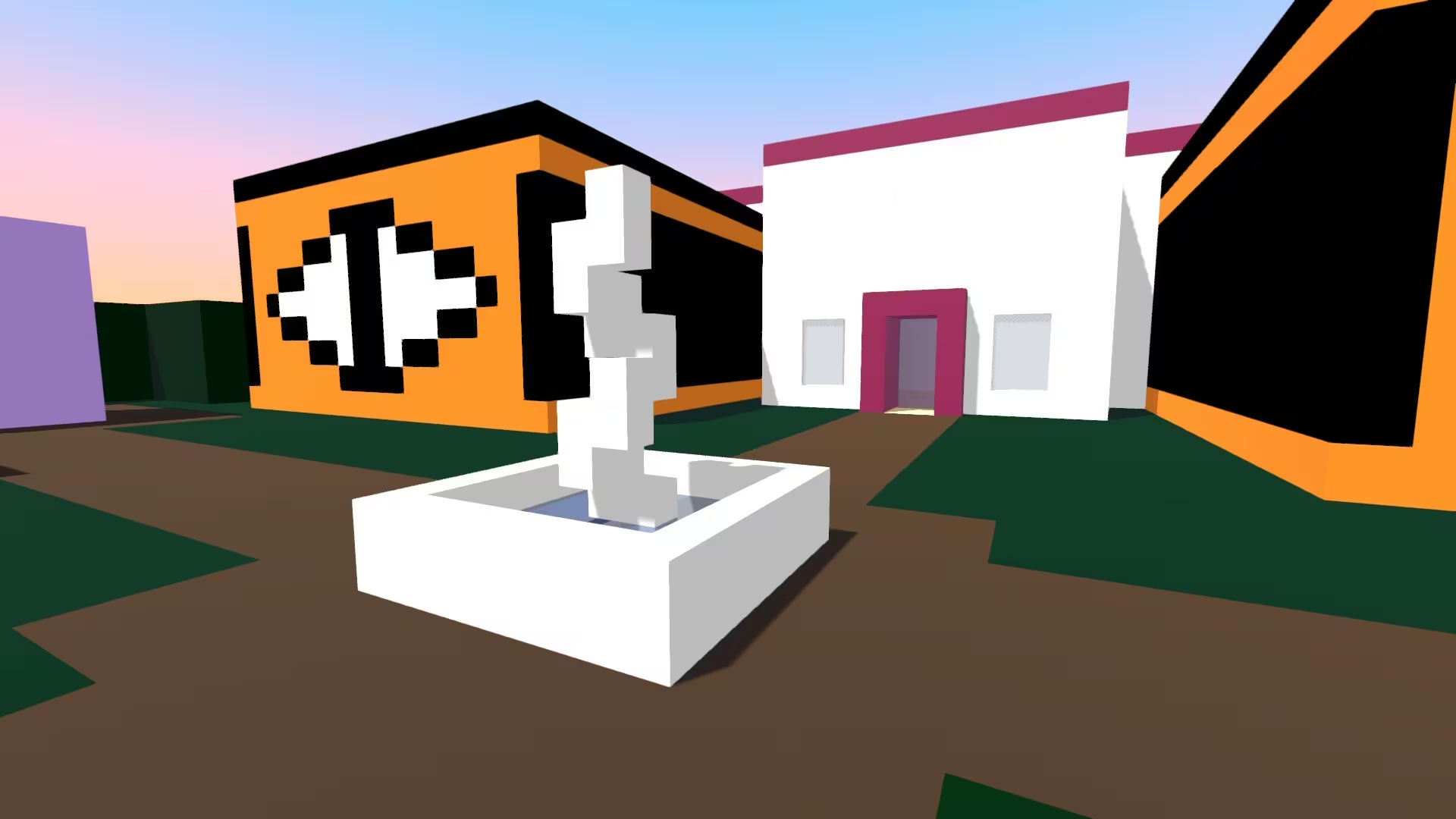
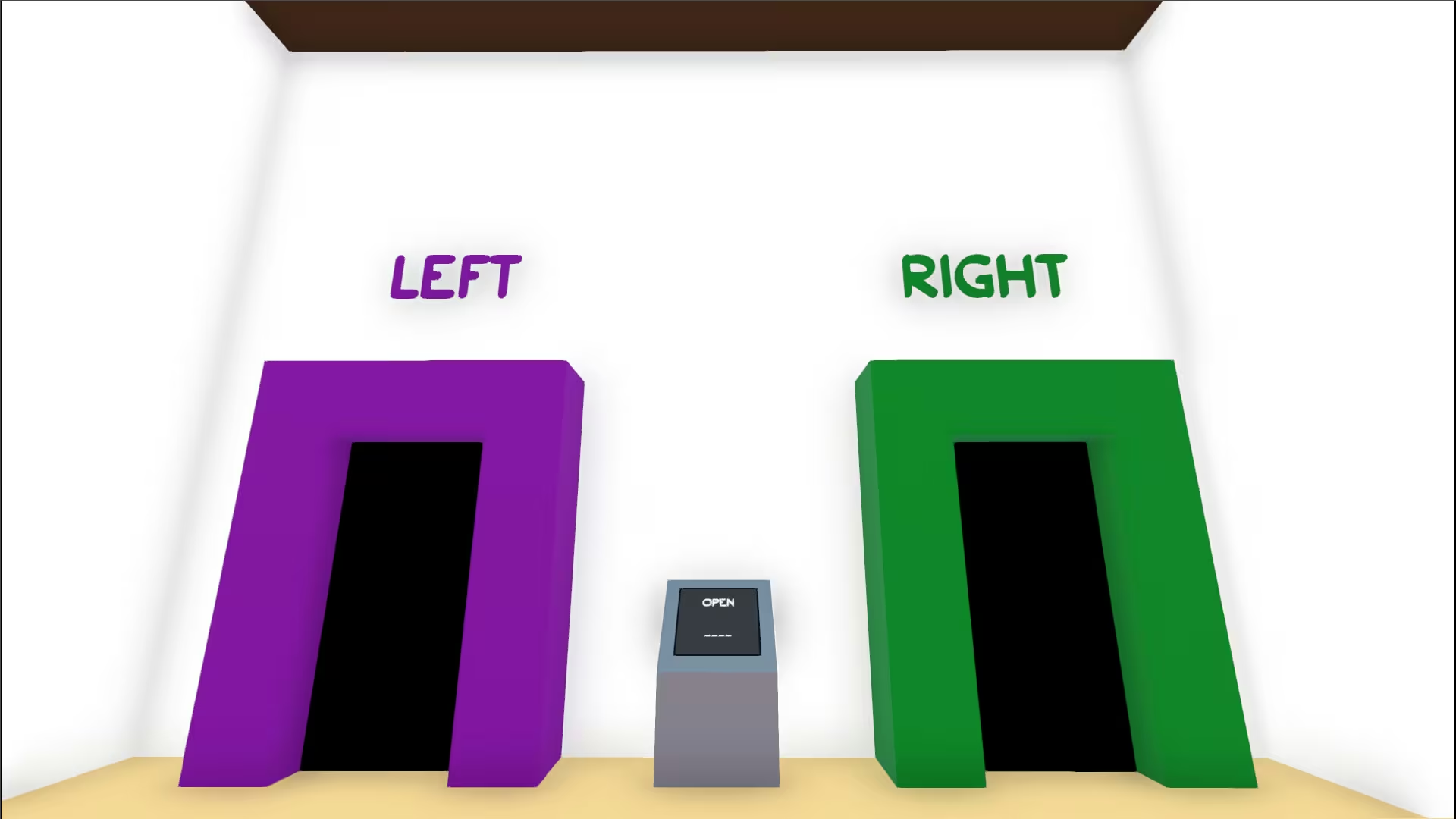
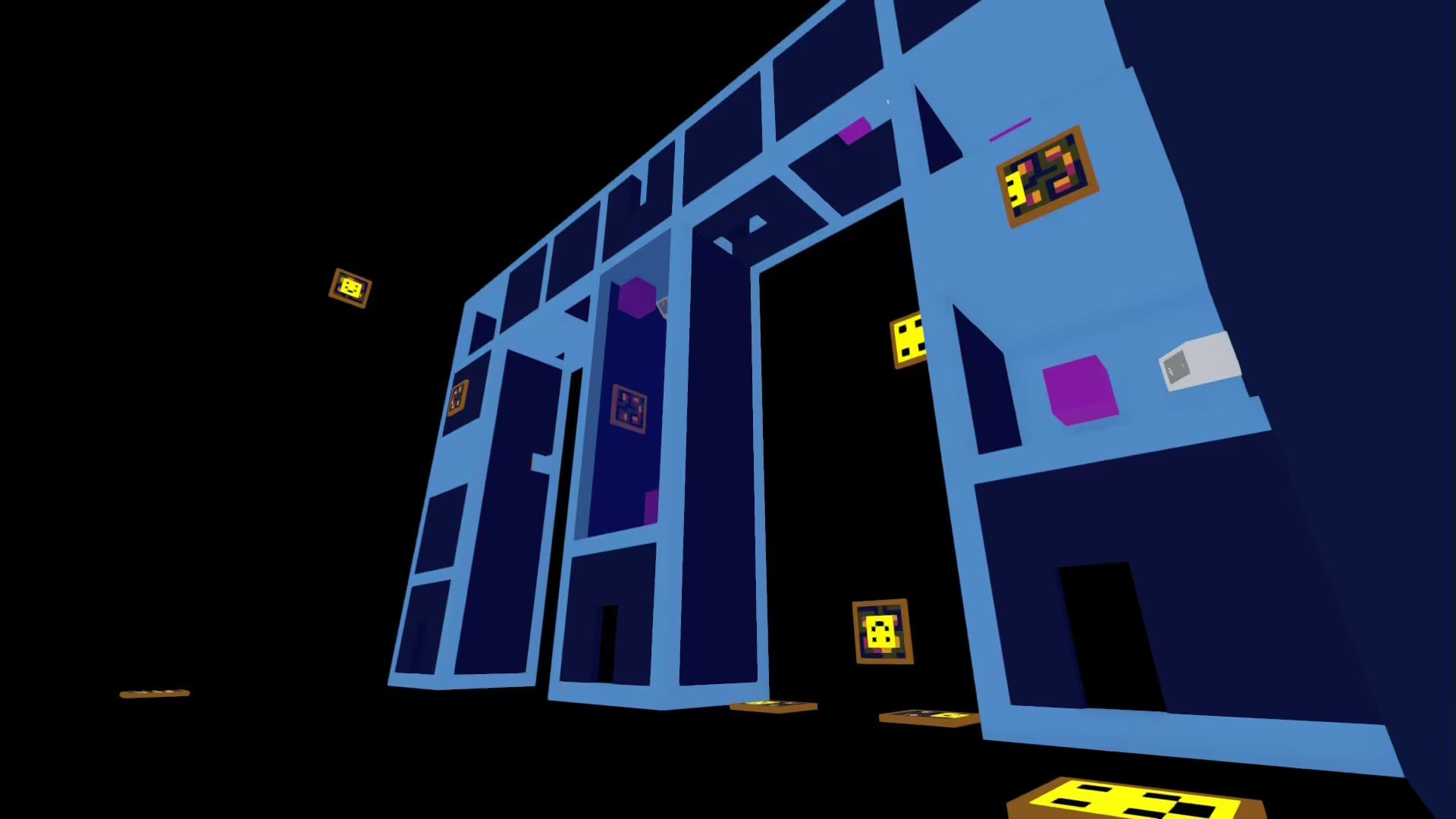
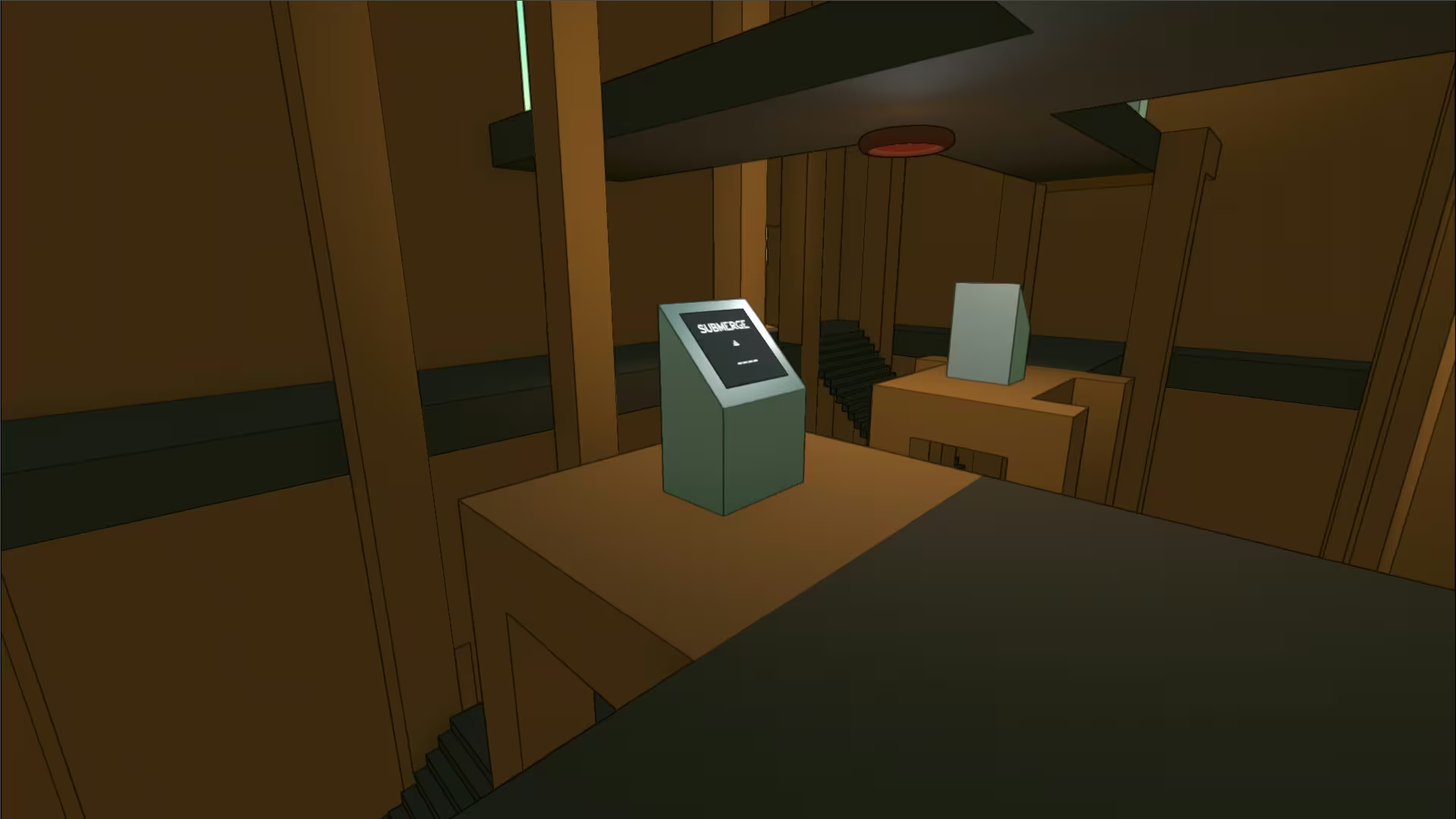
Lingo 2 blends word puzzles and impossible geometry, with brand new puzzle mechanics and a large, colorful world to discover. Welcome back!

Global score

93/100

Genres

Adventure, Indie, Puzzle

Similar games

    Pros

    • Deep and challenging puzzles
    • Large interconnected world
    • Engaging rule discovery
    • Strong sense of progression
    • Active and helpful community

    Cons

    • Navigation can be confusing
    • Some puzzles feel ambiguous
    • Minimal sensory and narrative elements
    • Potential for frustration in backtracking
    • Not suitable for casual or short play sessions

    Analysis

    Less representative of its motivational profile, with noticeable differences. Motivations that often define this kind of title include Fantasy, Violence, Story, Thrill. Here, the score leans higher than usual among comparable games on Cooperation, Exploration, Fantasy.

    How to use the graph
    Similar games map

    Each dot is a game. They are arranged from the same motivation profile as in the “Motivations” section below. Closer dots usually mean more similar reasons to play (exploration, competition, relaxation, etc.)—not that one game is “better” than another.

    • Larger dot with a light outline: the game you are viewing.
    • Colour: groups of games with comparable motivation patterns (statistical clusters).
    • Hover a dot to see the game name; click to open its page.
    • Scroll or double-click the chart to zoom out and see more games.

    Why don’t the axes read like a score? This view uses t-SNE: it only keeps who is close to whom. The scales are not “good to bad” or hours played—they separate groups on the map. Read distance between dots, not the axis numbers.

    Motivations

    • Autonomy
      4

      "Players have freedom to explore the large, non-linear world and choose their own path and puzzle approach, though some progression gating exists via letter collection."

    • Competence
      5

      "The game offers challenging puzzles requiring skillful rule discovery, lateral thinking, and problem solving with frequent feedback and rewarding 'aha' moments."

    • Competition
      -4

      "Focus is on personal puzzle solving and exploration without competitive or ranked elements."

    • Continuation
      5

      "Players report long play sessions, habitual engagement, and a strong desire to keep uncovering secrets and progressing."

    • Cooperation
      2

      "While primarily a single-player experience, many players enjoy discussing puzzles and sharing hints with friends or community."

    • Creativity
      4

      "Players experiment with symbolic mechanics and combine puzzle rules creatively; modding community expected to expand creative possibilities."

    • Domination
      -5

      "Interactions are collaborative or solitary; no evidence of exerting control or superiority over others."

    • Escapism
      4

      "Players use the game as a mental challenge and immersive distraction, often describing it as absorbing and mind-bending."

    • Expectation
      -4

      "Engagement is driven by intrinsic motivation, curiosity, and personal desire to solve puzzles rather than obligation."

    • Experimenting
      5

      "The game encourages trying new puzzle solutions, exploring mechanics, and testing hypotheses continuously."

    • Exploration
      5

      "Exploration is a core element, with large interconnected areas, hidden secrets, and backtracking to previously inaccessible zones."

    • Expression
      -3

      "Minimal character or environment customization; focus is on puzzle solving rather than self-expression."

    • Fantasy
      2

      "The game features surreal, non-Euclidean spaces and abstract puzzles, providing an imaginative experience beyond realistic scenarios."

    • Fellowship
      1

      "Community interaction occurs mainly through sharing hints and theories, but gameplay is mostly solo."

    • Growth
      5

      "Strong emphasis on learning new rules, improving puzzle-solving skills, and personal development through discovery."

    • Health
      -5

      "Sedentary gameplay with no physical activity elements."

    • Idle
      -4

      "Requires focused attention and continuous engagement; not suited for casual or background play."

    • Intimacy
      -4

      "Limited social interaction; connections are surface-level via community discussions rather than close relationships."

    • Leadership
      -5

      "No leadership or authoritative roles; players act independently or collaboratively without hierarchy."

    • Progression
      5

      "Progression through collecting letters, unlocking new areas, and completing puzzles is a key motivator."

    • Relaxation
      2

      "While mentally challenging, the game offers moments of flow and satisfaction, balancing tension with reward."

    • Sensation
      1

      "Minimal sensory stimulation; visuals are simple and functional, music is ambient but not highly stimulating."

    • Status
      -4

      "Achievements and recognition are personal; no social status or popularity mechanisms."

    • Story
      1

      "Narrative is minimal or abstract; focus is on puzzle and world discovery rather than traditional story."

    • Strategy
      5

      "High mental challenge requiring logic, reasoning, planning, and strategic problem solving."

    • Thrill
      2

      "Some suspense and excitement from solving difficult puzzles and uncovering secrets, but low physical risk."

    • Value
      5

      "Players perceive excellent value for time and money due to extensive content and replayability."

    • Violence
      -5

      "No combat or destructive elements; gameplay is constructive and intellectual."

    • Survival
      -5

      "No survival or threat avoidance mechanics; stable and safe gameplay environment."

    Last update: 29/04/2026