Psycholonials Thumbnail

Psycholonials similar games & best alternatives

Psycholonials

PC (Microsoft Windows), iOS, Android • 2021

Related articles

Quick resume

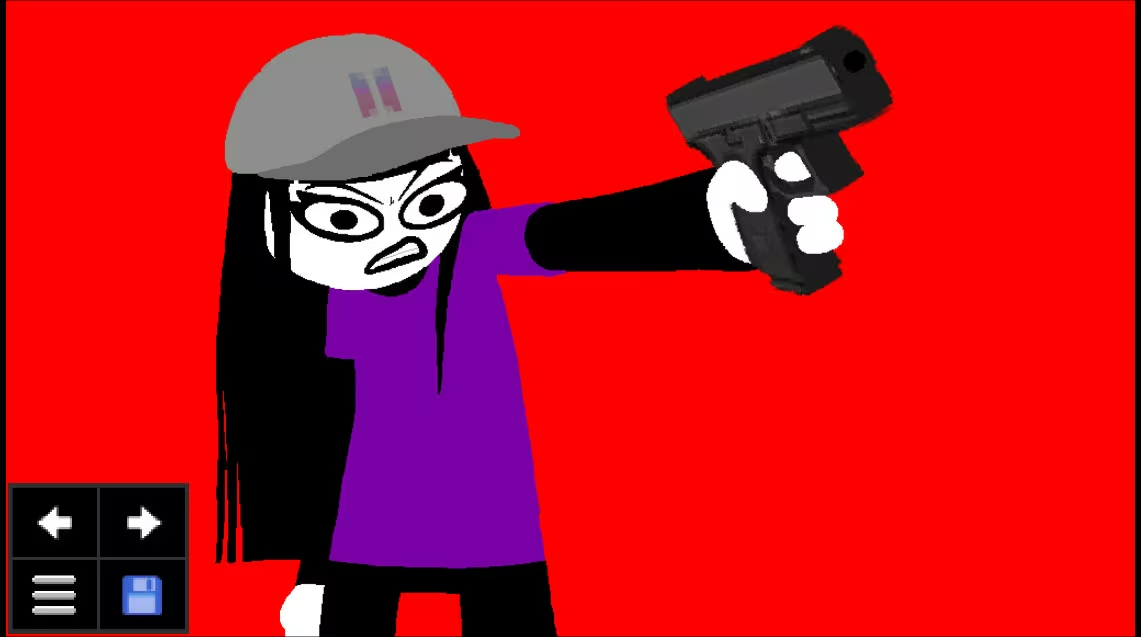
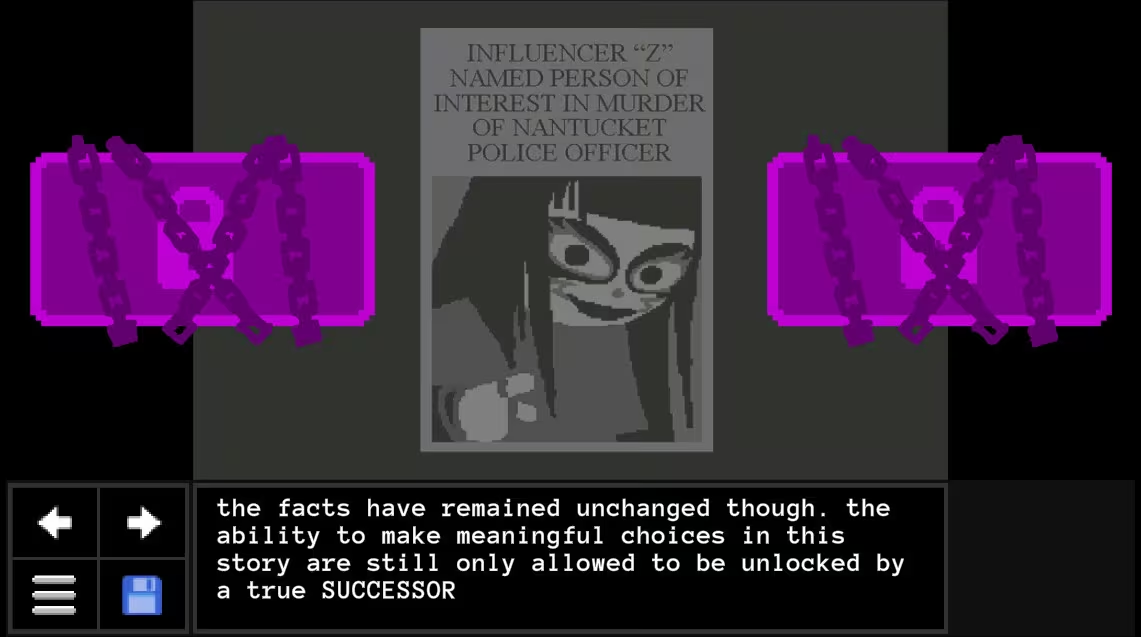
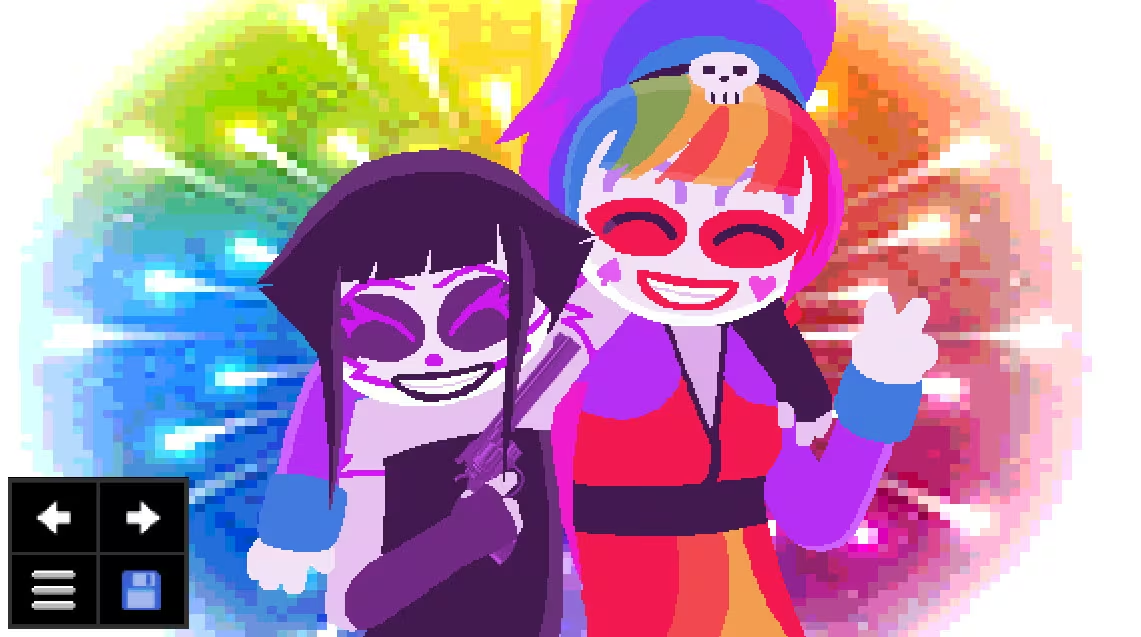
While in communication with supernatural forces, two influencers launch a daring new social media brand.

Global score

90/100

Genres

Adventure, Casual, Indie, Free To Play, Visual Novel

Similar games

    Pros

    • Unique and compelling narrative
    • Strong character development
    • Engaging music and art style
    • Thought-provoking social commentary
    • Affordable price

    Cons

    • Limited interactivity
    • Linear story progression
    • Art style may be off-putting to some
    • Emotionally intense and challenging
    • Not suitable for players seeking traditional gameplay

    Analysis

    Less representative of its motivational profile, with noticeable differences. Motivations that often define this kind of title include Expression, Fellowship, Cooperation, Competition. Here, the score leans higher than usual among comparable games on Intimacy. It leans lower than usual among comparable games on Strategy, Exploration.

    How to use the graph
    Similar games map

    Each dot is a game. They are arranged from the same motivation profile as in the “Motivations” section below. Closer dots usually mean more similar reasons to play (exploration, competition, relaxation, etc.)—not that one game is “better” than another.

    • Larger dot with a light outline: the game you are viewing.
    • Colour: groups of games with comparable motivation patterns (statistical clusters).
    • Hover a dot to see the game name; click to open its page.
    • Scroll or double-click the chart to zoom out and see more games.

    Why don’t the axes read like a score? This view uses t-SNE: it only keeps who is close to whom. The scales are not “good to bad” or hours played—they separate groups on the map. Read distance between dots, not the axis numbers.

    Motivations

    • Autonomy
      4

      "Players experience a narrative-driven visual novel with limited interactivity but strong personal agency in interpreting the story and characters."

    • Competence
      2

      "The game involves reading and understanding complex themes rather than skill-based challenges; some players appreciate the narrative mastery."

    • Competition
      -5

      "No competitive elements; focus is on personal experience and reflection without comparison to others."

    • Continuation
      3

      "Players engage over multiple chapters and sessions, often reflecting deeply and returning to the story over time."

    • Cooperation
      -5

      "Single-player experience focused on individual narrative engagement without multiplayer or cooperative features."

    • Creativity
      3

      "Creative storytelling, unique art style, and music contribute to a distinctive experience, though player creation is limited."

    • Domination
      -5

      "No elements of exerting control over others; interactions are narrative and personal."

    • Escapism
      2

      "While the game is immersive and engaging, it confronts real-world issues and can be emotionally challenging rather than purely escapist."

    • Expectation
      -3

      "Players engage out of personal interest and intrinsic motivation rather than obligation or external pressure."

    • Experimenting
      -2

      "The narrative is mostly linear with limited player choices; exploration is more intellectual than mechanical."

    • Exploration
      -3

      "Players navigate a fixed story environment with minimal discovery of new areas or secrets."

    • Expression
      -4

      "No character customization or personal expression; presentation is fixed by the author."

    • Fantasy
      2

      "Contains imaginative and surreal elements blended with contemporary social commentary."

    • Fellowship
      -4

      "Experience is solitary with minimal social interaction or community engagement within the game."

    • Growth
      4

      "Players engage in reflection and intellectual growth through complex themes and character development."

    • Health
      -5

      "Sedentary visual novel experience with no physical activity components."

    • Idle
      -3

      "Requires focused reading and attention; not designed for background or casual play."

    • Intimacy
      1

      "Emotional connection to characters and themes is present but social intimacy is limited."

    • Leadership
      -5

      "No leadership or management roles; narrative is author-driven."

    • Progression
      3

      "Narrative progression through chapters and story development, but no item or upgrade accumulation."

    • Relaxation
      -1

      "The story can be emotionally intense and challenging rather than purely relaxing."

    • Sensation
      2

      "Music and visuals provide sensory stimulation, though art style is intentionally rough and stylized."

    • Status
      -4

      "No social status or recognition mechanics; experience is personal and private."

    • Story
      5

      "Strong narrative immersion with complex characters, themes, and plot development."

    • Strategy
      -4

      "Minimal strategic or problem-solving gameplay; focus is on narrative consumption."

    • Thrill
      1

      "Some suspense and emotional tension in the story, but no gameplay risk or excitement."

    • Value
      4

      "Players perceive good value for time and money given the quality and depth of the narrative."

    • Violence
      2

      "Contains themes of violence and revolution within the story, though not interactive combat."

    • Survival
      1

      "Story involves survival themes and societal collapse, but no survival gameplay mechanics."

    Last update: 29/04/2026