The Impossible Game Thumbnail

The Impossible Game similar games & best alternatives
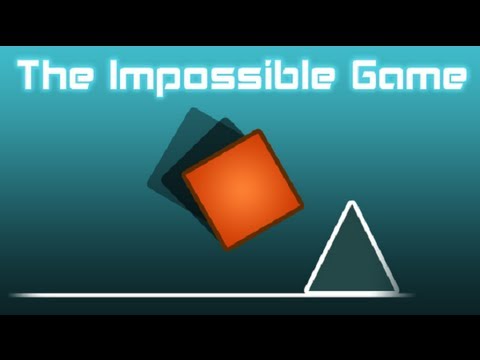
The Impossible Game

PC (Microsoft Windows), Mac, iOS, Windows Phone, Xbox 360, Android, PlayStation Vita, PlayStation 3, PlayStation Portable, Linux • 2014

Related articles

Quick resume

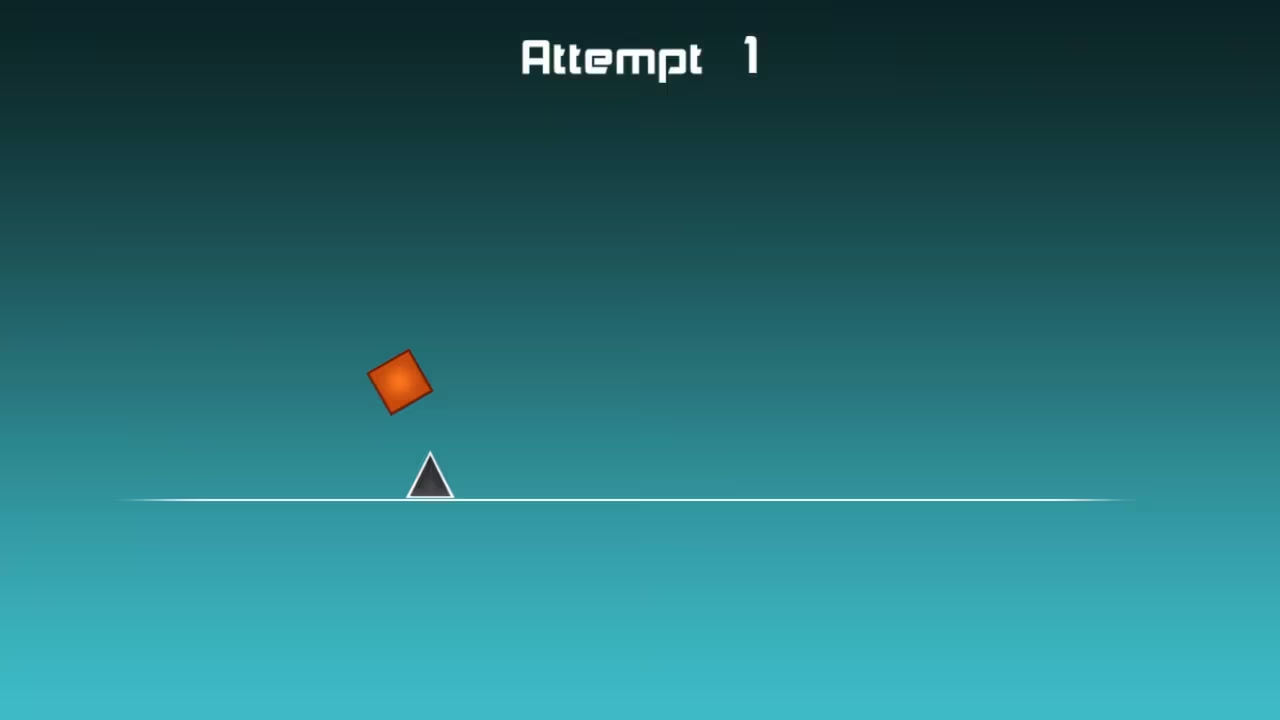
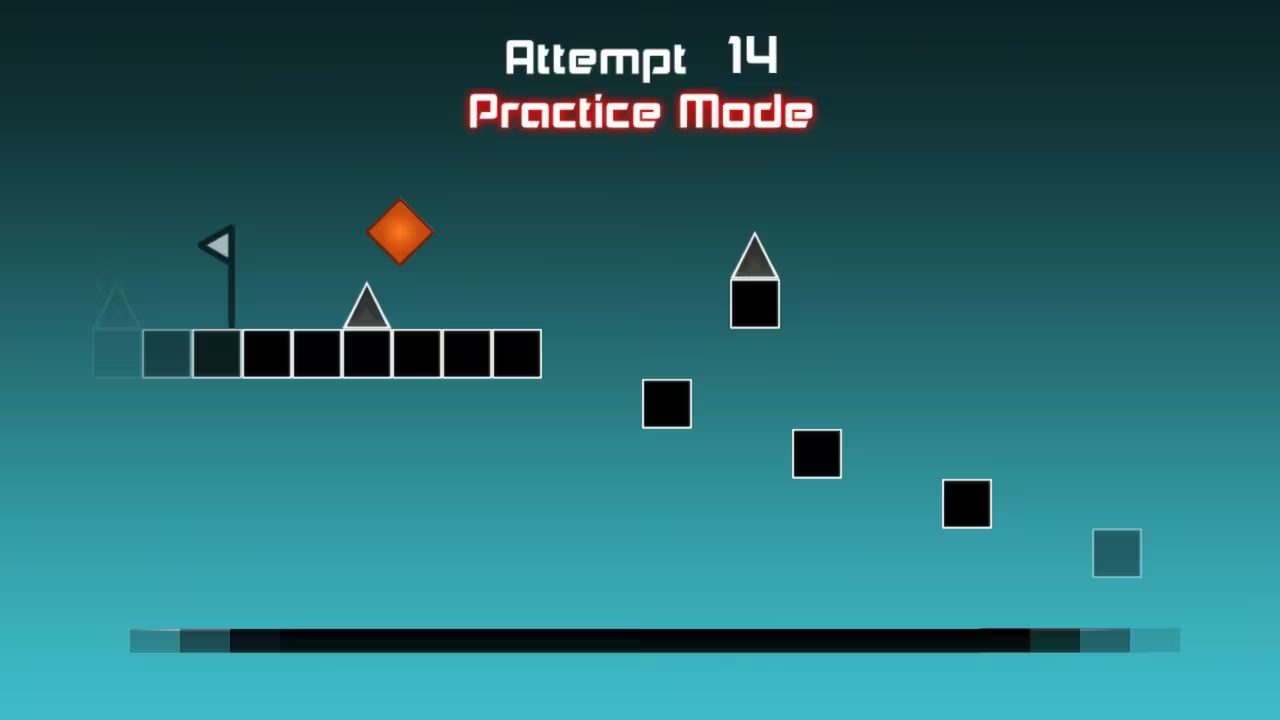
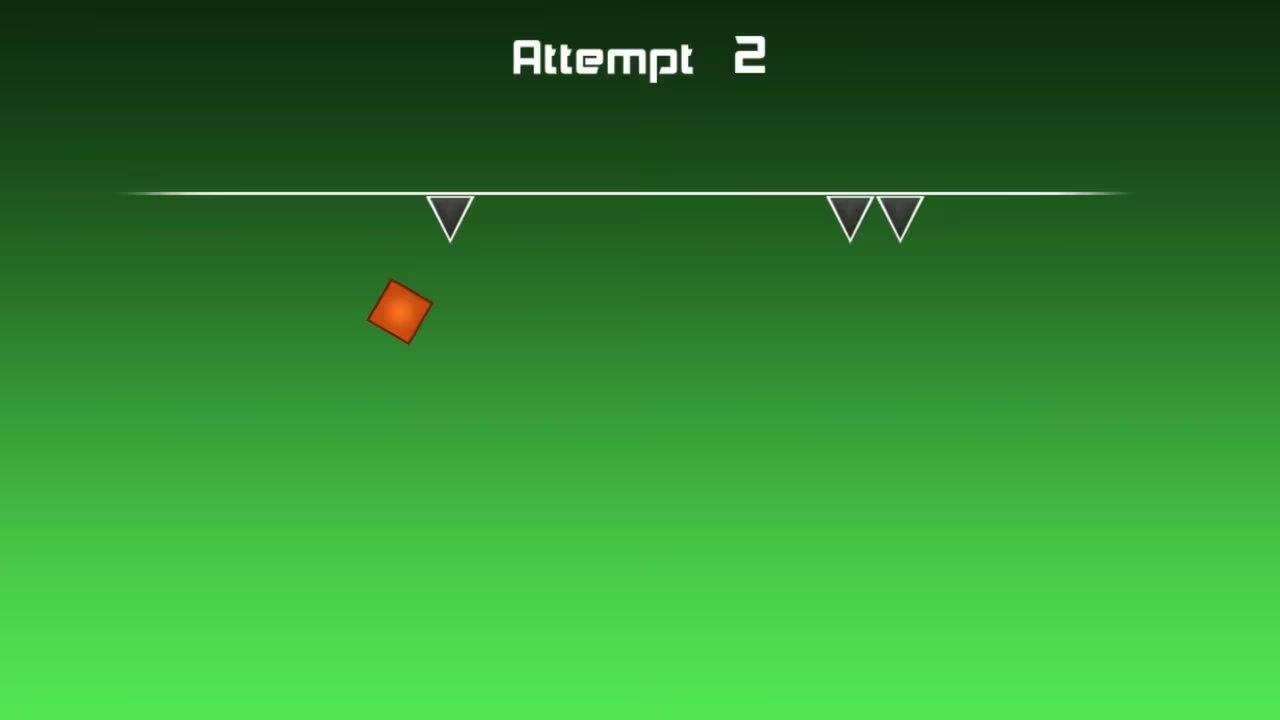
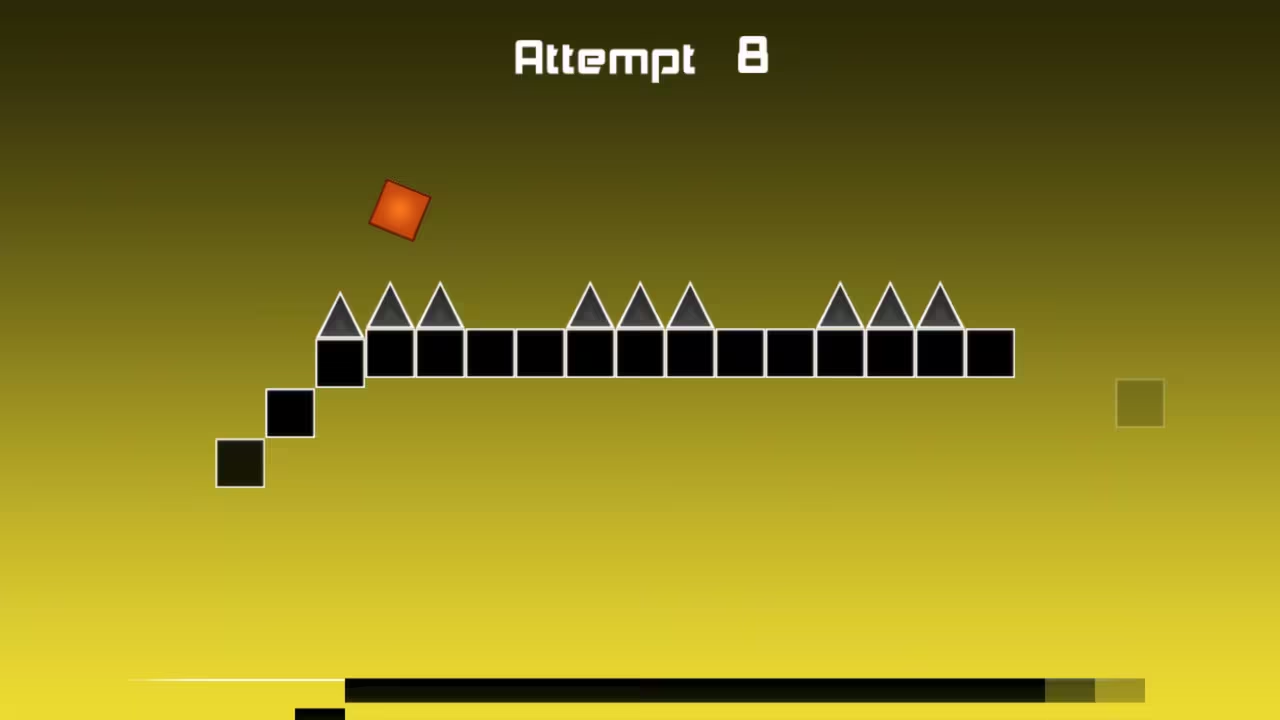
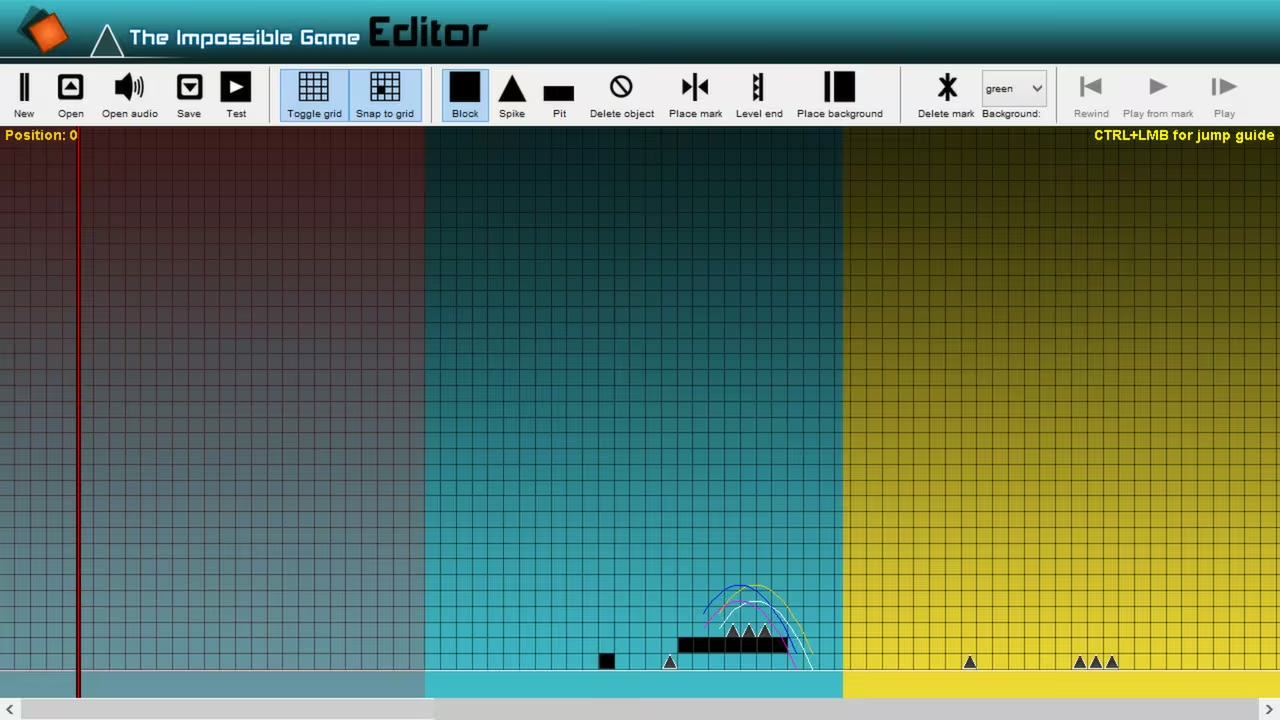
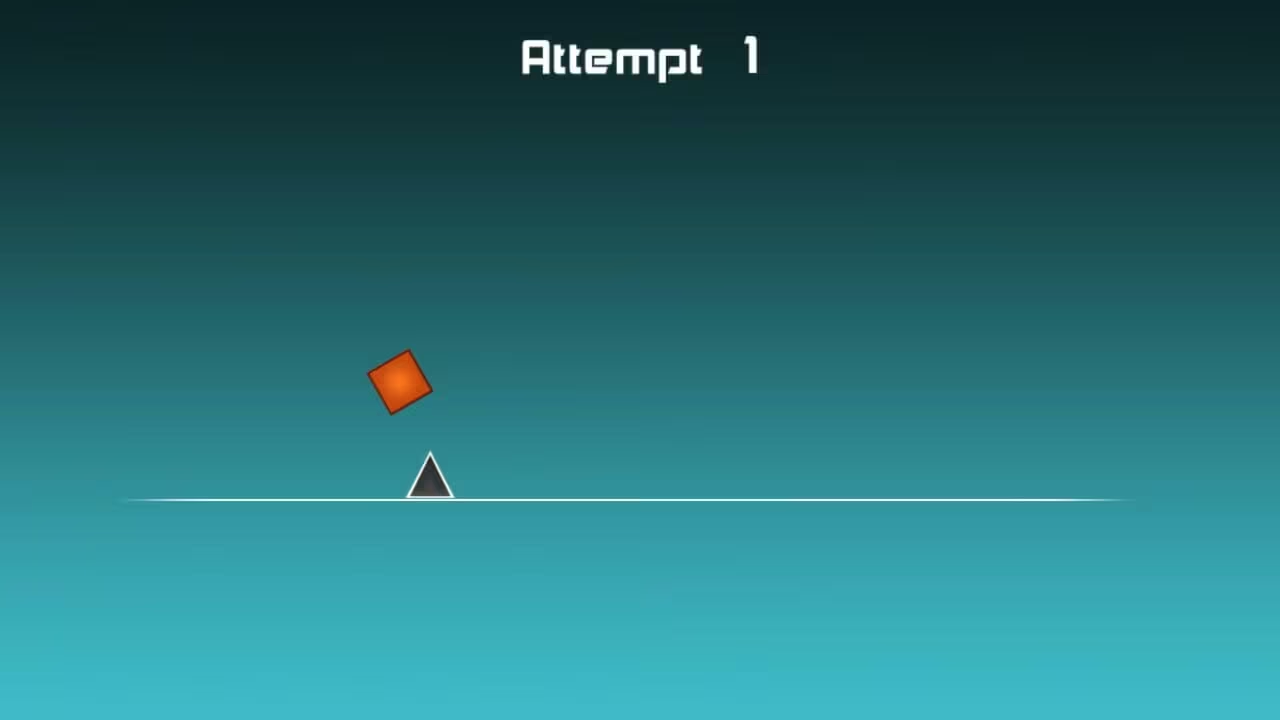
The super-addictive and very, very hard platform game finally arrives on Steam - it's quite possibly the world's hardest game! As well as five classic Impossible Game levels, this desktop version includes an EXCLUSIVE new Level Editor.

Global score

84/100

Genres

Indie, Music, Arcade, Platform

Similar games

    Pros

    • Challenging and skill-based gameplay
    • Excellent and motivating soundtrack
    • Level editor for creative content
    • Addictive and rewarding progression
    • Low system requirements

    Cons

    • Limited number of official levels
    • Some bugs and crashes reported
    • Can cause frustration and rage
    • Minimal narrative or social features
    • Level editor lacks workshop integration

    Analysis

    Less representative of its motivational profile, with noticeable differences. Motivations that often define this kind of title include Fantasy, Violence, Story, Thrill. Here, the score leans higher than usual among comparable games on Survival, Thrill. It leans lower than usual among comparable games on Relaxation.

    How to use the graph
    Similar games map

    Each dot is a game. They are arranged from the same motivation profile as in the “Motivations” section below. Closer dots usually mean more similar reasons to play (exploration, competition, relaxation, etc.)—not that one game is “better” than another.

    • Larger dot with a light outline: the game you are viewing.
    • Colour: groups of games with comparable motivation patterns (statistical clusters).
    • Hover a dot to see the game name; click to open its page.
    • Scroll or double-click the chart to zoom out and see more games.

    Why don’t the axes read like a score? This view uses t-SNE: it only keeps who is close to whom. The scales are not “good to bad” or hours played—they separate groups on the map. Read distance between dots, not the axis numbers.

    Motivations

    • Autonomy
      4

      "Players control timing of jumps precisely with a single button, allowing personal skill expression and decision making."

    • Competence
      5

      "High difficulty and skill-based gameplay requiring precise timing and reaction, with frequent player feedback through deaths and progress."

    • Competition
      -3

      "No explicit competitive modes or leaderboards mentioned; focus is on personal challenge and mastery."

    • Continuation
      4

      "Players report habitual replay, long sessions, and repeated attempts to master levels despite frustration."

    • Cooperation
      -5

      "Single-player experience with no cooperative elements."

    • Creativity
      3

      "Includes a level editor allowing players to create and share custom levels, fostering creative engagement."

    • Domination
      -5

      "No indications of exerting control or superiority over others; gameplay is individual and self-focused."

    • Escapism
      3

      "Players use the game as a challenging distraction and stress outlet, though some frustration is involved."

    • Expectation
      -4

      "Players engage voluntarily for fun and challenge, not due to obligation or pressure."

    • Experimenting
      2

      "Some experimentation with level editor and custom levels; gameplay itself is pattern memorization but with some novelty."

    • Exploration
      -4

      "Levels are fixed and memorized; no open exploration or discovery."

    • Expression
      2

      "Limited visual customization but creative expression through level creation."

    • Fantasy
      -4

      "Abstract, minimalistic graphics with no narrative or fictional immersion; realistic in terms of gameplay mechanics."

    • Fellowship
      -4

      "Minimal social interaction; community exists around level sharing but gameplay is solo."

    • Growth
      4

      "Players develop skills, muscle memory, and reaction times through repeated practice."

    • Health
      -5

      "Sedentary gameplay with no physical activity involved."

    • Idle
      -4

      "Requires focused attention and continuous engagement due to difficulty and precision."

    • Intimacy
      -5

      "No social or emotional relationship building described."

    • Leadership
      -5

      "No leadership or group management elements."

    • Progression
      3

      "Progression through levels and achievements; level editor adds content progression."

    • Relaxation
      -3

      "Game induces frustration and tension due to difficulty; some players find catharsis in overcoming challenges."

    • Sensation
      3

      "Engaging soundtrack and rhythmic gameplay provide sensory stimulation and emotional excitement."

    • Status
      -3

      "No visible social status or ranking systems; achievements exist but focus is personal."

    • Story
      -5

      "No narrative or story elements; gameplay is context-free and abstract."

    • Strategy
      2

      "Requires memorization and timing strategy, but primarily reflex-based rather than complex planning."

    • Thrill
      4

      "High tension and suspense from challenging jumps and risk of failure."

    • Value
      4

      "Players perceive good value for price due to challenge, music, and replayability."

    • Violence
      -5

      "No violent content; gameplay involves avoiding obstacles rather than destruction."

    • Survival
      4

      "Gameplay centers on avoiding failure and surviving through precise timing and obstacle navigation."

    Last update: 29/04/2026