Virtual Virtual Reality Thumbnail

Virtual Virtual Reality similar games & best alternatives
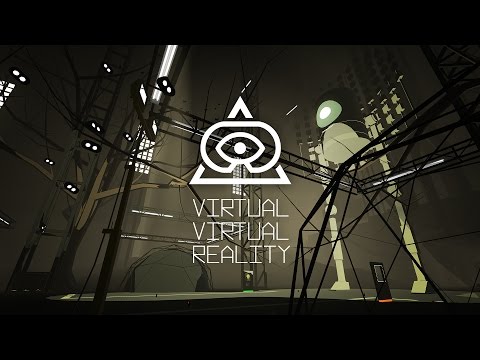
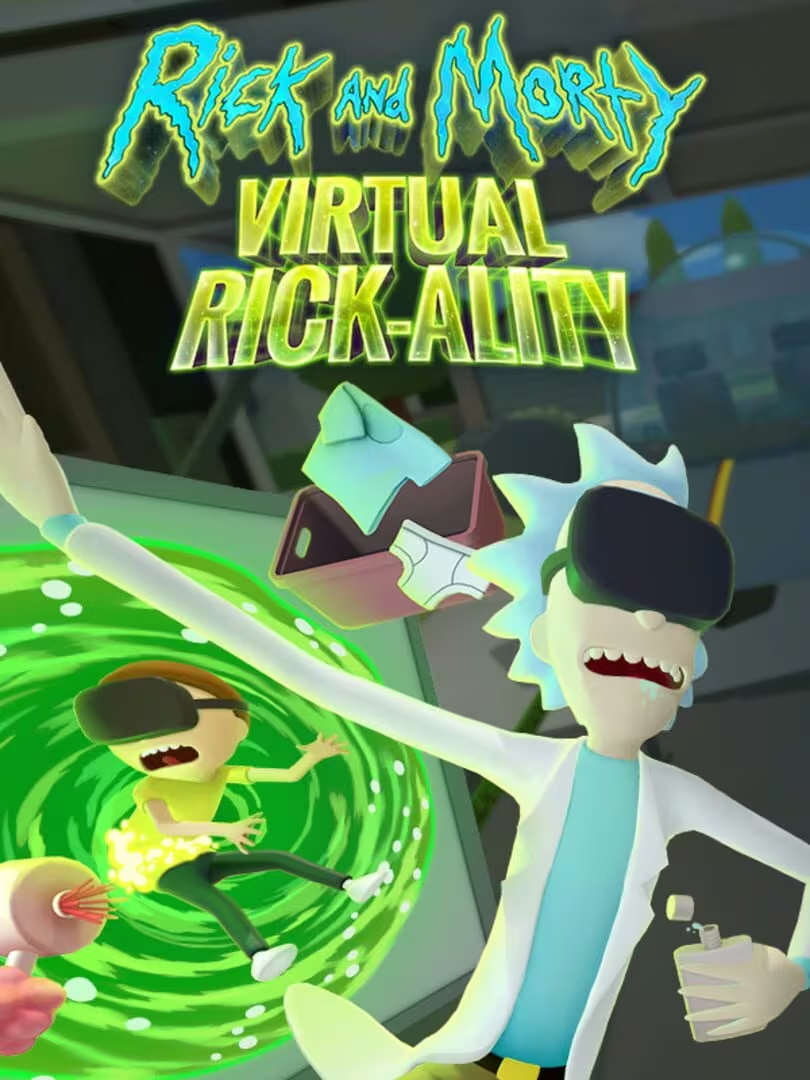
Virtual Virtual Reality

PC (Microsoft Windows), PlayStation VR, SteamVR, Oculus Quest, Android, Daydream, Oculus VR • 2018

Related articles

Quick resume

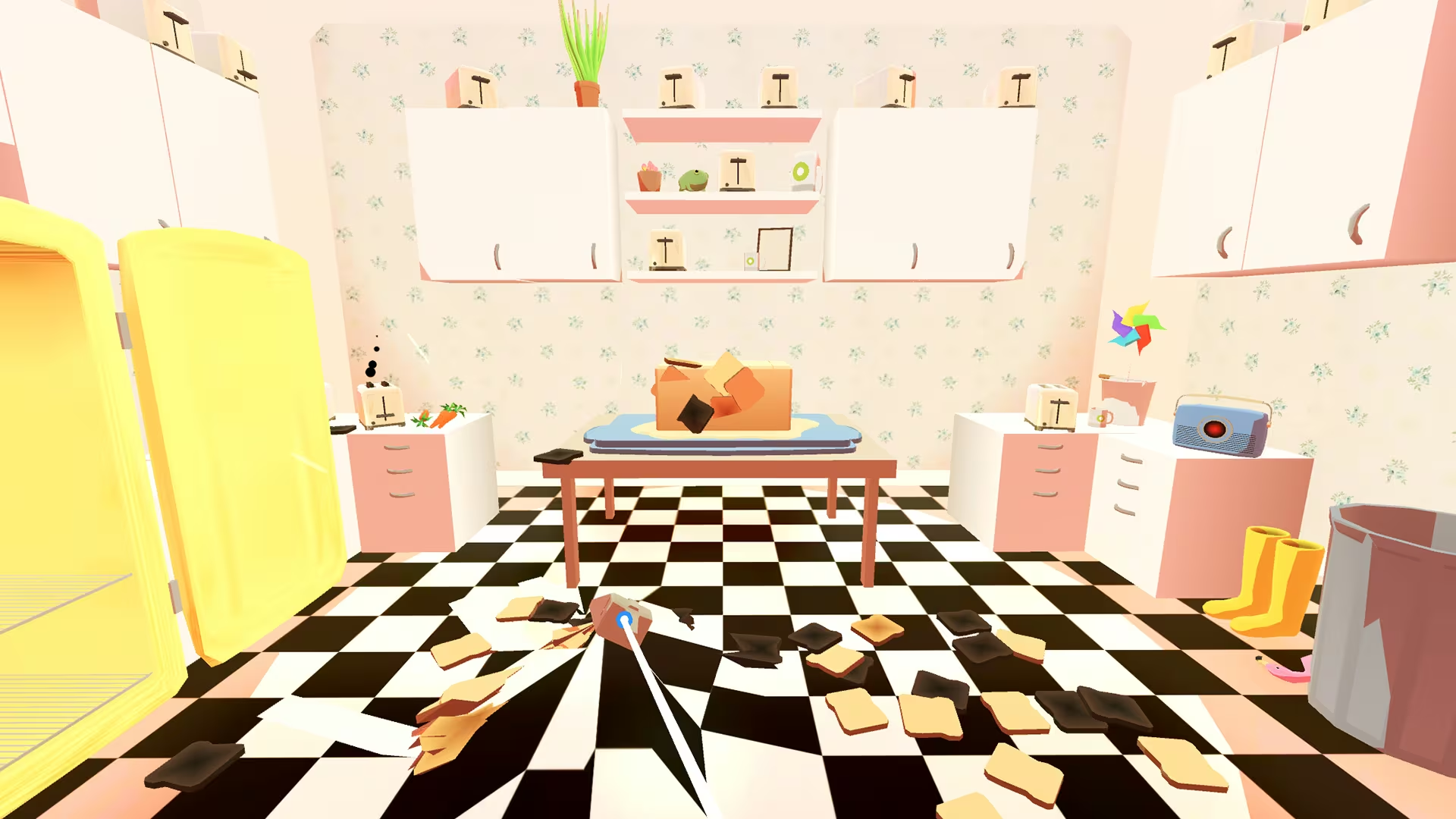
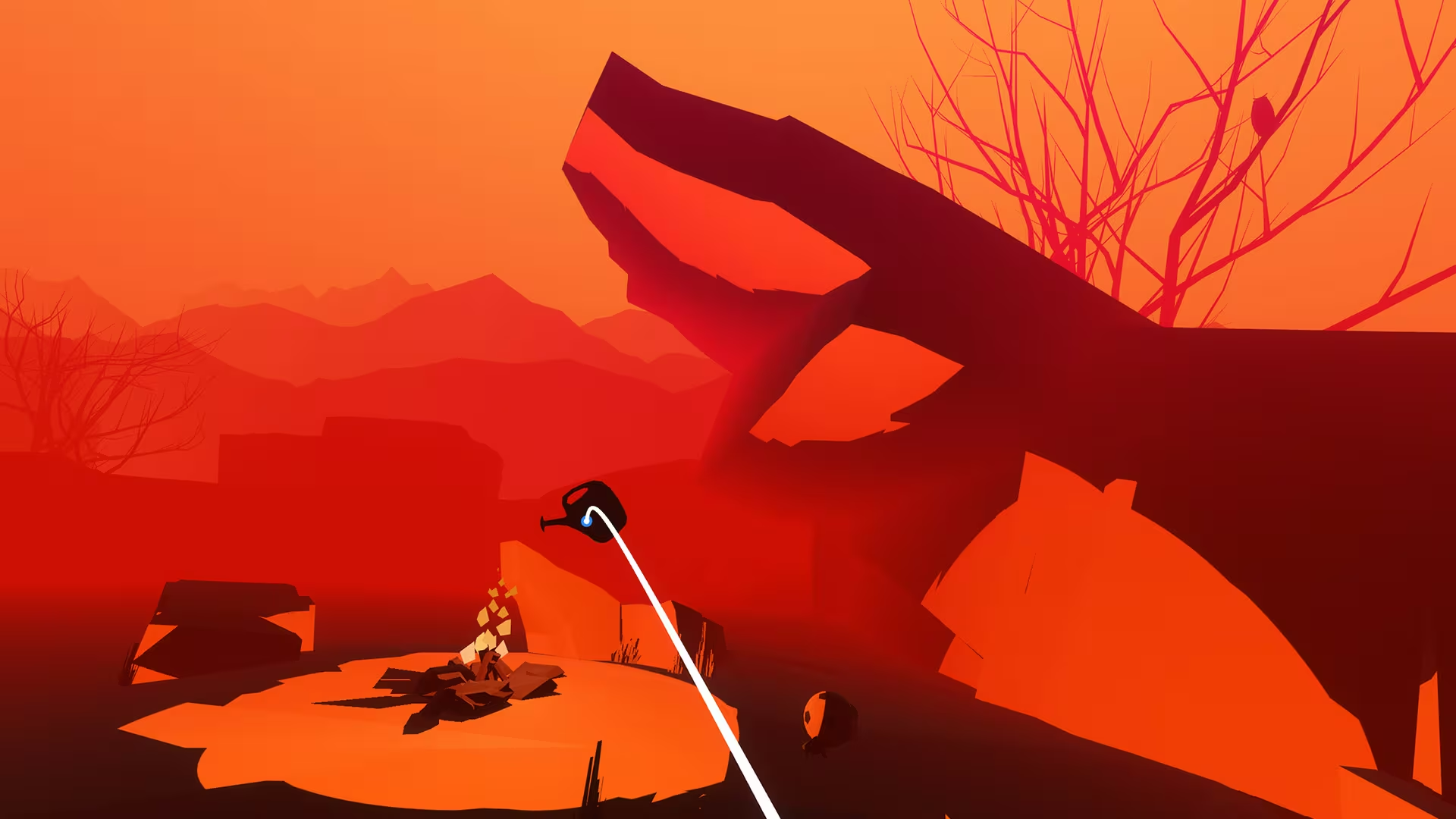
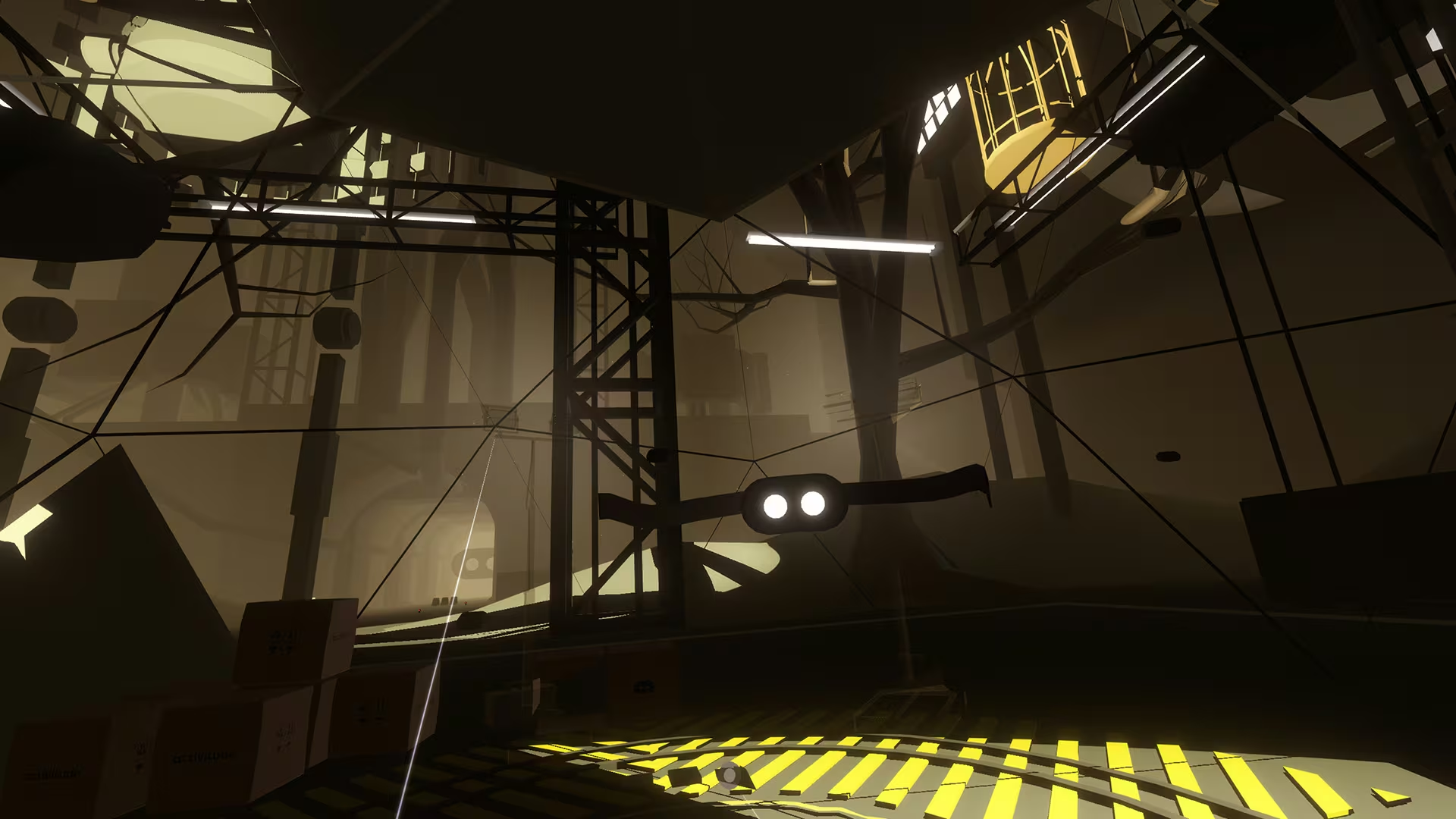
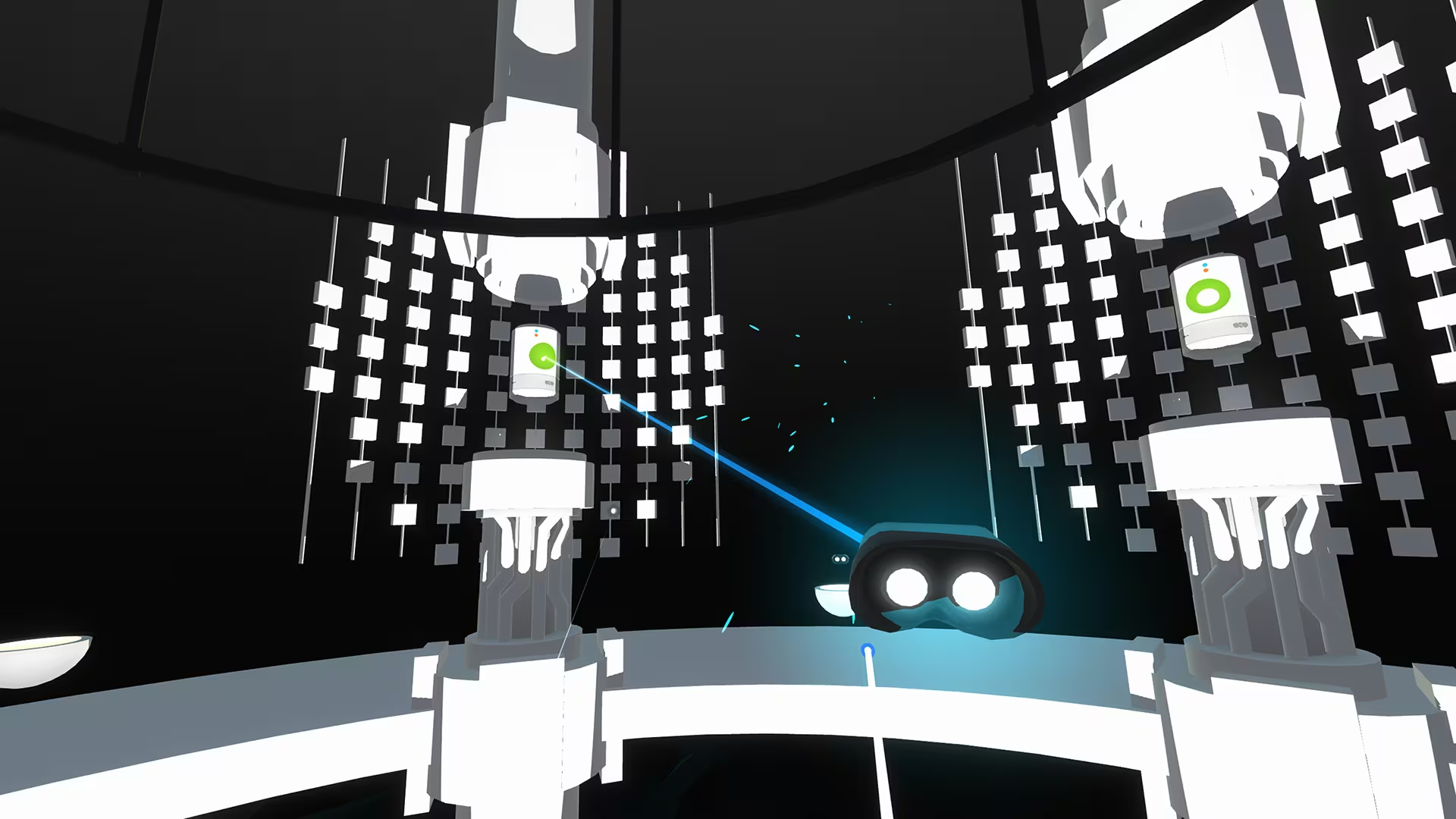
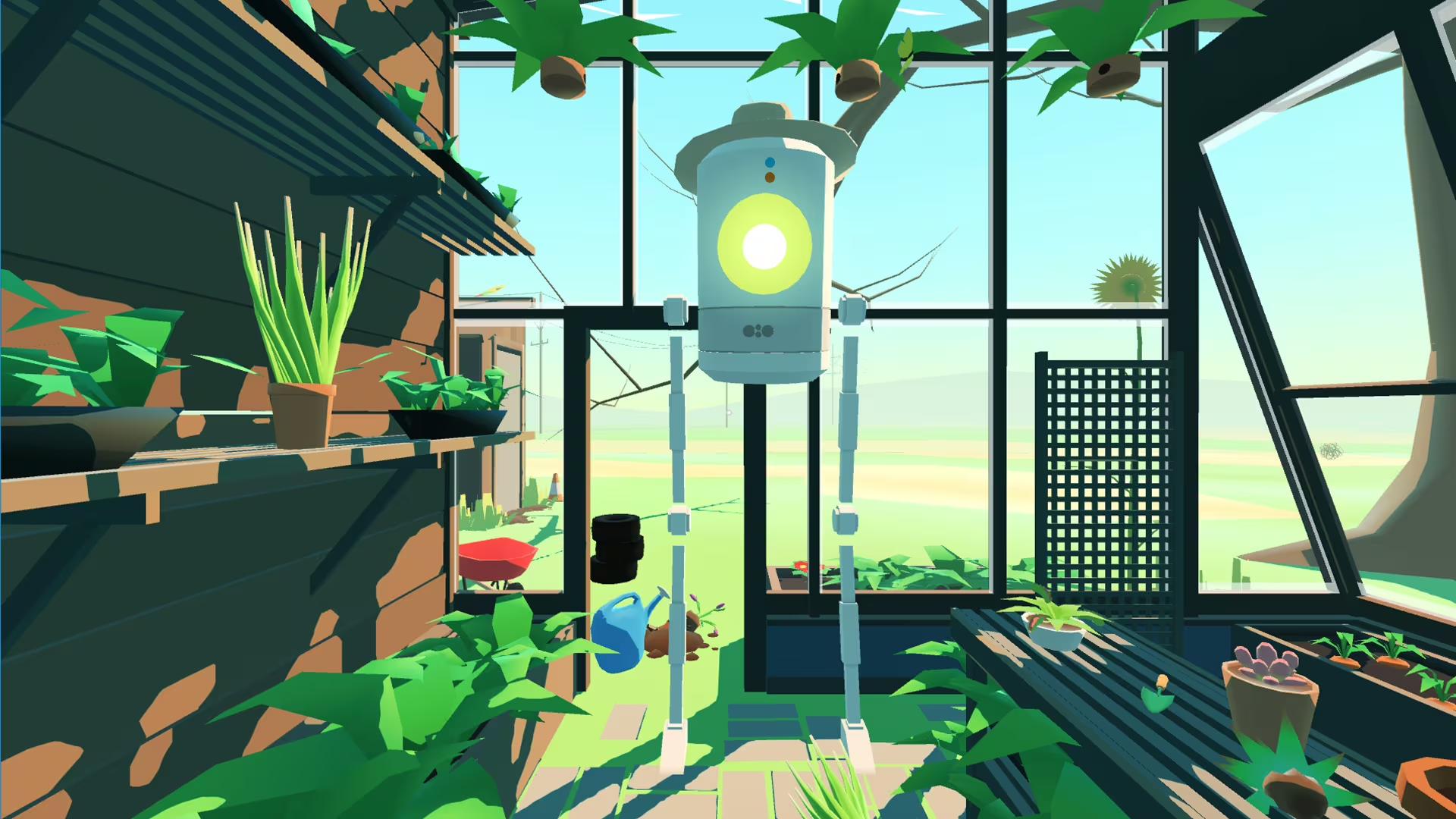
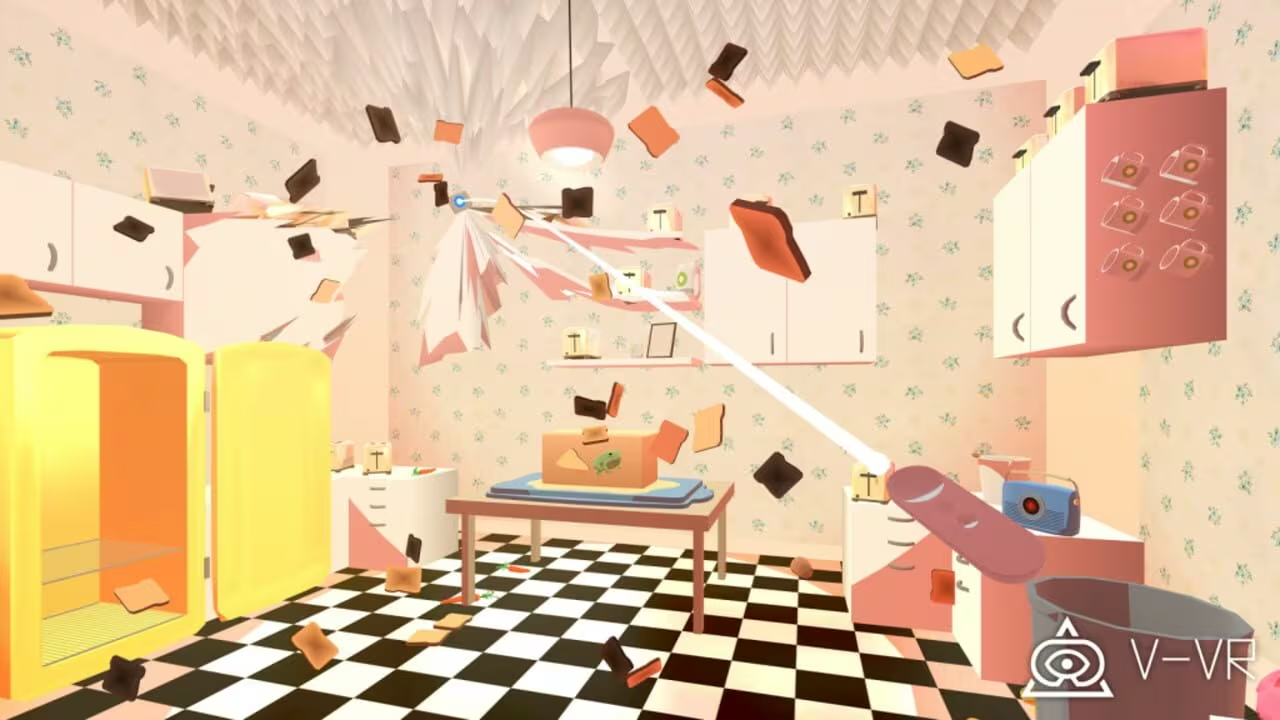
A game about VR, AI, and our collective sci-fi fever dreams. In a future where AI has transformed society, can humans still find purpose? Find out with Activitude, a service that lets humans aid AI clients in increasingly curious ways.

Global score

92/100

Genres

Adventure, Indie, Simulator

Similar games

    Pros

    • Unique and immersive vr narrative
    • Excellent voice acting and humor
    • Innovative vr mechanics and interaction
    • Polished and well-crafted experience
    • Strong story and thematic depth

    Cons

    • Short playtime (around 2-3 hours)
    • Limited controller support (especially valve index)
    • Some unintuitive controls and mechanics
    • Linear progression with some waiting during dialogue
    • Minimal replay value beyond exploration

    Analysis

    Broadly representative of its motivational profile, with a few distinct shifts. Motivations that often define this kind of title include Survival, Violence, Fellowship, Expression. Here, the score leans higher than usual among comparable games on Thrill, Health, Story.

    How to use the graph
    Similar games map

    Each dot is a game. They are arranged from the same motivation profile as in the “Motivations” section below. Closer dots usually mean more similar reasons to play (exploration, competition, relaxation, etc.)—not that one game is “better” than another.

    • Larger dot with a light outline: the game you are viewing.
    • Colour: groups of games with comparable motivation patterns (statistical clusters).
    • Hover a dot to see the game name; click to open its page.
    • Scroll or double-click the chart to zoom out and see more games.

    Why don’t the axes read like a score? This view uses t-SNE: it only keeps who is close to whom. The scales are not “good to bad” or hours played—they separate groups on the map. Read distance between dots, not the axis numbers.

    Motivations

    • Autonomy
      3

      "Players have freedom to explore multiple VR worlds, choose how to interact with AI clients, and solve puzzles with minimal hand-holding."

    • Competence
      2

      "Game involves puzzle-solving and interaction mechanics that require some skill and learning, but not highly challenging or competitive."

    • Competition
      -5

      "No evidence of competitive or ranked modes; focus is on personal narrative experience and exploration."

    • Continuation
      2

      "Players report wanting to keep exploring after main story; some replayability with secrets and multiple endings."

    • Cooperation
      -5

      "Single-player experience with no multiplayer or cooperative gameplay elements."

    • Creativity
      4

      "Players engage with unique VR mechanics, manipulate environments, and explore surreal, imaginative worlds."

    • Domination
      -5

      "No elements of exerting control or superiority over others; experience is personal and narrative-driven."

    • Escapism
      4

      "Strong escapism through immersive VR worlds, surreal narrative, and emotional engagement."

    • Expectation
      -4

      "Players engage voluntarily out of interest and enjoyment; no indication of obligation or pressure."

    • Experimenting
      3

      "Encourages exploration of new VR mechanics, environments, and narrative paths."

    • Exploration
      4

      "Game features multiple VR layers and hidden secrets encouraging discovery."

    • Expression
      -2

      "Limited character customization; expression mainly through interaction with environment rather than avatar personalization."

    • Fantasy
      4

      "Highly imaginative, surreal, and meta-fictional VR experience with science fiction and philosophical themes."

    • Fellowship
      -5

      "Single-player experience with minimal social interaction or community involvement."

    • Growth
      3

      "Players learn new VR interaction mechanics and puzzle-solving skills."

    • Health
      -3

      "Typical VR sedentary play; no evidence of physical activity or health-related features."

    • Idle
      -3

      "Requires focused attention and active engagement during play sessions."

    • Intimacy
      -5

      "No evidence of forming close relationships or emotional social interactions."

    • Leadership
      -5

      "No leadership or group management elements; purely single-player narrative."

    • Progression
      2

      "Some progression through story and unlocking new VR realities, but no extensive item collection or upgrades."

    • Relaxation
      3

      "Generally described as enjoyable, humorous, and immersive with moments of tension and release."

    • Sensation
      4

      "Strong sensory engagement through VR visuals, sound design, and immersive mechanics."

    • Status
      -5

      "No social status or recognition systems mentioned."

    • Story
      5

      "Narrative-driven experience with strong story, voice acting, and thematic depth."

    • Strategy
      1

      "Some puzzle-solving and problem-solving elements, but not highly strategic or complex."

    • Thrill
      2

      "Contains moments of suspense and surprise, but overall balanced with humor and calm."

    • Value
      4

      "Players report high satisfaction and feel the game is worth the price, especially on sale."

    • Violence
      -4

      "No combat or destruction; focus on interaction and exploration."

    • Survival
      -5

      "No survival or threat avoidance mechanics; stable narrative experience."

    Last update: 29/04/2026