Dark Fall: The Journal Thumbnail

Dark Fall: The Journal similar games & best alternatives

Dark Fall: The Journal

PC (Microsoft Windows) • 2013

Related articles

Quick resume

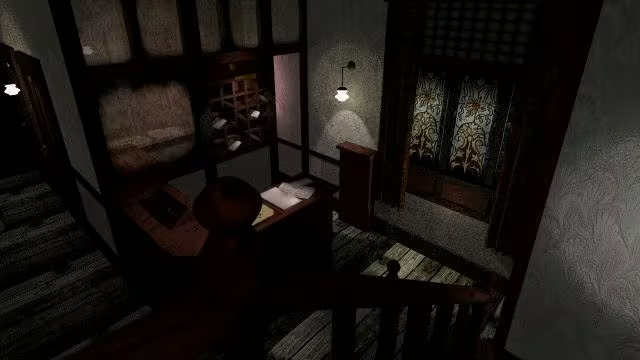
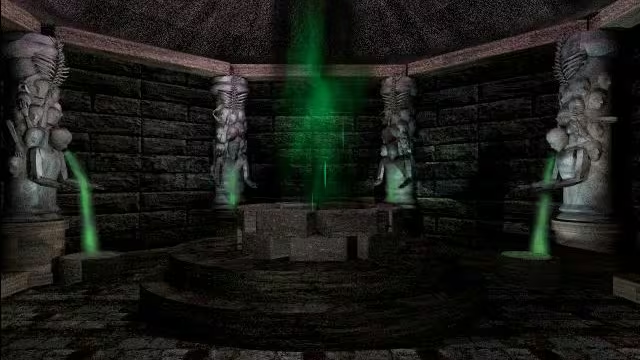
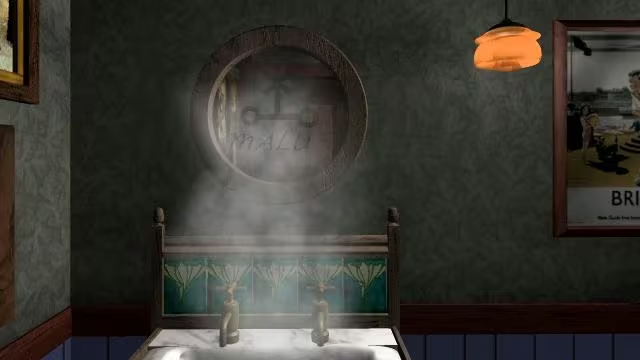
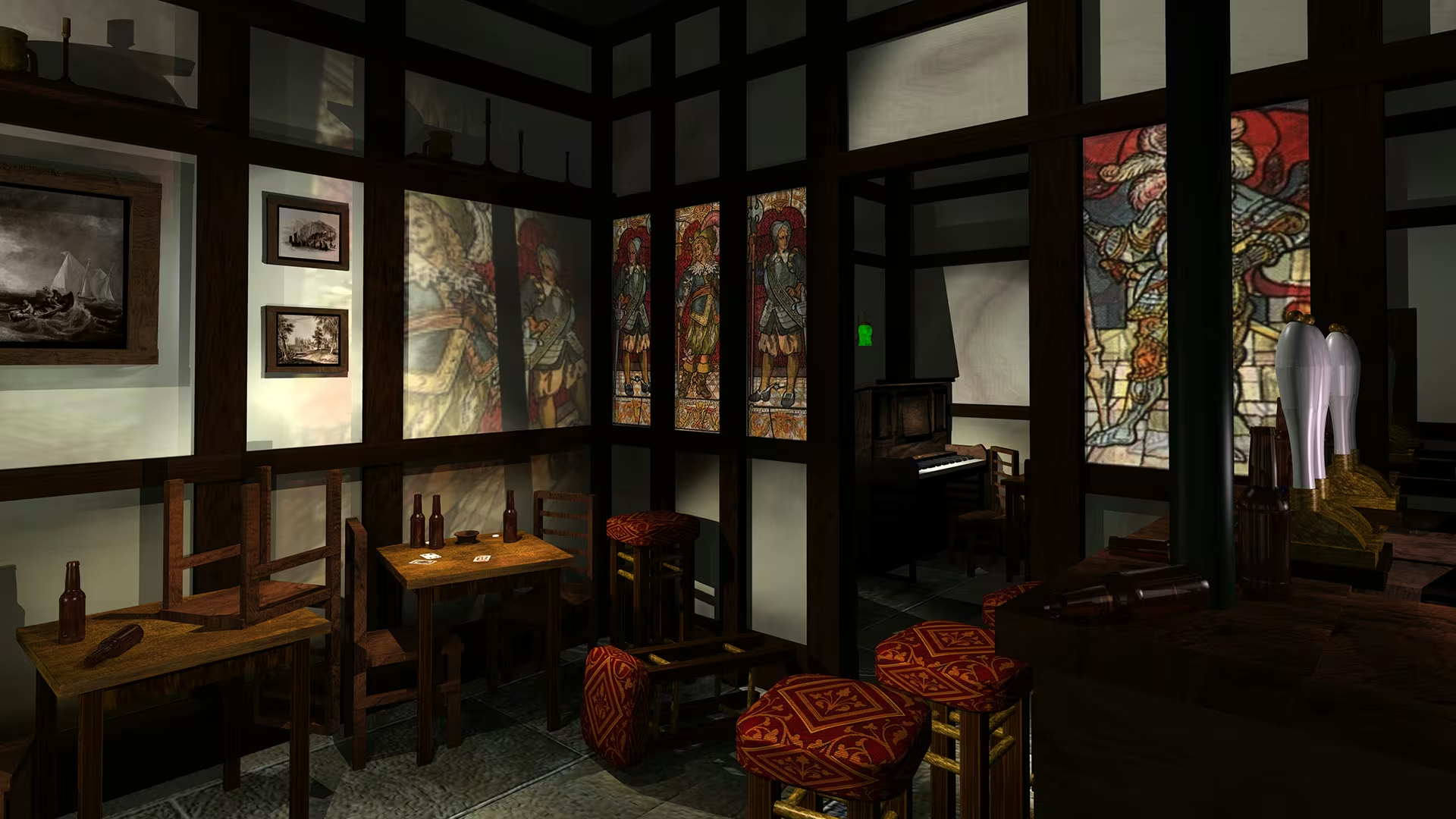
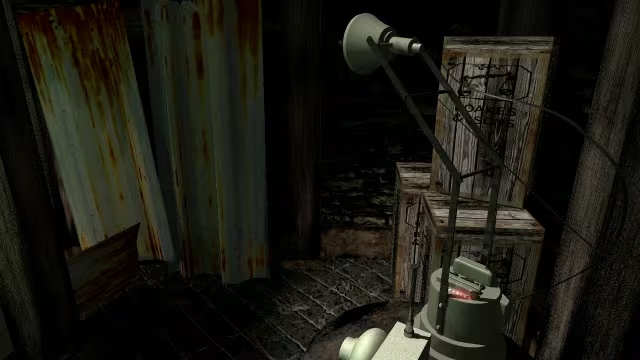
This Myst-style horror-adventure game will bring fear into your heart. From the very beginning you are exposed to an overwhelming but invisible ghost presence – strange calls, footsteps, voices from nowhere. In order to help your brother and survive you will need to solve the mystery of this abandoned, haunted place. And remember!

Global score

78/100

Genres

Adventure, Puzzle, Point-and-click

Similar games

    Pros

    • Strong atmospheric horror and mystery
    • Logical and challenging puzzles
    • Rich and engaging story
    • Non-linear exploration
    • Good value for price

    Cons

    • Dated graphics and resolution
    • Lack of in-game note system
    • Some pixel hunting required
    • Slow pacing may deter some players
    • No hand-holding or guidance

    Analysis

    A very typical example of its motivational profile. Motivations that often define this kind of title include Survival, Violence, Fellowship, Expression. Here, the score leans higher than usual among comparable games on Thrill, Story. It leans lower than usual among comparable games on Creativity.

    How to use the graph
    Similar games map

    Each dot is a game. They are arranged from the same motivation profile as in the “Motivations” section below. Closer dots usually mean more similar reasons to play (exploration, competition, relaxation, etc.)—not that one game is “better” than another.

    • Larger dot with a light outline: the game you are viewing.
    • Colour: groups of games with comparable motivation patterns (statistical clusters).
    • Hover a dot to see the game name; click to open its page.
    • Scroll or double-click the chart to zoom out and see more games.

    Why don’t the axes read like a score? This view uses t-SNE: it only keeps who is close to whom. The scales are not “good to bad” or hours played—they separate groups on the map. Read distance between dots, not the axis numbers.

    Motivations

    • Autonomy
      4

      "Players explore freely with no hand-holding or linear guidance, deciding their own pace and investigation order."

    • Competence
      3

      "Puzzles require logical thinking and note-taking; players feel challenged but can solve with effort."

    • Competition
      -5

      "Single-player experience focused on personal exploration and puzzle solving without comparison to others."

    • Continuation
      2

      "Players report immersive atmosphere and story that encourage extended play sessions, though some find it slow."

    • Cooperation
      -5

      "Entirely single-player with no multiplayer or cooperative elements."

    • Creativity
      1

      "Players create their own notes and piece together clues, but game content and puzzles are predefined."

    • Domination
      -5

      "No social or competitive dominance elements; experience is solitary and respectful."

    • Escapism
      4

      "Strong atmospheric horror and mystery provide immersive escape from reality."

    • Expectation
      -4

      "Players engage voluntarily out of interest in mystery and puzzles, no obligation or pressure."

    • Experimenting
      3

      "Players explore environments non-linearly and experiment with clues and puzzle solutions."

    • Exploration
      4

      "Game emphasizes discovering new areas, clues, and secrets in an abandoned train station and hotel."

    • Expression
      -3

      "Limited customization; players express themselves mainly through note-taking rather than in-game appearance."

    • Fantasy
      3

      "Supernatural ghost story with paranormal elements creates a fictional, eerie experience."

    • Fellowship
      -5

      "No social or community features; experience is solitary."

    • Growth
      3

      "Players develop problem-solving skills and piece together complex story elements."

    • Health
      -5

      "Sedentary gameplay typical of point-and-click adventure games."

    • Idle
      -4

      "Requires focused attention and active note-taking; not suitable for casual or background play."

    • Intimacy
      -4

      "Limited social interaction; some emotional engagement with story but no interpersonal relationships."

    • Leadership
      -5

      "No leadership or group management elements; purely single-player."

    • Progression
      3

      "Progression through solving puzzles and uncovering story; collecting clues and symbols."

    • Relaxation
      2

      "Atmospheric and slow-paced, but tension from mystery and eerie sounds maintains engagement."

    • Sensation
      3

      "Eerie sound design and atmospheric visuals provide sensory stimulation and emotional engagement."

    • Status
      -5

      "No social recognition or status systems."

    • Story
      5

      "Strong narrative focus with layered story uncovered through exploration and reading."

    • Strategy
      3

      "Logical puzzle solving and connecting clues require analytical thinking and planning."

    • Thrill
      3

      "Eerie atmosphere and suspenseful moments create mild thrill without jump scares."

    • Value
      4

      "Players praise the game’s quality and content for its low price."

    • Violence
      -5

      "No combat or destruction; focus on exploration and puzzle solving."

    • Survival
      -4

      "No threat of death or failure; stable conditions without survival mechanics."

    Last update: 29/04/2026