Democracy 4 similar games & best alternatives
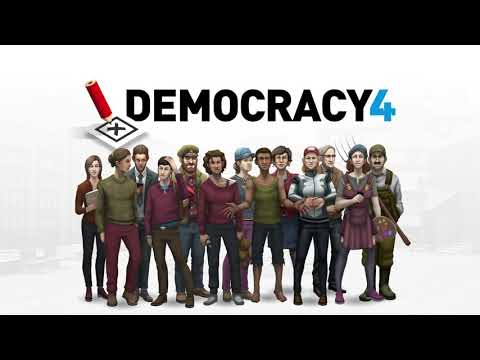
Democracy 4
2022
Related articles
Quick resume
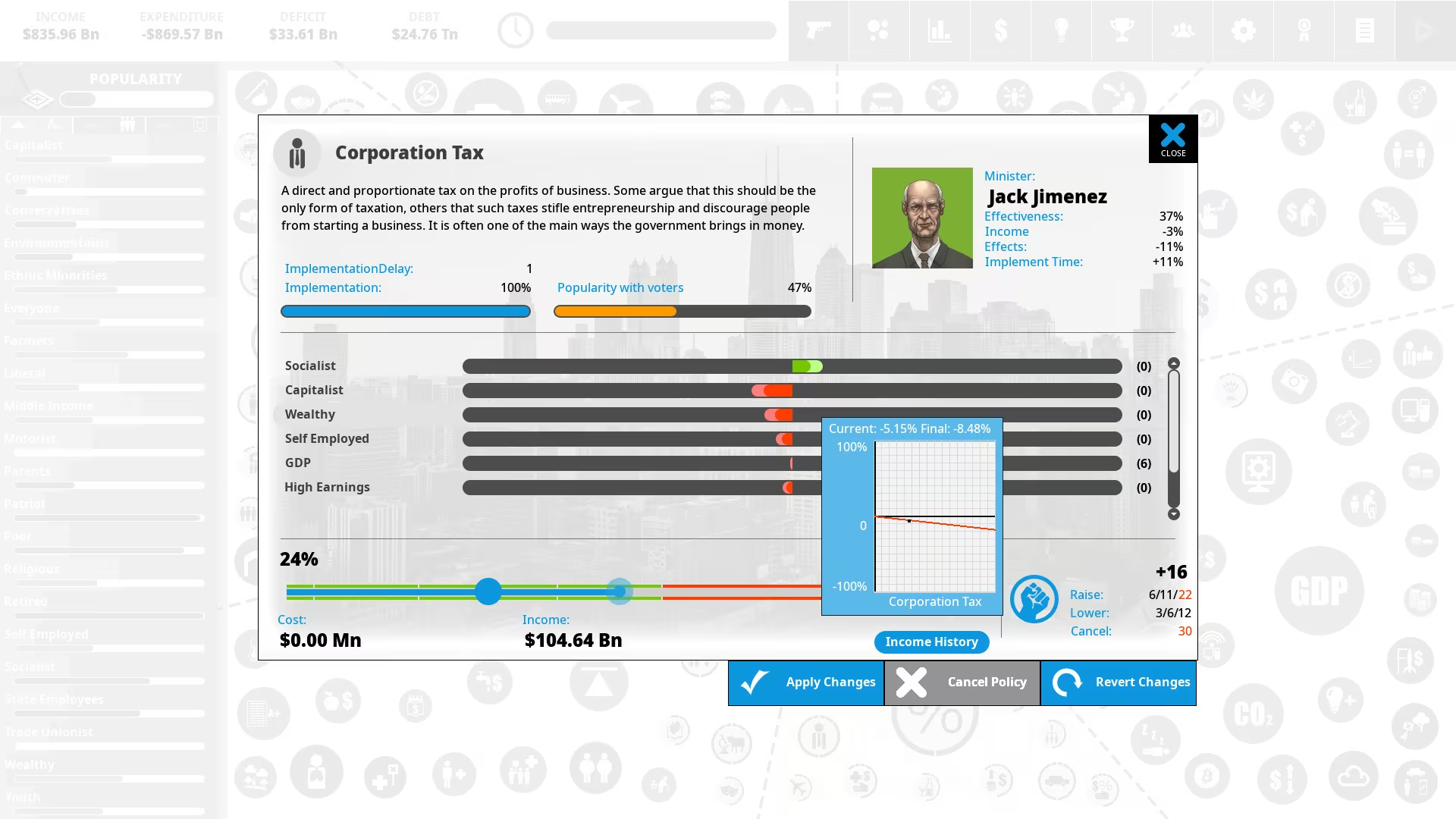
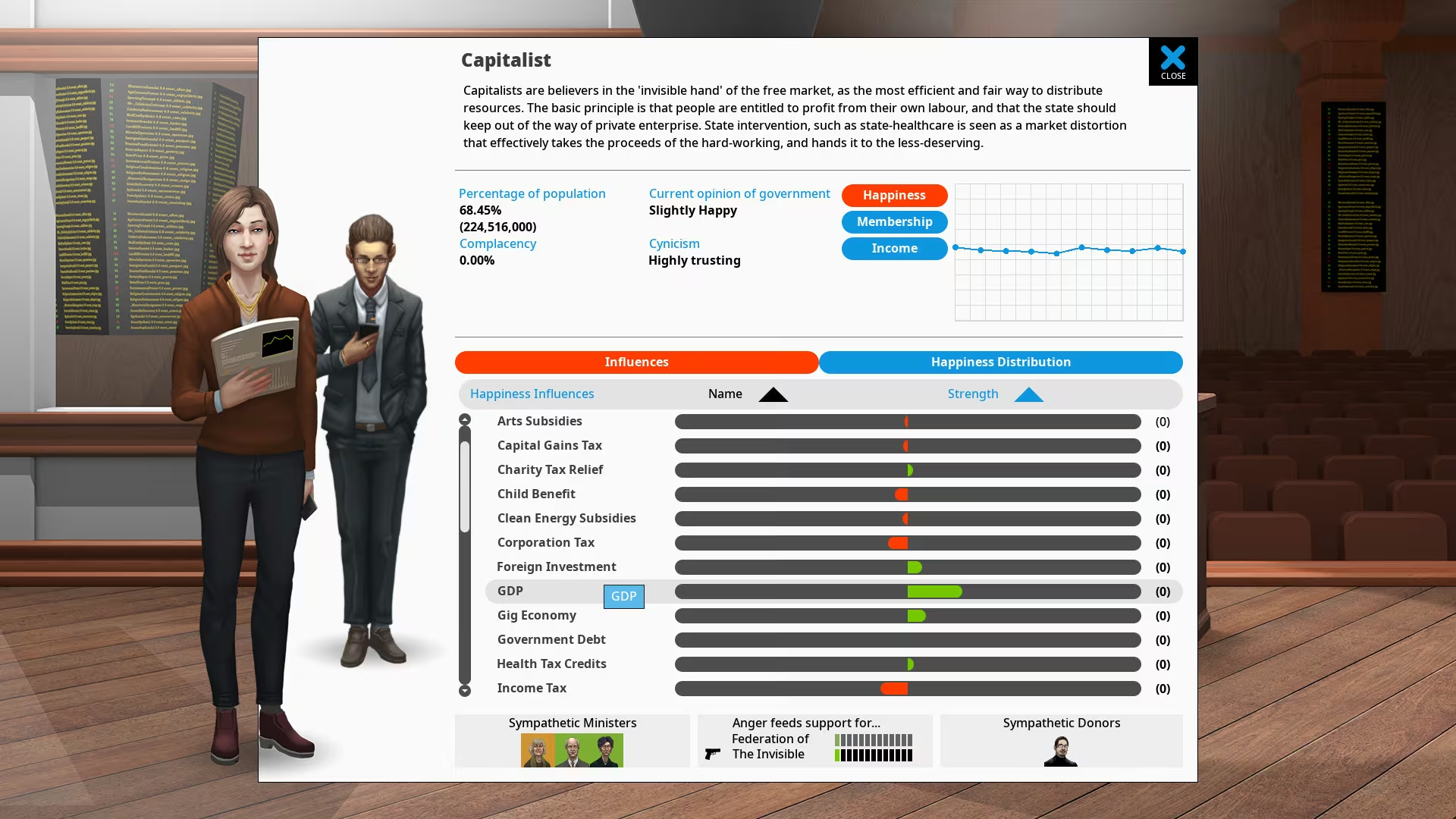
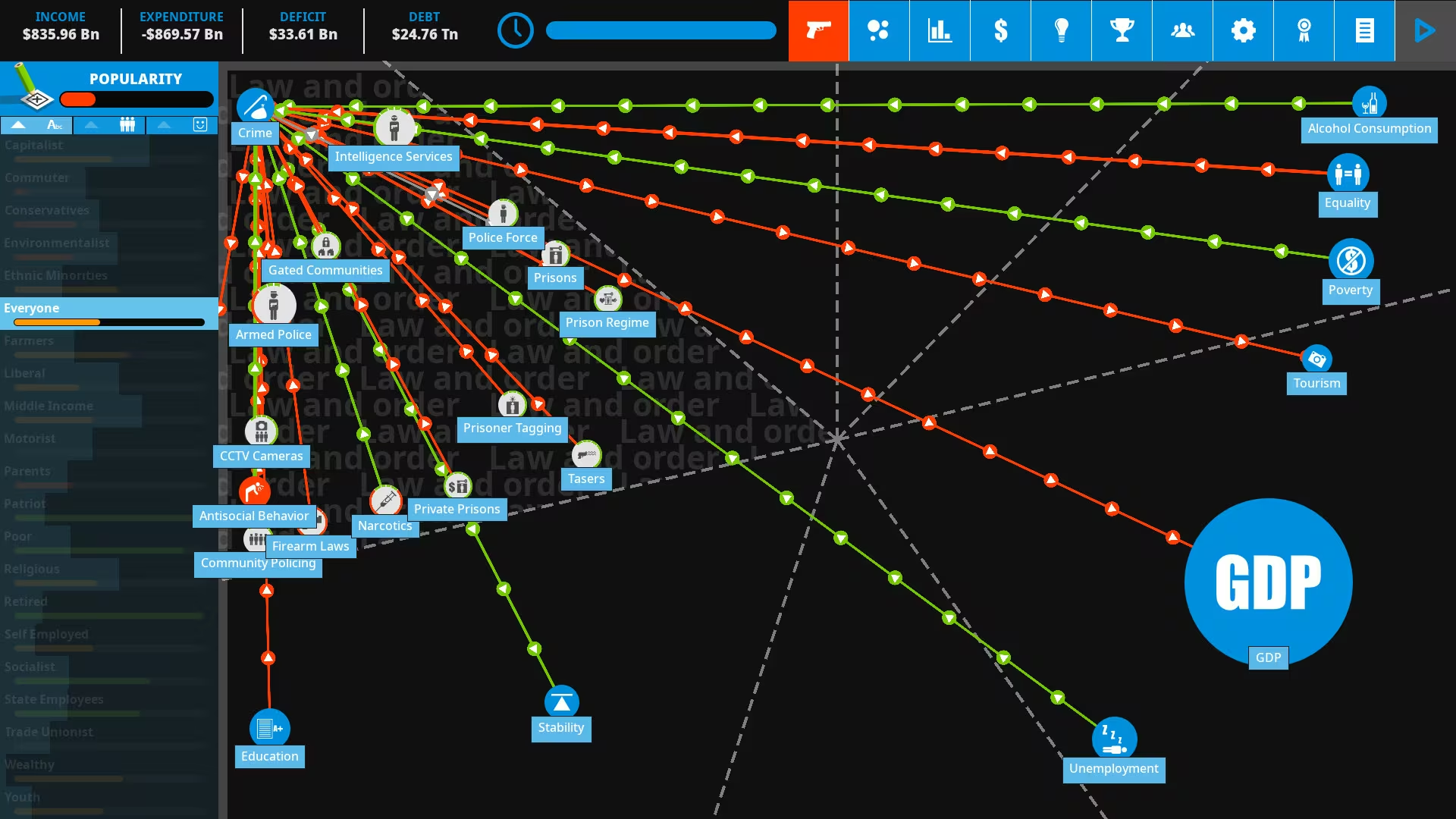
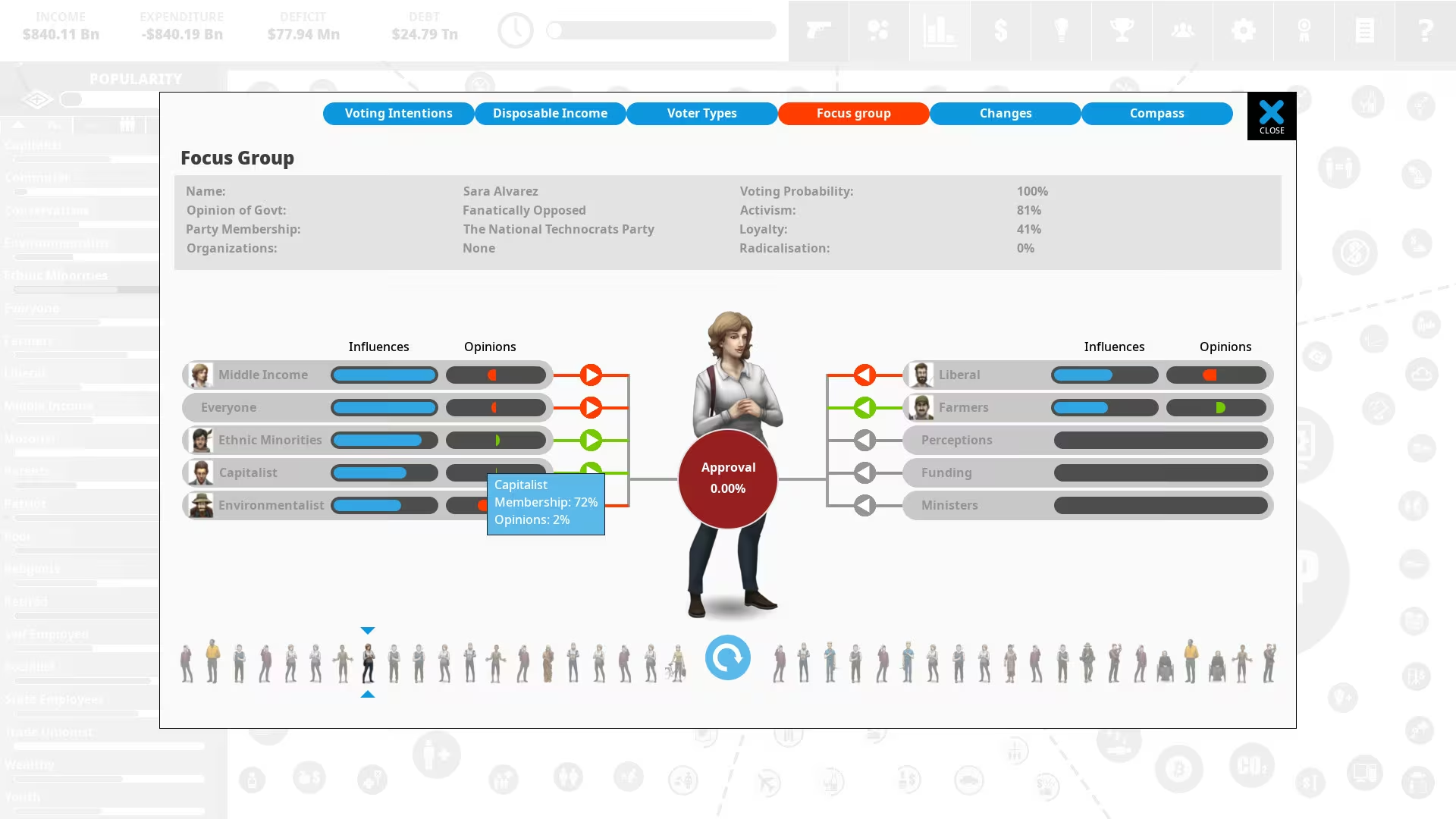
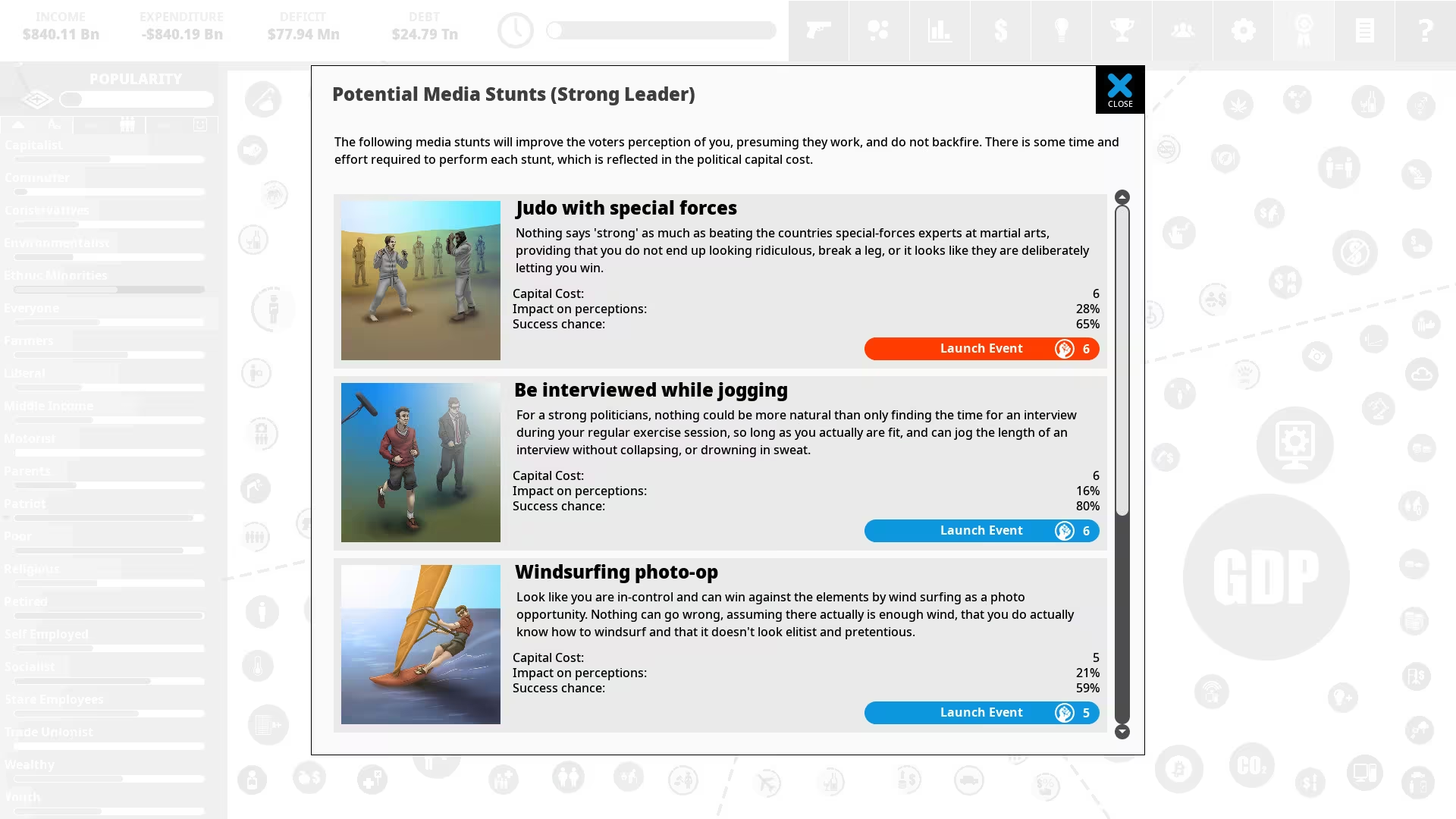
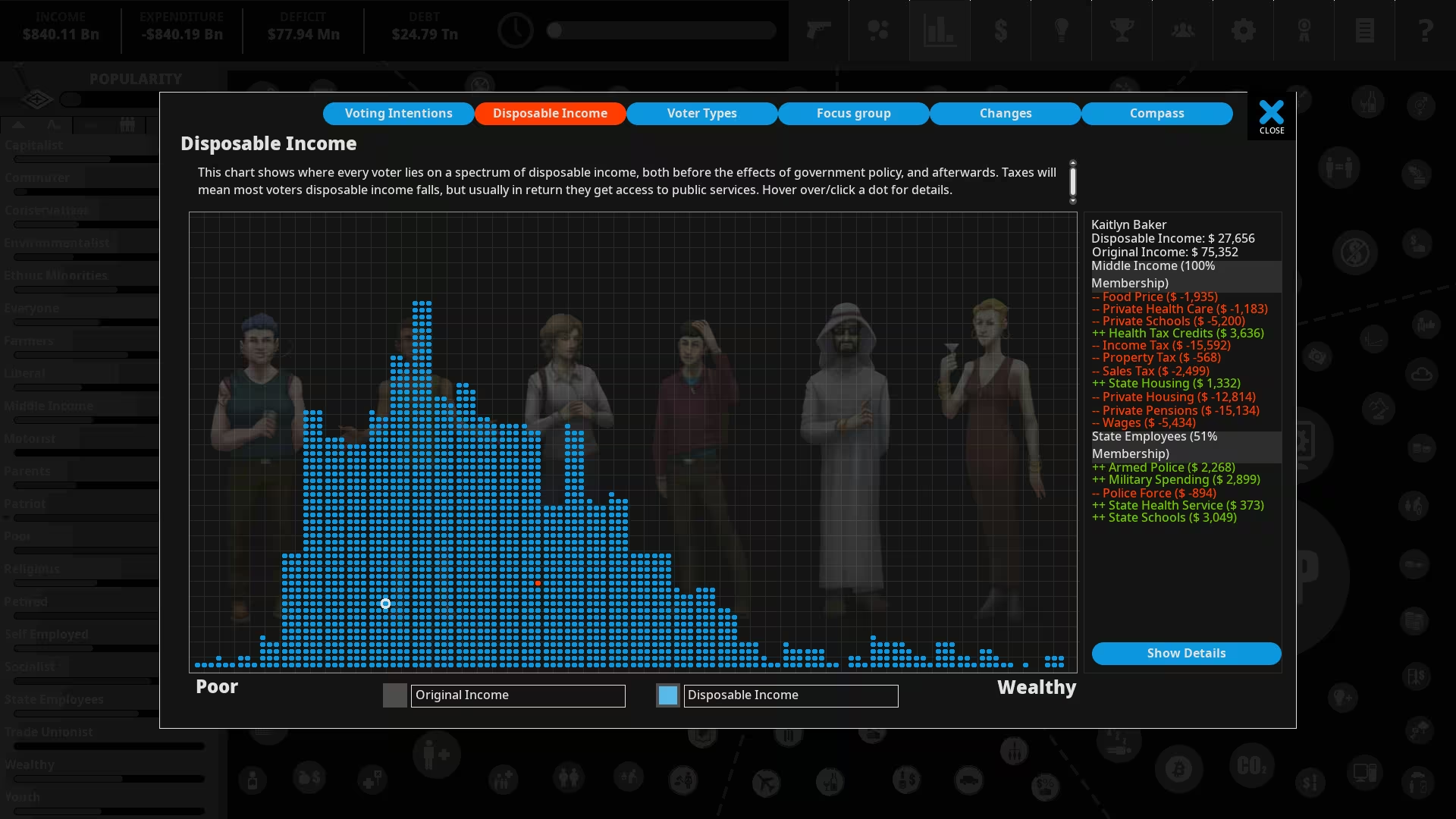
Democracy 4 lets you take the role of President / Prime minister, govern the country (choosing its policies, laws and other actions), and both transform the country as you see fit, while trying to retain enough popularity to get re-elected...
Global score
82/100
Genres
Indie, Simulator, Strategy
Similar games
Pros
- Deep political simulation
- High strategic complexity
- Freedom to experiment with policies
- Educational and thought-provoking
- Active developer engagement and mod support
Cons
- Steep learning curve and complexity
- Some political bias perceived
- Repetitive gameplay after mastery
- Limited audiovisual presentation
- Lack of multiplayer or social features
Analysis
Less representative of its motivational profile, with noticeable differences. Motivations that often define this kind of title include Fantasy, Violence, Story, Thrill. Here, the score leans higher than usual among comparable games on Leadership, Survival, Competition.
How to use the graph
Similar games map
Each dot is a game. They are arranged from the same motivation profile as in the “Motivations” section below. Closer dots usually mean more similar reasons to play (exploration, competition, relaxation, etc.)—not that one game is “better” than another.
- Larger dot with a light outline: the game you are viewing.
- Colour: groups of games with comparable motivation patterns (statistical clusters).
- Hover a dot to see the game name; click to open its page.
- Scroll or double-click the chart to zoom out and see more games.
Why don’t the axes read like a score? This view uses t-SNE: it only keeps who is close to whom. The scales are not “good to bad” or hours played—they separate groups on the map. Read distance between dots, not the axis numbers.
Motivations
-
Autonomy4
"Players have extensive freedom to direct policies and decisions shaping their country, with many choices and strategies available."
-
Competence4
"The game challenges players to understand complex political and economic systems and manage multiple interacting variables effectively."
-
Competition2
"Elections and re-election campaigns provide some competitive elements, but mostly against AI with no direct player-vs-player competition."
-
Continuation3
"Many players report long sessions and repeated playthroughs experimenting with different policies and countries."
-
Cooperation-4
"Gameplay is primarily single-player and focused on individual decision-making rather than teamwork or collaboration."
-
Creativity3
"Players can create unique political scenarios and experiment with various policy combinations, though within predefined mechanics."
-
Domination-3
"Interactions are balanced and simulation-based without emphasis on exerting superiority or power over other players."
-
Escapism3
"Players use the game to explore political scenarios and escape into a simulation of governance, often as a distraction or intellectual challenge."
-
Expectation-4
"Engagement is voluntary and driven by personal interest in politics and simulation rather than external obligation."
-
Experimenting4
"The game encourages trying new policies, strategies, and political ideologies to see their effects on the simulated country."
-
Exploration2
"Players explore different countries and political systems, though environments are abstract and menu-driven rather than spatial."
-
Expression-2
"Customization is limited to policy choices and political direction rather than avatar or visual expression."
-
Fantasy1
"The game simulates political leadership realistically but allows players to create improbable or extreme political scenarios."
-
Fellowship-4
"The game is primarily single-player with minimal social or community interaction within gameplay."
-
Growth4
"Players learn about political systems, policy impacts, and strategic governance through gameplay."
-
Health-5
"The game is sedentary and does not involve physical activity or health-related gameplay."
-
Idle-3
"Requires focused attention to manage policies and monitor outcomes; not designed for passive or background play."
-
Intimacy-5
"No social or emotional relationship-building mechanics; gameplay is solitary and analytical."
-
Leadership5
"Players assume the role of national leader, making executive decisions and guiding the country’s direction."
-
Progression3
"Players progress by unlocking policies, managing political capital, and extending terms in office."
-
Relaxation1
"Some find the game relaxing as a thoughtful simulation, though others report stress and challenge from political complexity."
-
Sensation-3
"The game offers minimal sensory stimulation, focusing on menus and data rather than audiovisual excitement."
-
Status-4
"Achievements exist but social recognition or popularity within a community is limited."
-
Story-4
"No narrative or plot; gameplay is context-free policy management and simulation."
-
Strategy5
"Requires deep strategic thinking, planning, and problem solving to balance competing political interests and outcomes."
-
Thrill1
"Some suspense in elections and crises, but overall gameplay is measured and analytical rather than high-adrenaline."
-
Value3
"Players report good value for time spent, especially when on sale; some critique on DLC pricing."
-
Violence-5
"No combat or destruction; gameplay centers on governance and policy."
-
Survival3
"Players must avoid political failure such as losing elections or assassination, managing threats to stay in power."
Last update: 29/04/2026