Emily is Away Too Thumbnail

Emily is Away Too similar games & best alternatives

Emily is Away Too

PC (Microsoft Windows), Mac, Linux • 2017

Related articles

Quick resume

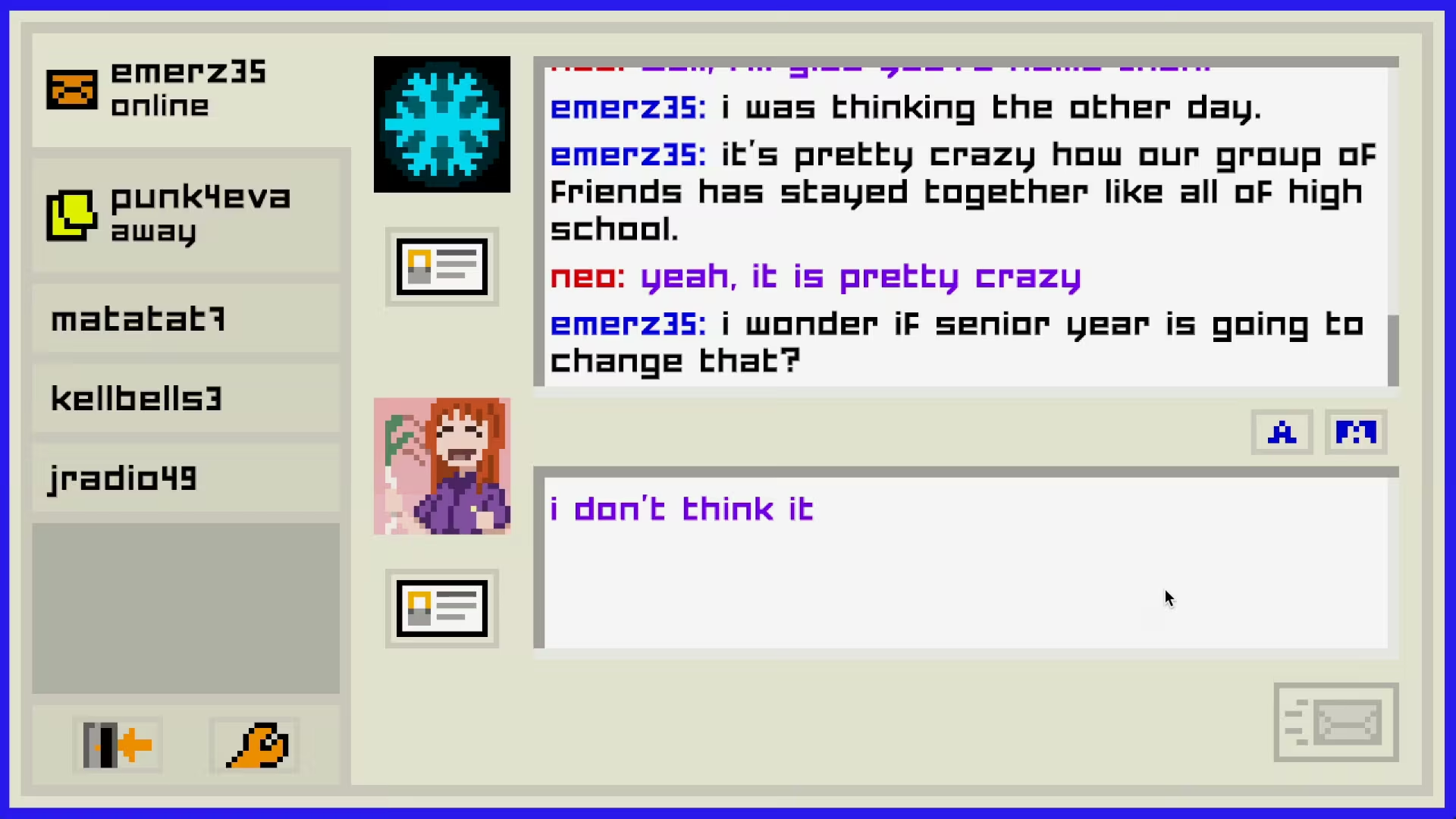
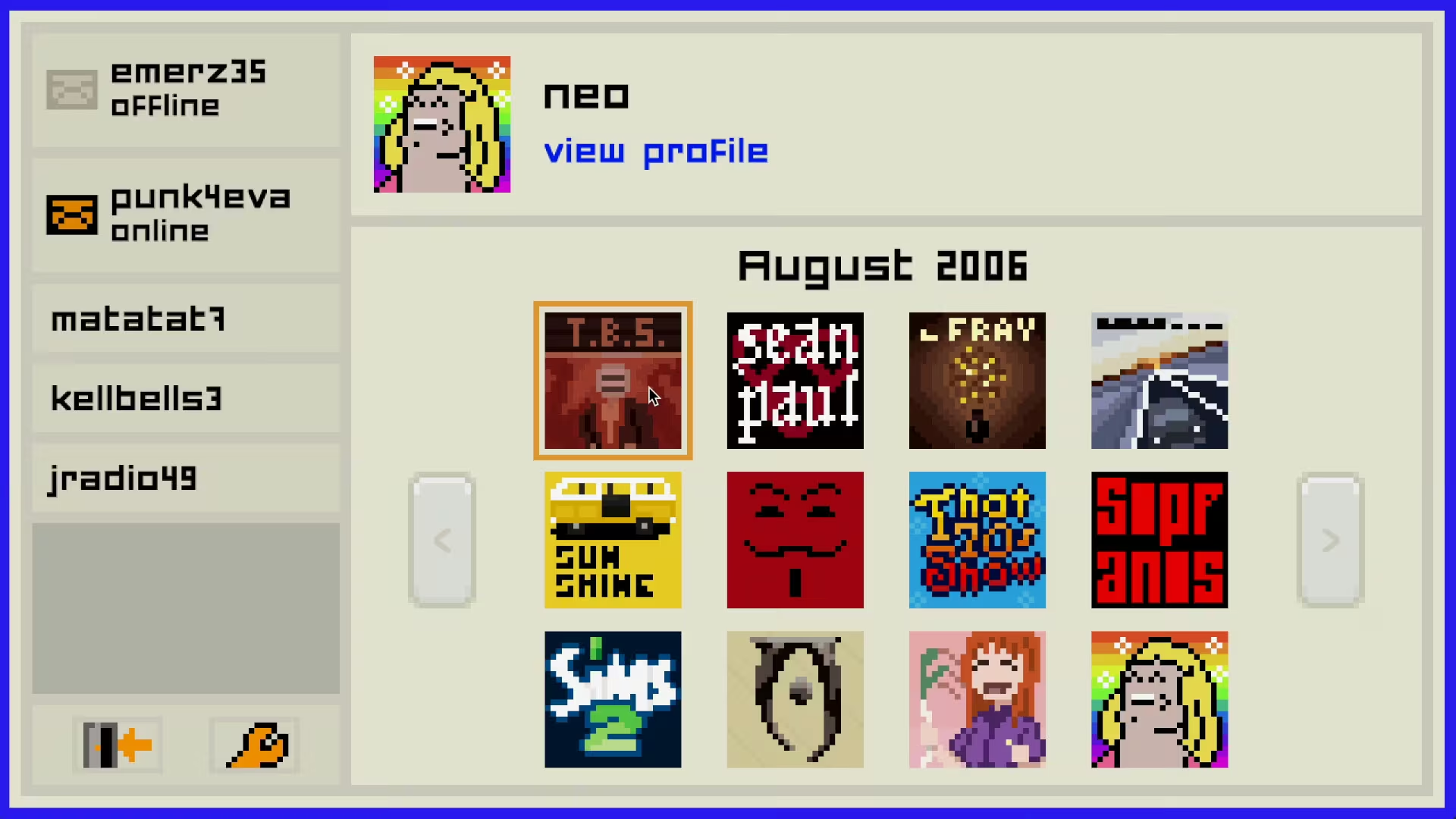
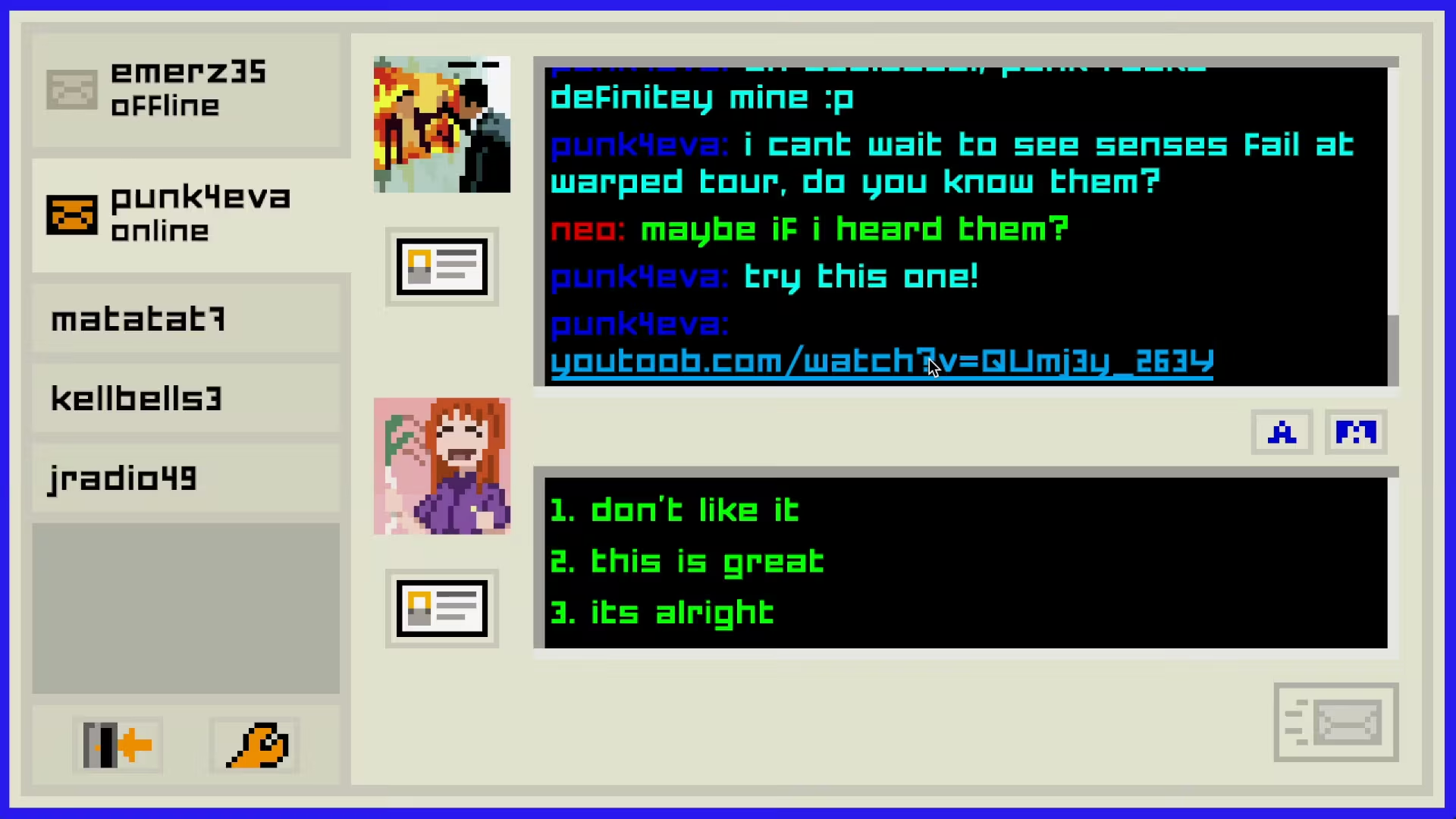
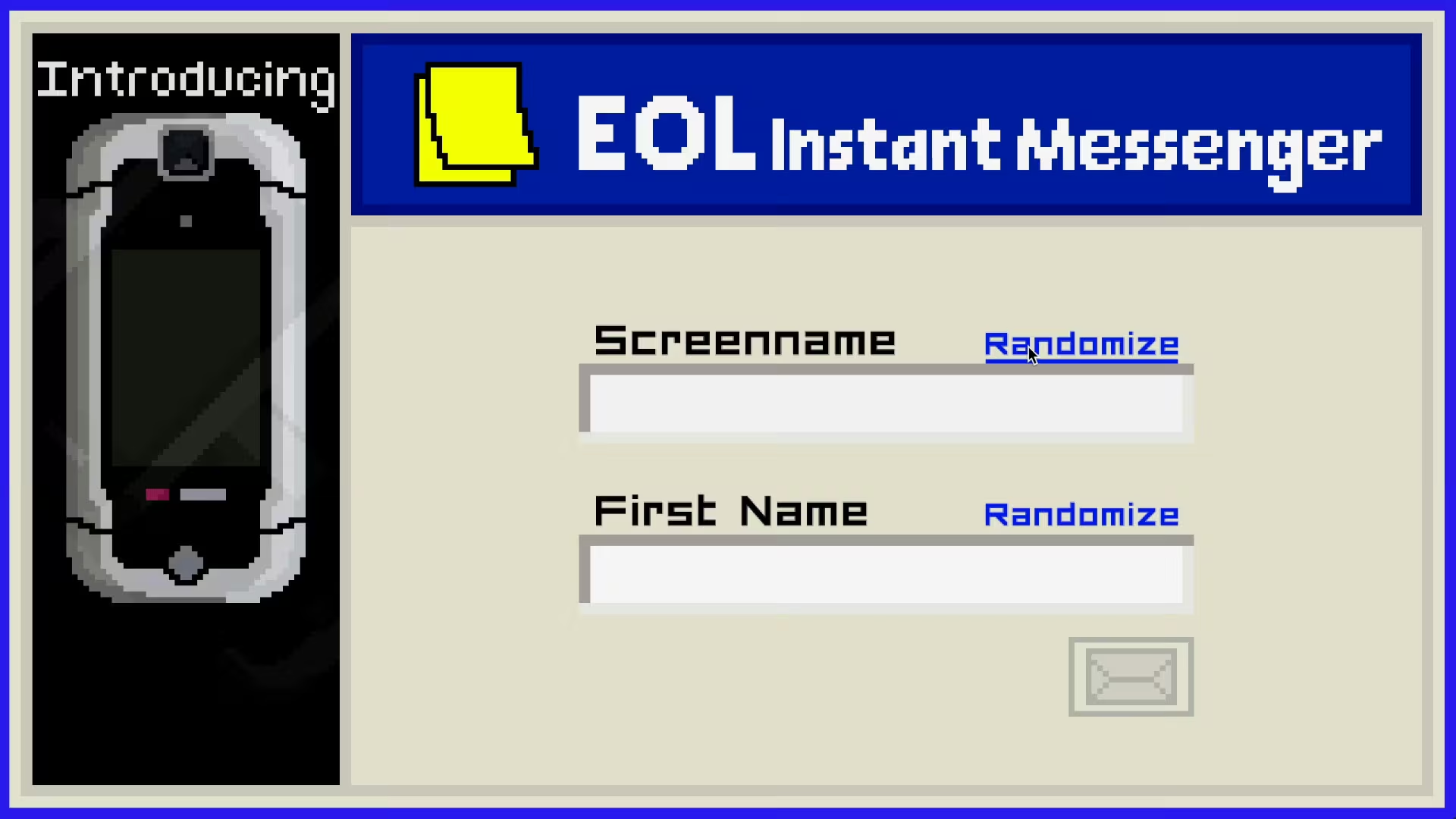
Emily is Away Too is a brand new story featuring new characters and multiple different endings. Message your friends, surf the web and choose your path through this branching narrative.

Global score

93/100

Genres

Adventure, Casual, Indie, Role-playing (RPG), Simulator, Visual Novel

Similar games

    Pros

    • Strong nostalgic atmosphere
    • Emotional and realistic storytelling
    • Multiple endings and replayability
    • Immersive early 2000s internet simulation
    • Meaningful player choices

    Cons

    • Can be emotionally taxing or depressing
    • Some players find timed responses stressful
    • Limited gameplay mechanics beyond dialogue
    • Minor writing inconsistencies noted
    • Short overall playtime

    Analysis

    A very typical example of its motivational profile. Motivations that often define this kind of title include Intimacy, Survival, Violence, Competition. Here, the score leans higher than usual among comparable games on Fellowship. It leans lower than usual among comparable games on Fantasy, Relaxation.

    How to use the graph
    Similar games map

    Each dot is a game. They are arranged from the same motivation profile as in the “Motivations” section below. Closer dots usually mean more similar reasons to play (exploration, competition, relaxation, etc.)—not that one game is “better” than another.

    • Larger dot with a light outline: the game you are viewing.
    • Colour: groups of games with comparable motivation patterns (statistical clusters).
    • Hover a dot to see the game name; click to open its page.
    • Scroll or double-click the chart to zoom out and see more games.

    Why don’t the axes read like a score? This view uses t-SNE: it only keeps who is close to whom. The scales are not “good to bad” or hours played—they separate groups on the map. Read distance between dots, not the axis numbers.

    Motivations

    • Autonomy
      4

      "Players make meaningful dialogue choices that affect story outcomes and character relationships, reflecting personal freedom in decision-making."

    • Competence
      1

      "The gameplay involves selecting dialogue options and some timed responses, requiring moderate skill but mostly narrative engagement."

    • Competition
      -4

      "Focus is on personal story and relationships without competitive elements or comparison to others."

    • Continuation
      3

      "Players often replay to explore multiple endings and different dialogue paths, showing attachment and habitual engagement."

    • Cooperation
      -3

      "Gameplay centers on individual interactions with two characters rather than cooperative multiplayer or teamwork."

    • Creativity
      2

      "Players customize profile icons and choose dialogue paths, but within predefined narrative structures."

    • Domination
      -5

      "Interactions emphasize mutual respect and emotional connection rather than control or superiority."

    • Escapism
      4

      "Strong nostalgic and emotional immersion provides an escape from real life into a recreated early 2000s internet experience."

    • Expectation
      -4

      "Players engage voluntarily out of personal interest and nostalgia rather than obligation or external pressure."

    • Experimenting
      3

      "Multiple dialogue choices and endings encourage players to try different approaches and explore story variations."

    • Exploration
      3

      "Exploring character profiles, clicking on in-game links, and discovering Easter eggs support curiosity-driven discovery."

    • Expression
      2

      "Players personalize avatars and profile details, allowing some self-expression within the game's aesthetic."

    • Fantasy
      -3

      "The game simulates realistic teenage social interactions and emotional experiences rather than imaginative fiction."

    • Fellowship
      2

      "Players feel connected to a community through shared nostalgia and emotional engagement with characters."

    • Growth
      3

      "Players learn about relationship dynamics and emotional consequences through narrative choices."

    • Health
      -5

      "Sedentary gameplay with no physical activity or health-related features."

    • Idle
      -3

      "Requires focused attention on dialogue and timed responses, not suitable for passive or background play."

    • Intimacy
      4

      "Game fosters emotional closeness and personal connection with characters through meaningful conversations."

    • Leadership
      -5

      "No leadership or group management elements; player supports individual relationships."

    • Progression
      2

      "Progression is narrative-based with unlocking new dialogue and endings rather than item or power accumulation."

    • Relaxation
      1

      "While some find it relaxing, timed choices and emotional intensity can create tension and stress."

    • Sensation
      2

      "Nostalgic audiovisual elements provide moderate sensory stimulation and emotional engagement."

    • Status
      -4

      "No social status or recognition mechanics; focus is on private personal experience."

    • Story
      5

      "Strong narrative immersion with branching storylines and emotional character development."

    • Strategy
      2

      "Requires some planning in dialogue choices to maintain relationships and achieve desired endings."

    • Thrill
      1

      "Some suspense from timed choices and consequences, but overall low-risk emotional experience."

    • Value
      4

      "Players perceive good value for time and money due to emotional impact and replayability."

    • Violence
      -5

      "No violence; focus on communication and emotional interaction."

    • Survival
      -5

      "No survival or threat avoidance mechanics; stable narrative environment."

    Last update: 29/04/2026