Evolution Board Game Thumbnail

Evolution Board Game similar games & best alternatives

Evolution Board Game

PC (Microsoft Windows), Nintendo Switch • 2019

Related articles

Quick resume

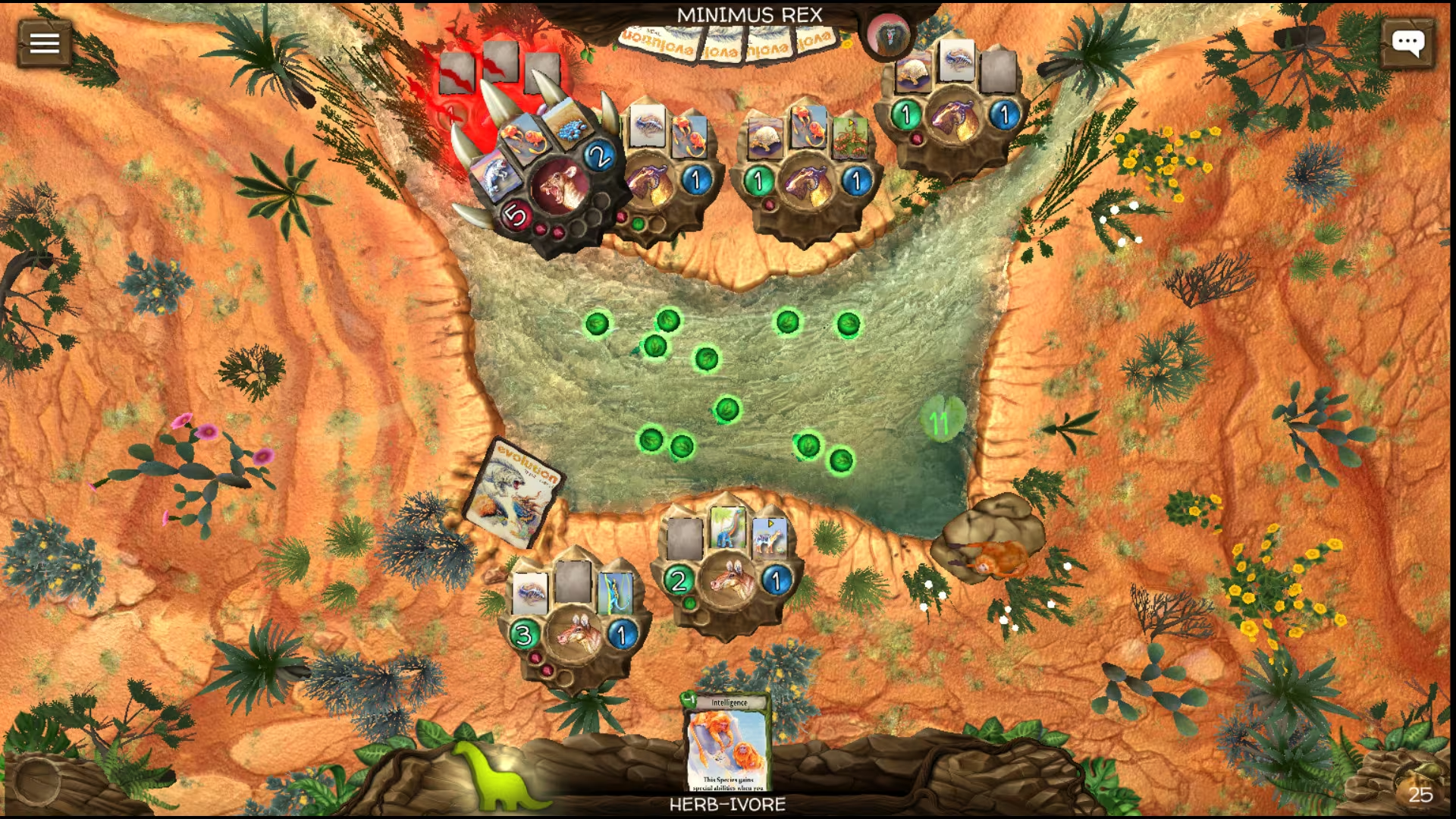
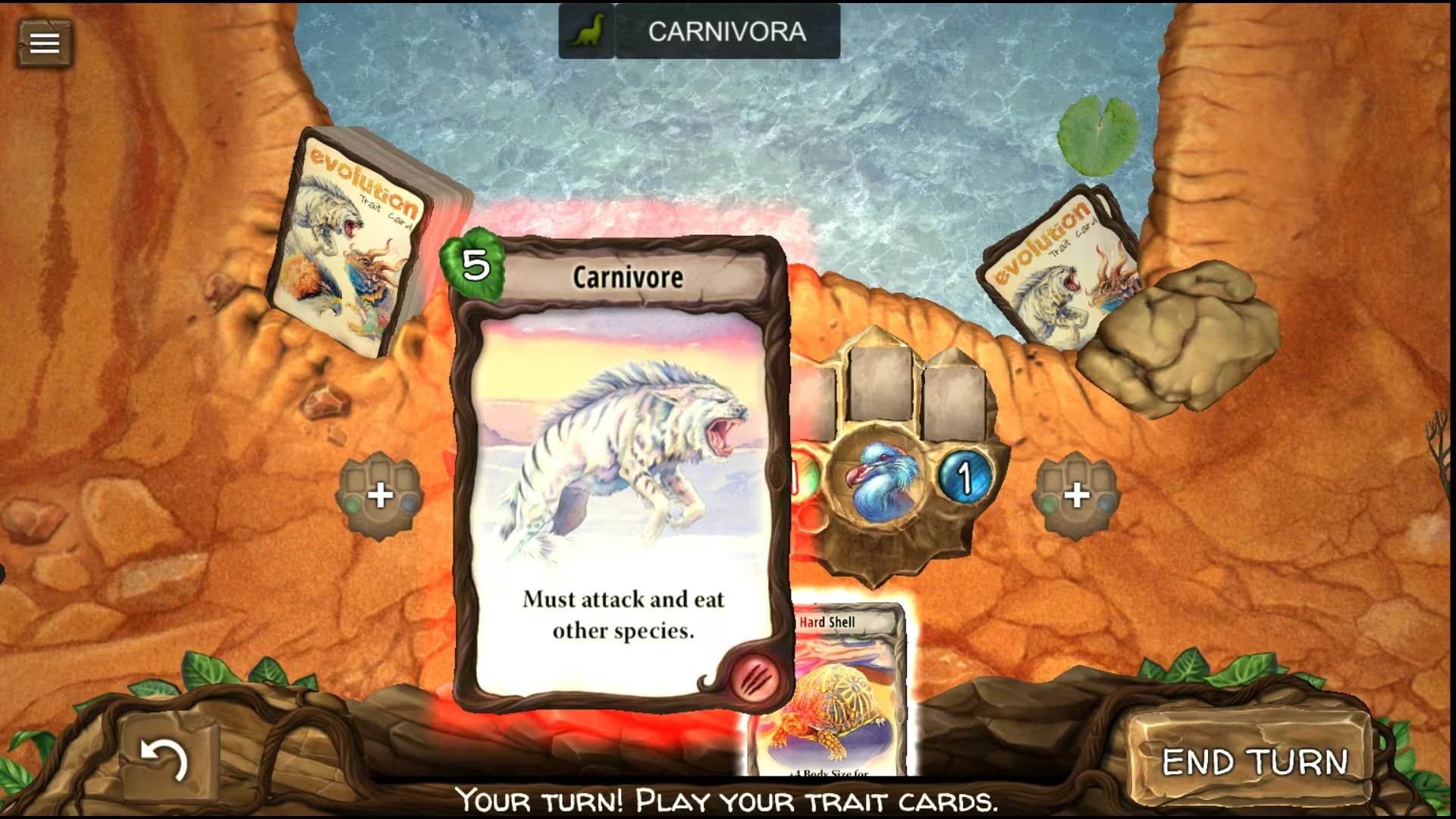
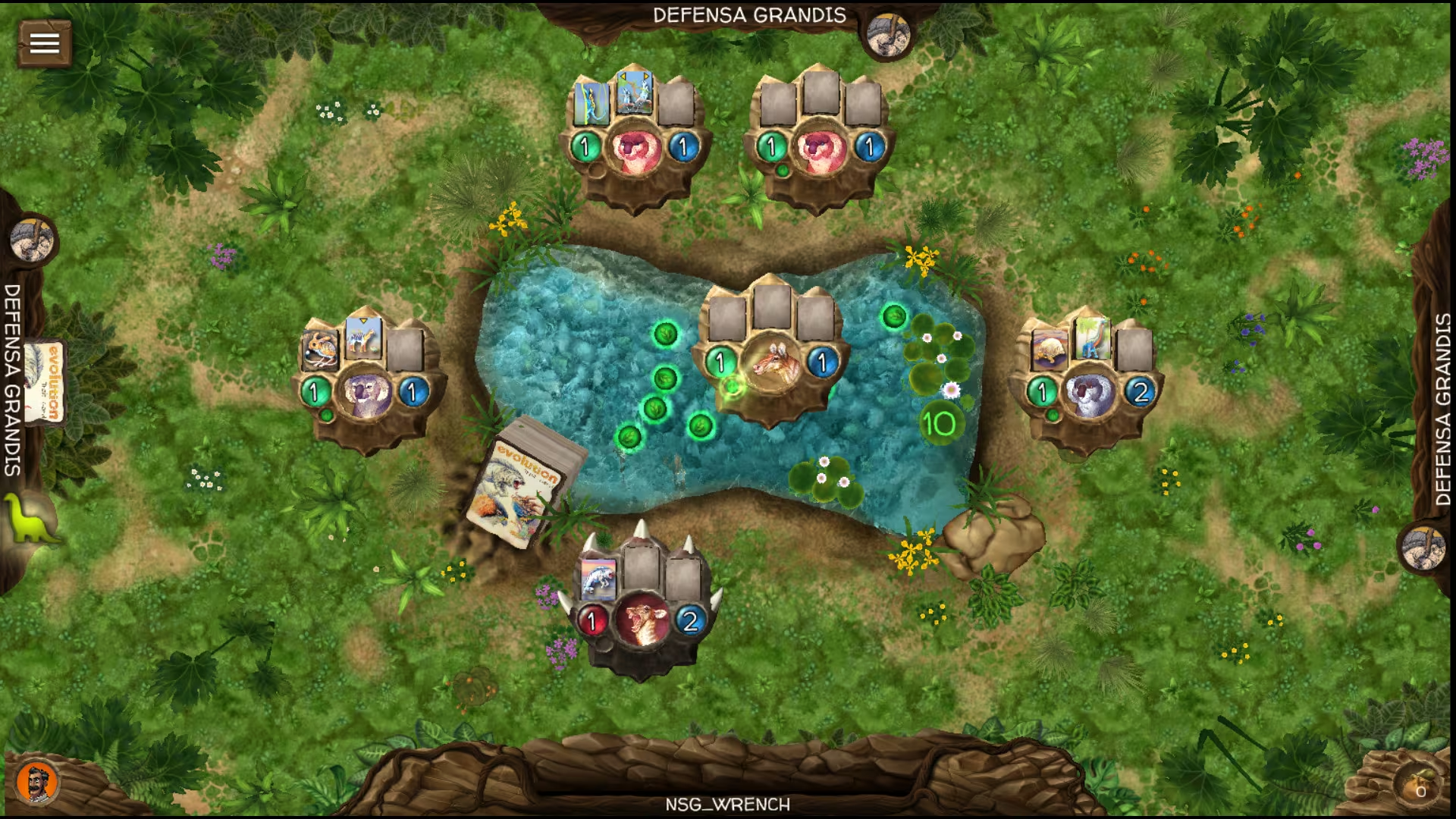
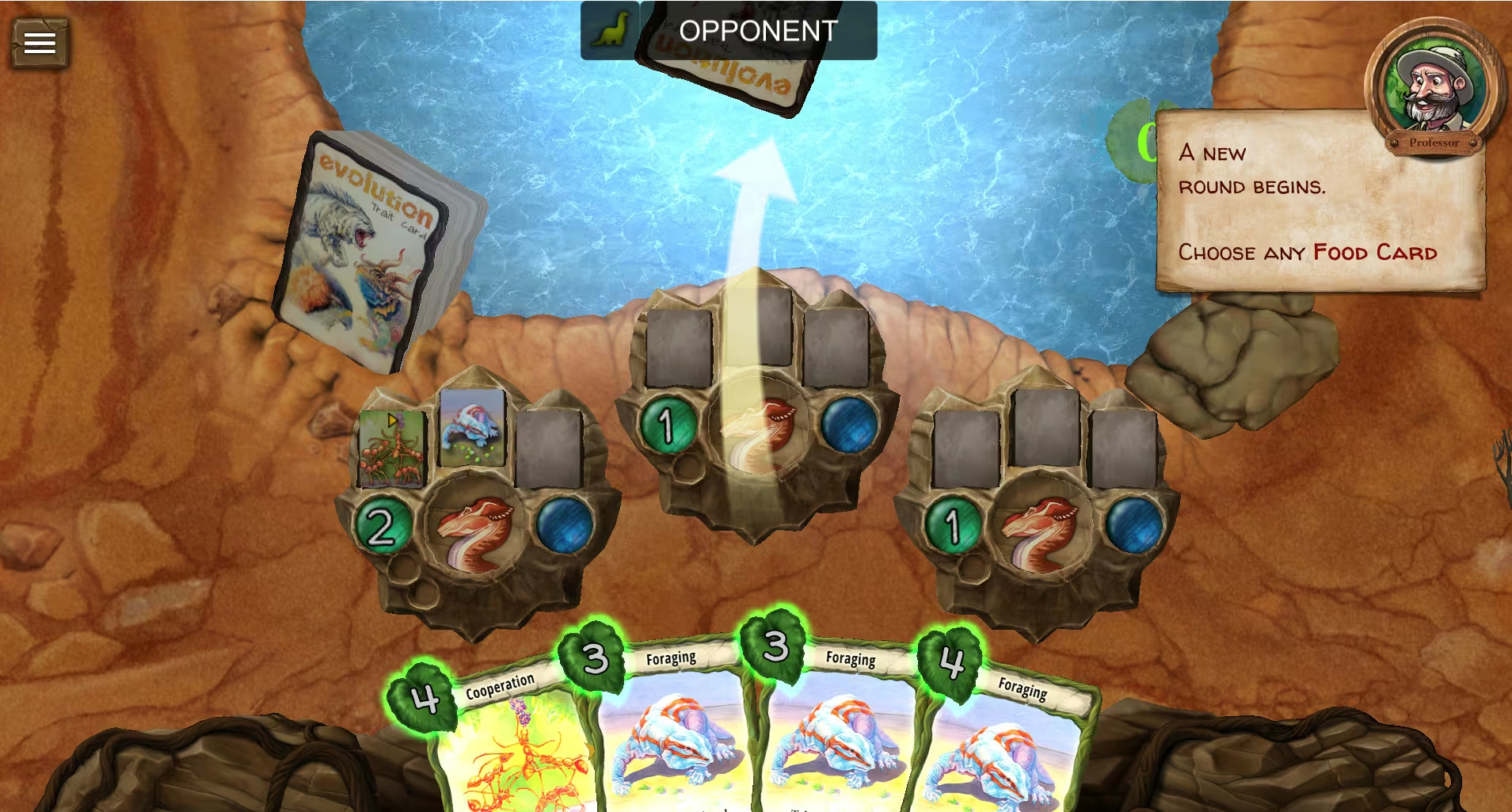
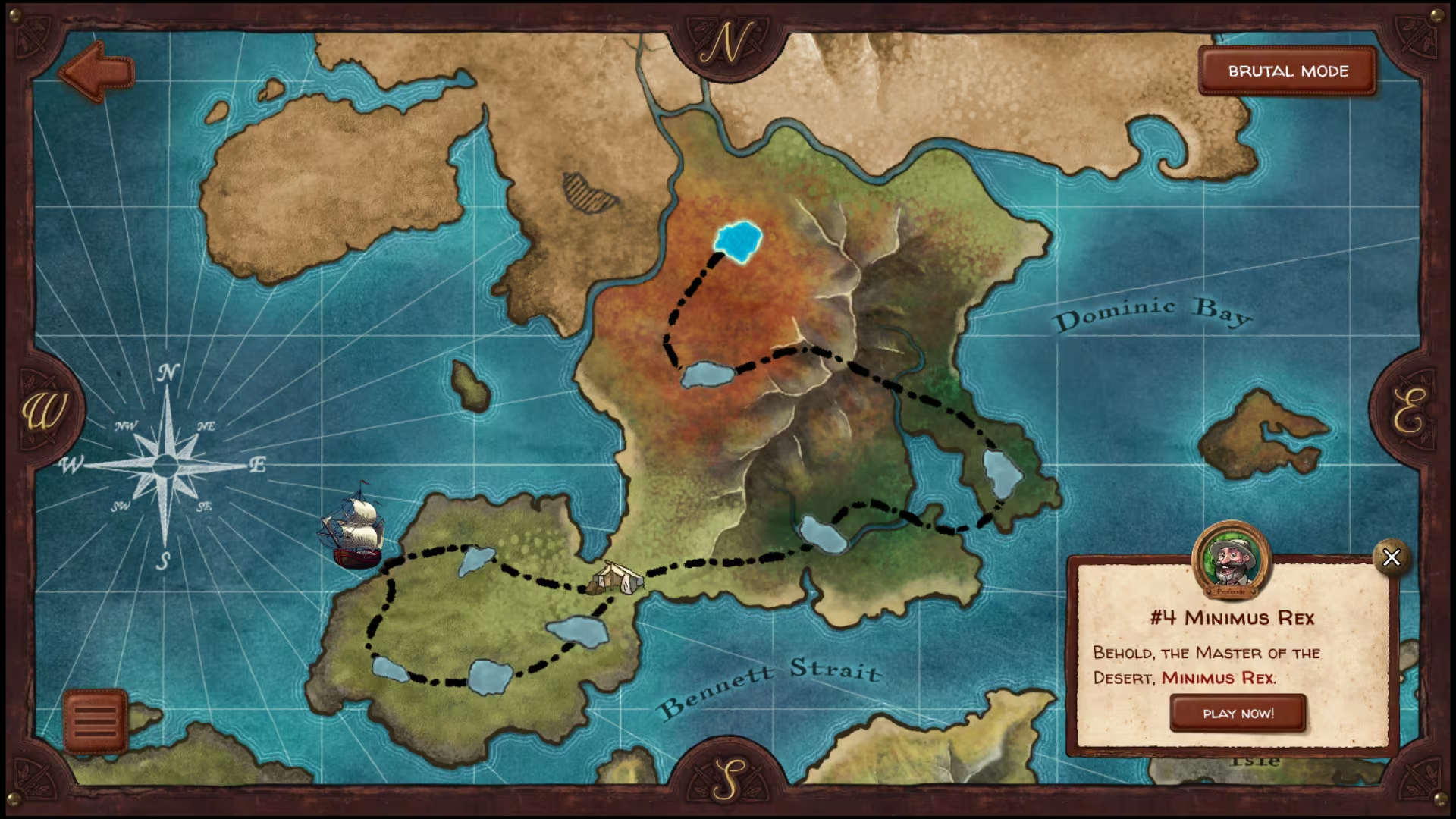
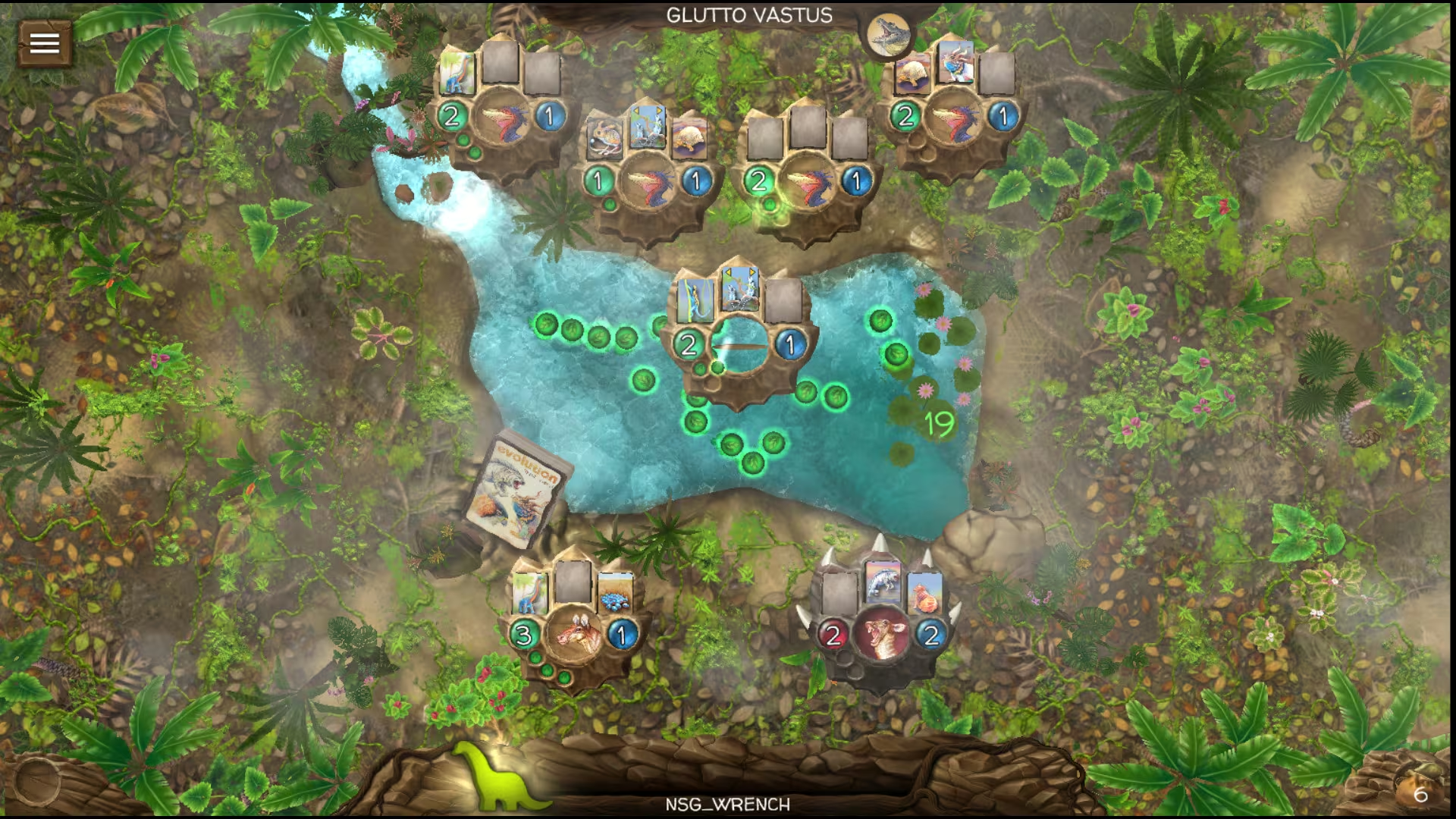
Predators lurk, food is scarce, you must adapt - or go extinct. Evolve your species to survive and dominate as you explore the campaign or go head-to-head with the skill-based matchmaker.

Global score

84/100

Genres

Casual, Indie, Simulator, Strategy, Card & Board Game

Similar games

    Pros

    • Faithful and well-executed adaptation of popular board game
    • Challenging ai and multiplayer modes
    • Engaging campaign and tutorial
    • High replayability with expansions and challenges
    • Pleasant art and animations

    Cons

    • Multiplayer suffers from occasional bugs and freezes
    • Small online player base limits matchmaking
    • Some content behind paid dlc
    • Lack of deeper social or cooperative features
    • Minor ui and translation issues

    Analysis

    Broadly representative of its motivational profile, with a few distinct shifts. Motivations that often define this kind of title include Competition, Status, Story, Expression. Here, the score leans higher than usual among comparable games on Domination, Survival, Fellowship.

    How to use the graph
    Similar games map

    Each dot is a game. They are arranged from the same motivation profile as in the “Motivations” section below. Closer dots usually mean more similar reasons to play (exploration, competition, relaxation, etc.)—not that one game is “better” than another.

    • Larger dot with a light outline: the game you are viewing.
    • Colour: groups of games with comparable motivation patterns (statistical clusters).
    • Hover a dot to see the game name; click to open its page.
    • Scroll or double-click the chart to zoom out and see more games.

    Why don’t the axes read like a score? This view uses t-SNE: it only keeps who is close to whom. The scales are not “good to bad” or hours played—they separate groups on the map. Read distance between dots, not the axis numbers.

    Motivations

    • Autonomy
      4

      "Players have freedom to choose species traits, strategies, and adapt to changing game states, reflecting high control over decisions."

    • Competence
      4

      "Game offers strategic depth and challenge, with AI difficulty levels and multiplayer competition requiring skill and mastery."

    • Competition
      4

      "Strong competitive element with multiplayer matches, leaderboards, and player vs player species evolution battles."

    • Continuation
      3

      "Players report long play sessions, habitual play, and high replayability with campaign, challenges, and multiplayer."

    • Cooperation
      -3

      "Focus is primarily on individual play and competing against others; limited evidence of cooperative gameplay."

    • Creativity
      4

      "Players create and customize species with different traits and combinations, enabling creative strategic expression."

    • Domination
      2

      "Competitive dominance is present in multiplayer, but interactions are mostly balanced and respectful without toxic behavior emphasized."

    • Escapism
      3

      "Players use the game as a relaxing, immersive strategy experience, often as a break from other games or real life."

    • Expectation
      -4

      "Engagement is driven by intrinsic interest and personal desire to play, not obligation or external pressure."

    • Experimenting
      4

      "Players explore different trait combinations and strategies, encouraged by campaign and challenges to try new tactics."

    • Exploration
      1

      "Some discovery in learning new cards and strategies, but limited spatial or environmental exploration."

    • Expression
      3

      "Customization of species traits and unlocking avatars allows for personal expression within gameplay."

    • Fantasy
      2

      "Game involves imaginative evolution and species adaptation in a stylized ecosystem, though grounded in biological concepts."

    • Fellowship
      2

      "Some community feeling through multiplayer and shared challenges, but mostly individual competitive focus."

    • Growth
      4

      "Players develop skills and strategies over time, progressing through campaign and multiplayer ranks."

    • Health
      -5

      "No physical activity involved; sedentary gameplay."

    • Idle
      -3

      "Requires focused attention during matches; not designed for passive or background play."

    • Intimacy
      -4

      "Social interactions are mostly surface-level competitive play; limited evidence of close relationship building."

    • Leadership
      Insufficient data
    • Progression
      4

      "Players accumulate species traits, unlock avatars, and advance in ranks and campaign progress."

    • Relaxation
      3

      "Many players describe the game as relaxing and less stressful than other competitive games."

    • Sensation
      2

      "Visuals and animations are pleasant and engaging but not highly stimulating or intense."

    • Status
      2

      "Ranking and leveling systems provide some social recognition, though community size is small."

    • Story
      1

      "Campaign mode offers some narrative structure, but overall gameplay is more abstract and strategic."

    • Strategy
      5

      "Core gameplay revolves around strategic planning, adapting to opponents, and problem solving."

    • Thrill
      2

      "Some tension and excitement from competitive matches and evolving game states, but generally controlled."

    • Value
      4

      "Players feel the game offers good value for price with extensive content, replayability, and quality."

    • Violence
      -2

      "While carnivory is a mechanic, the game is not focused on violent themes but on survival and adaptation."

    • Survival
      4

      "Survival and resource management are central mechanics, requiring players to avoid starvation and extinction."

    Last update: 29/04/2026