Punch Club similar games & best alternatives
Punch Club
2016
Related articles
Quick resume
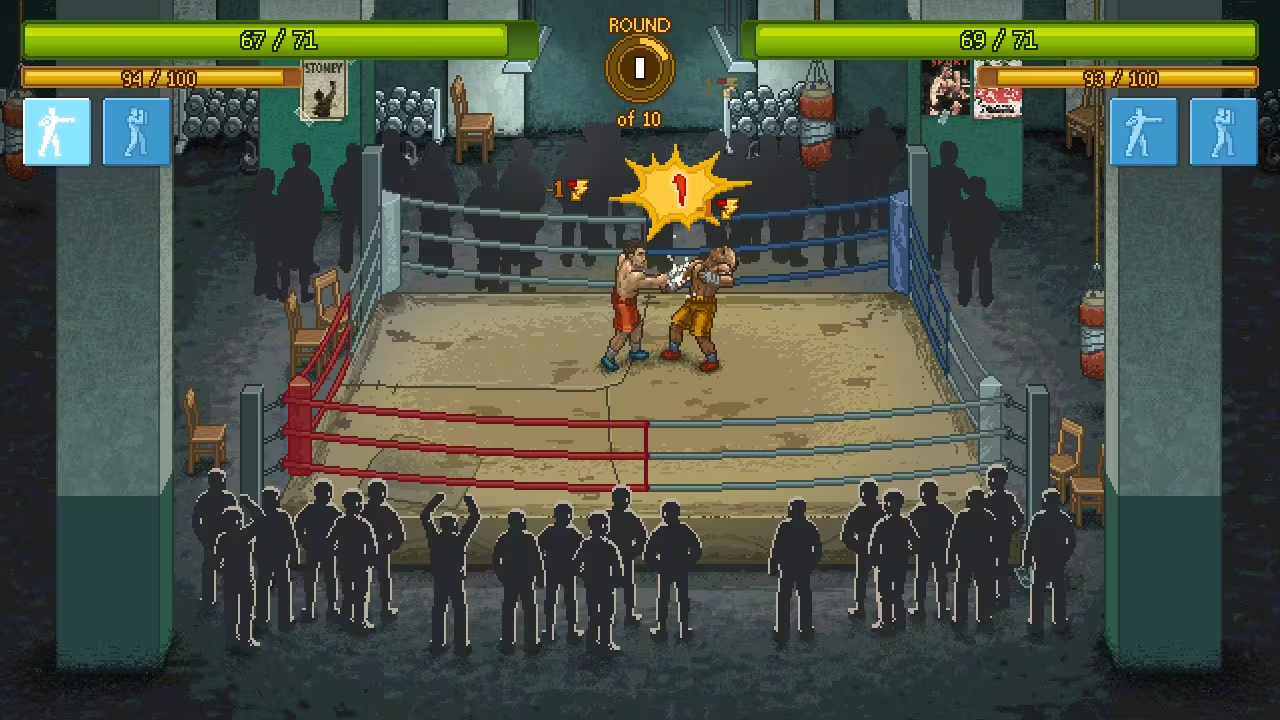
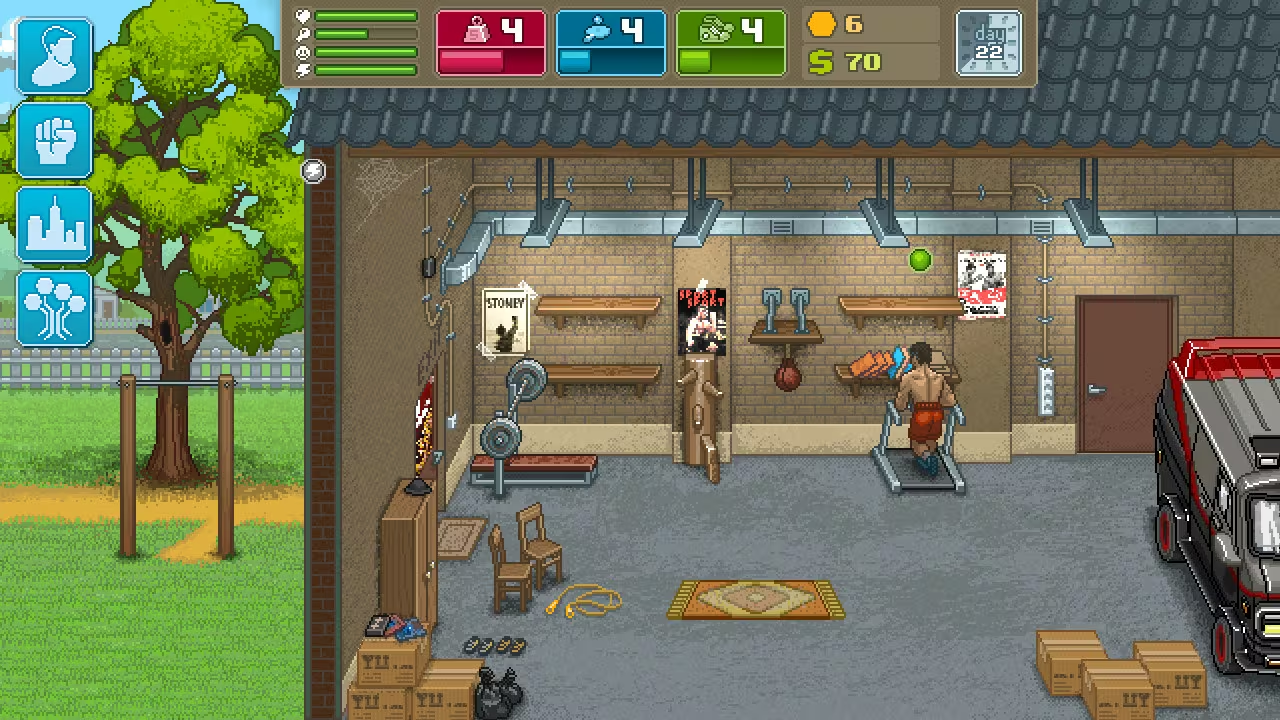
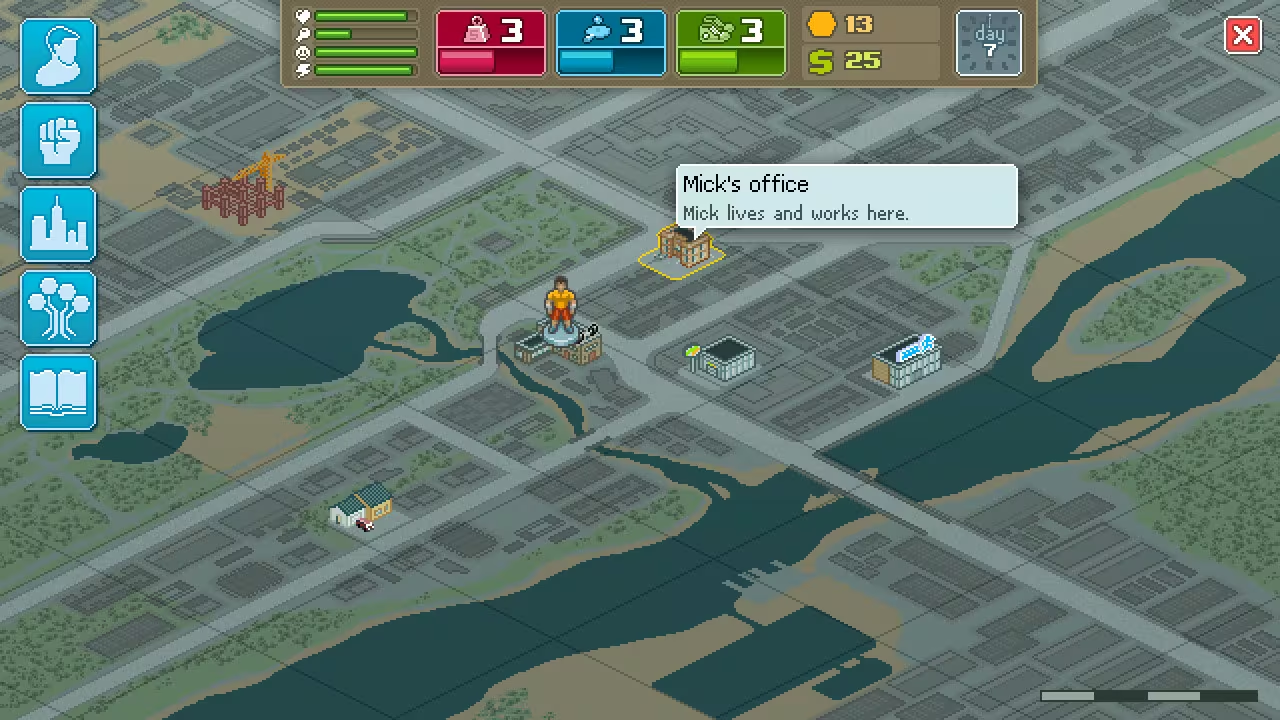
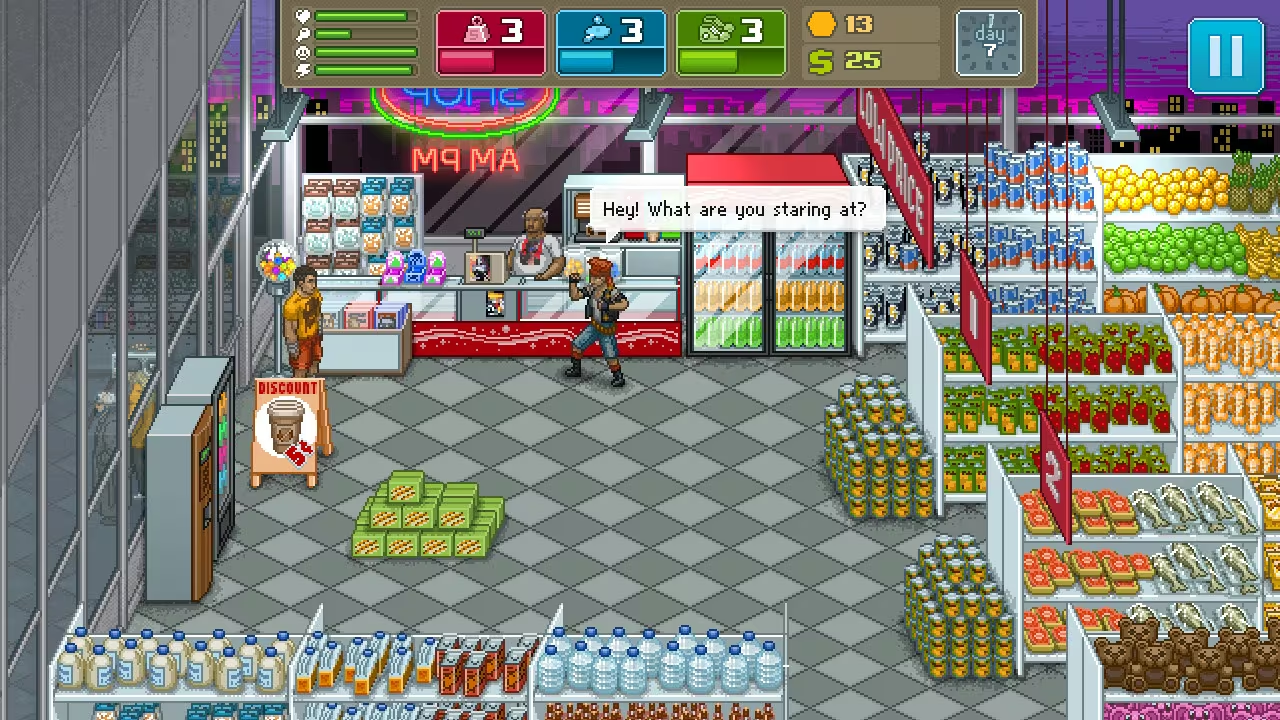
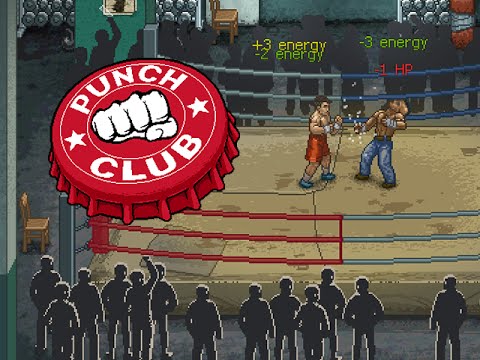
Train hard, fight crocodiles and find love. Earn your place in the Punch Club ranks, and discover who brutally murdered your father, in this choose your own adventure boxing management tycoon.
Global score
80/100
Genres
Indie, Role-playing (RPG), Strategy, Simulator, Sport, Fighting
Similar games
Pros
- Engaging time and resource management
- Rich pop culture references and humor
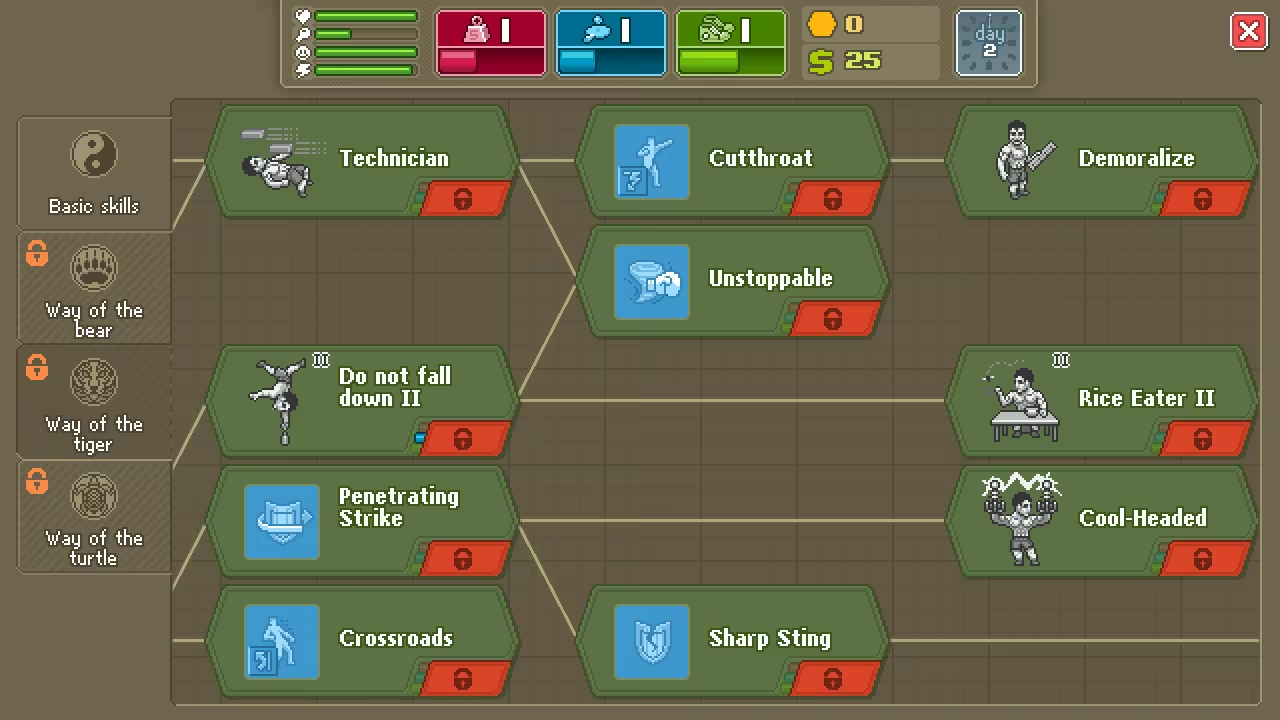
- Multiple skill trees and fighting styles
- Good price-to-playtime value
- Retro pixel art and soundtrack
Cons
- Grind-heavy gameplay
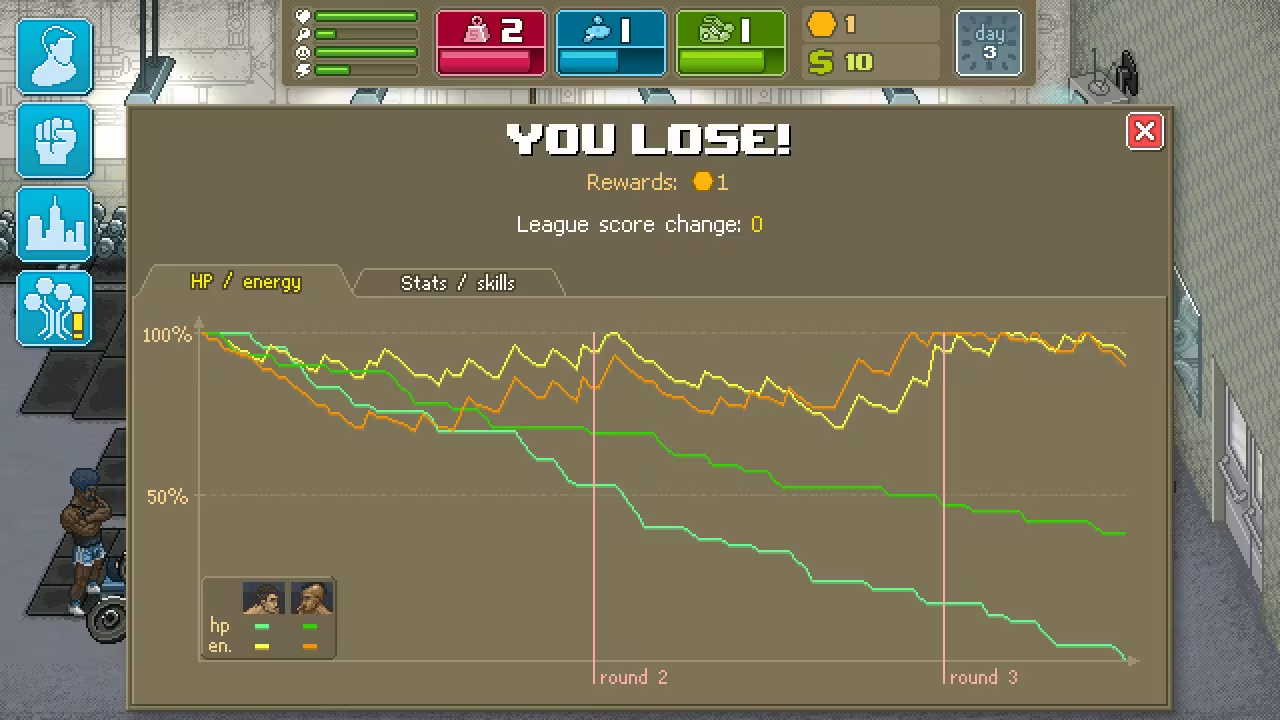
- Automated rng combat limits player control
- Story can feel clichéd and repetitive
- Some bugs and interface limitations
- Late game can become tedious
Analysis
Broadly representative of its motivational profile, with a few distinct shifts. Motivations that often define this kind of title include Health, Story, Competition, Status. Here, the score leans higher than usual among comparable games on Idle, Story. It leans lower than usual among comparable games on Fellowship.
How to use the graph
Similar games map
Each dot is a game. They are arranged from the same motivation profile as in the “Motivations” section below. Closer dots usually mean more similar reasons to play (exploration, competition, relaxation, etc.)—not that one game is “better” than another.
- Larger dot with a light outline: the game you are viewing.
- Colour: groups of games with comparable motivation patterns (statistical clusters).
- Hover a dot to see the game name; click to open its page.
- Scroll or double-click the chart to zoom out and see more games.
Why don’t the axes read like a score? This view uses t-SNE: it only keeps who is close to whom. The scales are not “good to bad” or hours played—they separate groups on the map. Read distance between dots, not the axis numbers.
Motivations
-
Autonomy4
"Players manage daily activities and make strategic choices about training, work, and fighting style, with freedom to choose skill paths and progression."
-
Competence3
"Players engage in skill management and strategic planning, but combat is automated and RNG-based, limiting direct skill expression."
-
Competition-1
"Focus is on personal progression and story; no direct player-vs-player competition or leaderboards mentioned."
-
Continuation2
"Game has addictive qualities and replayability with multiple story paths, but grind and routine may cause fatigue."
-
Cooperation-5
"Single-player game with no cooperative or multiplayer elements."
-
Creativity2
"Players customize skill trees and fighting styles, but within predefined structures and limited character customization."
-
Domination-5
"No evidence of exerting control or superiority over others; interactions are single-player and narrative-driven."
-
Escapism4
"Players immerse in a fictional retro world with nostalgic references, escaping real life through story and gameplay."
-
Expectation-4
"Players engage voluntarily for fun and nostalgia; no indication of obligation or external pressure."
-
Experimenting3
"Players experiment with different skill builds and story paths, though core gameplay loops are repetitive."
-
Exploration1
"Some exploration of different city locations and story branches, but mostly familiar environments."
-
Expression1
"Limited character expression through skill and fighting style choices; no deep avatar customization."
-
Fantasy3
"Game features exaggerated, stylized fighting and story with many pop culture and fictional references."
-
Fellowship-5
"No social or community features; strictly single-player experience."
-
Growth4
"Strong focus on learning game mechanics, managing stats, and improving character through training and strategy."
-
Health1
"Game simulates physical training and fitness, motivating players to exercise, but is sedentary gameplay."
-
Idle3
"Gameplay involves waiting during training and automated fights, allowing multitasking or casual play."
-
Intimacy-4
"Minimal social interaction limited to scripted NPC relationships; no deep emotional connections."
-
Leadership-3
"Player manages own character only; no leadership or group management roles."
-
Progression4
"Clear progression through stat increases, skill unlocks, equipment purchases, and story advancement."
-
Relaxation1
"Game can be relaxing but also involves tension from time management and stat decay pressures."
-
Sensation2
"Retro pixel art and music provide sensory enjoyment; combat animations add excitement despite automation."
-
Status-2
"No social status or recognition systems; progress is personal and narrative-based."
-
Story3
"Narrative with multiple branches, characters, and pop culture references provides engaging story immersion."
-
Strategy3
"Players plan training, work, and combat skill loadouts strategically to optimize performance and progression."
-
Thrill1
"Some tension from RNG combat and time/resource management, but overall controlled and predictable."
-
Value4
"Good price-to-playtime ratio; players report satisfying gameplay hours and free DLC content."
-
Violence3
"Combat and fighting are core gameplay elements with punches, kicks, and brawling, though stylized and pixelated."
-
Survival2
"Players must manage resources and avoid failure in fights and daily needs to survive and progress."
Last update: 29/04/2026