RollerCoaster Tycoon®: Deluxe similar games & best alternatives
RollerCoaster Tycoon®: Deluxe
2014
Related articles
Quick resume
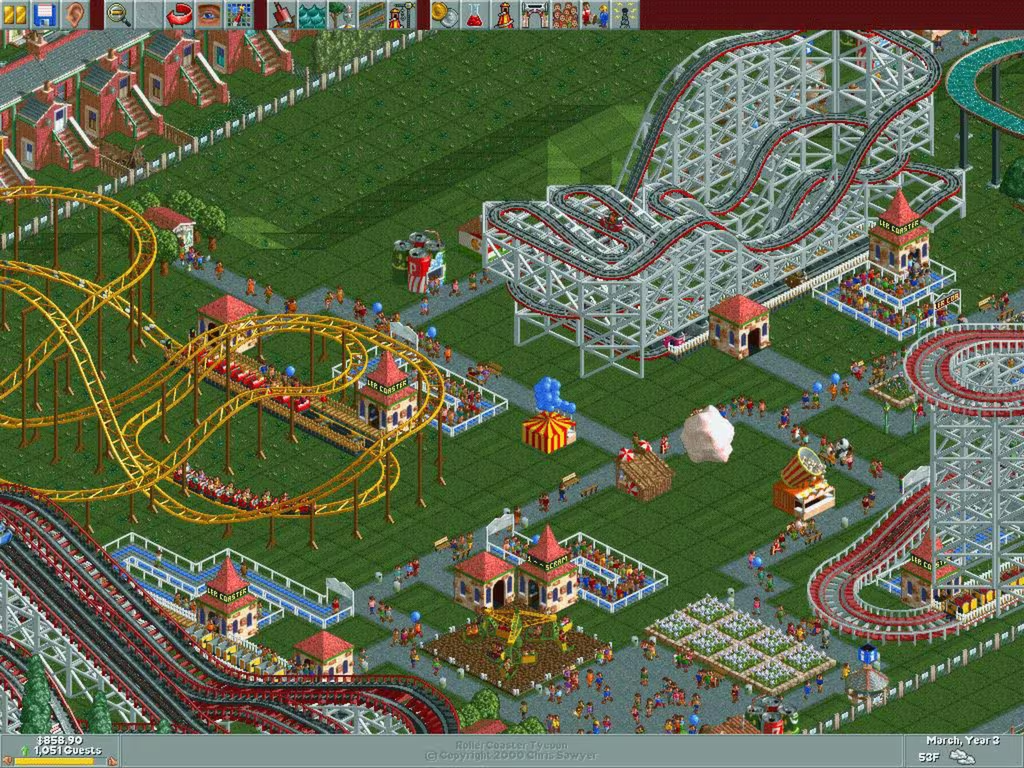
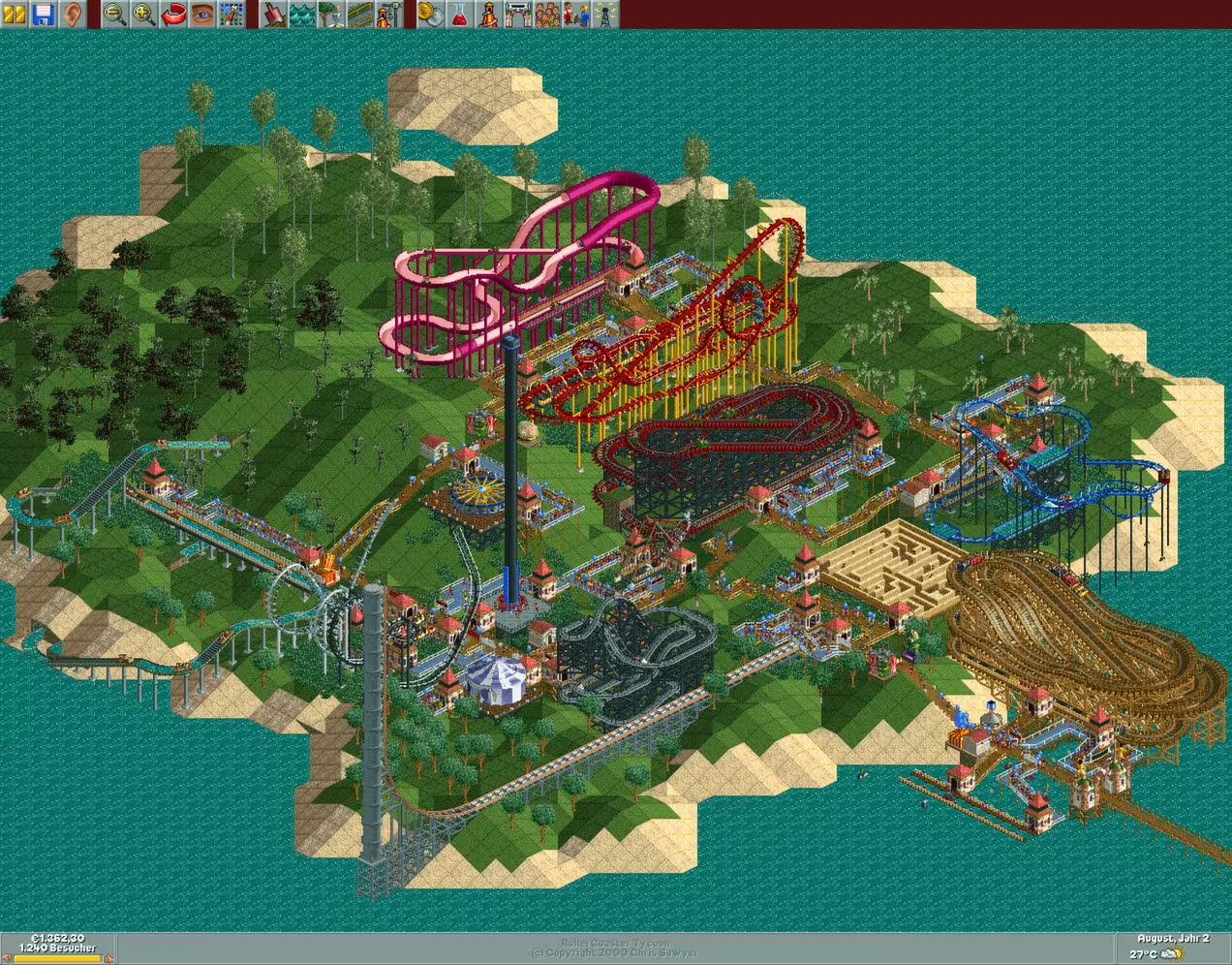
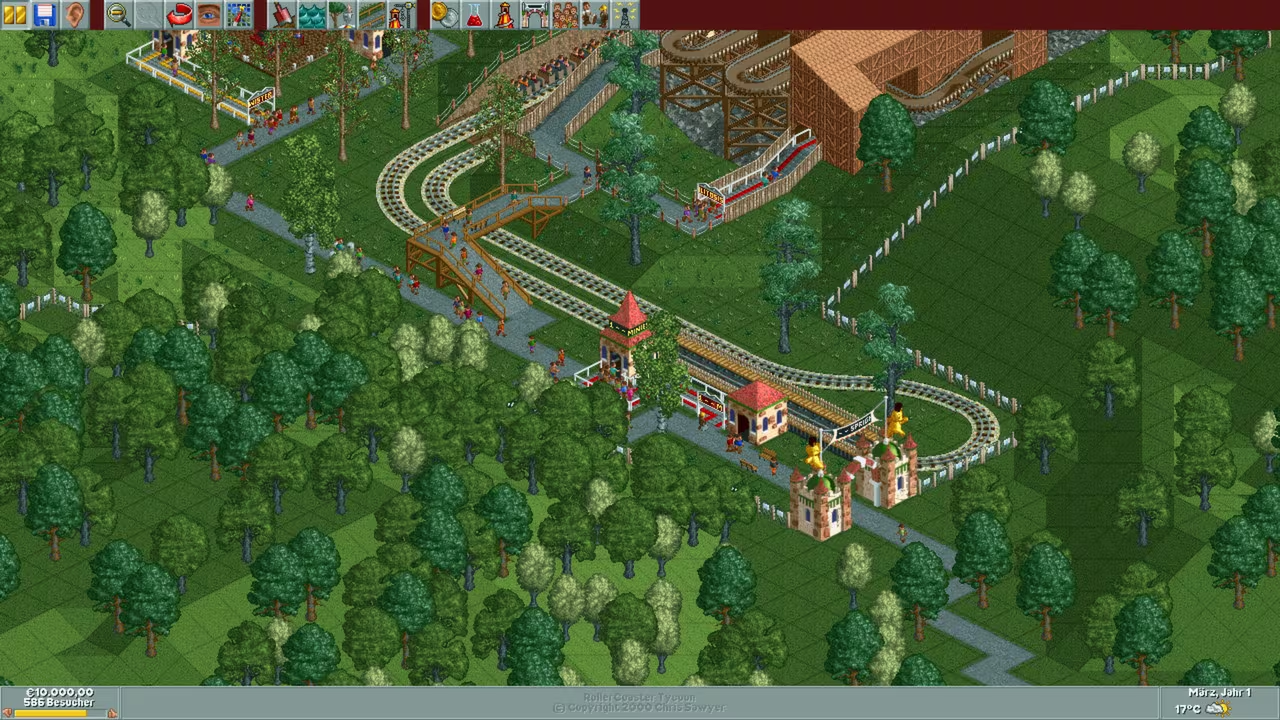
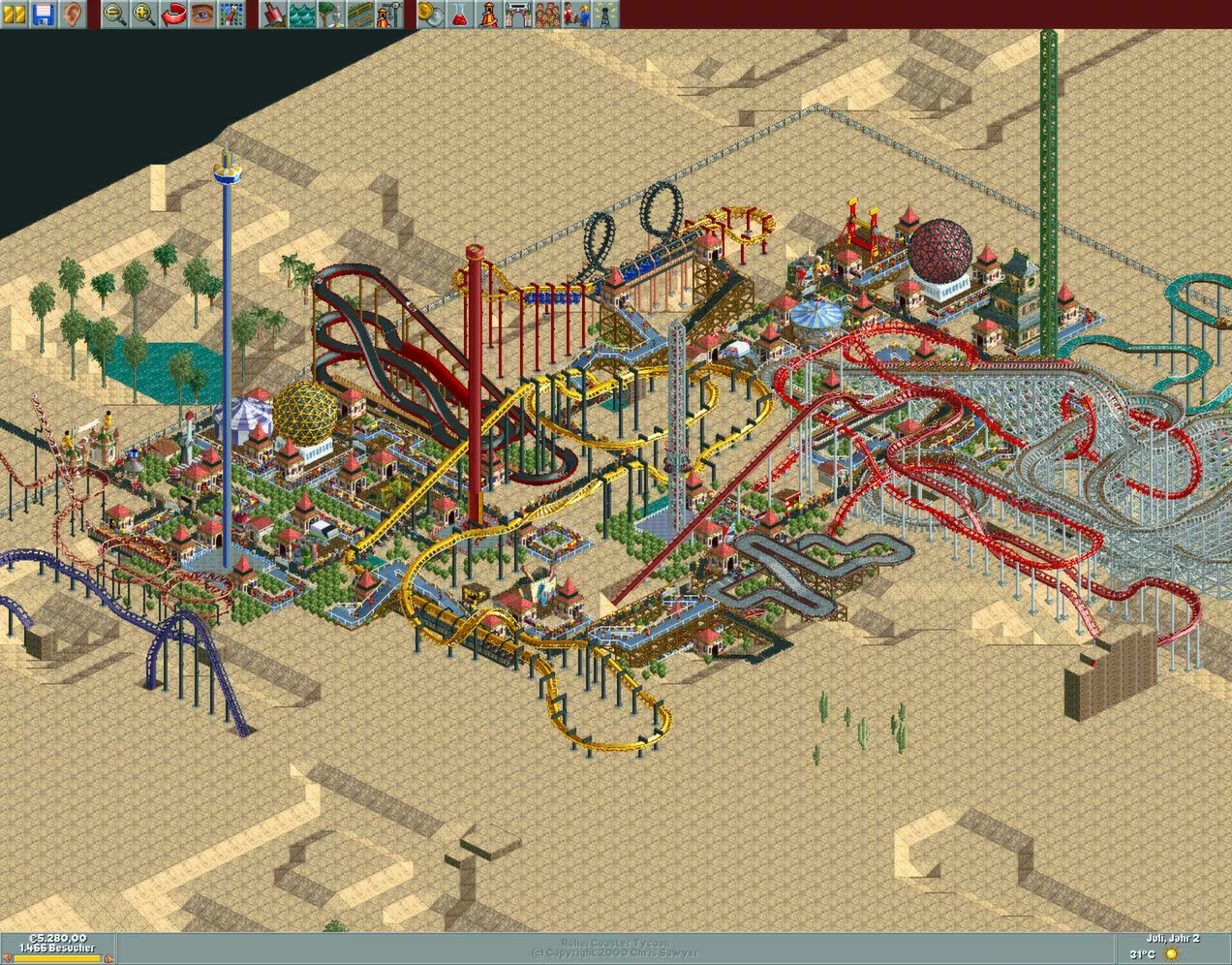
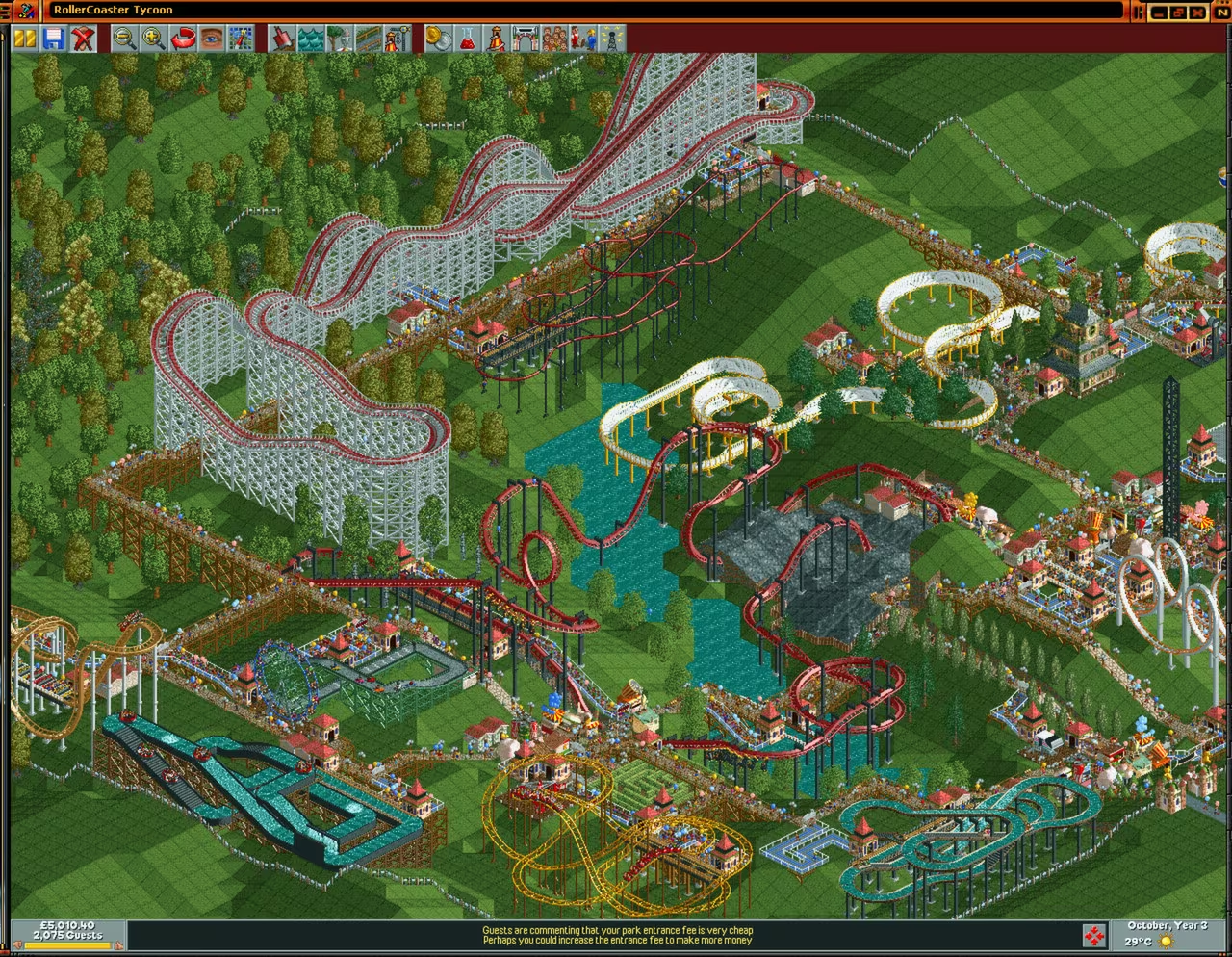
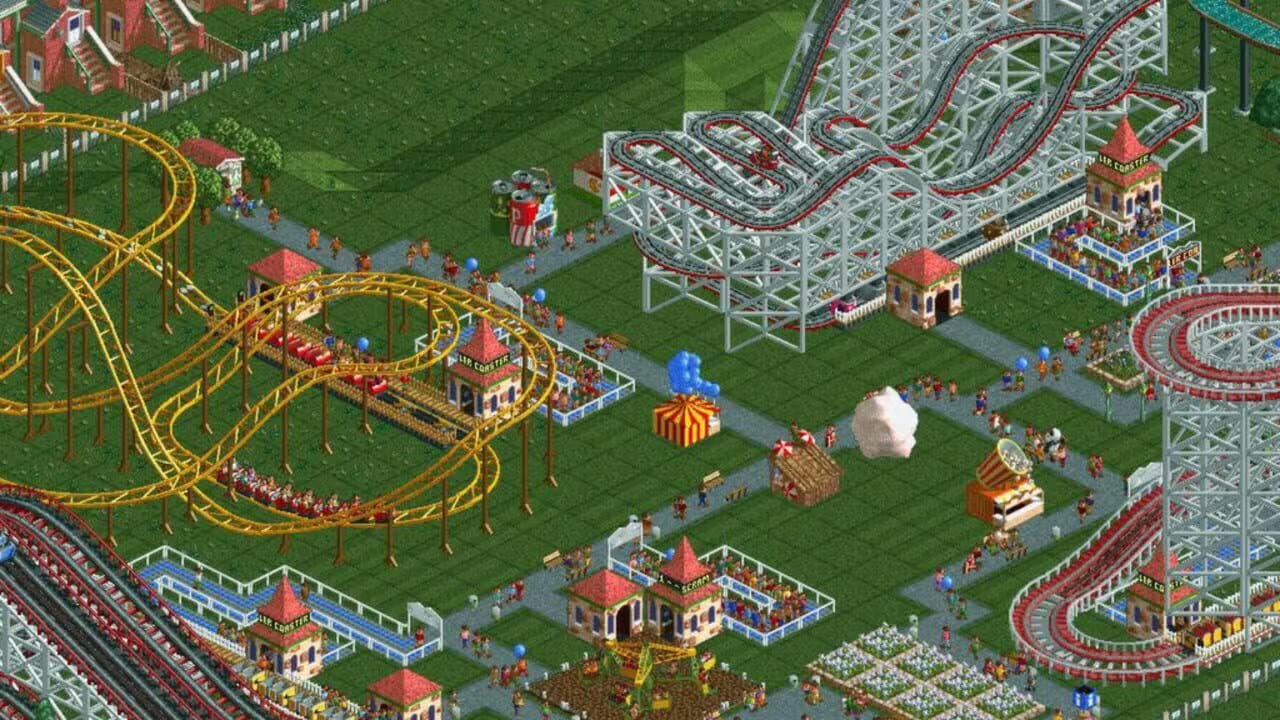
One of the best games from acclaimed Tycoon series, with well designed gameplay mechanics, appealing graphics, and really high re-playability value. There’s no limit to what you can create so design and build the most thrilling roller coaster the world has ever seen!
Global score
94/100
Genres
Simulator, Strategy
Similar games
Pros
- Highly nostalgic and replayable
- Extensive creative freedom in coaster and park design
- Challenging and rewarding management gameplay
- Includes expansions with many scenarios
- Runs well on modern systems with some compatibility fixes
Cons
- Dated graphics and limited resolution options
- No multiplayer or social features
- Some bugs and ui limitations due to age
- Lack of sandbox mode
- Requires active attention, not suitable for idle play
Analysis
Broadly representative of its motivational profile, with a few distinct shifts. Motivations that often define this kind of title include Leadership, Survival, Violence, Strategy. Here, the score leans higher than usual among comparable games on Expression, Relaxation. It leans lower than usual among comparable games on Story.
How to use the graph
Similar games map
Each dot is a game. They are arranged from the same motivation profile as in the “Motivations” section below. Closer dots usually mean more similar reasons to play (exploration, competition, relaxation, etc.)—not that one game is “better” than another.
- Larger dot with a light outline: the game you are viewing.
- Colour: groups of games with comparable motivation patterns (statistical clusters).
- Hover a dot to see the game name; click to open its page.
- Scroll or double-click the chart to zoom out and see more games.
Why don’t the axes read like a score? This view uses t-SNE: it only keeps who is close to whom. The scales are not “good to bad” or hours played—they separate groups on the map. Read distance between dots, not the axis numbers.
Motivations
-
Autonomy4
"Players have extensive control over park design, coaster building, pricing, and management decisions, allowing personal freedom in gameplay."
-
Competence4
"Game involves skillful balancing of finances, coaster design with ride statistics, and park management challenges that require learning and mastery."
-
Competition-3
"Focus is primarily on individual park building and scenario completion without direct player-vs-player competition or leaderboards."
-
Continuation5
"Players report hundreds to thousands of hours played, with high replayability and long sessions driven by nostalgia and creativity."
-
Cooperation-4
"Gameplay is single-player focused with no multiplayer or cooperative mechanics; players manage their own parks independently."
-
Creativity5
"Strong emphasis on creative coaster design, park layout, scenery customization, and personal expression within the game."
-
Domination-4
"Interactions are with AI guests and park management rather than exerting control over other players; no social dominance elements."
-
Escapism4
"Players use the game as a nostalgic escape and stress relief, immersing in park building and management away from real life."
-
Expectation-4
"Players engage voluntarily out of personal interest and nostalgia rather than obligation or external pressure."
-
Experimenting4
"Players experiment with coaster designs, pricing strategies, and park layouts to optimize success and enjoyment."
-
Exploration2
"Some exploration of different maps and scenarios with unique challenges, though environments are mostly known and fixed."
-
Expression4
"Customization of rides, colors, names, and park decorations allows for player self-expression."
-
Fantasy2
"Game features imaginative amusement park scenarios and exaggerated coaster physics, though grounded in a theme park simulation."
-
Fellowship-4
"Minimal social interaction; primarily a solo experience without community or multiplayer integration."
-
Growth4
"Players develop skills in management, coaster design, and strategic planning through progressive challenges."
-
Health-5
"Sedentary gameplay with no physical activity or health-related mechanics."
-
Idle-4
"Requires active management and attention; not designed for passive or background play."
-
Intimacy-5
"No close social relationships or emotional sharing; interactions are with AI guests only."
-
Leadership3
"Players lead and manage park staff and operations, making strategic decisions to guide park success."
-
Progression4
"Players unlock new scenarios, rides, and features, progressing through increasingly challenging objectives."
-
Relaxation3
"Gameplay offers a balance of challenge and flow, providing a relaxing and rewarding experience."
-
Sensation2
"Visual and auditory stimuli are nostalgic and enjoyable but limited by dated graphics and sound."
-
Status-4
"No social recognition or ranking systems; achievements are personal and internal."
-
Story-3
"No narrative or plot; gameplay is scenario-based with objectives but lacks story immersion."
-
Strategy4
"Requires strategic planning in coaster design, pricing, staff management, and park layout to succeed."
-
Thrill2
"Some excitement from coaster design and managing park crises, but overall low suspense or risk."
-
Value4
"Highly regarded for replayability and nostalgia value; considered a worthwhile purchase by users."
-
Violence3
"Players can create death coasters and drown guests, adding a darkly humorous destructive element."
-
Survival2
"Players manage finances and park safety to avoid failure, but game is generally forgiving and low-risk."
Last update: 29/04/2026