The Deed Thumbnail

The Deed similar games & best alternatives

The Deed

PC (Microsoft Windows) • 2015

Related articles

Quick resume

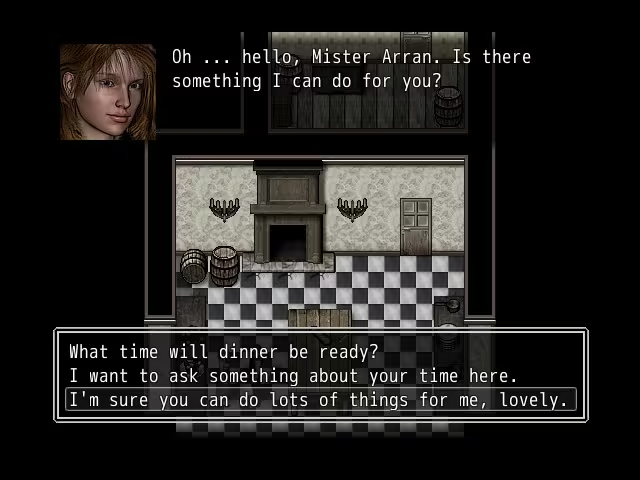
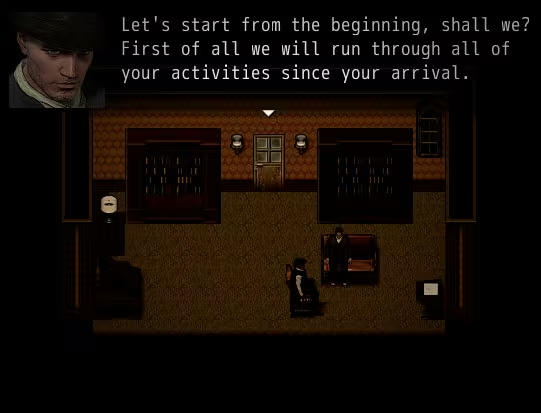
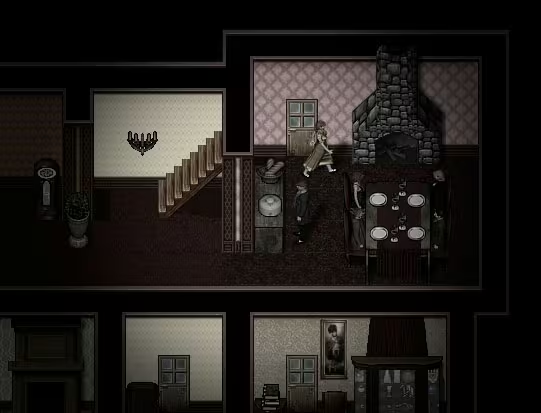
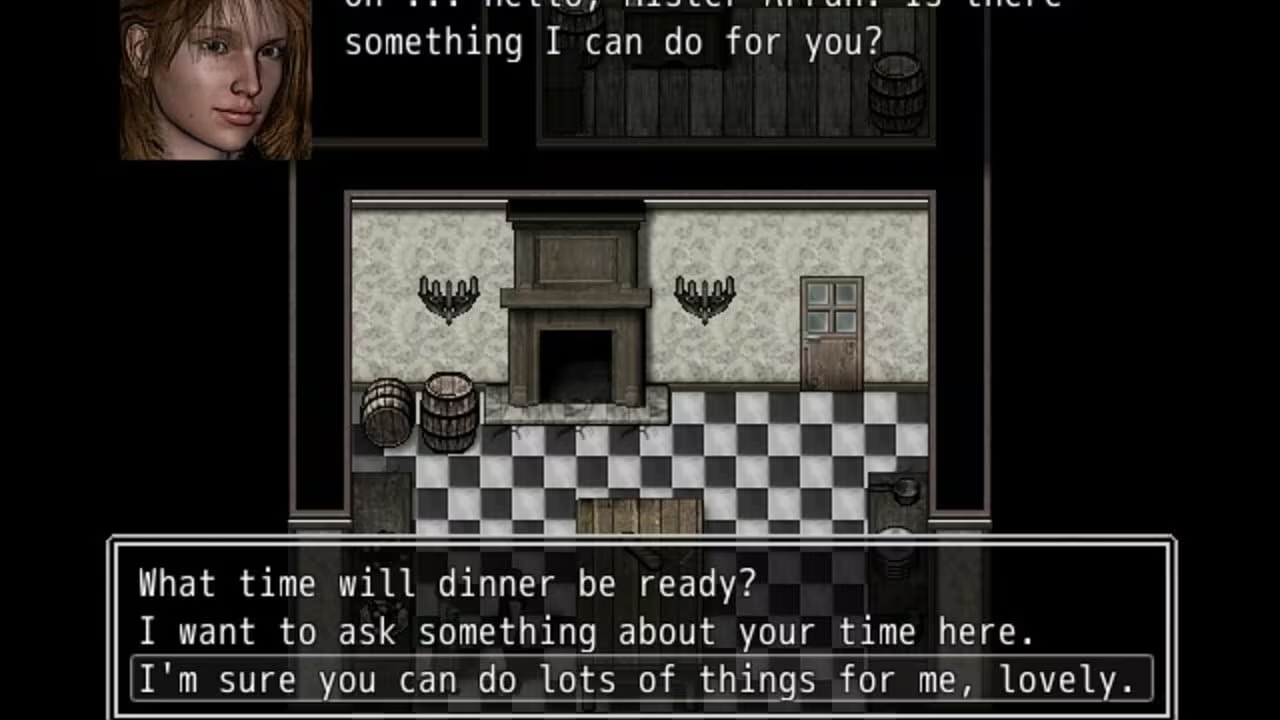
A keenly dark twist on the traditional murder mystery setting, The Deed is an Adventure/RPG game about getting away with murder. Arran Bruce, the rightful heir to Dunshiel House, returns home to settle a score with his estranged family.

Global score

90/100

Genres

Adventure, Role-playing (RPG)

Similar games

    Pros

    • High replayability with multiple endings
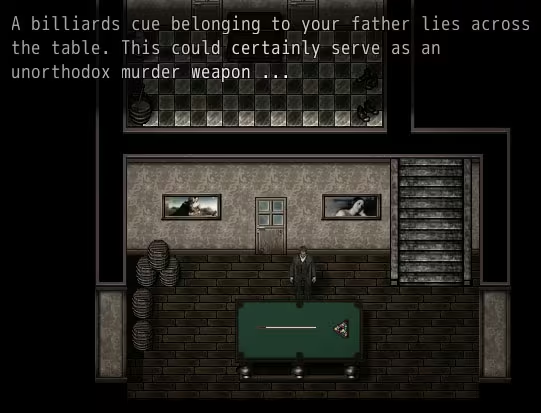
    • Creative murder and framing mechanics
    • Engaging narrative and dialogue choices
    • Excellent value for price
    • Immersive dark atmosphere

    Cons

    • Very short playtime per run
    • Simple graphics and sound
    • Repetitive dialogue on multiple playthroughs
    • Limited character customization
    • No multiplayer or social features

    Analysis

    Less representative of its motivational profile, with noticeable differences. Motivations that often define this kind of title include Fellowship, Cooperation, Leadership, Violence. Here, the score leans higher than usual among comparable games on Violence. It leans lower than usual among comparable games on Expression, Progression.

    How to use the graph
    Similar games map

    Each dot is a game. They are arranged from the same motivation profile as in the “Motivations” section below. Closer dots usually mean more similar reasons to play (exploration, competition, relaxation, etc.)—not that one game is “better” than another.

    • Larger dot with a light outline: the game you are viewing.
    • Colour: groups of games with comparable motivation patterns (statistical clusters).
    • Hover a dot to see the game name; click to open its page.
    • Scroll or double-click the chart to zoom out and see more games.

    Why don’t the axes read like a score? This view uses t-SNE: it only keeps who is close to whom. The scales are not “good to bad” or hours played—they separate groups on the map. Read distance between dots, not the axis numbers.

    Motivations

    • Autonomy
      4

      "Players have freedom to choose dialogue options, murder weapons, evidence placement, and framing targets, allowing control over their actions and decisions."

    • Competence
      3

      "The game challenges players to plan and execute a murder while manipulating evidence and conversations, requiring strategic thinking and problem solving."

    • Competition
      -3

      "Focus is on individual playthroughs and personal experimentation with outcomes rather than competing against others."

    • Continuation
      3

      "High replayability with multiple endings and achievements encourages repeated play sessions."

    • Cooperation
      -5

      "Gameplay is single-player and individual, with no cooperative or team-based elements."

    • Creativity
      4

      "Players creatively combine weapons, evidence, and dialogue choices to craft unique murder scenarios and frame others."

    • Domination
      -4

      "Interactions are balanced and focused on narrative choices rather than exerting power or superiority over others."

    • Escapism
      4

      "The dark, immersive murder mystery setting offers players an escape from reality through roleplaying a complex scenario."

    • Expectation
      -4

      "Players engage voluntarily out of interest and curiosity, with no external obligation or pressure."

    • Experimenting
      5

      "Core motivation is to experiment with different murder methods, evidence placements, and dialogue to discover all endings."

    • Exploration
      3

      "Players explore the mansion and interact with various characters and objects to uncover clues and plan the murder."

    • Expression
      -2

      "Limited character customization; expression mainly through choice of actions and dialogue rather than visual personalization."

    • Fantasy
      3

      "The game involves a fictional murder mystery with exaggerated family drama and dark themes, providing an imaginative experience."

    • Fellowship
      -5

      "The game is a solitary experience without social or community features."

    • Growth
      3

      "Players learn from repeated playthroughs how to manipulate evidence and dialogue to achieve desired outcomes."

    • Health
      -5

      "Sedentary gameplay with no physical activity involved."

    • Idle
      -3

      "Requires focused attention during playthroughs; not designed for passive or background play."

    • Intimacy
      -4

      "Interactions are limited to scripted dialogue with no deep emotional or social bonding."

    • Leadership
      -5

      "No leadership or group management elements; purely individual gameplay."

    • Progression
      2

      "Progression is through unlocking achievements and discovering new endings rather than accumulating items or upgrades."

    • Relaxation
      1

      "The game has tense moments but overall a calm, methodical pace with some suspense."

    • Sensation
      1

      "Simple graphics and sound provide moderate sensory stimulation appropriate to the dark theme."

    • Status
      -4

      "Achievements exist but social recognition or competition is minimal; focus is on personal accomplishment."

    • Story
      4

      "Strong narrative focus with branching dialogue and multiple endings driving player engagement."

    • Strategy
      4

      "Players must plan murder methods, evidence placement, and dialogue choices strategically to succeed."

    • Thrill
      3

      "Suspense and tension arise from attempting to avoid detection and successfully framing others."

    • Value
      5

      "Highly praised for excellent value given low price and replayability."

    • Violence
      5

      "Central gameplay involves committing murder and framing others, with various violent methods."

    • Survival
      3

      "Players must avoid failure by not getting caught and managing evidence and alibis."

    Last update: 29/04/2026