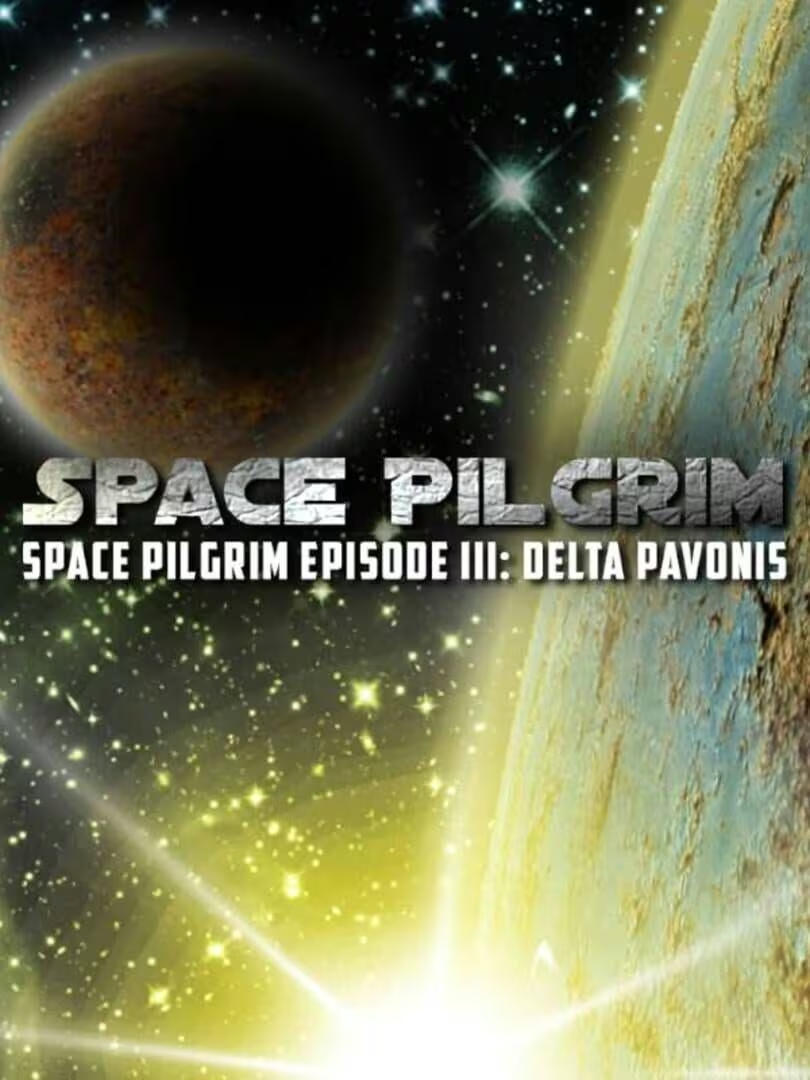
Space Pilgrim Episode II: Epsilon Indi Thumbnail

Space Pilgrim Episode II: Epsilon Indi similar games & best alternatives

Space Pilgrim Episode II: Epsilon Indi

PC (Microsoft Windows) • 2016

Related articles

Quick resume

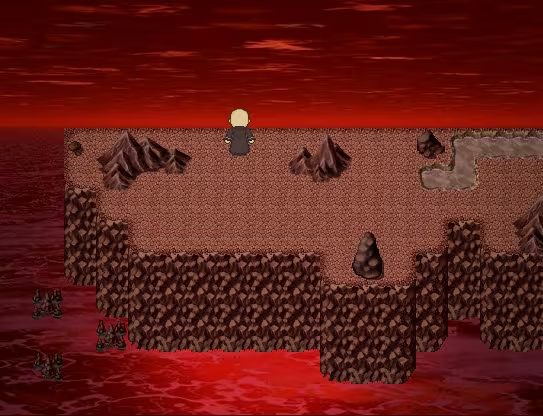
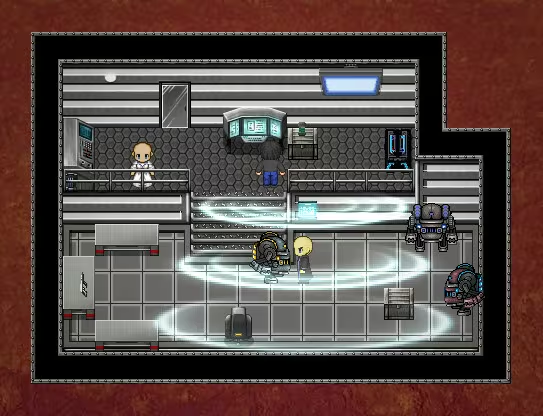
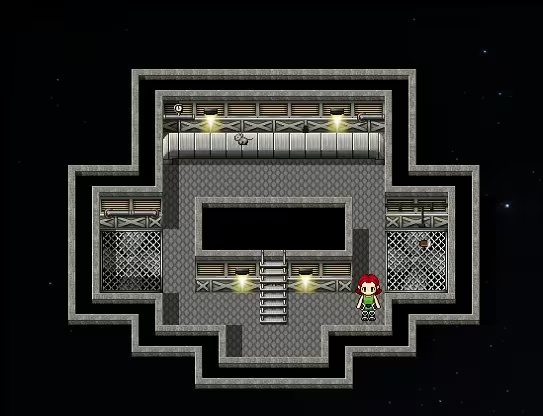
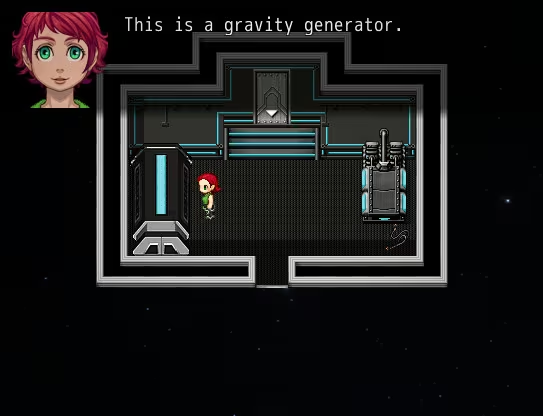
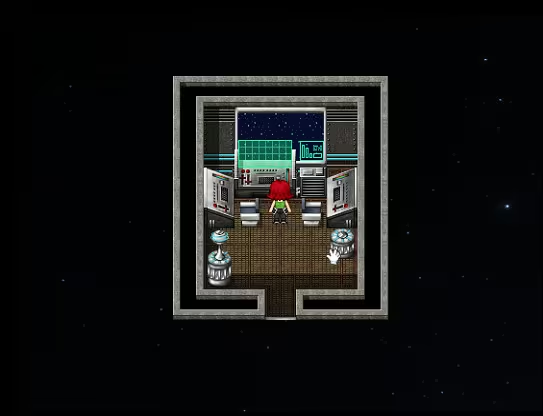
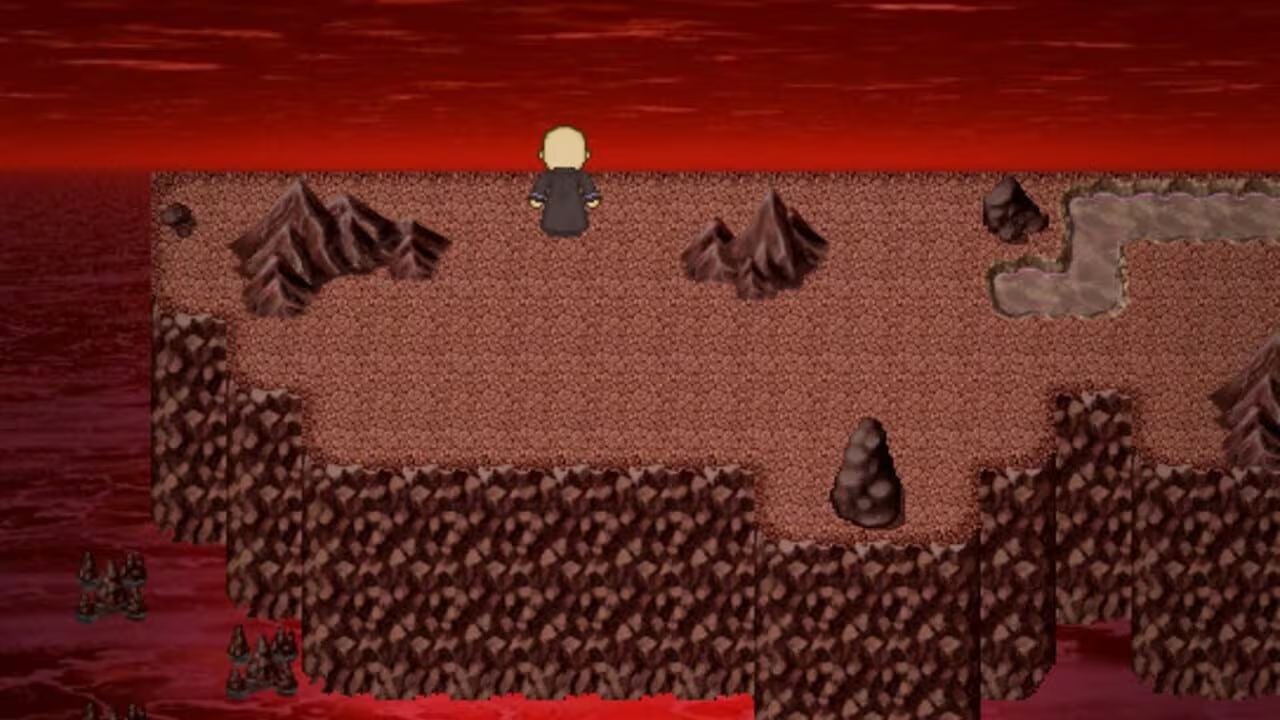
One year after the events of Episode I, Captain Pilgrim is once again carrying a shipload of passengers between star systems. This time her guests include a mysterious priestess, a wayward youth and a robotics genius.

Global score

82/100

Genres

Adventure, Indie

Similar games

    Pros

    • Engaging and humorous story
    • Affordable price
    • Short, accessible gameplay
    • Charming characters
    • Good puzzle design

    Cons

    • Short game length
    • Limited graphics and sound
    • Some clunky controls
    • Linear gameplay
    • Lack of replay value

    Analysis

    Broadly representative of its motivational profile, with a few distinct shifts. Motivations that often define this kind of title include Survival, Violence, Fellowship, Expression. Here, the score leans higher than usual among comparable games on Survival, Continuation. It leans lower than usual among comparable games on Expression.

    How to use the graph
    Similar games map

    Each dot is a game. They are arranged from the same motivation profile as in the “Motivations” section below. Closer dots usually mean more similar reasons to play (exploration, competition, relaxation, etc.)—not that one game is “better” than another.

    • Larger dot with a light outline: the game you are viewing.
    • Colour: groups of games with comparable motivation patterns (statistical clusters).
    • Hover a dot to see the game name; click to open its page.
    • Scroll or double-click the chart to zoom out and see more games.

    Why don’t the axes read like a score? This view uses t-SNE: it only keeps who is close to whom. The scales are not “good to bad” or hours played—they separate groups on the map. Read distance between dots, not the axis numbers.

    Motivations

    • Autonomy
      3

      "Players direct their own actions in a point-and-click adventure style with item use and puzzle solving, allowing personal decision-making within the story."

    • Competence
      2

      "Puzzles require some thought and item combinations, with a few challenging moments, but overall gameplay is straightforward and accessible."

    • Competition
      -5

      "No competitive elements or player comparison; focus is on single-player narrative experience."

    • Continuation
      4

      "Players often replay episodes, follow the series, and engage in habitual play to experience the ongoing story."

    • Cooperation
      -5

      "Single-player game with no multiplayer or cooperative gameplay."

    • Creativity
      1

      "Some experimentation with item combinations and puzzle solving, but within predefined story and game structure."

    • Domination
      -5

      "No elements of exerting control or superiority over others; cooperative and narrative focus."

    • Escapism
      4

      "Players use the game as a relaxing, immersive sci-fi narrative to escape real-life stress and enjoy humor and story."

    • Expectation
      -4

      "Players engage voluntarily out of personal interest and enjoyment rather than obligation or pressure."

    • Experimenting
      2

      "Encourages trying different item uses and puzzle approaches, though within a linear adventure framework."

    • Exploration
      3

      "Players explore new areas on the ship and planets, discovering story elements and interacting with environments."

    • Expression
      -4

      "Limited customization; players follow preset characters and story without avatar personalization."

    • Fantasy
      4

      "Set in a sci-fi universe with fictional characters and space adventure themes."

    • Fellowship
      -5

      "Primarily a solo experience with minimal social interaction."

    • Growth
      2

      "Players develop problem-solving skills and learn story details, though no character leveling or skill progression."

    • Health
      -5

      "Sedentary gameplay typical of point-and-click adventure games."

    • Idle
      -3

      "Requires focused attention to progress through puzzles and story; not designed for idle play."

    • Intimacy
      -4

      "Limited social connection; interactions are with NPCs in a narrative context rather than forming close relationships."

    • Leadership
      -5

      "No leadership or group management elements; player controls single characters."

    • Progression
      1

      "Some item collection and puzzle progression, but no character upgrades or power accumulation."

    • Relaxation
      3

      "Generally a relaxing experience balancing light challenge and story engagement."

    • Sensation
      1

      "Simple graphics and sound provide moderate sensory stimulation appropriate for the genre."

    • Status
      -5

      "No social recognition or ranking systems; focus is on personal story experience."

    • Story
      5

      "Strong narrative focus with engaging plot, character development, and humor driving player immersion."

    • Strategy
      1

      "Requires some problem solving and logical thinking for puzzles, but no complex strategic planning."

    • Thrill
      1

      "Some suspenseful moments and plot twists, but overall low risk and tension."

    • Value
      4

      "Players perceive good value due to low price, short playtime, and enjoyable story."

    • Violence
      -4

      "Minimal combat or destruction; focus on puzzle solving and story."

    • Survival
      0

      "Some moments of threat in story but no gameplay mechanics focused on survival or resource management."

    Last update: 29/04/2026