City of Chains Thumbnail

City of Chains similar games & best alternatives

City of Chains

PC (Microsoft Windows) • 2015

Related articles

Quick resume

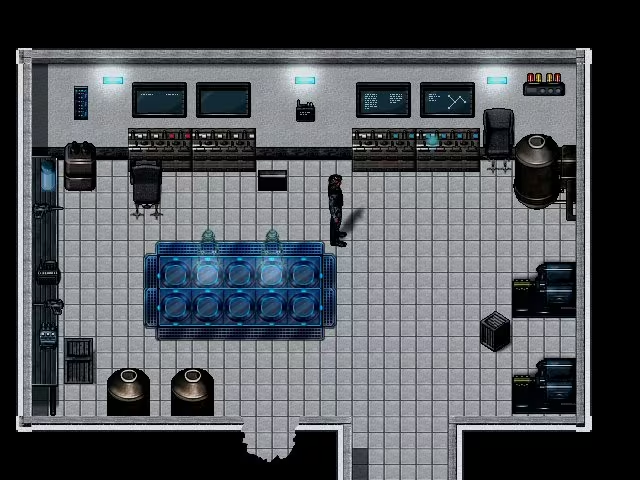
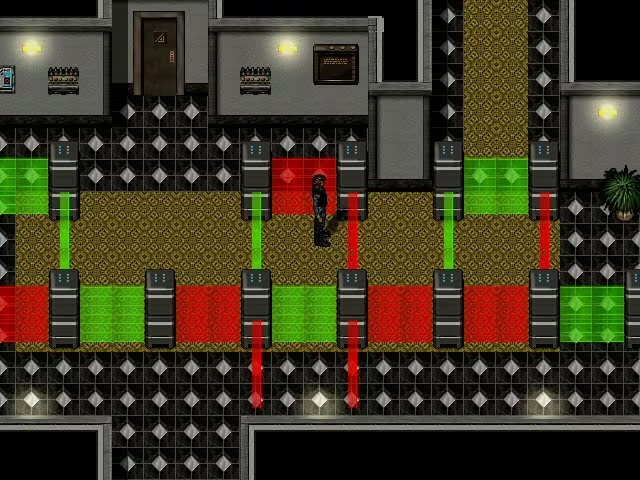
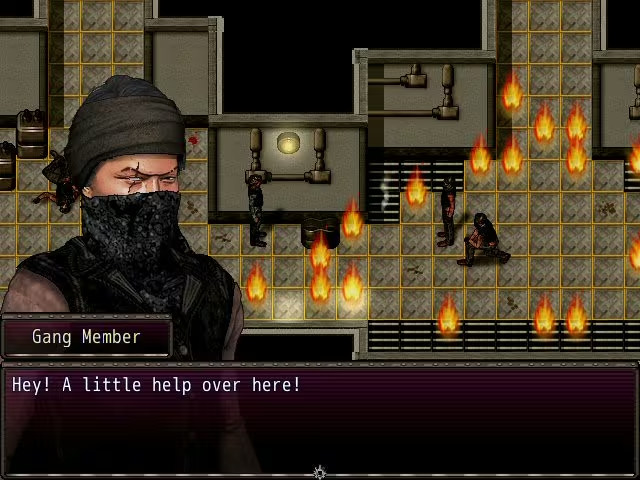
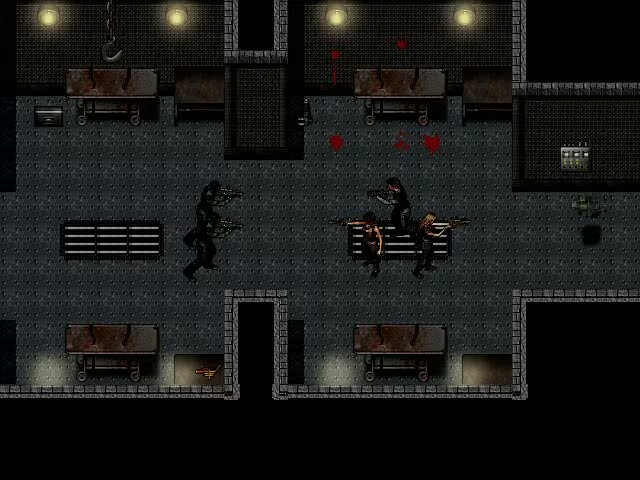
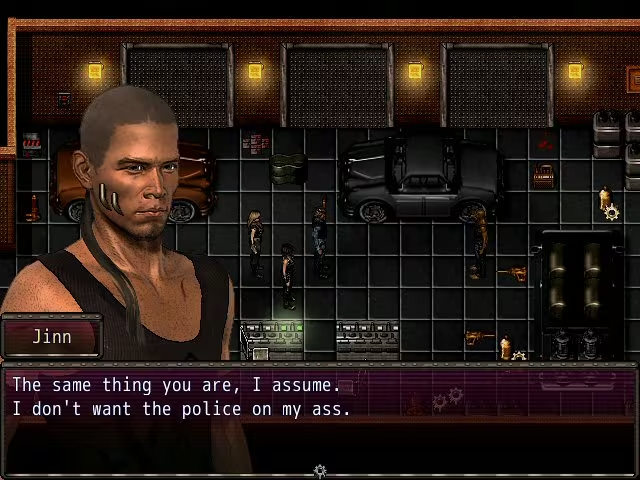
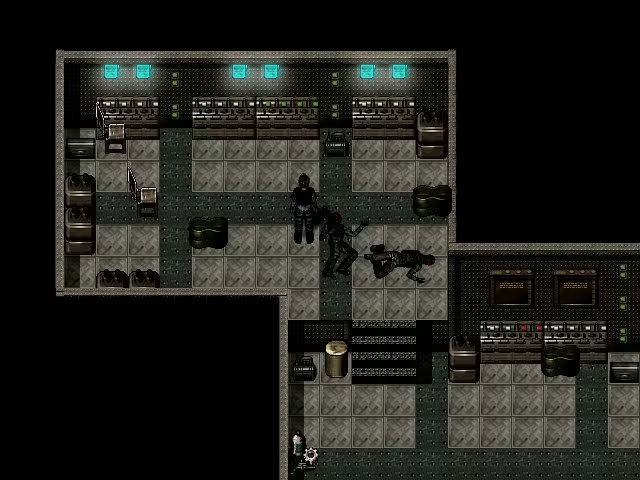
City of Chains is a dark sci-fi RPG set in a dystopian city. Take control of a small group of escaped fugitives and lead them to their freedom. Decide whether to fight head on or to avoid combat, to help others or to go your own way, to show mercy or to kill. Your actions could affect the fate of the city.

Global score

72/100

Genres

Adventure, Indie, Role-playing (RPG), Strategy

Similar games

    Pros

    • Meaningful player choices affecting story and gameplay
    • Unique skill point system rewarding tasks over grinding
    • Multiple endings and replayability
    • Tactical turn-based combat with resource management
    • Immersive dystopian sci-fi atmosphere and soundtrack

    Cons

    • Outdated graphics typical of rpg maker
    • Limited character development and emotional depth
    • No multiplayer or social features
    • Some ui and control clunkiness reported
    • Short game length for some players

    Analysis

    A very typical example of its motivational profile. Motivations that often define this kind of title include Leadership, Survival, Violence, Strategy. Here, the score leans higher than usual among comparable games on Story. It leans lower than usual among comparable games on Domination, Competition.

    How to use the graph
    Similar games map

    Each dot is a game. They are arranged from the same motivation profile as in the “Motivations” section below. Closer dots usually mean more similar reasons to play (exploration, competition, relaxation, etc.)—not that one game is “better” than another.

    • Larger dot with a light outline: the game you are viewing.
    • Colour: groups of games with comparable motivation patterns (statistical clusters).
    • Hover a dot to see the game name; click to open its page.
    • Scroll or double-click the chart to zoom out and see more games.

    Why don’t the axes read like a score? This view uses t-SNE: it only keeps who is close to whom. The scales are not “good to bad” or hours played—they separate groups on the map. Read distance between dots, not the axis numbers.

    Motivations

    • Autonomy
      4

      "Players make meaningful choices affecting story and gameplay style, including combat approach and moral decisions."

    • Competence
      3

      "Skill point system rewards completing tasks rather than grinding; combat requires tactical planning and resource management."

    • Competition
      -4

      "Focus is on personal progression and story; no evidence of competitive modes or leaderboards."

    • Continuation
      3

      "Multiple endings and replayability encourage continued engagement; some players report long sessions."

    • Cooperation
      -3

      "Gameplay centers on controlling a party of characters but no multiplayer or cooperative play."

    • Creativity
      3

      "Players customize skill builds and choose different approaches to obstacles, including crafting and stealth."

    • Domination
      -5

      "Interactions emphasize choices and consequences without exerting control over others; no evidence of domination."

    • Escapism
      4

      "Dystopian sci-fi setting and immersive story provide escape from reality and stress relief."

    • Expectation
      -4

      "Players engage voluntarily for enjoyment and exploration, not out of obligation or pressure."

    • Experimenting
      4

      "Multiple paths, skill builds, and combat approaches encourage experimentation."

    • Exploration
      3

      "Non-linear and semi-linear locations with side quests and alternate routes encourage discovery."

    • Expression
      2

      "Character skill customization and equipment choices allow some self-expression, though limited by RPG Maker style."

    • Fantasy
      3

      "Fictional dystopian sci-fi world with imaginative technology and narrative elements."

    • Fellowship
      -4

      "Single player experience with minimal social interaction or community involvement."

    • Growth
      4

      "Skill point system and tactical combat promote learning and personal development."

    • Health
      -4

      "Sedentary gameplay typical of RPGs; no physical activity or health-related features."

    • Idle
      -3

      "Requires focused attention during combat and decision making; not designed for idle play."

    • Intimacy
      -4

      "Limited character relationships; no evidence of forming close social bonds or emotional sharing."

    • Leadership
      3

      "Player leads a party of characters, making strategic decisions and directing actions."

    • Progression
      4

      "Skill points, equipment upgrades, and story advancement provide clear progression."

    • Relaxation
      2

      "Some players find the game immersive and relaxing; others note difficulty spikes causing tension."

    • Sensation
      2

      "Atmospheric music and visuals provide sensory engagement, though graphics are retro and simple."

    • Status
      -4

      "No social recognition or ranking systems; focus is on individual experience."

    • Story
      4

      "Narrative immersion with branching storylines, moral choices, and multiple endings."

    • Strategy
      4

      "Turn-based combat and skill management require tactical thinking and planning."

    • Thrill
      2

      "Some suspense from combat difficulty and story consequences, but generally controlled gameplay."

    • Value
      4

      "Good value noted by players for price, replayability, and unique gameplay features."

    • Violence
      3

      "Combat involves firearms and grenades with tactical violence; killing or sparing enemies affects story."

    • Survival
      3

      "Resource management and avoiding defeat in combat are important gameplay elements."

    Last update: 29/04/2026