Two Point Campus Thumbnail

Two Point Campus similar games & best alternatives
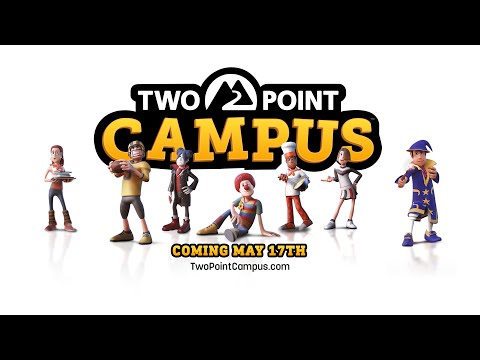
Two Point Campus

PC (Microsoft Windows), Mac, PlayStation 4, Xbox One, Xbox Series X|S, Nintendo Switch, PlayStation 5, Linux • 2022

Related articles

Quick resume

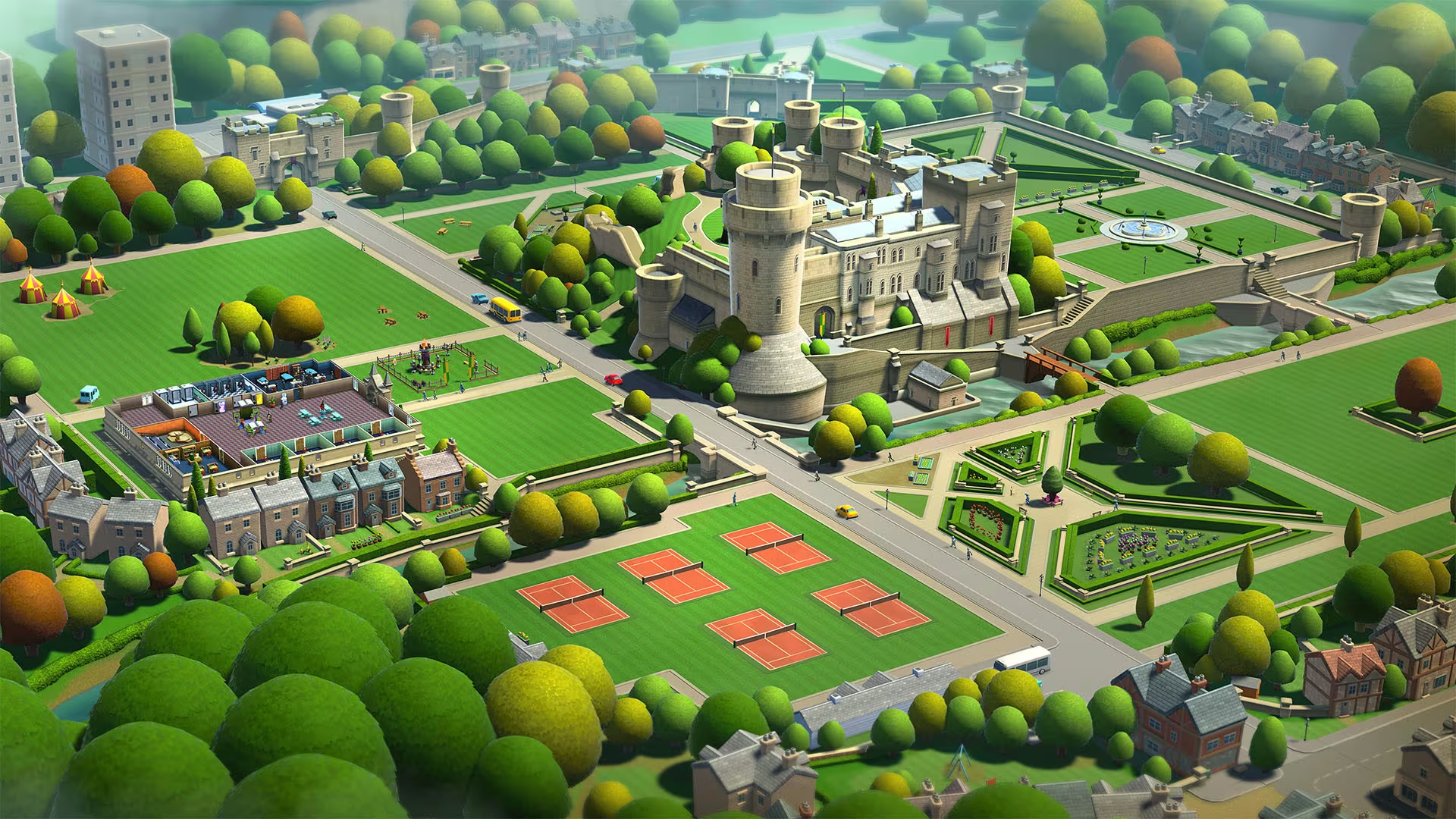
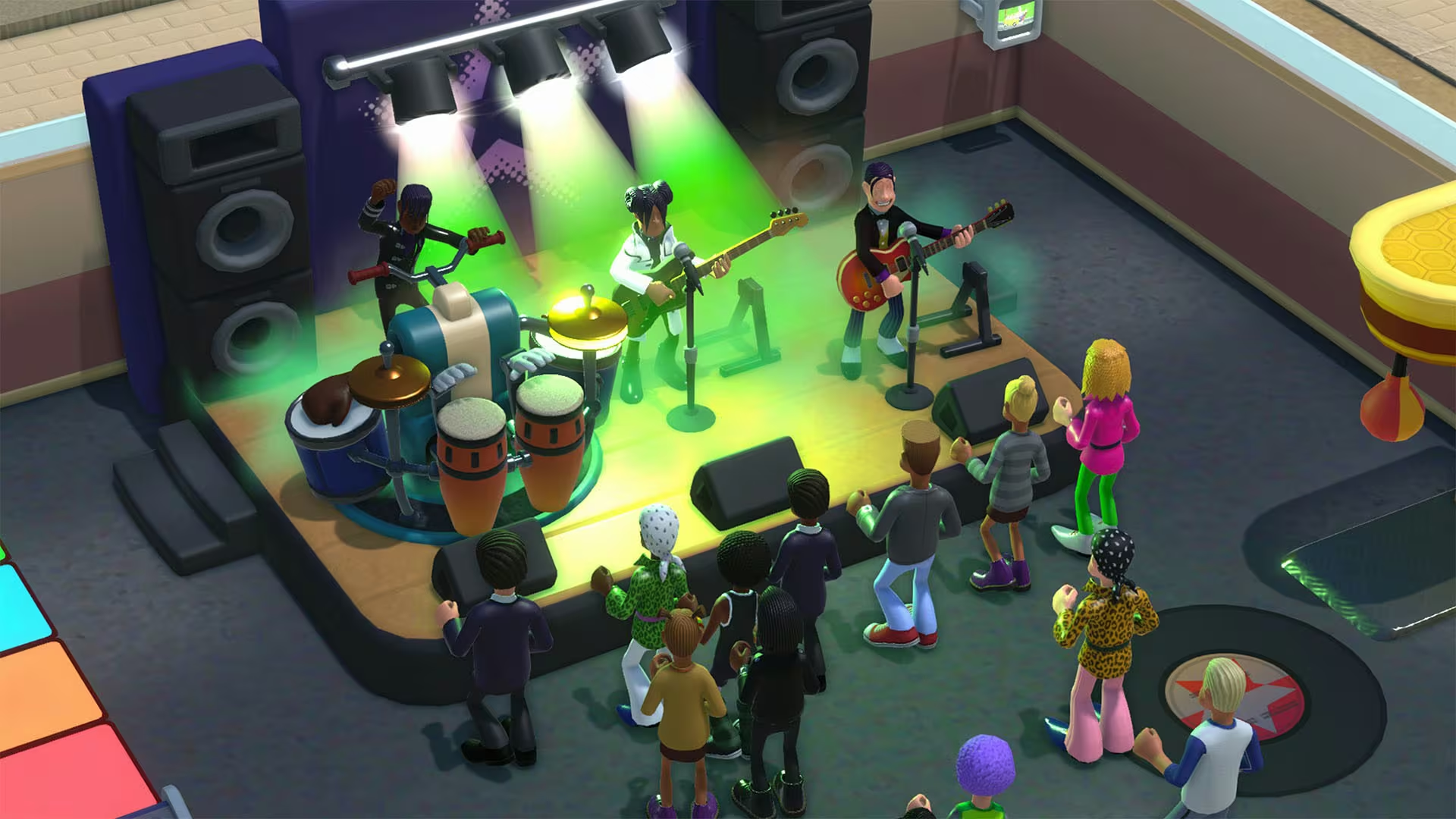
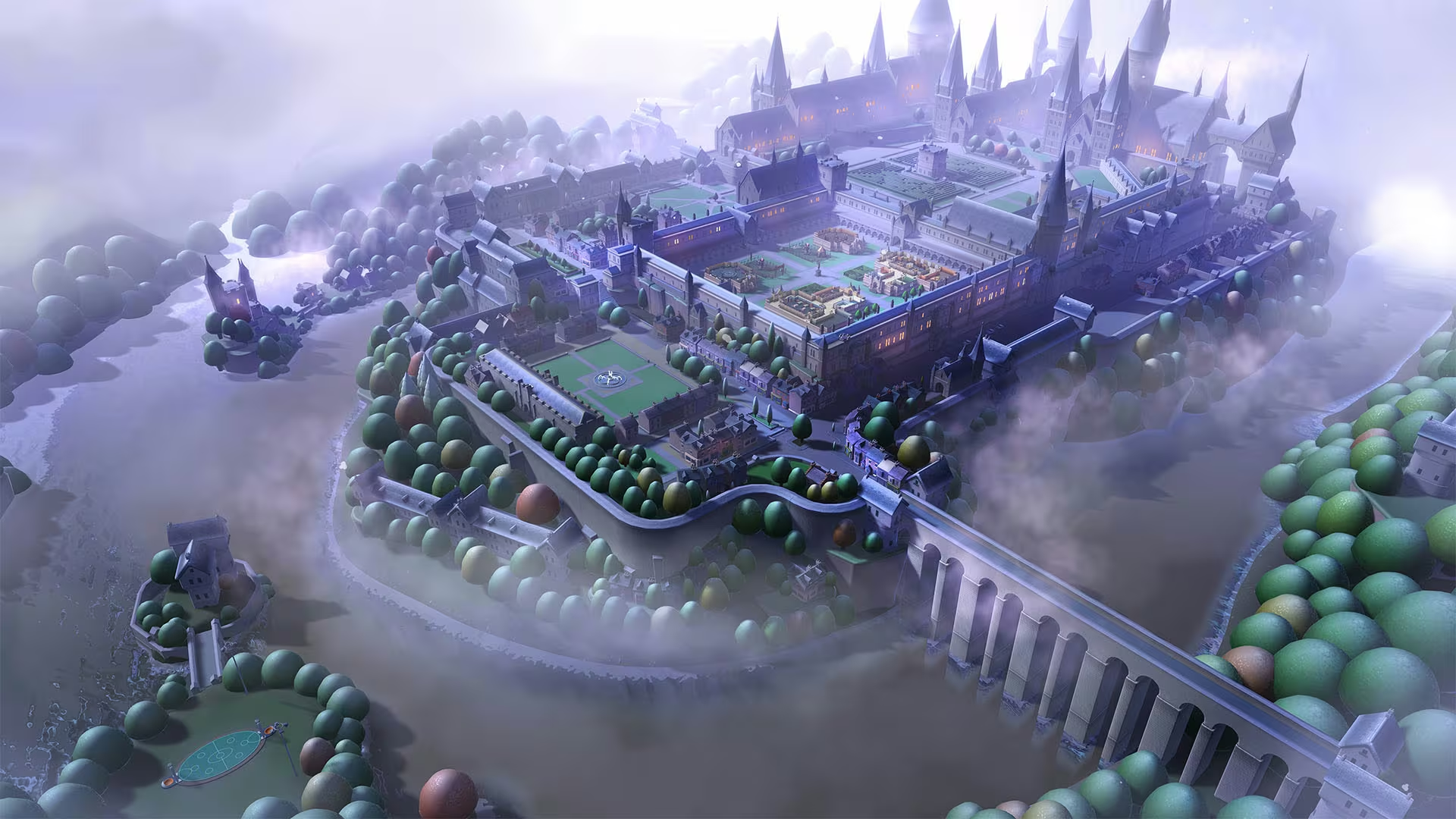
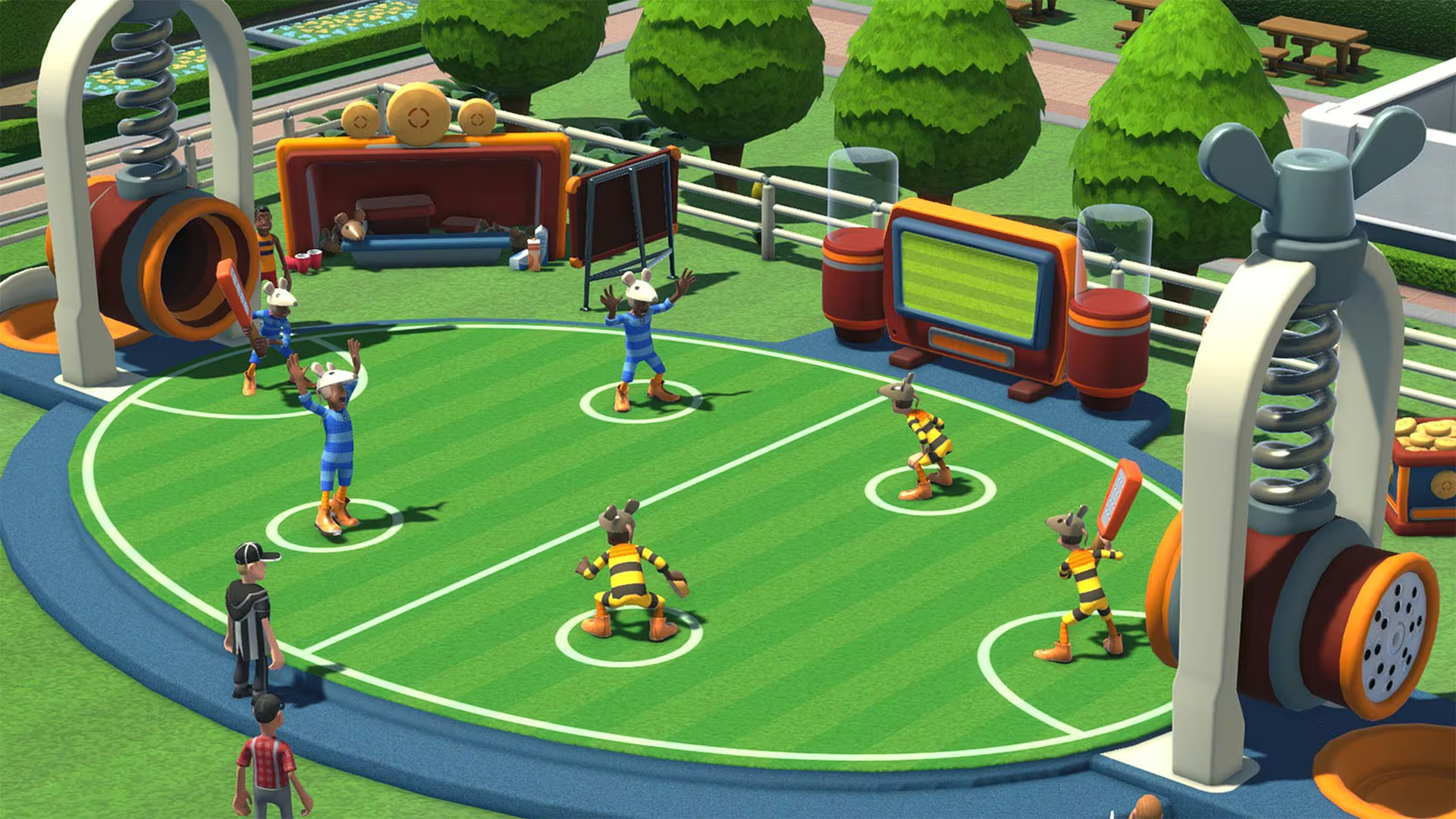
Build the university of your dreams with Two Point Campus, the sim with a twist from the makers of Two Point Hospital. Build, hire staff and run an academic institution packed with wild courses.

Global score

88/100

Genres

Casual, Indie, Simulator, Strategy

Similar games

    Pros

    • Engaging and creative campus building
    • Relaxing and humorous gameplay
    • Long playtime and replayability
    • Intuitive management mechanics
    • Varied themed campuses and courses

    Cons

    • Some repetitive elements and limited challenge
    • Clunky ui and ai quirks
    • Limited social and multiplayer features
    • Radio chatter can become repetitive
    • Some bugs and minor frustrations reported

    Analysis

    A very typical example of its motivational profile. Motivations that often define this kind of title include Idle, Thrill, Violence, Survival. Here, the score leans higher than usual among comparable games on Leadership, Expression, Creativity.

    How to use the graph
    Similar games map

    Each dot is a game. They are arranged from the same motivation profile as in the “Motivations” section below. Closer dots usually mean more similar reasons to play (exploration, competition, relaxation, etc.)—not that one game is “better” than another.

    • Larger dot with a light outline: the game you are viewing.
    • Colour: groups of games with comparable motivation patterns (statistical clusters).
    • Hover a dot to see the game name; click to open its page.
    • Scroll or double-click the chart to zoom out and see more games.

    Why don’t the axes read like a score? This view uses t-SNE: it only keeps who is close to whom. The scales are not “good to bad” or hours played—they separate groups on the map. Read distance between dots, not the axis numbers.

    Motivations

    • Autonomy
      4

      "Players have significant freedom to design and customize campus buildings, rooms, and layouts, with ability to expand buildings and outdoor areas."

    • Competence
      2

      "The game offers some strategic and management challenges, but overall is described as easier and more relaxed compared to its predecessor, with limited difficulty spikes."

    • Competition
      -3

      "Focus is on personal progression and management rather than competing against others; no mention of ranked or leaderboard modes."

    • Continuation
      4

      "Many players report long playtimes and habitual engagement, with some having 50+ hours and replaying levels for 3-star completion."

    • Cooperation
      -4

      "Gameplay centers on single-player management; no evidence of multiplayer or cooperative play."

    • Creativity
      5

      "Strong emphasis on building, customizing rooms and campuses, decorating, and creative freedom in layout and design."

    • Domination
      -5

      "No indications of exerting control over other players; interactions are individual and management-focused."

    • Escapism
      4

      "Players use the game as a relaxing, humorous escape from real life, with stress relief and distraction emphasized."

    • Expectation
      -4

      "Players engage voluntarily out of intrinsic interest and enjoyment, with no pressure or obligation mentioned."

    • Experimenting
      3

      "Encouraged to try different room layouts, course combinations, and customization options; some routine elements remain."

    • Exploration
      2

      "Players explore different themed campuses and unlock new courses and items, though environments are structured and familiar."

    • Expression
      4

      "Customization of characters, rooms, and outdoor spaces allows for self-expression and personalization."

    • Fantasy
      3

      "Includes imaginative and whimsical elements like wizardry courses and quirky student behaviors, blending fiction with management sim."

    • Fellowship
      -4

      "Minimal social interaction; primarily single-player experience with limited community engagement."

    • Growth
      3

      "Players learn management skills and improve strategies over time, progressing through increasingly complex campuses."

    • Health
      -5

      "No physical activity or health-related gameplay; sedentary play focused on screen interaction."

    • Idle
      3

      "Some waiting periods during academic years and downtime, but players remain engaged with management tasks."

    • Intimacy
      -4

      "Social interactions are superficial and limited to in-game character relationships without emotional depth."

    • Leadership
      3

      "Players lead and manage staff and campus development, making decisions and guiding progress."

    • Progression
      4

      "Clear progression through unlocking new campuses, courses, items, and upgrades; stars and achievements incentivize advancement."

    • Relaxation
      4

      "Game is described as chill, relaxing, and humorous, providing a low-stress experience."

    • Sensation
      2

      "Visuals and audio are enjoyable but not overwhelming; some players note repetitive radio chatter but overall pleasant sensory experience."

    • Status
      -3

      "No social status or recognition mechanics; focus is on personal achievement rather than social visibility."

    • Story
      1

      "Some narrative elements and themed campuses provide light story context, but gameplay is largely mission and management focused."

    • Strategy
      3

      "Requires planning and problem solving in resource management, room placement, and course scheduling."

    • Thrill
      -2

      "Game is more relaxed with minimal suspense or risk; some challenge but low emotional tension."

    • Value
      3

      "Players find good value especially when purchased on sale; long playtime and replayability noted."

    • Violence
      -5

      "No combat or destructive gameplay; focus on constructive building and management."

    • Survival
      -3

      "Low risk environment; failure is possible but not emphasized as survival challenge."

    Last update: 29/04/2026