We Were Here Together similar games & best alternatives
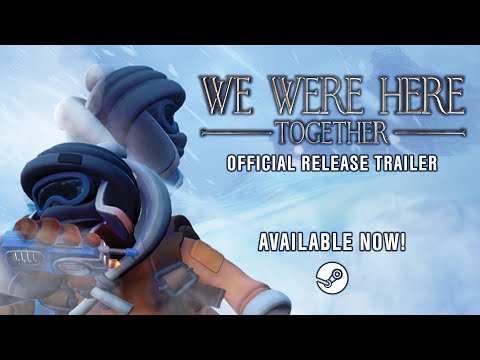
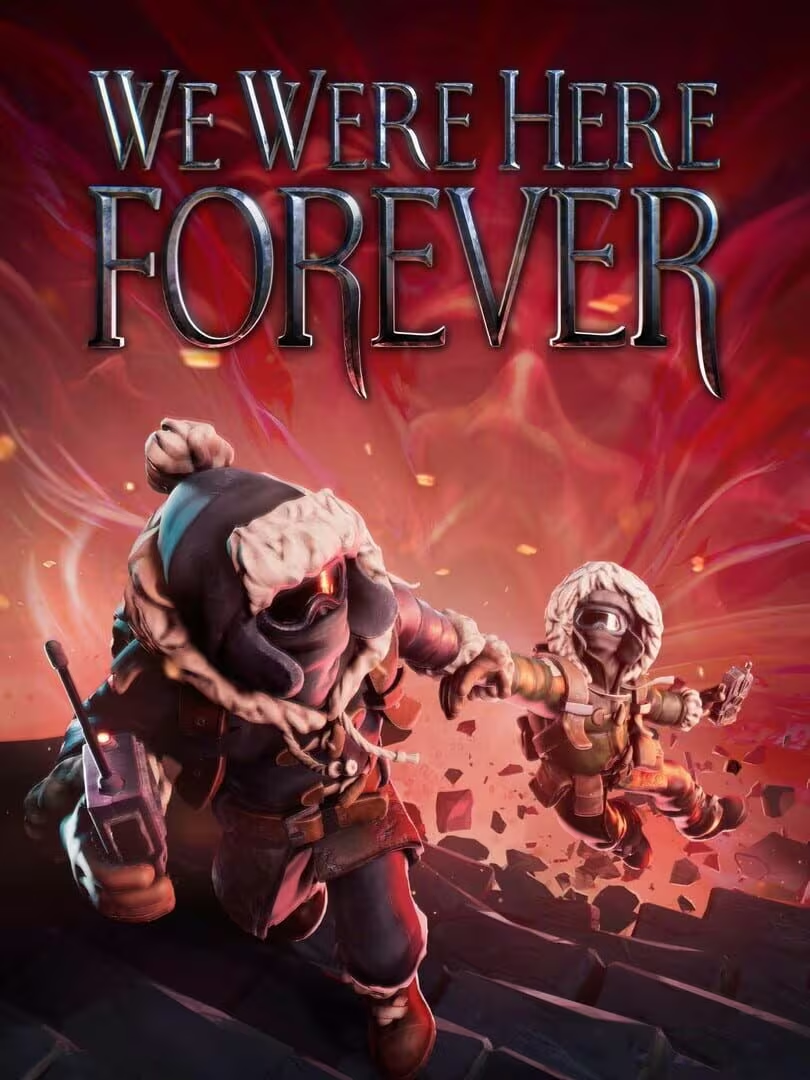
We Were Here Together
2019
Related articles
Quick resume
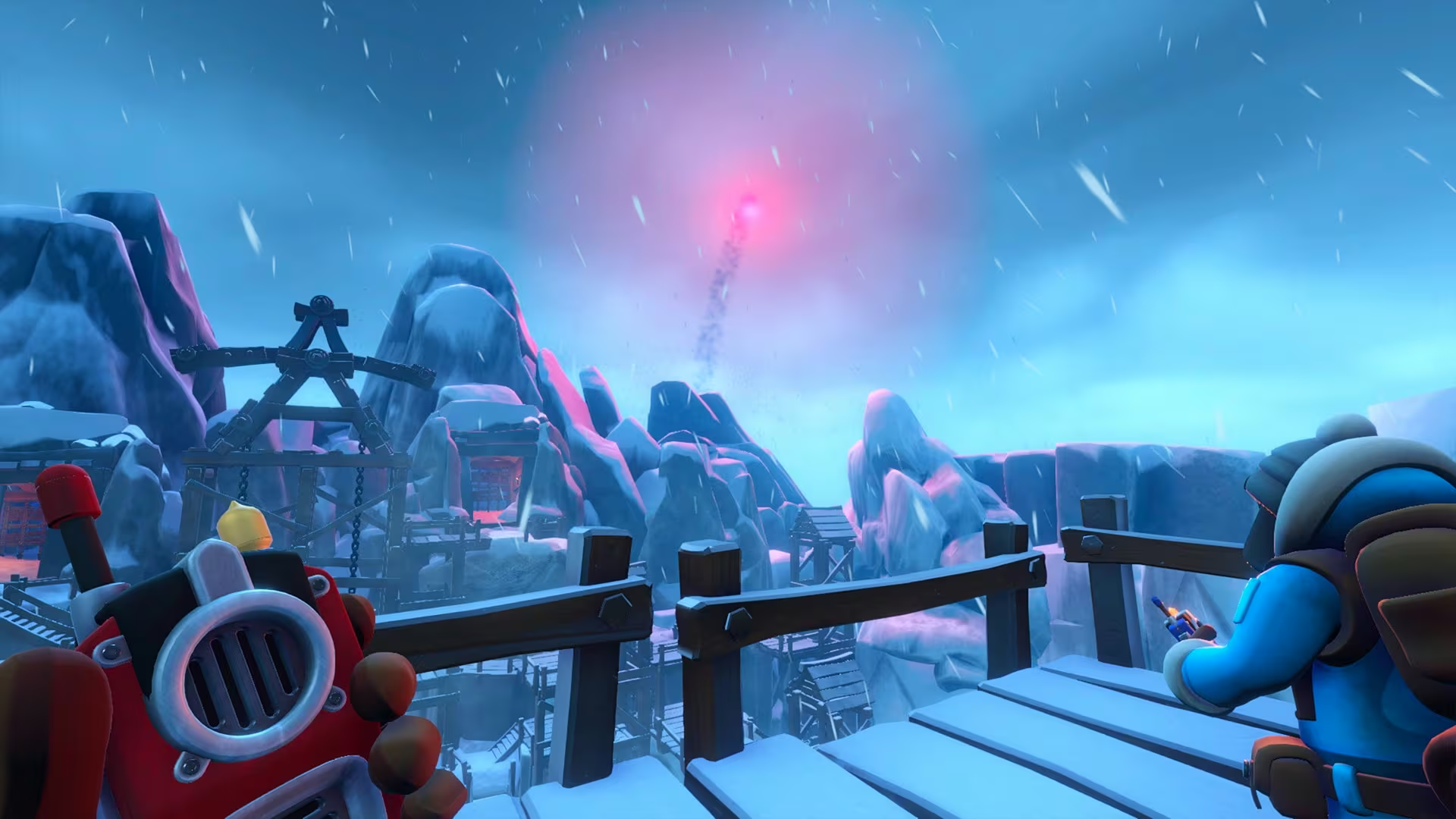
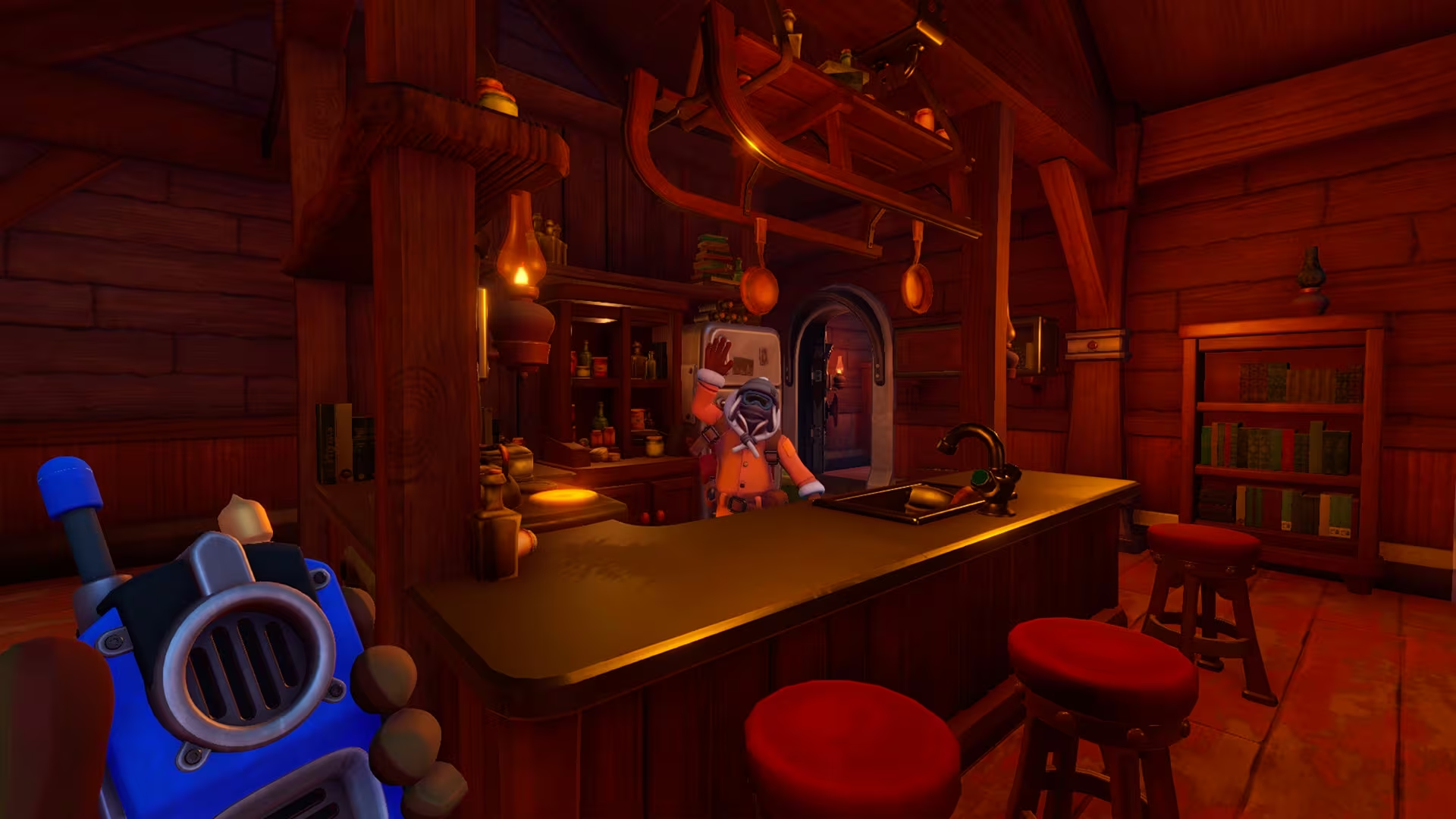
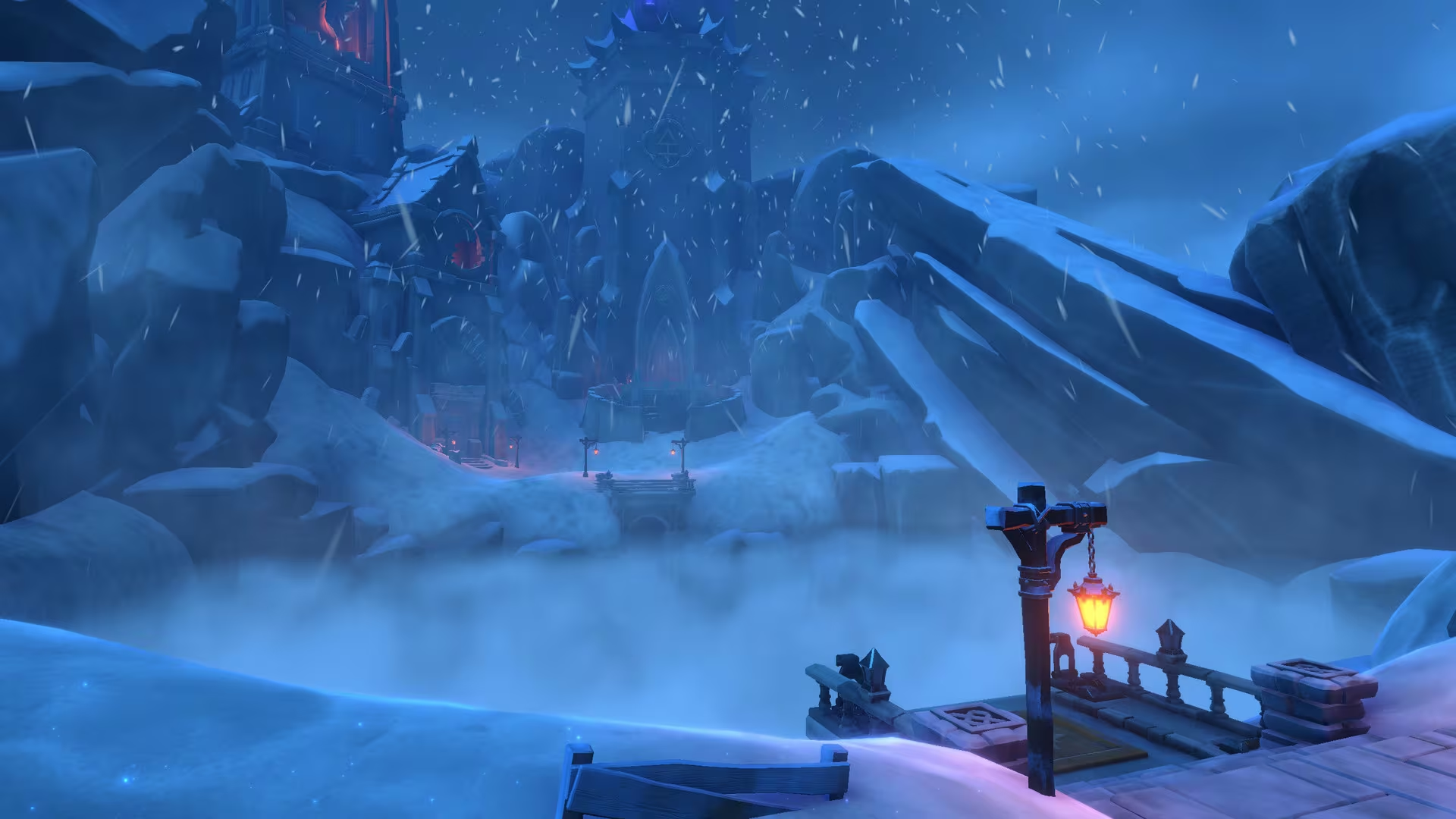
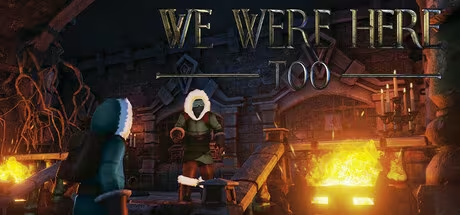
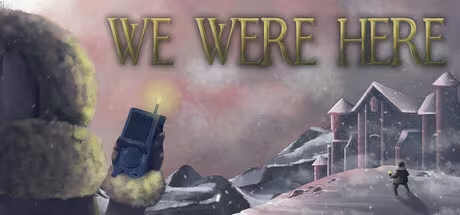
As we explore these frozen wastes, misfortune strikes once again. Through the fierce blizzard, a flare lights the sky, followed by a cry for help over the radio - broken, dying... No one else can come to their rescue. Can we make it back - together?
Global score
82/100
Genres
Adventure, Casual, Indie, Puzzle
Similar games
Pros
- Engaging cooperative puzzles
- Strong emphasis on communication
- Immersive atmosphere and story
- Good length and replayability
- Improves teamwork and problem-solving skills
Cons
- Some puzzles can be frustrating or unintuitive
- Technical bugs reported by some players
- Requires a partner to play
- Limited replayability after completion
- Story can be confusing or underdeveloped
Analysis
Less representative of its motivational profile, with noticeable differences. Motivations that often define this kind of title include Cooperation, Fellowship, Intimacy, Leadership. It leans lower than usual among comparable games on Expression, Violence, Leadership.
How to use the graph
Similar games map
Each dot is a game. They are arranged from the same motivation profile as in the “Motivations” section below. Closer dots usually mean more similar reasons to play (exploration, competition, relaxation, etc.)—not that one game is “better” than another.
- Larger dot with a light outline: the game you are viewing.
- Colour: groups of games with comparable motivation patterns (statistical clusters).
- Hover a dot to see the game name; click to open its page.
- Scroll or double-click the chart to zoom out and see more games.
Why don’t the axes read like a score? This view uses t-SNE: it only keeps who is close to whom. The scales are not “good to bad” or hours played—they separate groups on the map. Read distance between dots, not the axis numbers.
Motivations
-
Autonomy4
"Players have control over their own actions and decisions in puzzles, requiring active communication and problem solving rather than following fixed routines."
-
Competence4
"The game challenges players with complex puzzles that require skillful communication and logical thinking, providing feedback through puzzle completion."
-
Competition-4
"Focus is on cooperative play with a friend or partner, no competitive or ranked modes mentioned."
-
Continuation3
"Players often engage in long sessions (5-10 hours), replaying with swapped roles, showing attachment and desire to continue."
-
Cooperation5
"Core gameplay requires close cooperation and communication between two players to solve puzzles together."
-
Creativity3
"Players creatively solve puzzles using communication and logic; some puzzles require novel approaches and note-taking."
-
Domination-5
"Gameplay emphasizes equal participation and mutual collaboration without exerting control or superiority."
-
Escapism3
"Players use the game as a fun distraction and bonding experience, escaping real life stresses through immersive puzzles and story."
-
Expectation-4
"Players engage voluntarily for enjoyment and bonding; no indication of obligation or pressure to play."
-
Experimenting3
"Players try different puzzle solutions, experiment with communication methods, and explore puzzle mechanics."
-
Exploration2
"Players explore new areas like frozen wastelands and castles, though exploration is puzzle-focused rather than open-world."
-
Expression-3
"Limited customization or self-expression; players use predefined characters and environments."
-
Fantasy2
"Game has a fictional story with mystical elements like magic daggers and cursed castles, but grounded in puzzle-solving."
-
Fellowship5
"Strong sense of community and bonding through cooperative play, shared experiences, and memorable moments with friends or loved ones."
-
Growth4
"Players develop communication skills, problem-solving abilities, and learn to work effectively with partners."
-
Health-5
"No physical activity involved; sedentary puzzle gameplay."
-
Idle-4
"Requires continuous attention and focus to solve puzzles; not suitable for idle or background play."
-
Intimacy4
"Players form close relationships and emotional bonds through shared challenging experiences and communication."
-
Leadership-3
"Players share decision-making and collaborate equally rather than one leading the other."
-
Progression3
"Progression through puzzle completion and story advancement; some achievements encourage replaying roles."
-
Relaxation1
"Game balances challenge and flow but can cause frustration and tension during difficult puzzles."
-
Sensation2
"Enjoyable atmospheric audio and visuals provide sensory stimulation, though not intense or overwhelming."
-
Status-4
"No social status or ranking systems; focus is on private cooperative experience."
-
Story3
"Narrative is present and engaging for those interested, with cutscenes and lore enhancing immersion."
-
Strategy4
"Puzzles require logical reasoning, planning, and mental challenge to solve."
-
Thrill1
"Some suspense and tension in timed puzzles and story moments, but overall controlled experience."
-
Value3
"Players find good value especially when purchased on sale; game length and quality justify cost."
-
Violence-3
"Minimal violence; some narrative choices involve sacrifice but gameplay focuses on constructive puzzle solving."
-
Survival2
"Some elements of avoiding failure and managing time pressure in puzzles, but low-risk overall."
Last update: 29/04/2026