CALENDULA Thumbnail

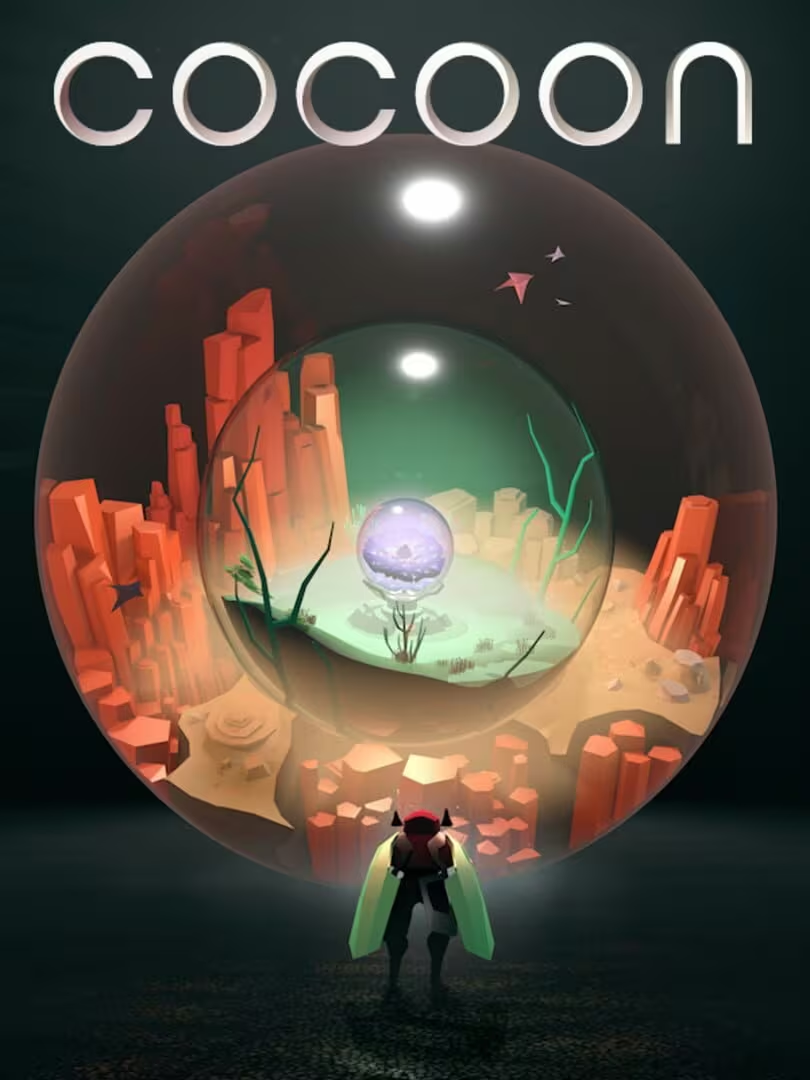
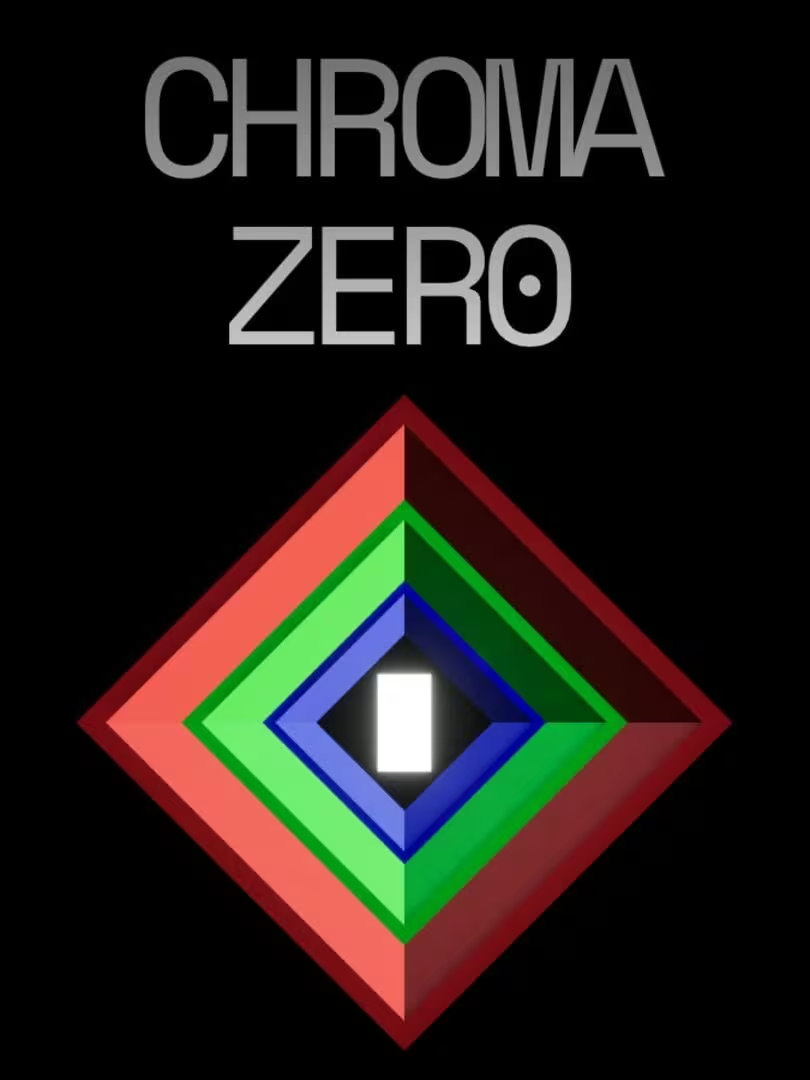
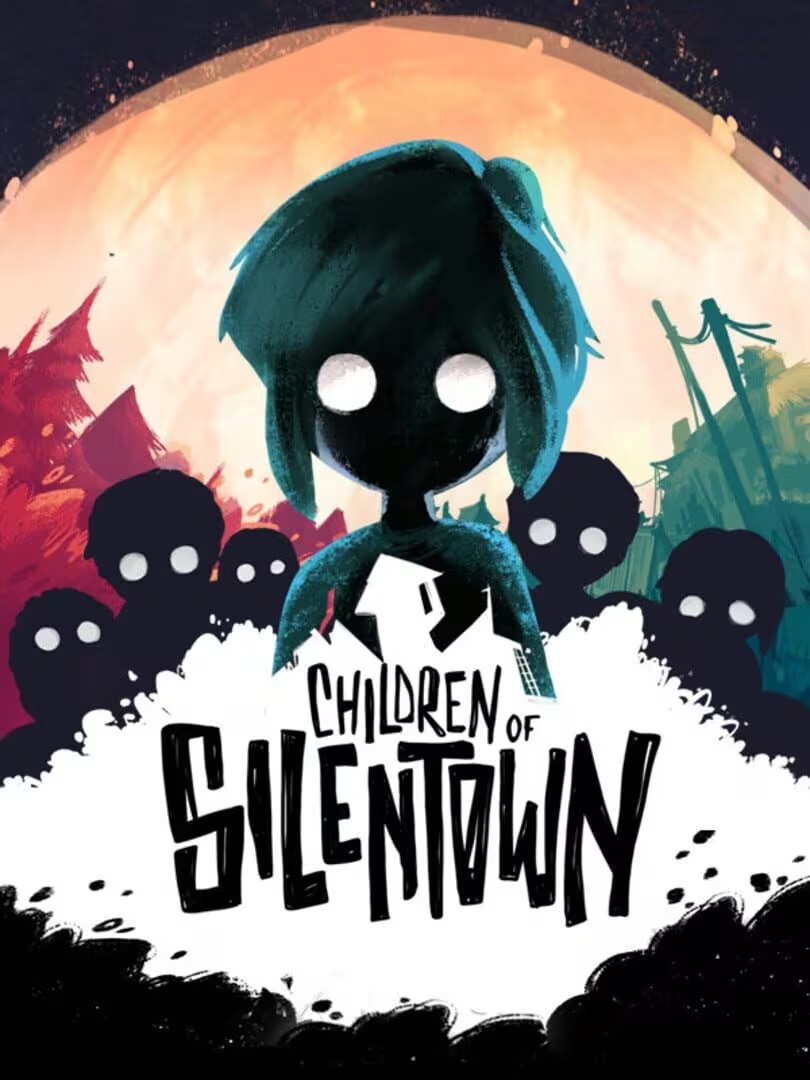
CALENDULA similar games & best alternatives

CALENDULA

PC (Microsoft Windows), Mac • 2016

Related articles

Quick resume

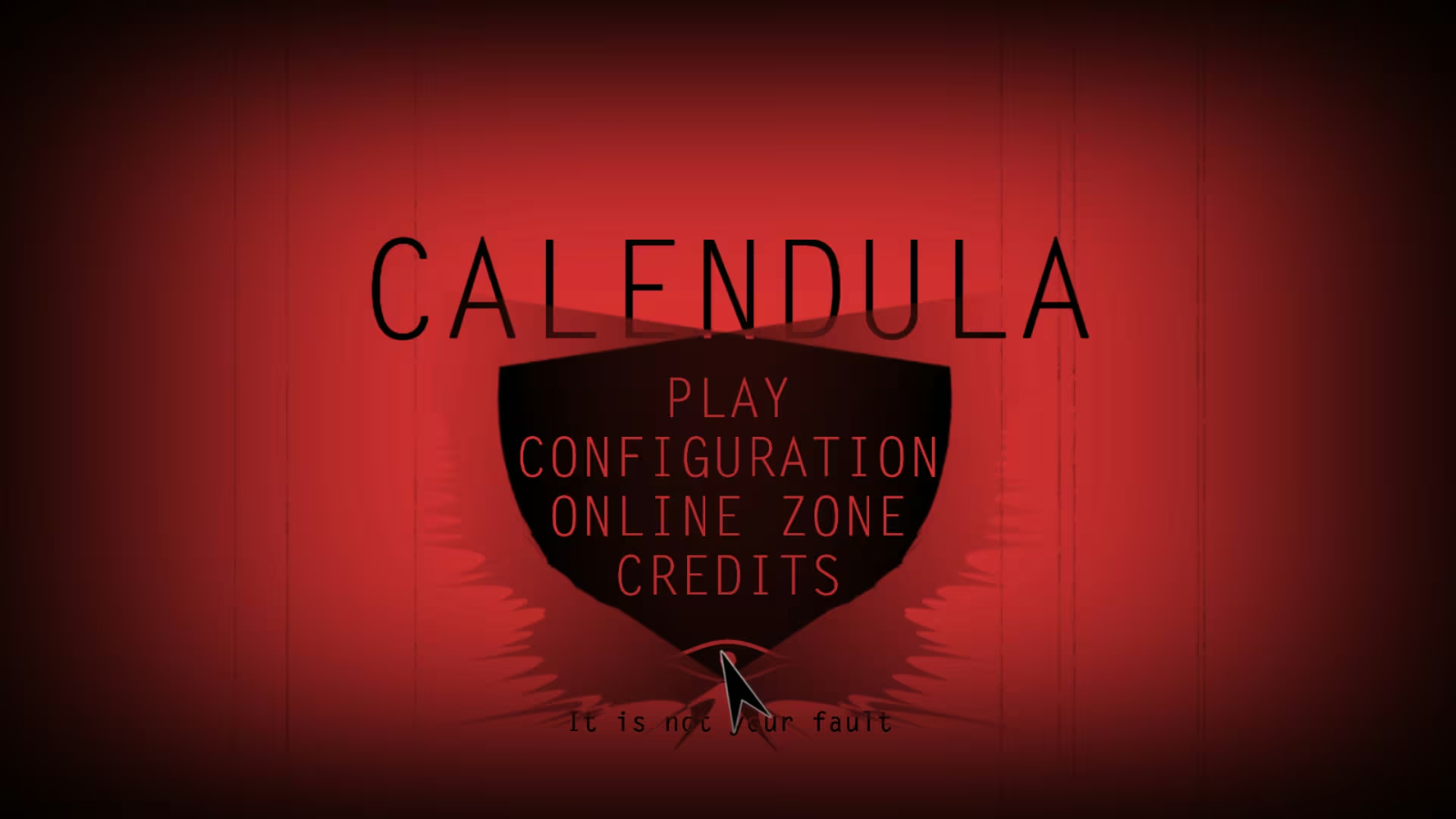
How to play a game that doesn't want to be played? Calendula is an experimental meta game about trying to play a game. Use your logic to thrive against conventions and get surrounded by a dark atmosphere.

Global score

77/100

Genres

Indie, Puzzle

Similar games

    Pros

    • Unique and creative meta-game design
    • Engaging and thought-provoking puzzles
    • Strong atmospheric and audio-visual presentation
    • Compelling abstract narrative
    • Mind-bending and immersive experience

    Cons

    • Very short playtime
    • Some bugs affecting progression
    • Limited replayability
    • Story can be confusing or unclear
    • Price considered high for length by some players

    Analysis

    Less representative of its motivational profile, with noticeable differences. Motivations that often define this kind of title include Expression, Fellowship, Cooperation, Competition. It leans lower than usual among comparable games on Survival, Violence, Continuation.

    How to use the graph
    Similar games map

    Each dot is a game. They are arranged from the same motivation profile as in the “Motivations” section below. Closer dots usually mean more similar reasons to play (exploration, competition, relaxation, etc.)—not that one game is “better” than another.

    • Larger dot with a light outline: the game you are viewing.
    • Colour: groups of games with comparable motivation patterns (statistical clusters).
    • Hover a dot to see the game name; click to open its page.
    • Scroll or double-click the chart to zoom out and see more games.

    Why don’t the axes read like a score? This view uses t-SNE: it only keeps who is close to whom. The scales are not “good to bad” or hours played—they separate groups on the map. Read distance between dots, not the axis numbers.

    Motivations

    • Autonomy
      4

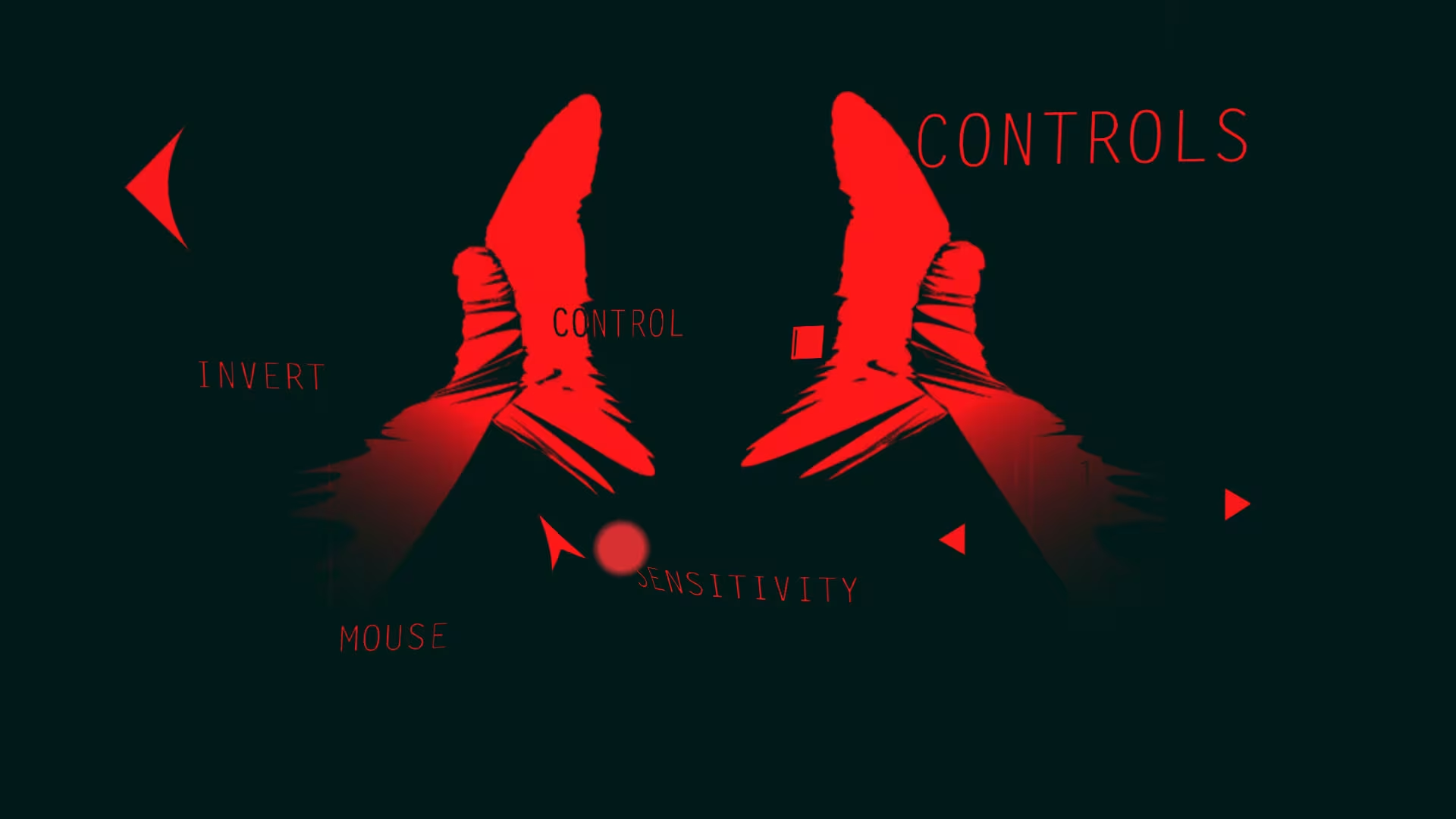
      "Players must experiment and manipulate the game menus and settings themselves to progress, indicating high personal control and freedom in solving puzzles."

    • Competence
      3

      "The game challenges players with creative puzzles that require thinking outside the box, providing a sense of skillful problem solving."

    • Competition
      -5

      "No evidence of competitive elements; the game is a solitary puzzle experience focused on personal discovery."

    • Continuation
      -3

      "Short playtime (~30-90 minutes) and limited replayability suggest low habitual or long session play."

    • Cooperation
      -5

      "The experience is single-player and independent, with no cooperative gameplay or social collaboration."

    • Creativity
      4

      "Highly creative meta-game design involving breaking the fourth wall and unusual puzzle mechanics."

    • Domination
      -5

      "No elements of exerting control or superiority over others; the game is a personal experience."

    • Escapism
      3

      "The surreal, unsettling atmosphere and meta-narrative provide a form of psychological escape and immersion."

    • Expectation
      -4

      "Players engage voluntarily out of curiosity and interest in unique experiences, not out of obligation."

    • Experimenting
      5

      "Core gameplay revolves around experimenting with menus and settings to unlock progress, encouraging exploration of game mechanics."

    • Exploration
      2

      "Players explore surreal environments and narrative vignettes, though the game is short and linear."

    • Expression
      -5

      "No customization or self-expression elements; presentation is fixed and standardized."

    • Fantasy
      3

      "The game uses surreal and symbolic imagery to convey a metaphorical story, blending reality with imaginative fiction."

    • Fellowship
      -5

      "No community or social features; the experience is solitary."

    • Growth
      3

      "Players learn new puzzle-solving approaches and interpret abstract narrative elements, fostering cognitive growth."

    • Health
      -5

      "No physical activity involved; sedentary gameplay."

    • Idle
      -4

      "Requires focused attention to solve puzzles and progress; not suitable for casual or background play."

    • Intimacy
      -5

      "No social or emotional relationship building; purely individual experience."

    • Leadership
      -5

      "No leadership or group management roles; single-player focused."

    • Progression
      3

      "Progression through solving puzzles and unlocking new parts of the meta-game, though no item collection or upgrades."

    • Relaxation
      -2

      "The game creates tension and unease rather than relaxation, with an unsettling atmosphere."

    • Sensation
      3

      "Strong sensory stimulation through eerie visuals, sound design, and atmosphere."

    • Status
      -5

      "No social recognition or status systems present."

    • Story
      4

      "Narrative is abstract and symbolic but central to the experience, delivered through surreal cutscenes and meta elements."

    • Strategy
      3

      "Puzzles require logical thinking and problem solving beyond straightforward processes."

    • Thrill
      3

      "Creates suspense and psychological tension through atmosphere and meta-game challenges."

    • Value
      -2

      "Some players feel the short length reduces value for money, though others appreciate the unique experience."

    • Violence
      -5

      "No combat or destructive gameplay; focus is on puzzle solving and narrative."

    • Survival
      -5

      "No survival mechanics or threat avoidance; stable conditions throughout."

    Last update: 29/04/2026