Gnomoria Thumbnail

Gnomoria similar games & best alternatives

Gnomoria

PC (Microsoft Windows), Mac, Linux • 2016

Related articles

Quick resume

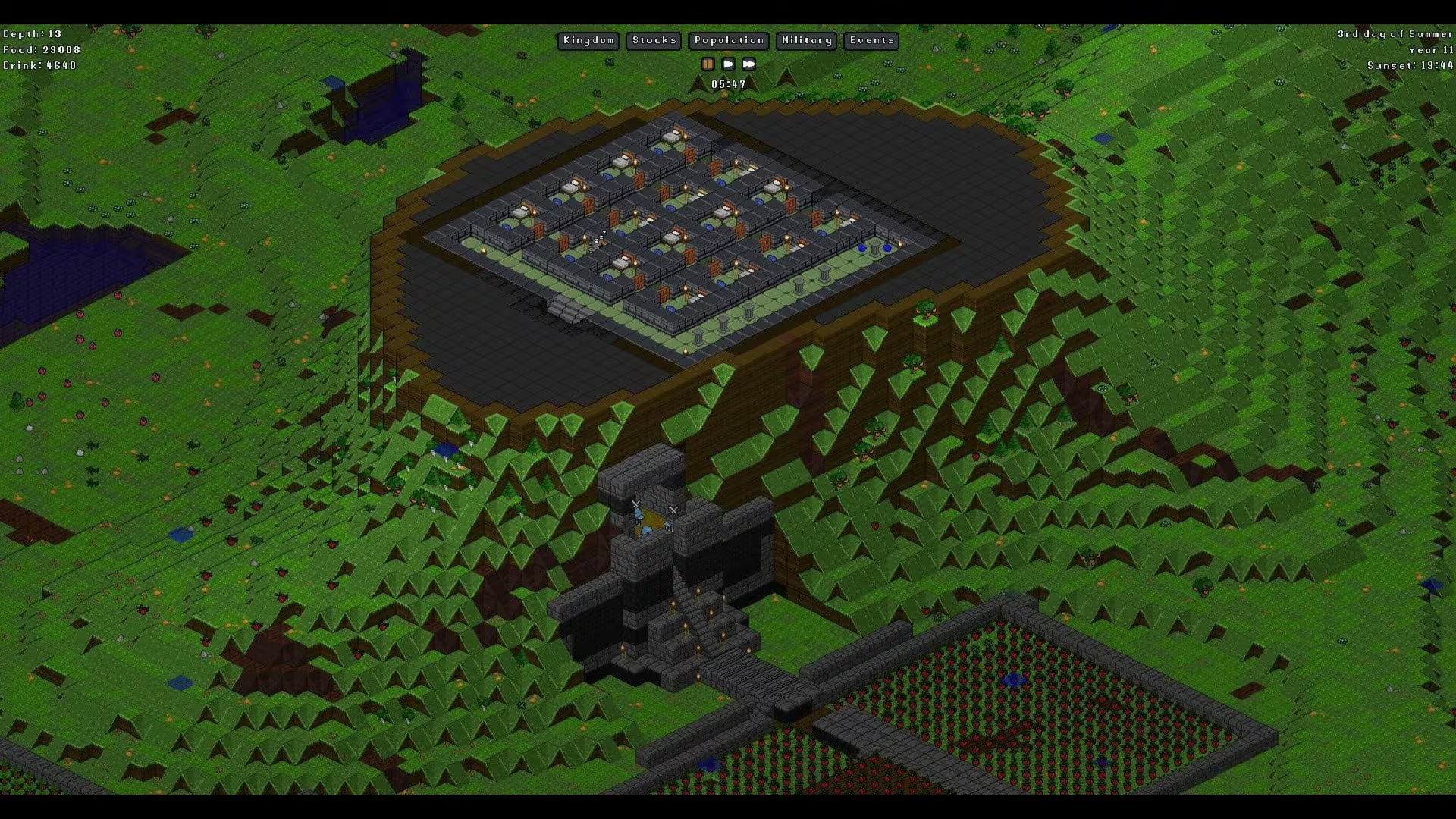
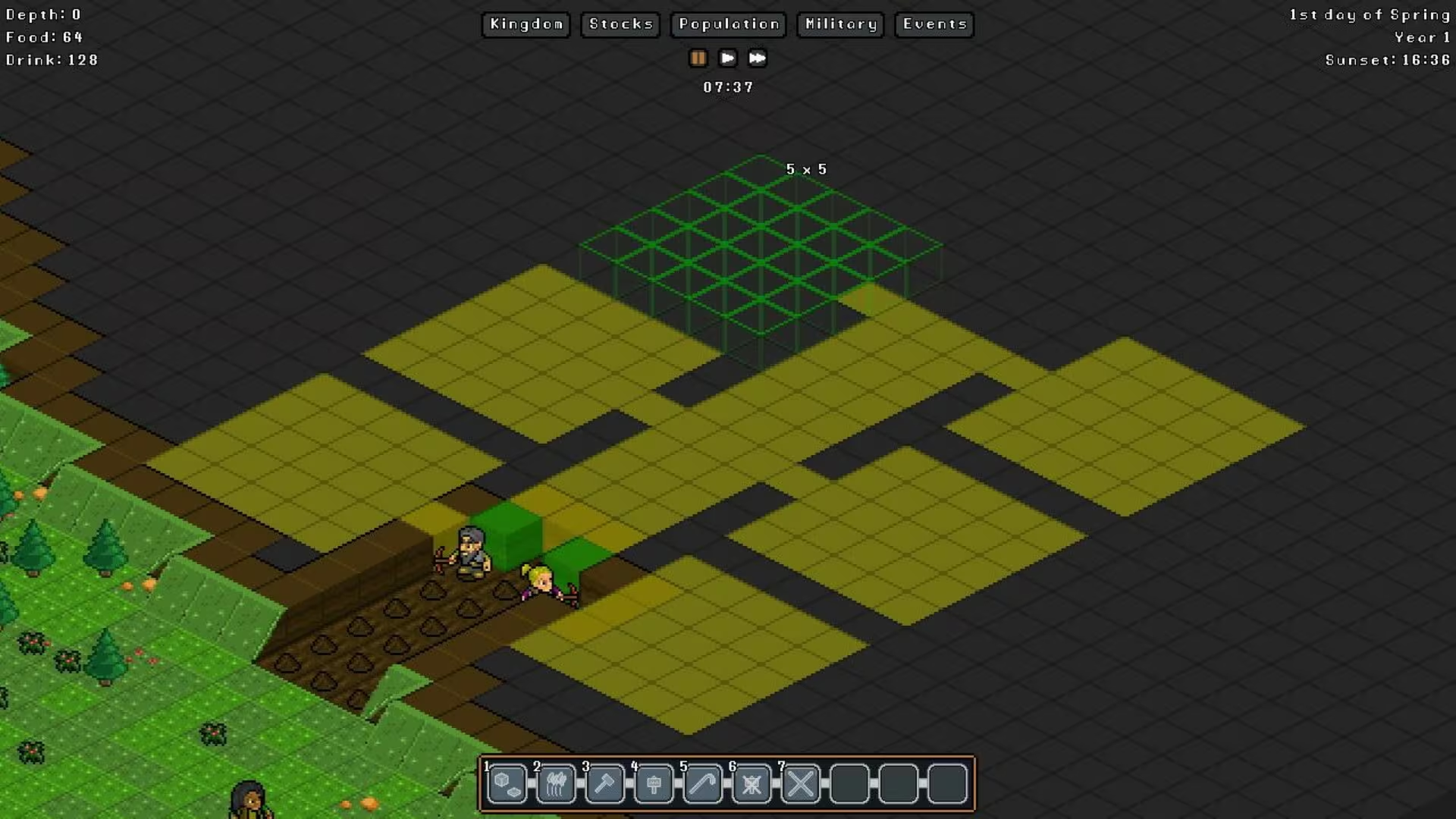
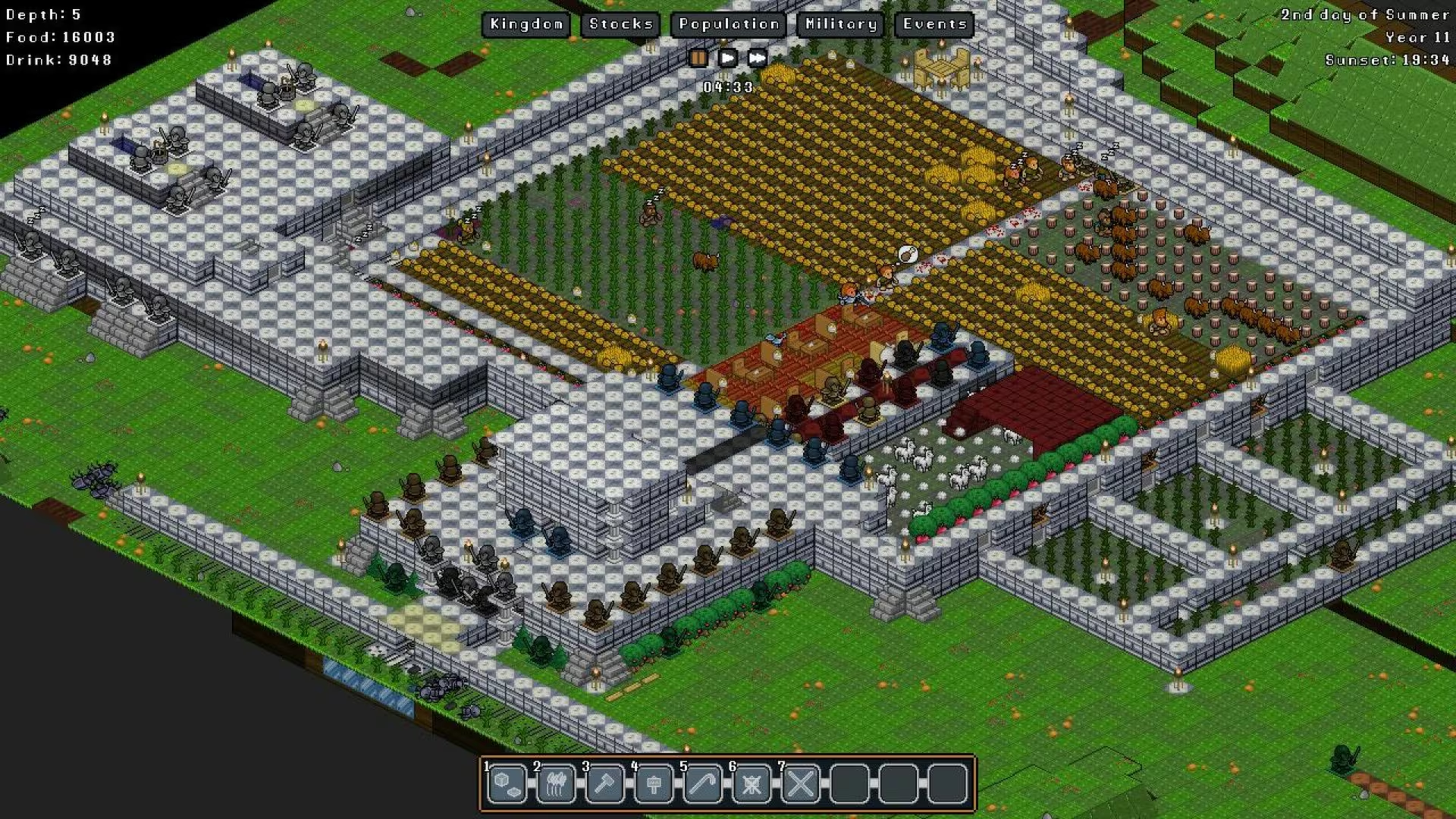
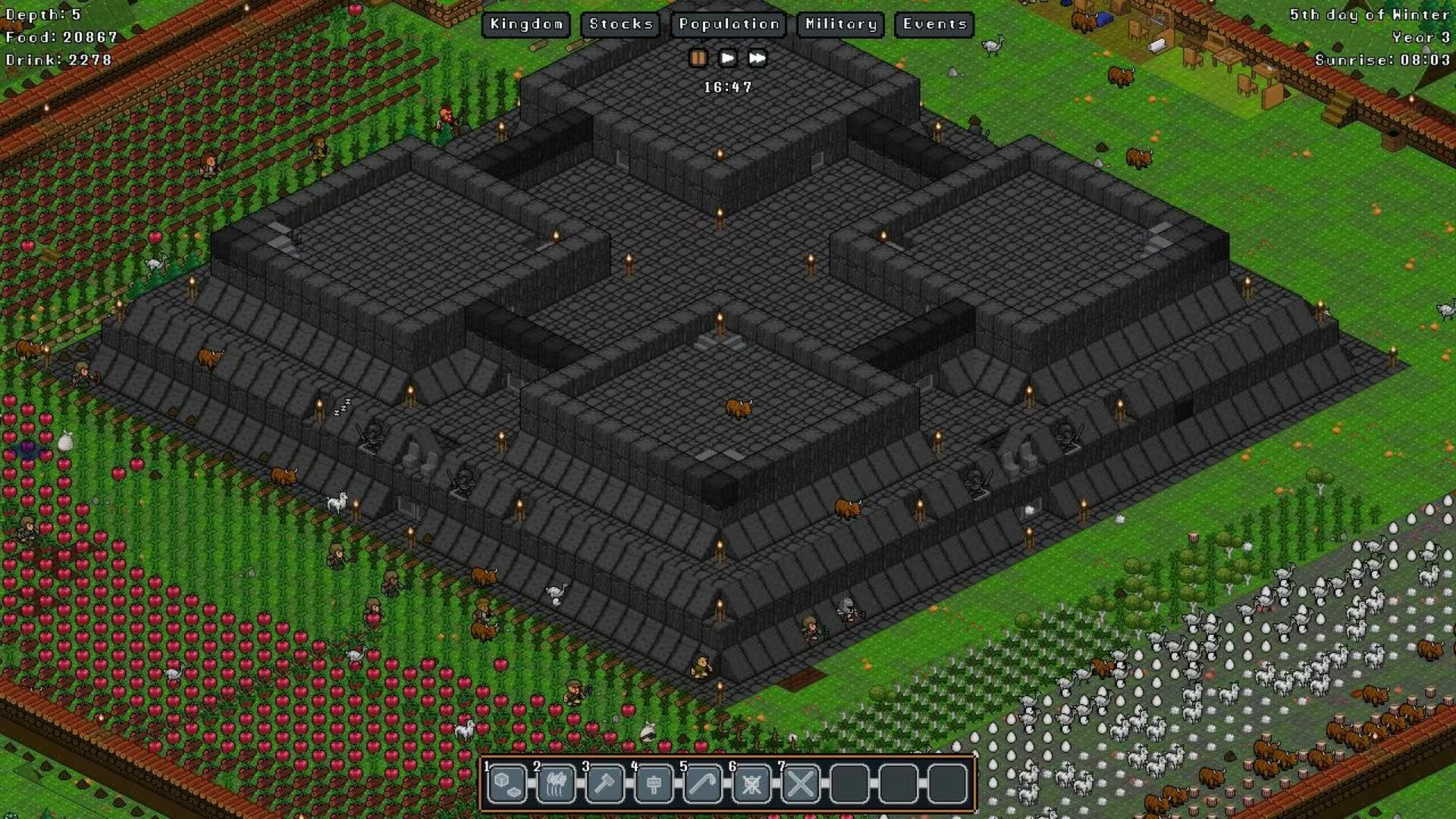
Gnomoria is a sandbox village management game where you help lead a small group of gnomes, who have set out on their own, to thrive into a bustling kingdom! Anything you see can be broken down and rebuilt elsewhere.

Global score

75/100

Genres

Indie, Simulator, Strategy, Turn-based strategy (TBS)

Similar games

    Pros

    • Deep and addictive gameplay
    • Extensive building and customization
    • Engaging combat and survival mechanics
    • Active modding community
    • Good value for price

    Cons

    • Steep learning curve with no tutorial
    • Some bugs and unfinished features
    • Abandoned by original developer
    • Clunky interface at times
    • Limited multiplayer or social features

    Analysis

    A very typical example of its motivational profile. Motivations that often define this kind of title include Leadership, Survival, Violence, Strategy. Here, the score leans higher than usual among comparable games on Expression, Creativity. It leans lower than usual among comparable games on Relaxation.

    How to use the graph
    Similar games map

    Each dot is a game. They are arranged from the same motivation profile as in the “Motivations” section below. Closer dots usually mean more similar reasons to play (exploration, competition, relaxation, etc.)—not that one game is “better” than another.

    • Larger dot with a light outline: the game you are viewing.
    • Colour: groups of games with comparable motivation patterns (statistical clusters).
    • Hover a dot to see the game name; click to open its page.
    • Scroll or double-click the chart to zoom out and see more games.

    Why don’t the axes read like a score? This view uses t-SNE: it only keeps who is close to whom. The scales are not “good to bad” or hours played—they separate groups on the map. Read distance between dots, not the axis numbers.

    Motivations

    • Autonomy
      4

      "Players have high control over their gnomes via task assignment and profession customization, but direct control is limited."

    • Competence
      4

      "Game involves overcoming complex management challenges and mastering detailed crafting and combat systems."

    • Competition
      -3

      "Focus is on personal colony management and survival rather than direct competition or leaderboards."

    • Continuation
      4

      "Many players report hundreds of hours played, indicating strong desire to keep playing despite difficulty."

    • Cooperation
      -4

      "Primarily a single-player experience with indirect control over gnomes; limited multiplayer or direct cooperation."

    • Creativity
      5

      "Extensive building, terraforming, and customization options allow creative fortress design and management."

    • Domination
      -4

      "Interactions with enemies are combat-based but lack social dominance or authority dynamics."

    • Escapism
      4

      "Players use the game as a complex, immersive fantasy world to escape real life stresses."

    • Expectation
      -4

      "Players engage voluntarily out of interest and enjoyment, not obligation or external pressure."

    • Experimenting
      4

      "Players experiment with different strategies, professions, and base designs to optimize play."

    • Exploration
      3

      "Randomly generated maps and underground areas encourage discovery and exploration."

    • Expression
      4

      "Customization of gnome equipment, base layout, and aesthetics supports player expression."

    • Fantasy
      4

      "Set in a fantasy world with goblins, ogres, and magical elements, providing imaginative fiction."

    • Fellowship
      -4

      "Minimal social interaction; mostly a solitary experience with limited community engagement."

    • Growth
      4

      "Players learn complex systems and improve skills managing their gnomes and economy."

    • Health
      -4

      "Sedentary gameplay with no physical activity or health-related mechanics."

    • Idle
      -3

      "Requires sustained attention and micromanagement; not suited for casual or background play."

    • Intimacy
      -4

      "No close personal relationships or emotional sharing; interactions are task-focused."

    • Leadership
      3

      "Players lead and manage gnome squads and professions, guiding their development and tasks."

    • Progression
      4

      "Players accumulate resources, items, and upgrades to strengthen their kingdom."

    • Relaxation
      -1

      "Game can be tense and challenging, especially with enemy threats and resource management."

    • Sensation
      2

      "Visual and auditory stimuli are simple but engaging; combat and events provide excitement."

    • Status
      -4

      "Achievements and progress are personal; little social recognition or status systems."

    • Story
      2

      "Narrative emerges from player-driven events and combat logs rather than scripted storylines."

    • Strategy
      4

      "Requires planning, resource management, and tactical combat decisions."

    • Thrill
      3

      "Combat and survival challenges create suspense and excitement."

    • Value
      4

      "Players report hundreds of hours of gameplay, indicating good value for money."

    • Violence
      3

      "Combat with goblins and monsters is a core gameplay element involving destruction."

    • Survival
      4

      "Players must manage resources and defend against threats to keep their colony alive."

    Last update: 29/04/2026