One Dreamer: Prologue Thumbnail

One Dreamer: Prologue similar games & best alternatives

One Dreamer: Prologue

PC (Microsoft Windows) • 2020

Related articles

Quick resume

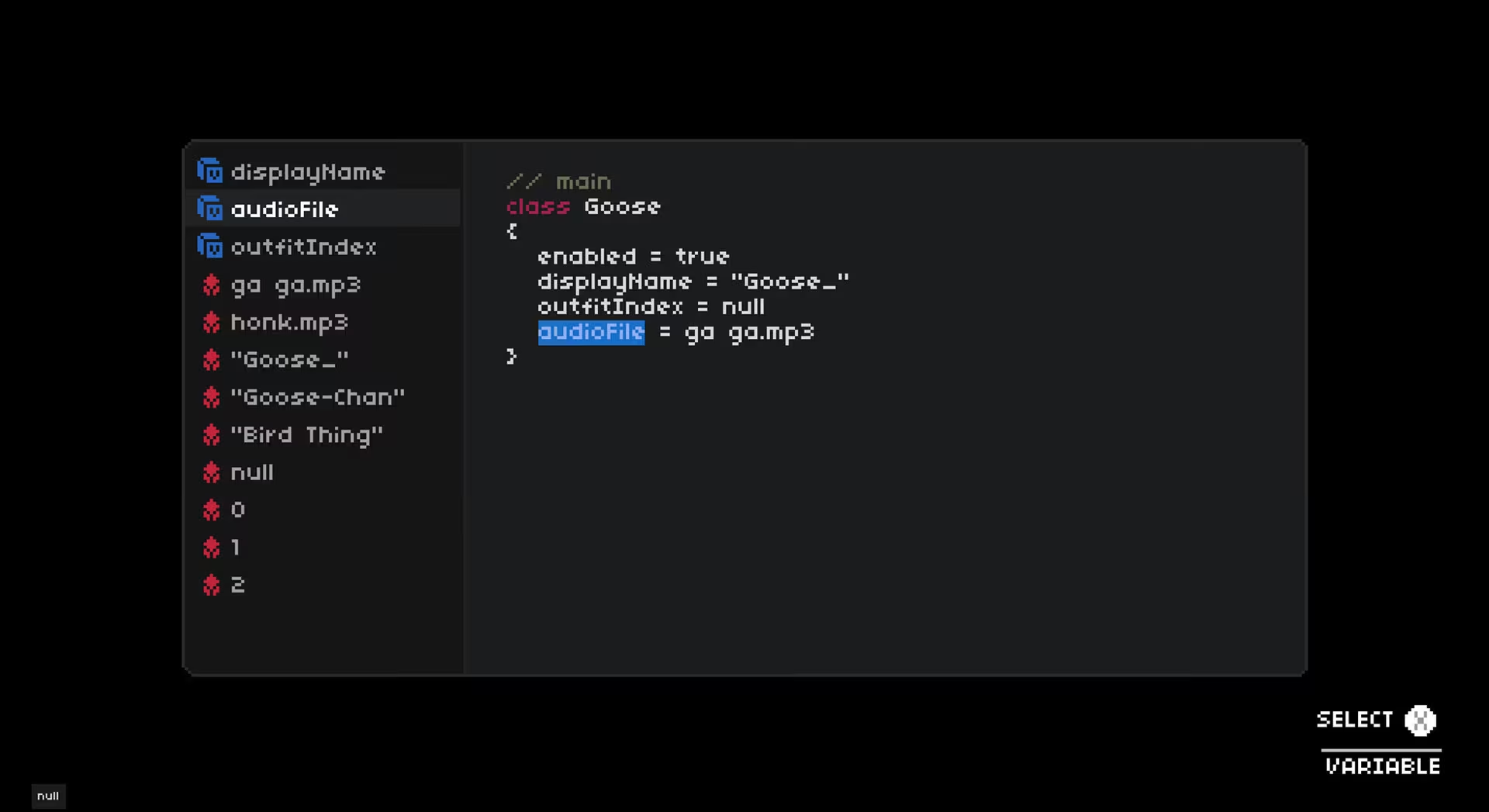
Modify the world around you with pseudocode as you journey through blended realities and discover why Frank became a game developer in the first place.

Global score

96/100

Genres

Free To Play, Indie

Similar games

    Pros

    • Unique coding-based puzzle mechanics
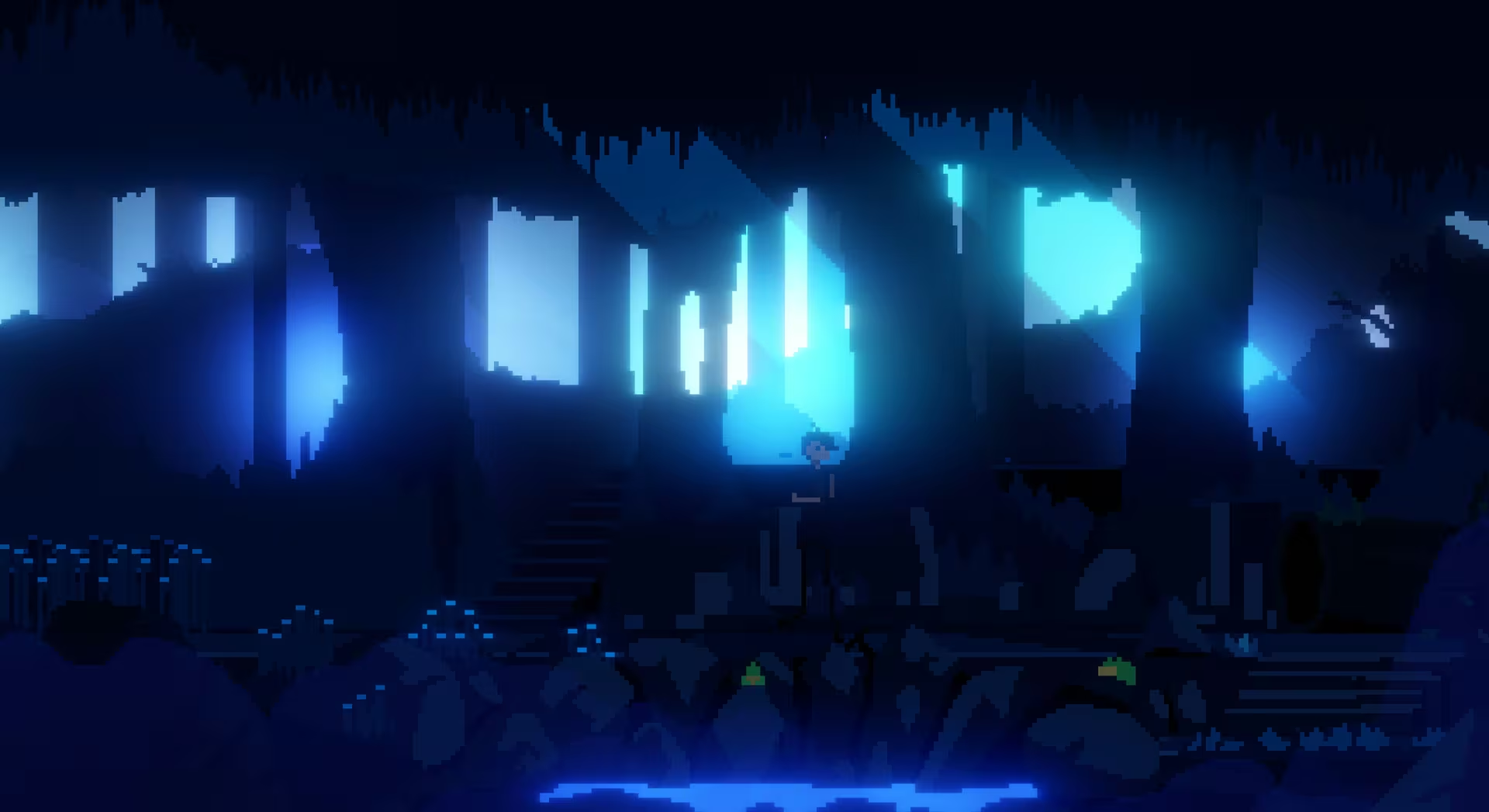
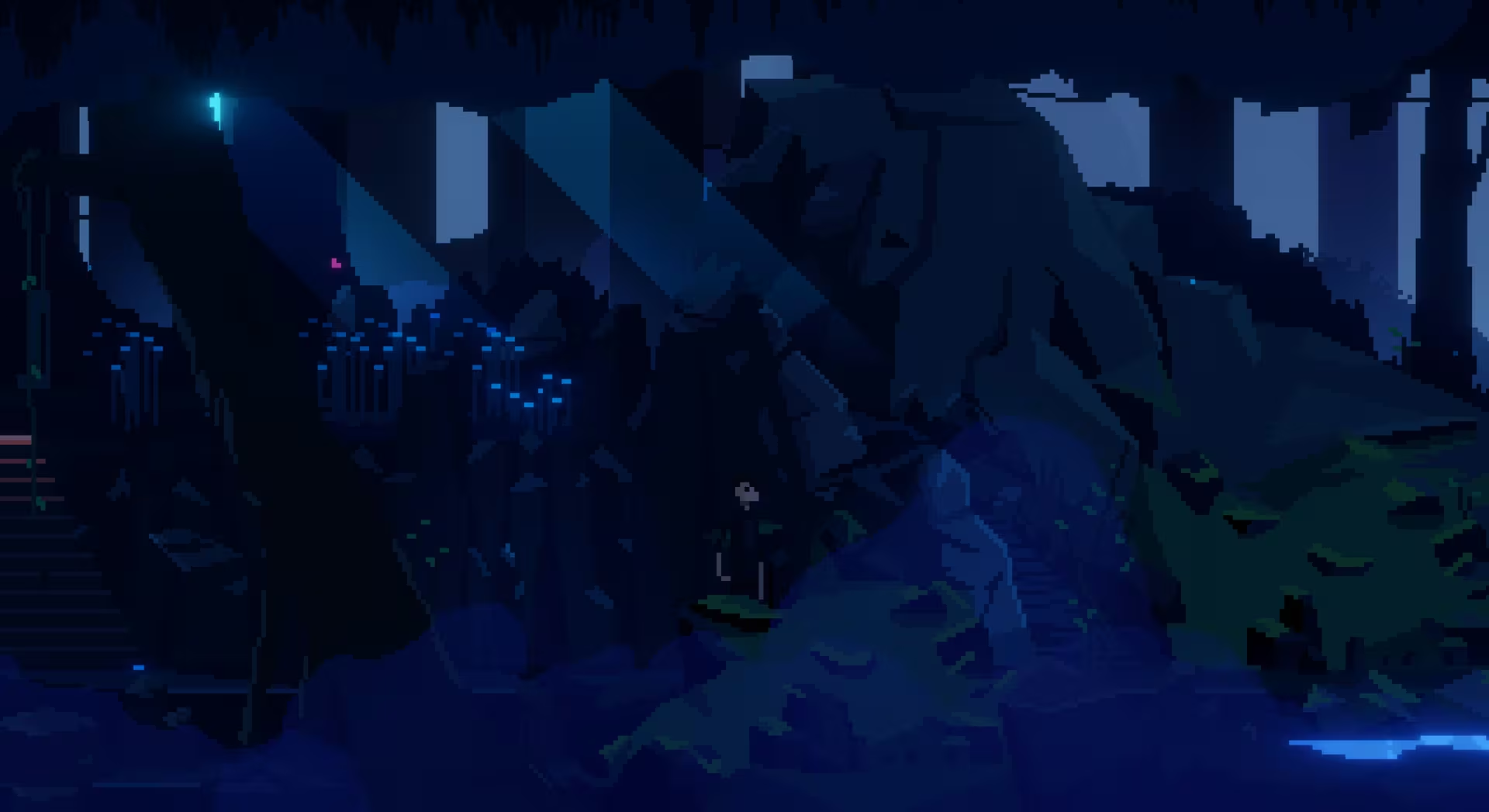
    • Beautiful pixel art and music
    • Emotional and heartfelt story
    • Engaging and creative gameplay
    • Free prologue with rich content

    Cons

    • Some mini-games are frustratingly difficult
    • Controls can be unintuitive or clunky
    • Short length as a prologue
    • Story can be confusing or unclear
    • Lack of accessibility options and quality-of-life features

    Analysis

    Broadly representative of its motivational profile, with a few distinct shifts. Motivations that often define this kind of title include Survival, Violence, Fellowship, Expression. Here, the score leans higher than usual among comparable games on Competition, Expression, Status.

    How to use the graph
    Similar games map

    Each dot is a game. They are arranged from the same motivation profile as in the “Motivations” section below. Closer dots usually mean more similar reasons to play (exploration, competition, relaxation, etc.)—not that one game is “better” than another.

    • Larger dot with a light outline: the game you are viewing.
    • Colour: groups of games with comparable motivation patterns (statistical clusters).
    • Hover a dot to see the game name; click to open its page.
    • Scroll or double-click the chart to zoom out and see more games.

    Why don’t the axes read like a score? This view uses t-SNE: it only keeps who is close to whom. The scales are not “good to bad” or hours played—they separate groups on the map. Read distance between dots, not the axis numbers.

    Motivations

    • Autonomy
      4

      "Players can modify game code to change the environment and solve puzzles, indicating high control over actions and decisions."

    • Competence
      3

      "Gameplay involves puzzle solving and coding challenges that require skill and problem-solving, though some tasks are simple."

    • Competition
      2

      "Includes challenging mini-games with achievements and speedrun competitions, encouraging some comparison with others."

    • Continuation
      3

      "Many players report long play sessions and repeated attempts to complete difficult challenges, showing attachment."

    • Cooperation
      -4

      "Game is primarily a single-player experience focused on individual problem solving and story engagement."

    • Creativity
      4

      "Unique mechanic of rewriting game code to alter the world encourages creative experimentation."

    • Domination
      -5

      "No evidence of exerting control over others; interactions are personal and story-driven."

    • Escapism
      4

      "Players describe emotional immersion and stress relief through the game's atmosphere and story."

    • Expectation
      -4

      "Players engage voluntarily out of personal interest and emotional connection, not obligation."

    • Experimenting
      4

      "Game encourages trying different code modifications and exploring puzzle solutions."

    • Exploration
      3

      "Players explore a pixel-art world with hidden secrets, Easter eggs, and multiple interactions."

    • Expression
      2

      "Some customization through code changes and interaction with environment, but limited cosmetic personalization."

    • Fantasy
      2

      "Story blends reality and fantasy elements, with a narrative about game development and imaginative sequences."

    • Fellowship
      -3

      "Minimal social interaction; community exists but gameplay is solitary."

    • Growth
      3

      "Players learn coding concepts and develop problem-solving skills through gameplay."

    • Health
      -5

      "Sedentary gameplay with no physical activity involved."

    • Idle
      -3

      "Requires focused attention and puzzle solving; not suited for casual or background play."

    • Intimacy
      -4

      "Social connections are minimal and surface-level; focus is on individual experience."

    • Leadership
      -5

      "No leadership or group management elements present."

    • Progression
      3

      "Players unlock achievements, discover secrets, and advance story through puzzle completion."

    • Relaxation
      3

      "Many players find the game calming and emotionally soothing despite some challenging moments."

    • Sensation
      3

      "Enjoyable pixel art, music, and sound design provide sensory pleasure and emotional engagement."

    • Status
      -3

      "Recognition mainly through achievements and community but not a central focus."

    • Story
      4

      "Strong narrative immersion with emotional storytelling and character development."

    • Strategy
      3

      "Players engage in logical problem solving and planning to manipulate game code and progress."

    • Thrill
      1

      "Some suspense in puzzles and mini-games, but overall a calm and reflective experience."

    • Value
      4

      "Free prologue with rich content and emotional impact provides high perceived value."

    • Violence
      -5

      "No violent or destructive gameplay elements; focus on constructive puzzle solving."

    • Survival
      -4

      "No survival or threat avoidance mechanics; stable and safe environment."

    Last update: 29/04/2026