Scarlet Hollow similar games & best alternatives
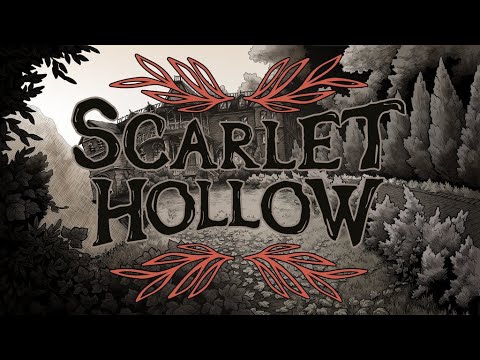
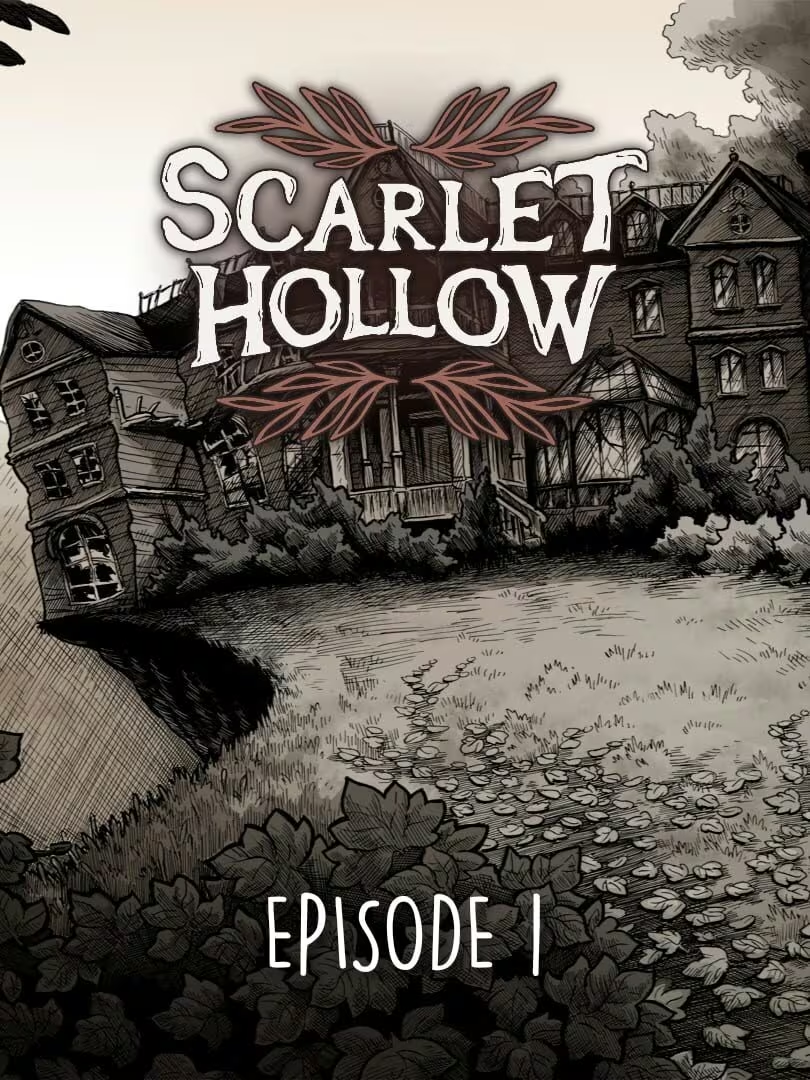
Scarlet Hollow
2021
Related articles
Quick resume
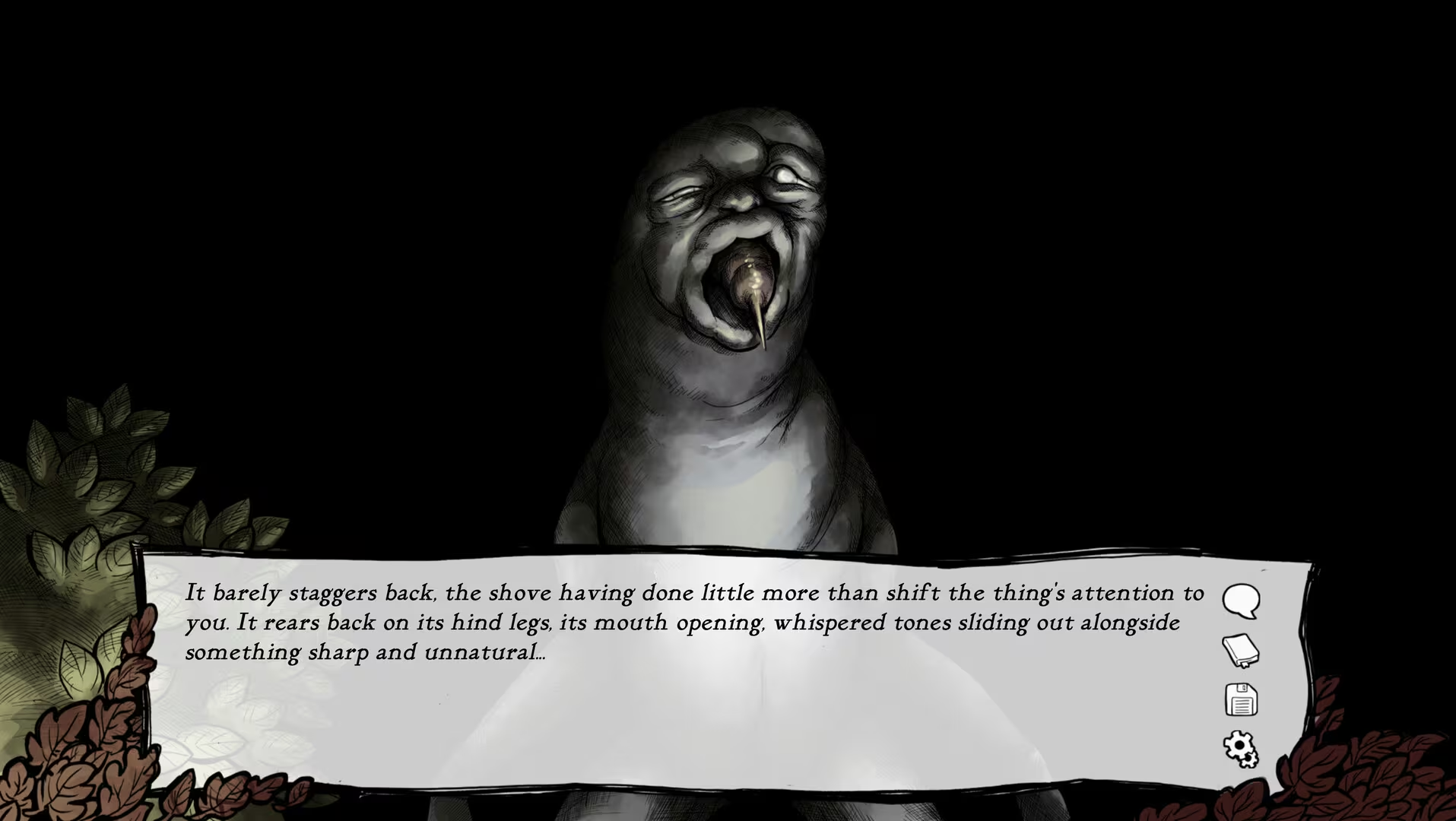
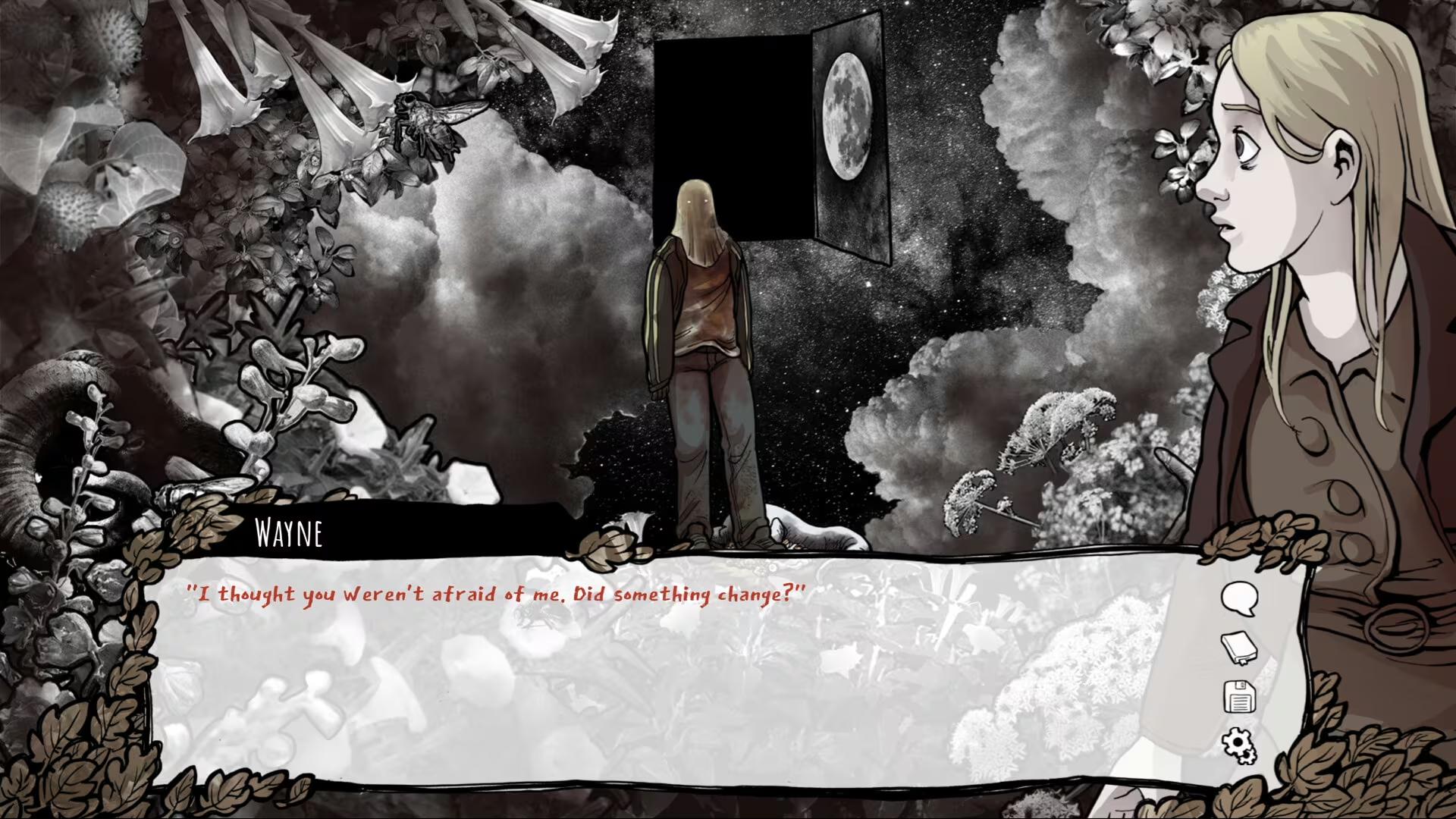
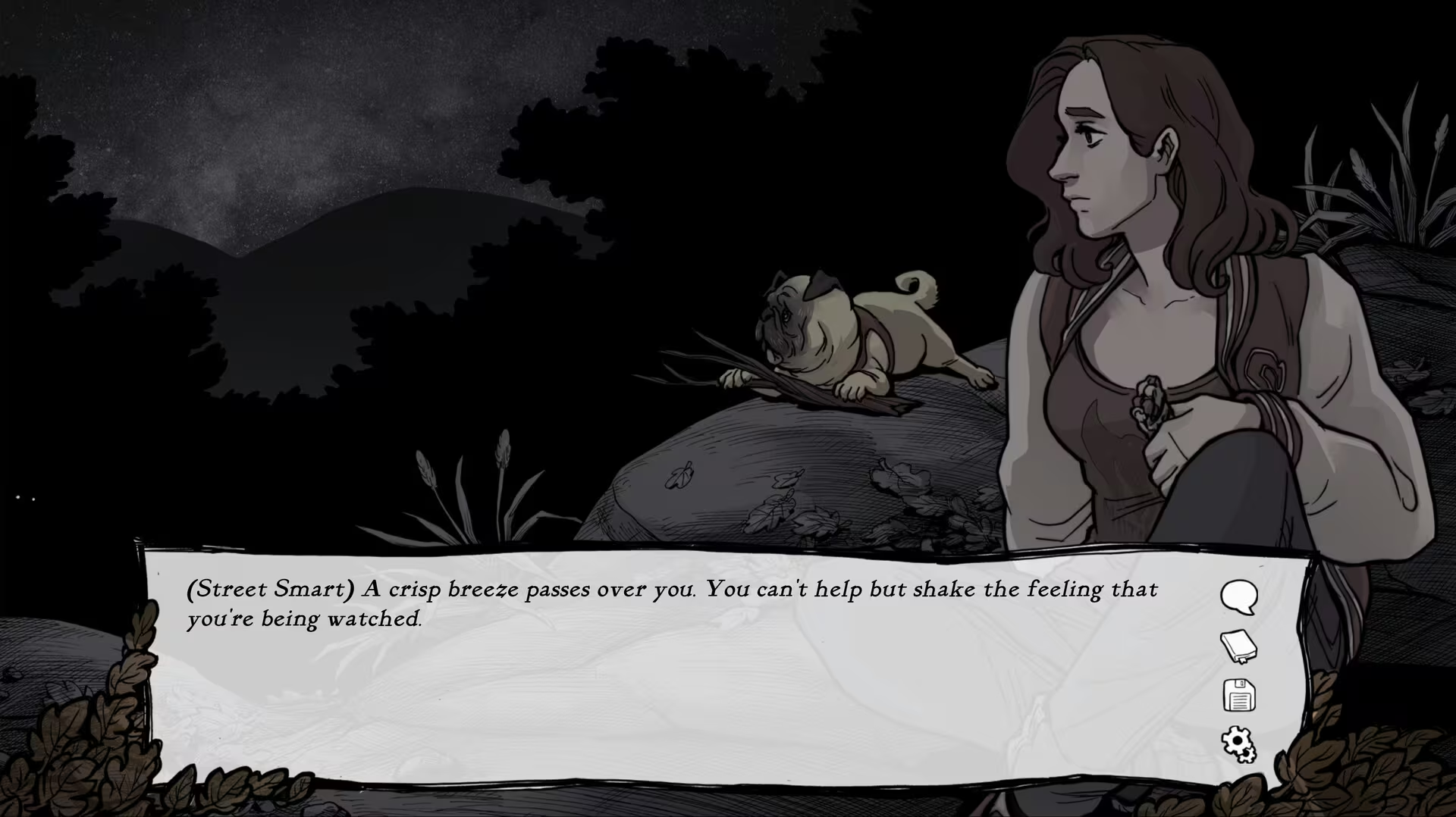
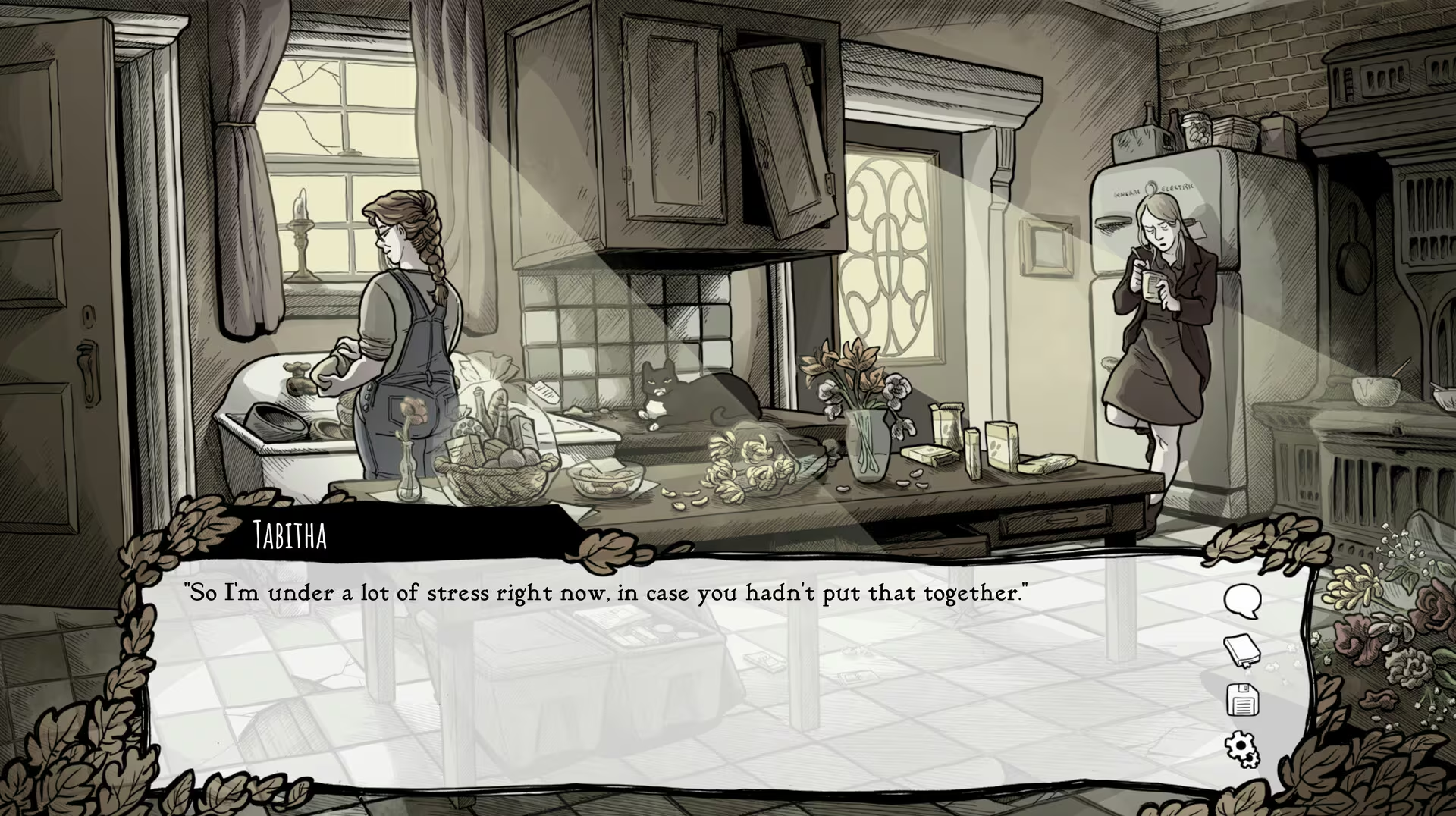
Your aunt’s dead, your cousin hates you, and you’re stuck in the dead-end town of Scarlet Hollow. Choose your path through a branching narrative so dense that you'll see less than a 1/5 of the game on a single playthrough. You won't be able to save everyone. Good luck, and welcome home.
Global score
98/100
Genres
Adventure, Casual, Indie, Role-playing (RPG), Early Access, Point-and-click, Visual Novel
Similar games
Pros
- Deep, branching narrative with meaningful choices
- Rich character development and relationships
- Beautiful hand-drawn art and atmospheric sound design
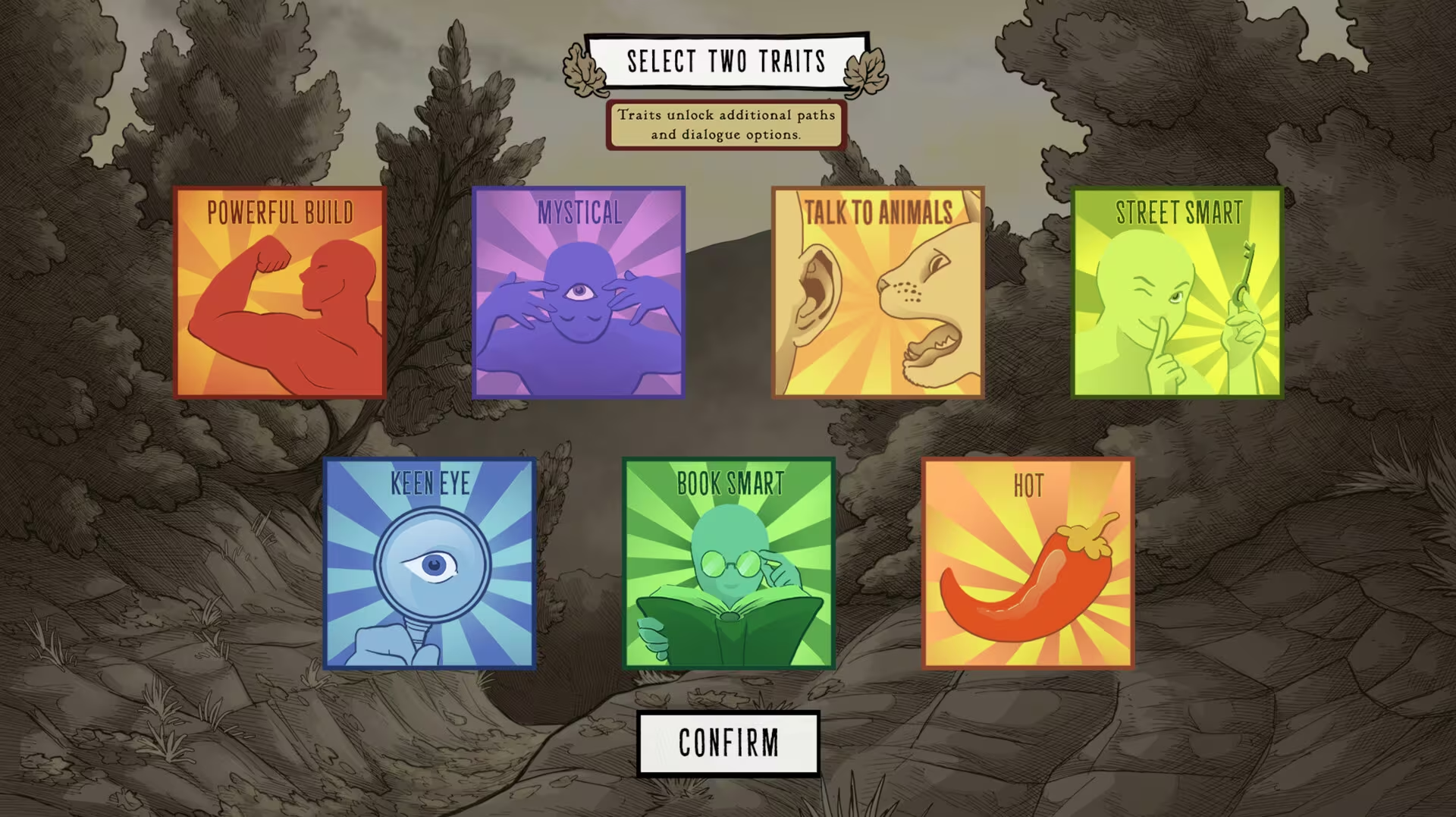
- High replayability due to trait system and multiple endings
- Inclusive character customization and pronoun options
Cons
- Game is still in early access with incomplete chapters
- Lack of voice acting
- Some players desire more polish and content between major events
- Limited physical activity due to visual novel format
- No multiplayer or competitive features
Analysis
Broadly representative of its motivational profile, with a few distinct shifts. Motivations that often define this kind of title include Intimacy, Survival, Violence, Competition. Here, the score leans higher than usual among comparable games on Survival, Fellowship, Thrill.
How to use the graph
Similar games map
Each dot is a game. They are arranged from the same motivation profile as in the “Motivations” section below. Closer dots usually mean more similar reasons to play (exploration, competition, relaxation, etc.)—not that one game is “better” than another.
- Larger dot with a light outline: the game you are viewing.
- Colour: groups of games with comparable motivation patterns (statistical clusters).
- Hover a dot to see the game name; click to open its page.
- Scroll or double-click the chart to zoom out and see more games.
Why don’t the axes read like a score? This view uses t-SNE: it only keeps who is close to whom. The scales are not “good to bad” or hours played—they separate groups on the map. Read distance between dots, not the axis numbers.
Motivations
-
Autonomy4
"Players have significant control over their character's traits, dialogue choices, and story paths, allowing personal expression and decision-making."
-
Competence2
"The game involves thoughtful decision-making and branching narratives, but gameplay mechanics are simple and accessible."
-
Competition-4
"Focus is on personal story experience and exploration without competitive elements or leaderboards."
-
Continuation5
"Highly addictive with strong replayability due to branching paths and trait combinations, encouraging long-term engagement."
-
Cooperation-3
"Primarily a single-player experience focusing on individual choices and relationships rather than teamwork with other players."
-
Creativity4
"Players customize their character with traits that significantly alter story outcomes and interactions, fostering creative playthroughs."
-
Domination-5
"Interactions emphasize mutual respect and complex relationships rather than exerting control or superiority over others."
-
Escapism5
"Players use the game as a deep immersive escape into a rich, atmospheric horror narrative and world."
-
Expectation-4
"Players engage voluntarily out of intrinsic interest and enjoyment rather than obligation or external pressure."
-
Experimenting5
"Encourages trying different trait combinations and dialogue choices to explore new story branches and secrets."
-
Exploration4
"Players discover new story paths, secrets, and character interactions through exploration and replay."
-
Expression4
"Character creation with selectable traits and pronouns allows personal expression and identity representation."
-
Fantasy3
"The game features supernatural and horror elements in a fictional Southern Gothic setting, blending fantasy with realism."
-
Fellowship3
"Strong community engagement and player attachment to characters foster a sense of belonging and shared interest."
-
Growth3
"Players learn about the story, characters, and lore through multiple playthroughs and experimentation."
-
Health-5
"Sedentary visual novel gameplay with no physical activity involved."
-
Idle-4
"Requires focused attention on narrative and choices; not designed for passive or background play."
-
Intimacy4
"Players form emotional connections with characters and experience meaningful relationships and social dynamics."
-
Leadership-5
"No leadership or group management elements; player acts individually within the story."
-
Progression3
"Progression occurs through story advancement, unlocking new dialogue and endings rather than item collection."
-
Relaxation3
"Balances tension and calm through atmospheric storytelling and pacing, providing immersive flow."
-
Sensation3
"Enjoyable art, music, and sound design create rich sensory and emotional experiences."
-
Status-4
"Focus is on personal narrative experience without social status or recognition mechanics."
-
Story5
"Narrative immersion is central, with branching plots, character development, and player-driven story."
-
Strategy3
"Requires mental engagement to plan choices and explore different outcomes, though not complex strategy."
-
Thrill3
"Provides suspense and tension through horror elements and story developments."
-
Value4
"Players perceive high value from rich content, replayability, and ongoing updates."
-
Violence-3
"Minimal focus on combat or destruction; emphasis on narrative and character interaction."
-
Survival1
"Some narrative elements involve danger and threat, but gameplay is not focused on survival mechanics."
Last update: 29/04/2026