Stationeers similar games & best alternatives
Stationeers
2017
Related articles
Quick resume
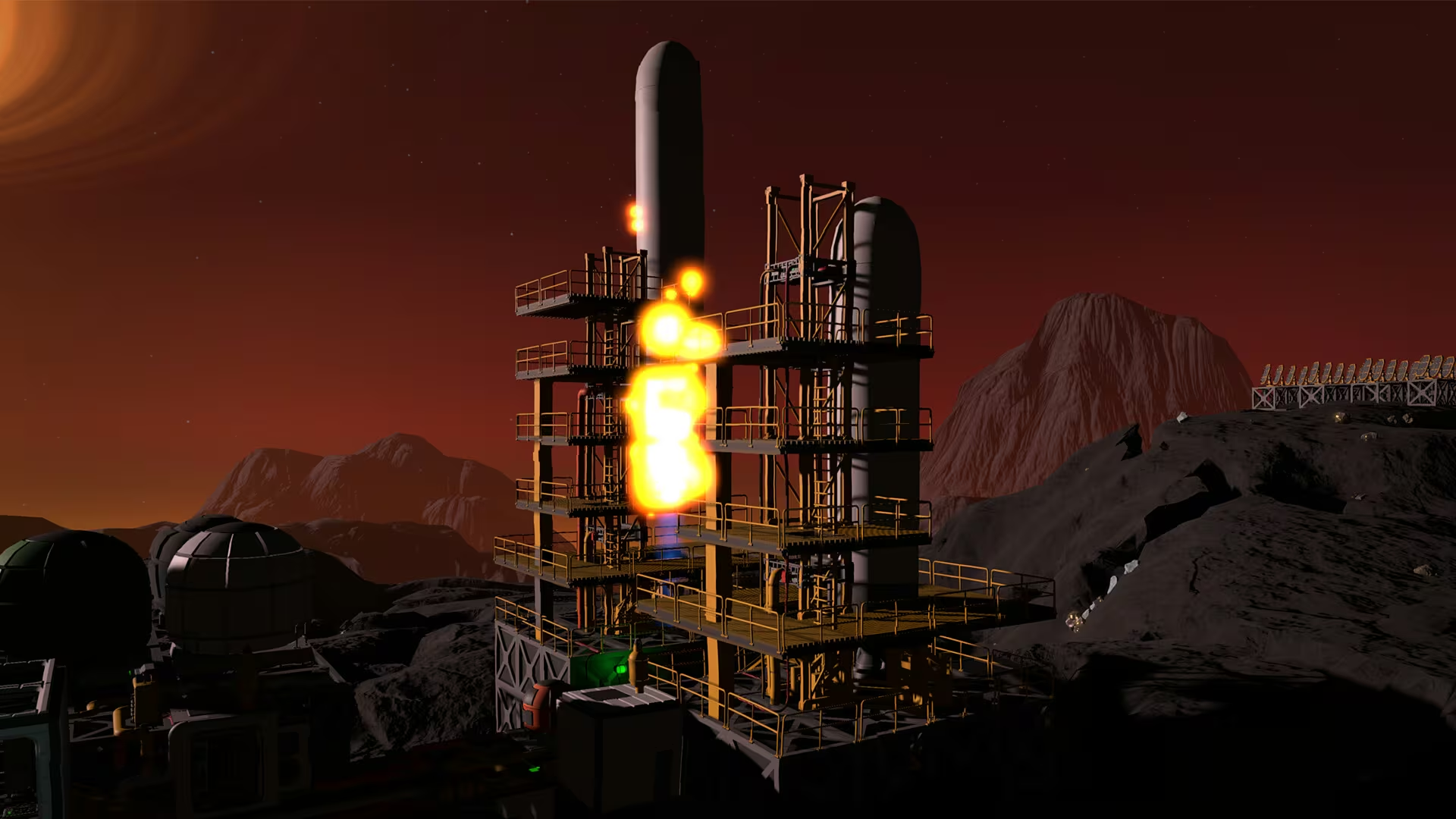
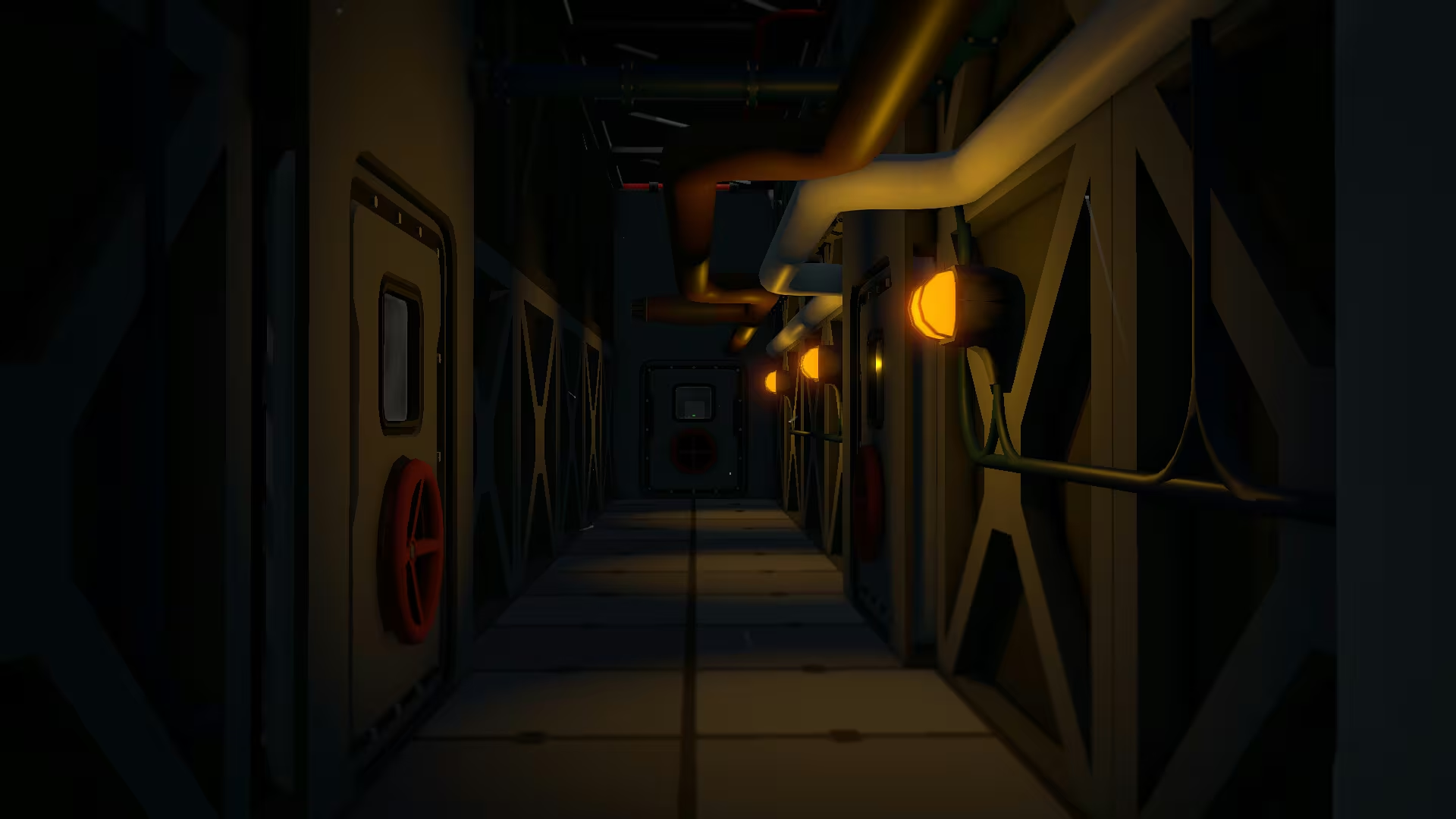
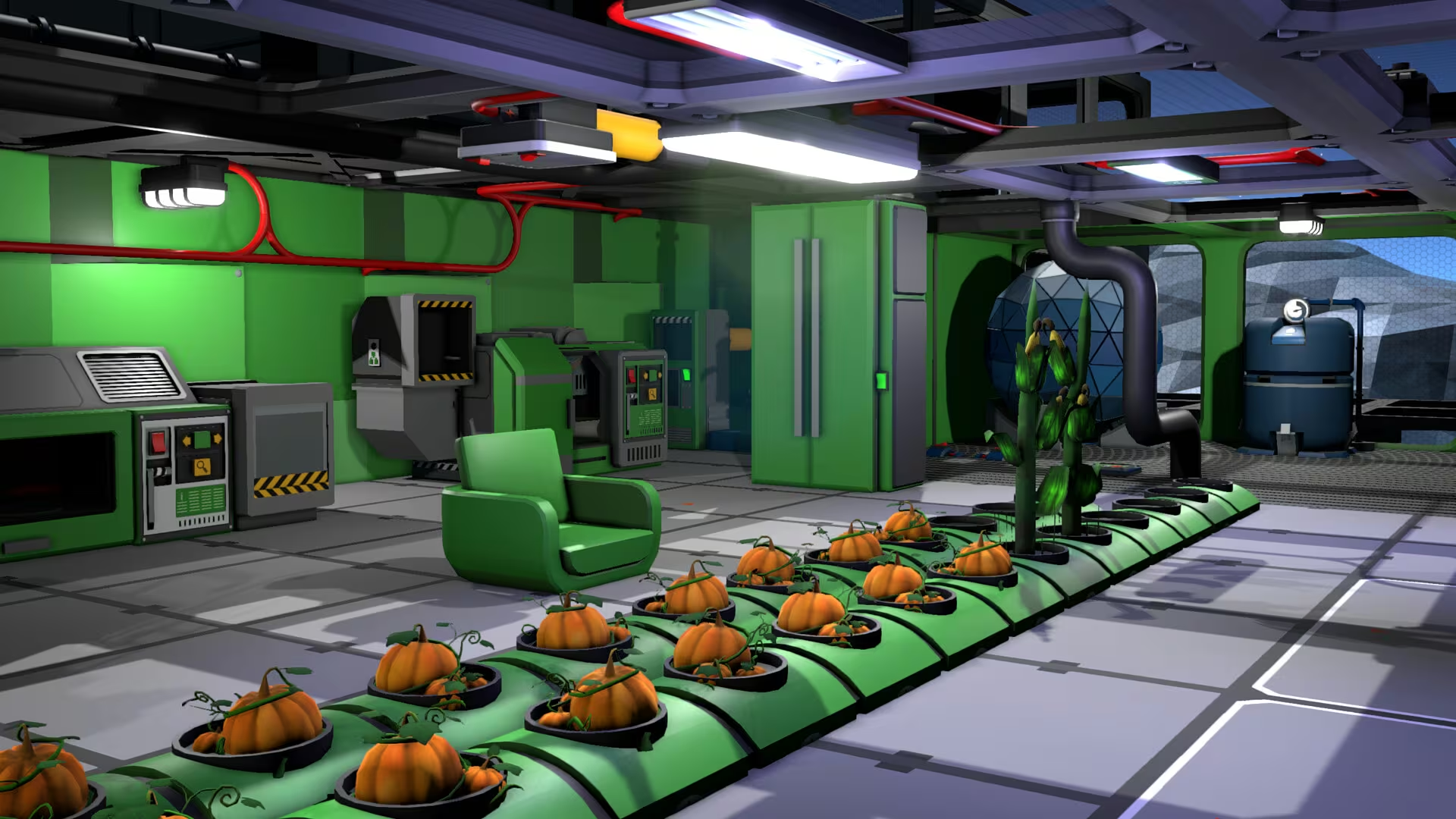
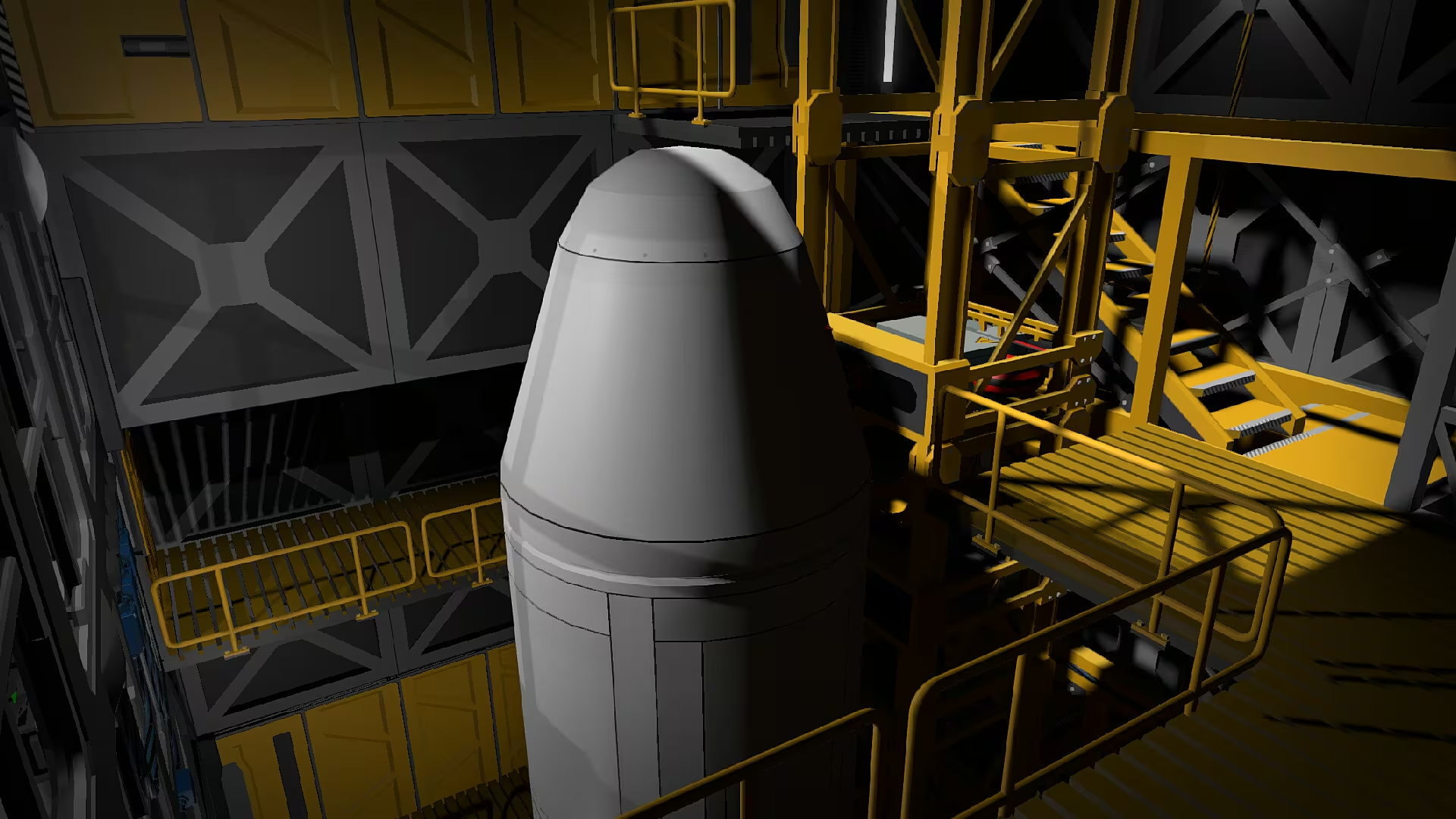
Stationeers puts you in control of the construction and management of a space station to run by yourself or online with your friends. Complex atmospheric, electrical, manufacturing, agriculture, and gravitational systems require your thought and management at all times!
Global score
88/100
Genres
Action, Indie, Simulator, Early Access
Similar games
Pros
- Deep and realistic engineering simulation
- Highly challenging and rewarding gameplay
- Extensive building and automation options
- Active and supportive developer community
- Strong multiplayer cooperation possibilities
Cons
- Steep learning curve with minimal tutorials
- Clunky inventory and control system
- Some bugs and occasional instability
- Lack of overarching story or objectives
- Multiplayer can suffer from desync and issues
Analysis
Less representative of its motivational profile, with noticeable differences. Motivations that often define this kind of title include Leadership, Survival, Violence, Strategy. Here, the score leans higher than usual among comparable games on Cooperation. It leans lower than usual among comparable games on Story, Violence.
How to use the graph
Similar games map
Each dot is a game. They are arranged from the same motivation profile as in the “Motivations” section below. Closer dots usually mean more similar reasons to play (exploration, competition, relaxation, etc.)—not that one game is “better” than another.
- Larger dot with a light outline: the game you are viewing.
- Colour: groups of games with comparable motivation patterns (statistical clusters).
- Hover a dot to see the game name; click to open its page.
- Scroll or double-click the chart to zoom out and see more games.
Why don’t the axes read like a score? This view uses t-SNE: it only keeps who is close to whom. The scales are not “good to bad” or hours played—they separate groups on the map. Read distance between dots, not the axis numbers.
Motivations
-
Autonomy5
"Players have full control over building, engineering, programming, and survival strategies with no hand-holding or fixed paths."
-
Competence5
"Highly challenging gameplay requiring mastery of complex systems, engineering, programming, and problem solving."
-
Competition-3
"Focus is on personal survival and base building with limited emphasis on direct competition; multiplayer is cooperative or casual."
-
Continuation4
"Players invest hundreds to thousands of hours, repeatedly experimenting and improving their bases, showing strong attachment."
-
Cooperation3
"Multiplayer allows teamwork in building and survival, though solo play is also common; cooperation is encouraged but optional."
-
Creativity5
"Extensive building, automation, and programming systems enable creative problem solving and base design."
-
Domination-4
"Interactions are collaborative or individual; no evidence of dominance or power imposition over others."
-
Escapism4
"Players use the game as a complex, immersive space survival escape from real life, engaging deeply with the simulation."
-
Expectation-4
"Players engage voluntarily out of intrinsic interest and passion for engineering and survival challenges."
-
Experimenting5
"Strong emphasis on experimentation with systems, programming, gas mixtures, and base designs to solve problems."
-
Exploration2
"Procedurally generated planets and environments encourage some exploration, but focus is more on base building."
-
Expression3
"Players customize bases and automation systems extensively, though character customization is minimal."
-
Fantasy-2
"Game emphasizes realistic physics, engineering, and survival rather than imaginative or fictional fantasy."
-
Fellowship2
"Community and multiplayer foster social connection, but many players also enjoy solo play."
-
Growth5
"Steep learning curve with continuous skill acquisition in engineering, programming, and survival."
-
Health-4
"Primarily sedentary gameplay with no physical activity or health-related mechanics."
-
Idle-4
"Requires constant attention and active management of complex systems; not suited for idle play."
-
Intimacy-3
"Social interactions are mostly surface-level or task-focused; no evidence of close emotional relationships."
-
Leadership2
"Some players take leadership roles in multiplayer base management, but many collaborate equally."
-
Progression4
"Players accumulate resources, upgrades, and automation systems to improve their bases and survival."
-
Relaxation-3
"Gameplay is tense and challenging with frequent failures and high stakes, not focused on relaxation."
-
Sensation2
"Visuals and sounds are functional and immersive but not highly stimulating or sensational."
-
Status-3
"Little emphasis on social recognition or status; focus is on personal achievement and survival."
-
Story-4
"No overarching narrative or plot; gameplay is open-ended and player-driven without story context."
-
Strategy5
"Strong mental challenge involving planning, problem solving, and system optimization."
-
Thrill3
"Tension and risk from survival threats and potential catastrophic failures create suspense and excitement."
-
Value4
"Players perceive high value from deep gameplay, frequent updates, and extensive content for time invested."
-
Violence-4
"Focus is on constructive building and survival; combat and destruction are minimal or accidental."
-
Survival5
"Core gameplay centers on managing threats, resource scarcity, and environmental hazards to stay alive."
Last update: 29/04/2026