The Jackbox Party Pack similar games & best alternatives

The Jackbox Party Pack
2014
Related articles
Quick resume
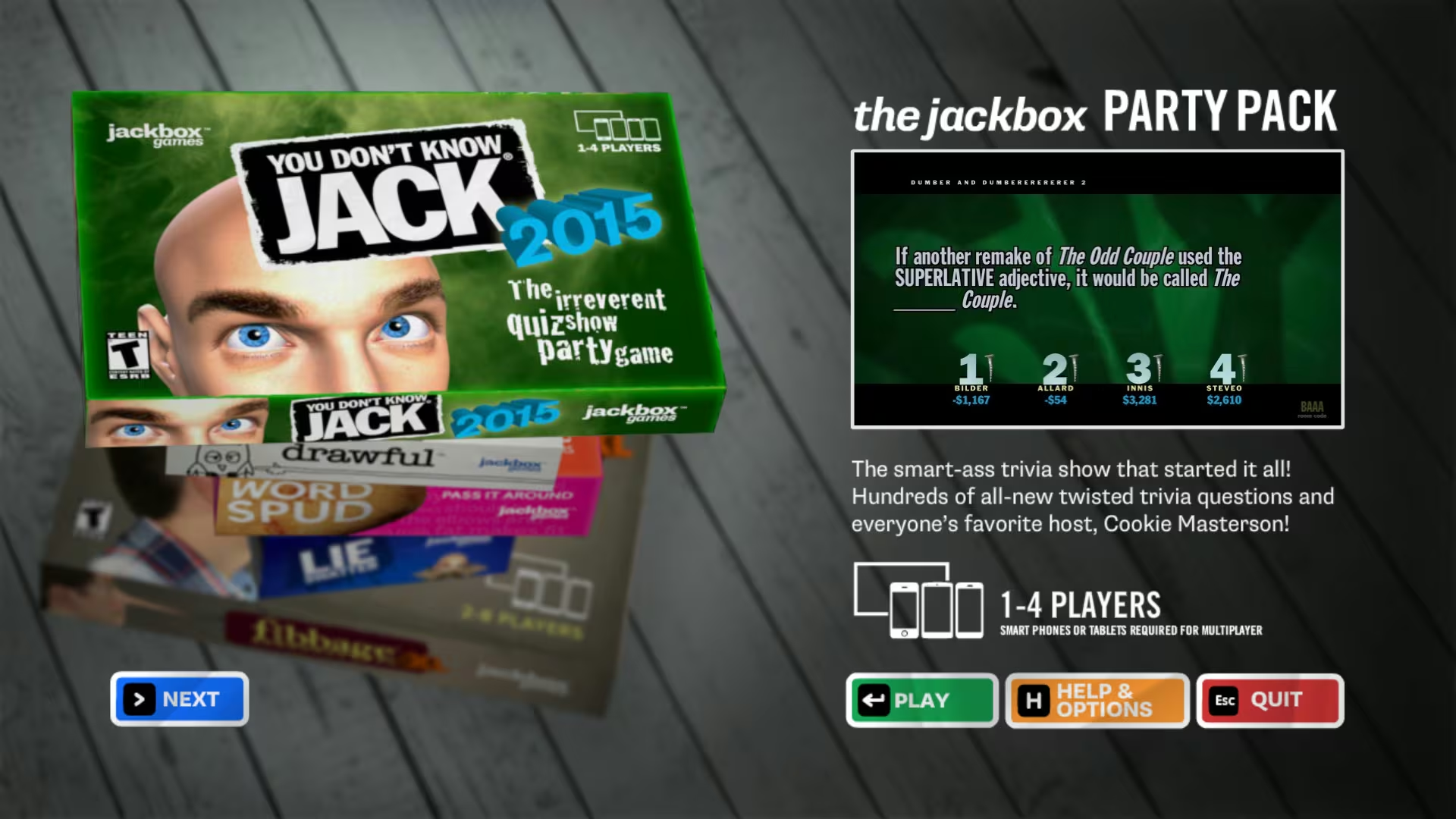
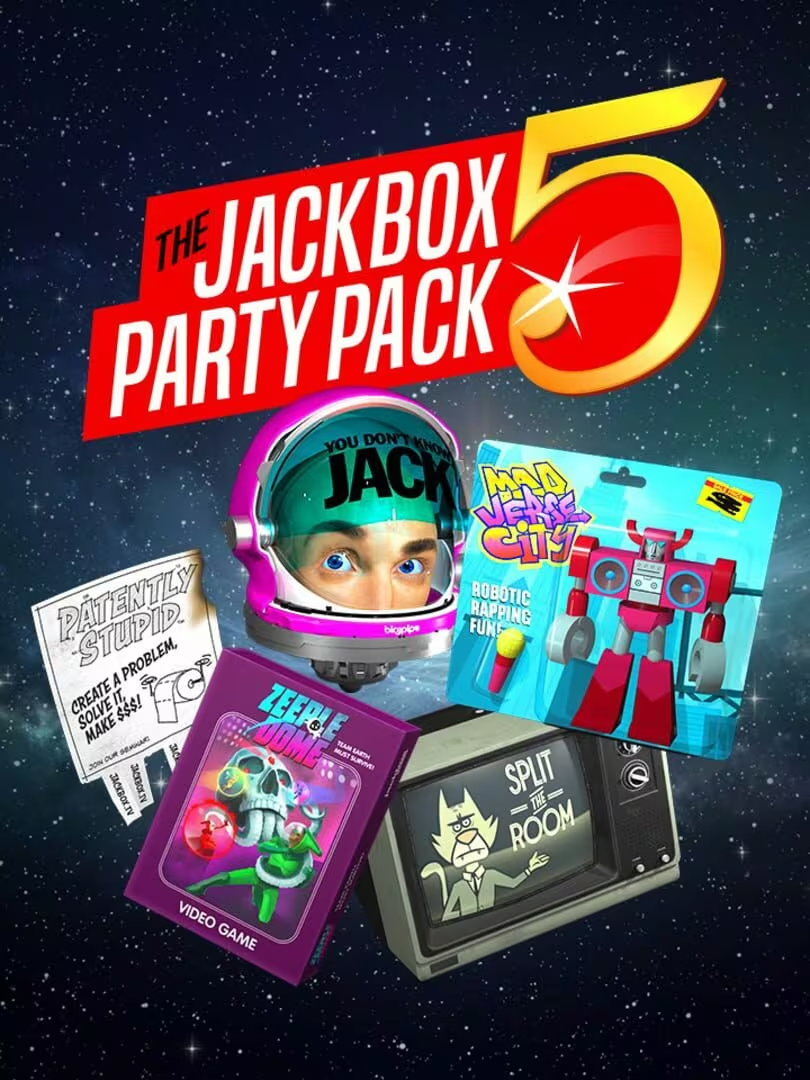
The team behind YOU DON’T KNOW JACK presents FIVE guffaw-inducing party games in one pack! You’re gonna need more than one party for this. Your phones or tablets are your controllers! For 1-100 players!
Global score
91/100
Genres
Casual, Indie, Strategy, Puzzle, Quiz/Trivia
Similar games
Pros
- Easy to set up and play using smartphones as controllers
- Highly social and humorous party experience
- Multiple games with varied mechanics
- Good replayability with large groups
- Accessible to players of different ages and skill levels
Cons
- Some games less popular or engaging (word spud, lie swatter)
- Limited player count in some games (ydkj max 4)
- Repeated prompts/questions over extended play
- Requires players to have smart devices
- Not ideal for solo play or deep narrative engagement
Analysis
Less representative of its motivational profile, with noticeable differences. Motivations that often define this kind of title include Competition, Status, Story, Expression. Here, the score leans higher than usual among comparable games on Intimacy, Fellowship. It leans lower than usual among comparable games on Survival.
How to use the graph
Similar games map
Each dot is a game. They are arranged from the same motivation profile as in the “Motivations” section below. Closer dots usually mean more similar reasons to play (exploration, competition, relaxation, etc.)—not that one game is “better” than another.
- Larger dot with a light outline: the game you are viewing.
- Colour: groups of games with comparable motivation patterns (statistical clusters).
- Hover a dot to see the game name; click to open its page.
- Scroll or double-click the chart to zoom out and see more games.
Why don’t the axes read like a score? This view uses t-SNE: it only keeps who is close to whom. The scales are not “good to bad” or hours played—they separate groups on the map. Read distance between dots, not the axis numbers.
Motivations
-
Autonomy4
"Players freely choose which mini-game to play and how to respond creatively in games like Fibbage and Drawful."
-
Competence3
"Games require skill in creativity, bluffing, drawing, and trivia knowledge, with feedback through scoring and social interaction."
-
Competition4
"Players compete for points and to fool others, with leaderboards and scoring in games like Fibbage and Drawful."
-
Continuation3
"Players often engage in multiple rounds and long sessions, with some complaints about repeated prompts over time."
-
Cooperation-3
"Games focus on individual play and competing against others rather than teamwork or cooperative goals."
-
Creativity5
"Strong emphasis on creative input in Fibbage (lying), Drawful (drawing), and Word Spud (word association)."
-
Domination2
"Some social dominance through winning and tricking others, but interactions are generally friendly and humorous."
-
Escapism4
"Players use the game as a fun distraction and social outlet, often in party or family settings."
-
Expectation-4
"Players engage voluntarily for fun and socializing, not out of obligation or pressure."
-
Experimenting3
"Players try different strategies, creative lies, and drawings, exploring humorous possibilities."
-
Exploration-2
"Gameplay occurs in known, repeated environments with limited discovery; novelty comes from social interaction."
-
Expression4
"Players express themselves through custom drawings, lies, and word choices, personalizing gameplay."
-
Fantasy-3
"Games are grounded in trivia, wordplay, and social humor rather than imaginative fiction or roleplay."
-
Fellowship5
"Strong sense of community and shared experience in group play and social laughter."
-
Growth2
"Players develop skills in bluffing, drawing, and trivia knowledge, though learning curve is moderate."
-
Health-5
"Sedentary gameplay with no physical activity involved."
-
Idle-4
"Requires active attention and participation during rounds; not designed for passive or background play."
-
Intimacy3
"Social interactions foster friendly bonding and humor, though not deep emotional sharing."
-
Leadership-2
"No formal leadership roles; players participate equally without guiding or managing others."
-
Progression2
"Players accumulate points and achievements during sessions but no persistent upgrades or items."
-
Relaxation3
"Generally lighthearted and fun, balancing challenge and humor for enjoyable flow."
-
Sensation2
"Visual and auditory stimuli are moderate, with humorous announcers and colorful presentation."
-
Status3
"Recognition through scoring and social praise within the group; no broader social status."
-
Story-4
"Games lack narrative immersion, focusing on isolated rounds and social interaction."
-
Strategy3
"Requires strategic bluffing, guessing, and timing in several games."
-
Thrill2
"Some suspense in guessing and timing, but overall low risk and lighthearted tension."
-
Value4
"High perceived value with multiple games in one pack and replayability for social occasions."
-
Violence-5
"No combat or destructive gameplay; focus on constructive social interaction."
-
Survival-5
"No survival or threat avoidance elements; stable and safe gameplay environment."
Last update: 29/04/2026