The Last Federation Thumbnail

The Last Federation similar games & best alternatives
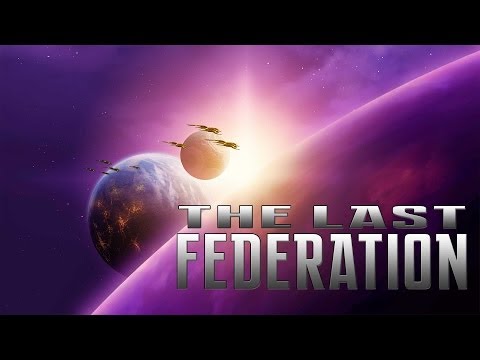
The Last Federation

PC (Microsoft Windows), Mac, Linux • 2014

Related articles

Quick resume

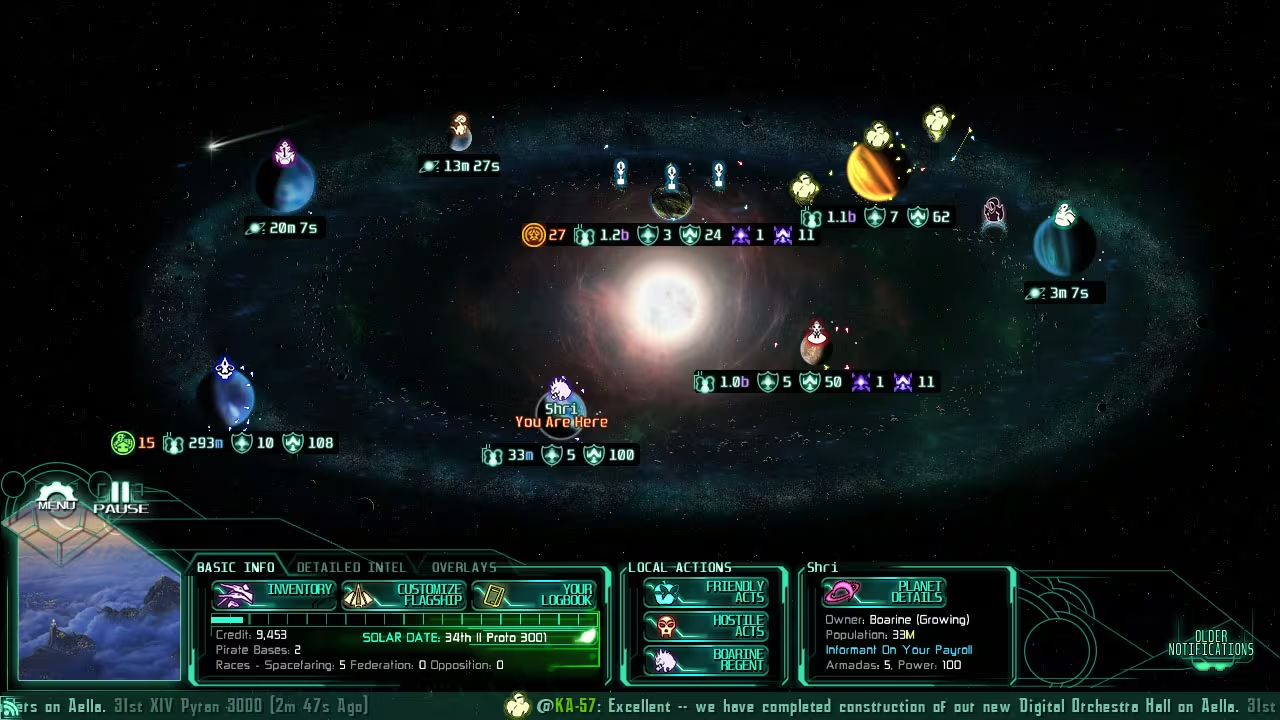
From the creators of AI War: Fleet Command comes an all-new grand strategy title with turn-based tactical combat, set in a deep simulation of an entire solar system and its billions of inhabitants. You are the last of a murdered race, determined to unify or destroy the 8 others.

Global score

75/100

Genres

Indie, Simulator, Strategy, Turn-based strategy (TBS)

Similar games

    Pros

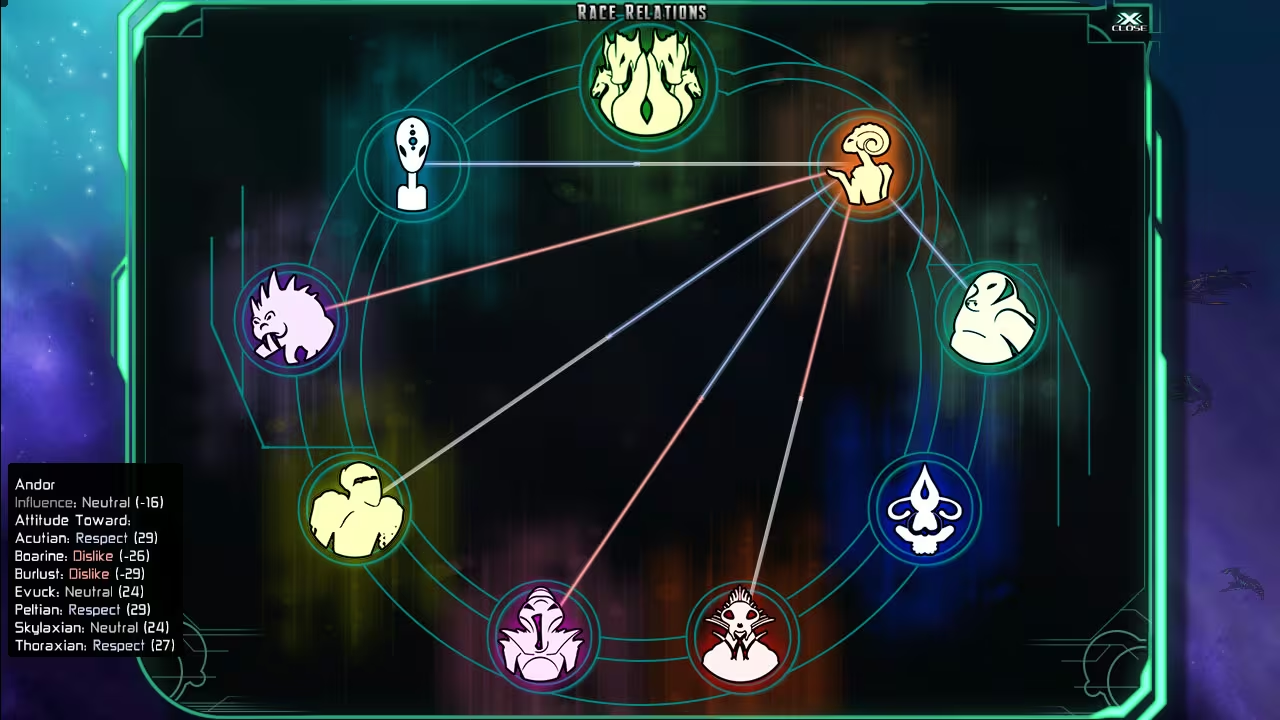
    • Deep and unique diplomacy system
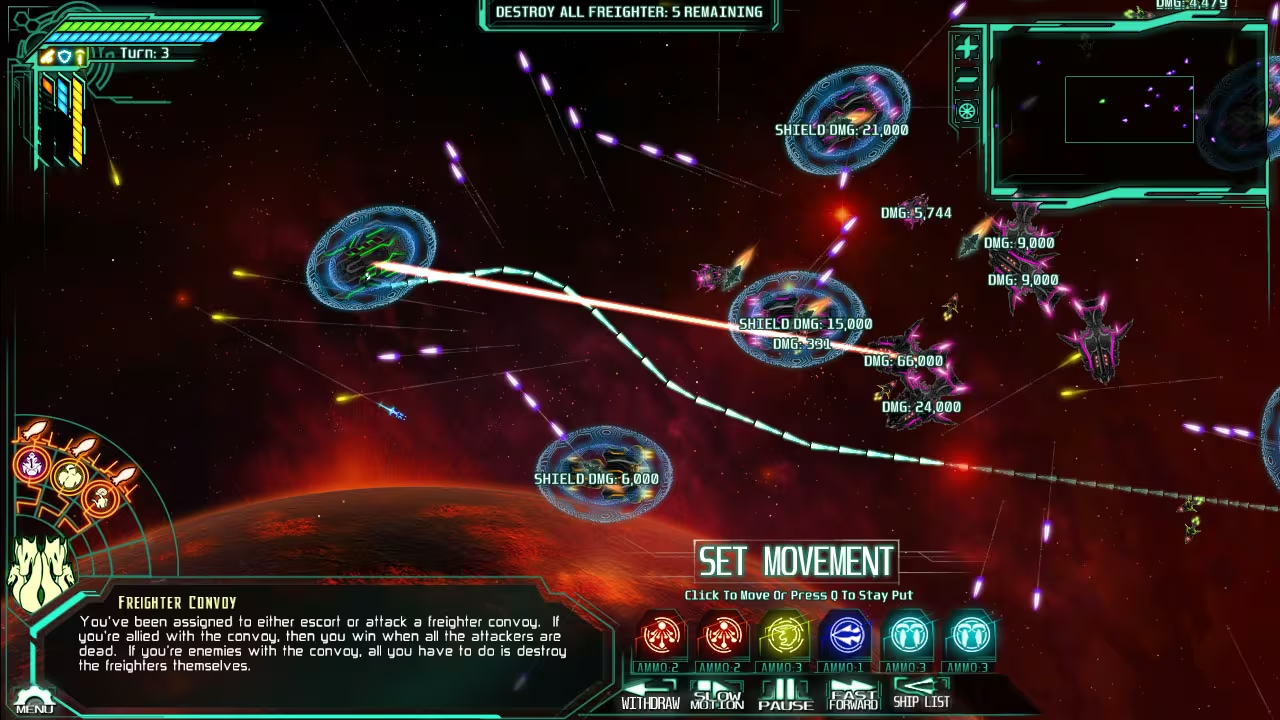
    • Engaging turn-based bullet hell combat
    • High replayability with emergent stories
    • Strong developer support and updates
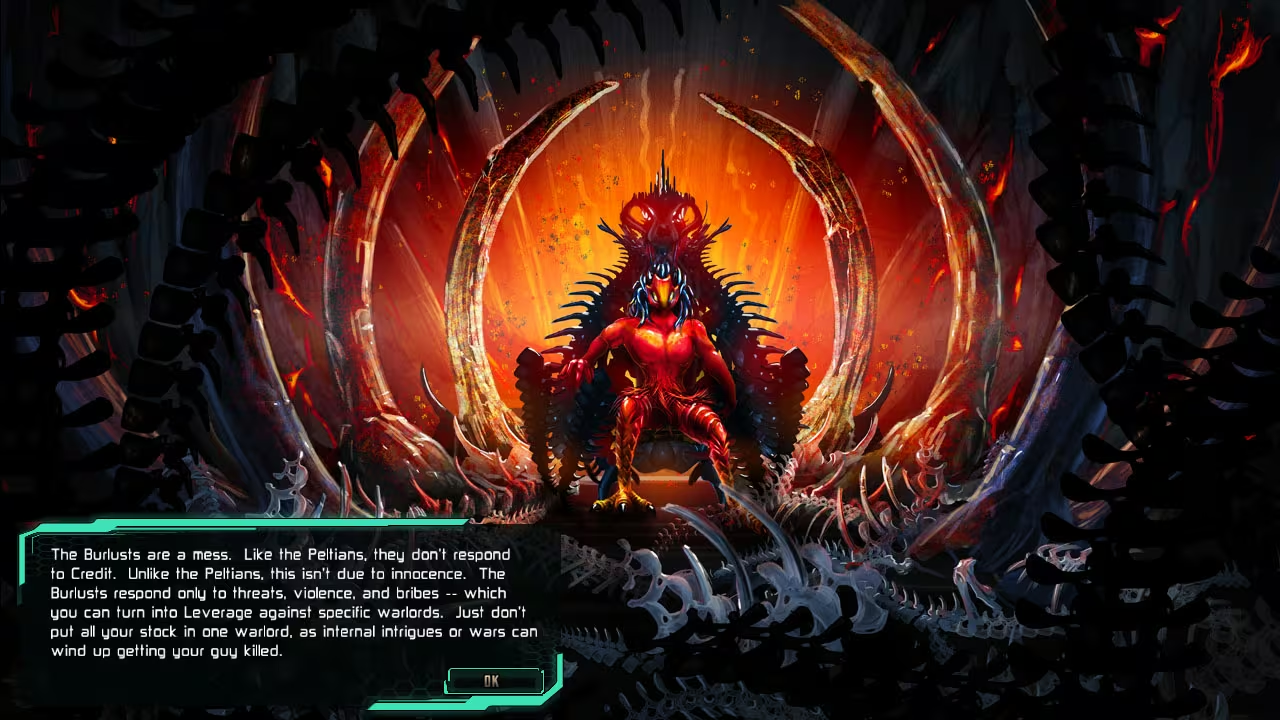
    • Rich sci-fi narrative and alien races

    Cons

    • Steep learning curve and complex ui
    • Combat can become repetitive or grindy
    • Some balance issues and late-game grind
    • Limited social/multiplayer features
    • Small solar system map limits scale

    Analysis

    Less representative of its motivational profile, with noticeable differences. Motivations that often define this kind of title include Cooperation, Fellowship, Intimacy, Leadership. Here, the score leans higher than usual among comparable games on Domination, Leadership. It leans lower than usual among comparable games on Intimacy.

    How to use the graph
    Similar games map

    Each dot is a game. They are arranged from the same motivation profile as in the “Motivations” section below. Closer dots usually mean more similar reasons to play (exploration, competition, relaxation, etc.)—not that one game is “better” than another.

    • Larger dot with a light outline: the game you are viewing.
    • Colour: groups of games with comparable motivation patterns (statistical clusters).
    • Hover a dot to see the game name; click to open its page.
    • Scroll or double-click the chart to zoom out and see more games.

    Why don’t the axes read like a score? This view uses t-SNE: it only keeps who is close to whom. The scales are not “good to bad” or hours played—they separate groups on the map. Read distance between dots, not the axis numbers.

    Motivations

    • Autonomy
      4

      "Players have high control over diplomatic and strategic decisions, manipulating races and events rather than following fixed routines."

    • Competence
      3

      "Requires skillful management of complex diplomacy and turn-based bullet hell combat, with meaningful feedback and challenge."

    • Competition
      -2

      "Focus is on managing relationships and personal strategic goals rather than direct competition or leaderboards."

    • Continuation
      4

      "Long play sessions and replayability with varied outcomes encourage habitual and extended play."

    • Cooperation
      3

      "Players work indirectly with AI races to form federations and alliances, emphasizing teamwork and collaboration."

    • Creativity
      4

      "Players creatively manipulate political and military situations, with many options for influencing races and outcomes."

    • Domination
      2

      "Players exert control over other races through manipulation, coercion, and sometimes genocide, showing power over others."

    • Escapism
      4

      "Immersive sci-fi setting and complex diplomacy provide strong escape from real life."

    • Expectation
      -4

      "Players engage voluntarily out of intrinsic interest and enjoyment rather than obligation."

    • Experimenting
      4

      "High encouragement to try different diplomatic strategies, combat tactics, and race interactions."

    • Exploration
      2

      "Randomized solar systems and emergent stories encourage discovery of new scenarios and outcomes."

    • Expression
      2

      "Some customization of ship weapons and abilities allows personal expression, though limited."

    • Fantasy
      4

      "Strong sci-fi narrative with imaginative alien races, politics, and space combat."

    • Fellowship
      1

      "Some social connection through community and shared interest, but gameplay is mostly single-player."

    • Growth
      3

      "Players learn complex systems and improve strategic and tactical skills over time."

    • Health
      -4

      "Primarily sedentary gameplay with no physical activity."

    • Idle
      -3

      "Requires focused attention and strategic planning, not suited for idle or background play."

    • Intimacy
      -4

      "Minimal social interaction or emotional connection beyond gameplay mechanics."

    • Leadership
      3

      "Players lead indirectly by influencing multiple races and guiding galactic politics."

    • Progression
      3

      "Players accumulate technology, influence, and upgrades to their ship and federation."

    • Relaxation
      2

      "Some players find the strategic flow relaxing, though complexity can cause tension."

    • Sensation
      3

      "Colorful bullet hell combat and music provide sensory stimulation and excitement."

    • Status
      -3

      "Achievements and community recognition exist but social status is not a core motivator."

    • Story
      4

      "Strong narrative immersion with emergent stories and lore-rich alien races."

    • Strategy
      5

      "Heavy emphasis on mental challenge, problem solving, and long-term planning."

    • Thrill
      3

      "Tactical combat and political intrigue create suspense and excitement."

    • Value
      4

      "Players report good value for time invested due to depth and replayability."

    • Violence
      3

      "Combat and destructive actions like planetary bombing and genocide are core gameplay elements."

    • Survival
      3

      "Avoiding defeat and managing threats is important to success."

    Last update: 29/04/2026