Three Digits similar games & best alternatives

Three Digits
2015
Related articles
Quick resume
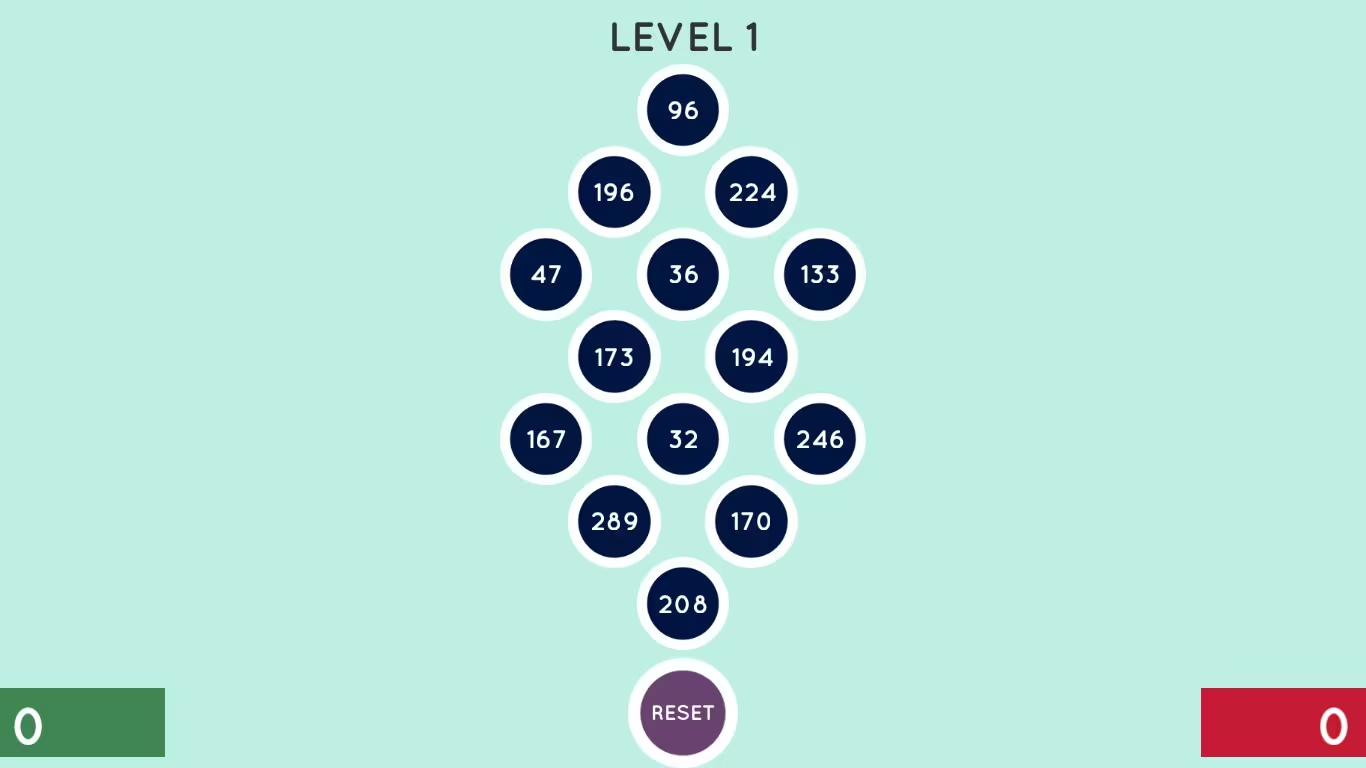
Three Digits is the sequel to our first game Two Digits. You are given 14 numbers less than 1000, and all you have to do is to choose two subsets with the same sum.
Global score
49/100
Genres
Casual, Indie, Puzzle
Similar games
Pros
- Simple and clear mathematical puzzle concept
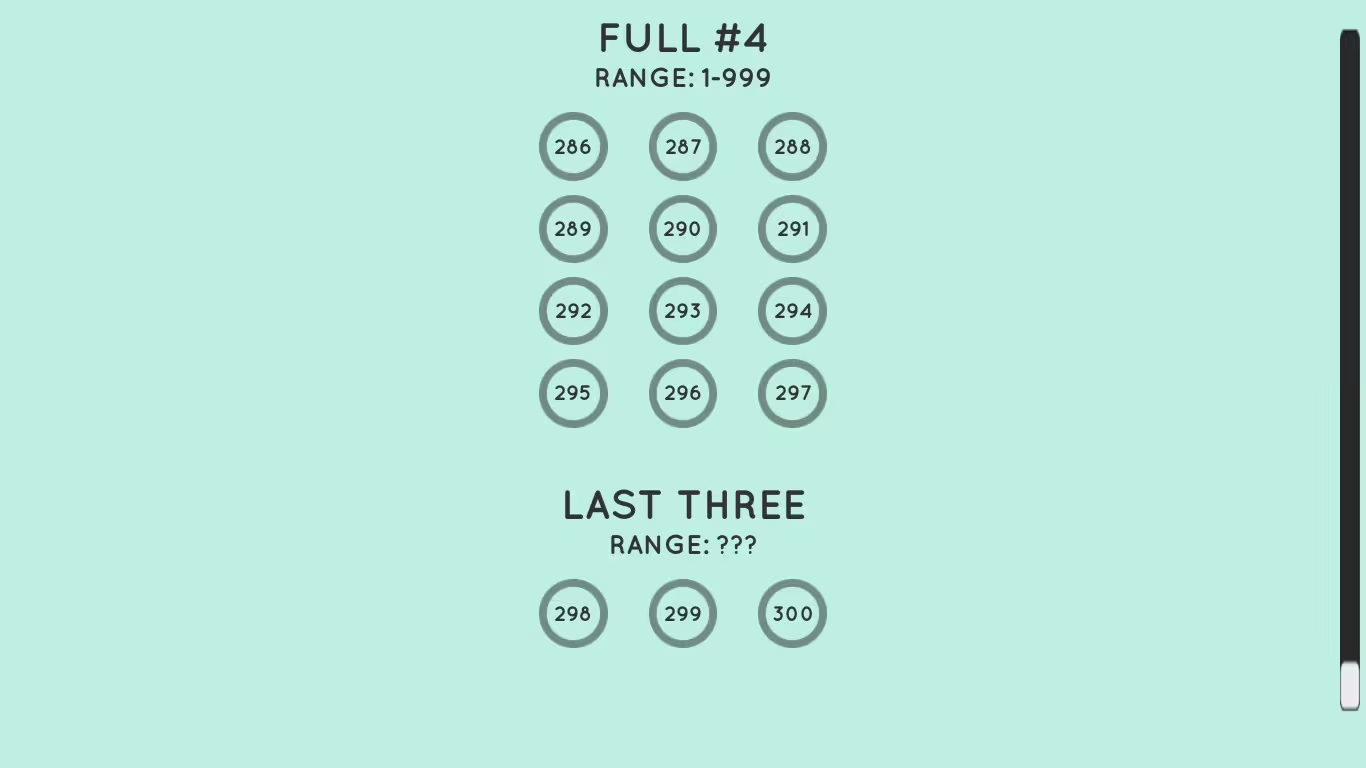
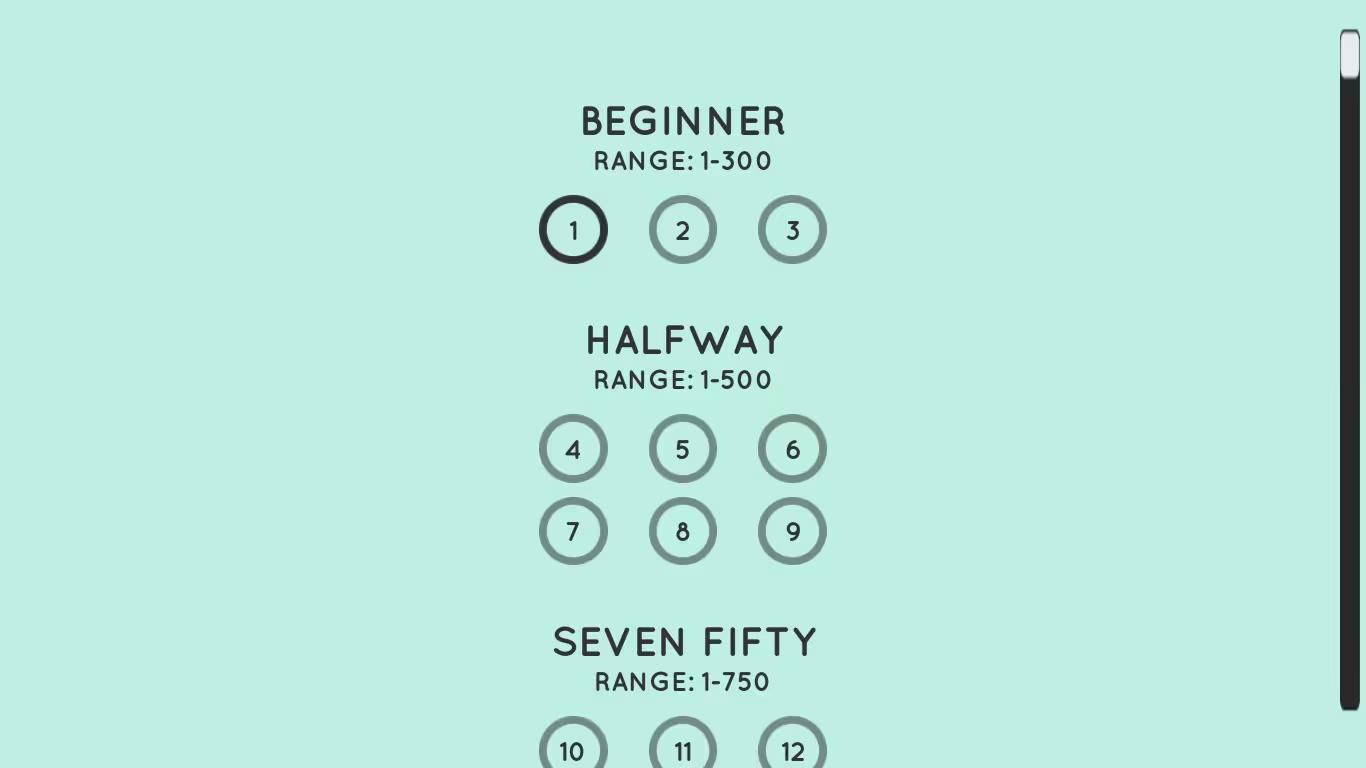
- Large number of levels (300)
- Affordable price
- Minimalistic design suitable for focused brain training
- Some players find it relaxing or enjoyable as a mental exercise
Cons
- Repetitive and tedious gameplay leading to boredom
- Buggy achievement system requiring game restarts
- Poor controls and ui not optimized for pc
- Lack of progression variety or innovation across levels
- Minimal sensory and social engagement
Analysis
Less representative of its motivational profile, with noticeable differences. Motivations that often define this kind of title include Creativity, Exploration, Expression, Story. It leans lower than usual among comparable games on Survival, Thrill, Fantasy.
How to use the graph
Similar games map
Each dot is a game. They are arranged from the same motivation profile as in the “Motivations” section below. Closer dots usually mean more similar reasons to play (exploration, competition, relaxation, etc.)—not that one game is “better” than another.
- Larger dot with a light outline: the game you are viewing.
- Colour: groups of games with comparable motivation patterns (statistical clusters).
- Hover a dot to see the game name; click to open its page.
- Scroll or double-click the chart to zoom out and see more games.
Why don’t the axes read like a score? This view uses t-SNE: it only keeps who is close to whom. The scales are not “good to bad” or hours played—they separate groups on the map. Read distance between dots, not the axis numbers.
Motivations
-
Autonomy4
"Players freely choose which numbers to select and how to assign colors to solve puzzles, indicating high control over actions."
-
Competence3
"The game challenges players with mathematical puzzles requiring mental calculation and problem solving, though some find it tedious and reliant on trial and error."
-
Competition-3
"Focus is on individual puzzle solving without mention of leaderboards or direct player comparison; some players enjoy competing informally with friends."
-
Continuation-2
"Many reviews mention boredom and repetitiveness leading to quitting early; some play in short bursts or use guides to finish."
-
Cooperation-4
"Gameplay is single-player puzzle solving with no cooperative elements described."
-
Creativity-3
"Players work within fixed puzzle constraints with no creation or modification of game elements."
-
Domination-5
"No evidence of exerting control over others; interactions are solitary and non-competitive."
-
Escapism1
"Some players use the game as a brain training or distraction, but others find it stressful or tedious rather than relaxing."
-
Expectation-4
"Players generally engage voluntarily out of interest in math puzzles; no indication of obligation or external pressure."
-
Experimenting1
"Players try different number combinations and approaches to solve puzzles, though some rely on guides or brute force."
-
Exploration-5
"Game consists of fixed puzzle sets with no new areas or secrets to discover."
-
Expression-5
"No customization or personalization features; presentation is minimalistic and standardized."
-
Fantasy-5
"Game is grounded in realistic arithmetic puzzles without fictional or imaginative elements."
-
Fellowship-4
"No social or community features; play is solitary with minimal social connection."
-
Growth3
"Players develop mental arithmetic and combinatorial skills through puzzle solving."
-
Health-5
"Sedentary gameplay with no physical activity involved."
-
Idle-3
"Requires focused attention and mental effort; not suited for background or casual idle play."
-
Intimacy-5
"No evidence of forming close relationships or emotional sharing through gameplay."
-
Leadership-5
"No leadership or group management roles present."
-
Progression2
"Players progress through 300 levels and can unlock achievements, though progression is linear and repetitive."
-
Relaxation-2
"Some find the game relaxing as a brain exercise, but many report frustration and boredom causing tension."
-
Sensation-3
"Minimal sensory stimulation; simple visuals and repetitive music with limited excitement."
-
Status-4
"No social recognition or status systems; achievements exist but are buggy and not prominent."
-
Story-5
"No narrative or story elements; purely abstract puzzle gameplay."
-
Strategy2
"Requires logical thinking and problem solving, but many players resort to trial and error or guides."
-
Thrill-4
"Lacks suspense or risk; gameplay is predictable and low emotional intensity."
-
Value1
"Affordable price and large number of levels provide some value, though many feel content is repetitive and limited."
-
Violence-5
"No violent or destructive content; gameplay is constructive mental activity."
-
Survival-5
"No threats or failure conditions; stable and low-risk environment."
Last update: 29/04/2026