Utawarerumono: Prelude to the Fallen Thumbnail

Utawarerumono: Prelude to the Fallen similar games & best alternatives

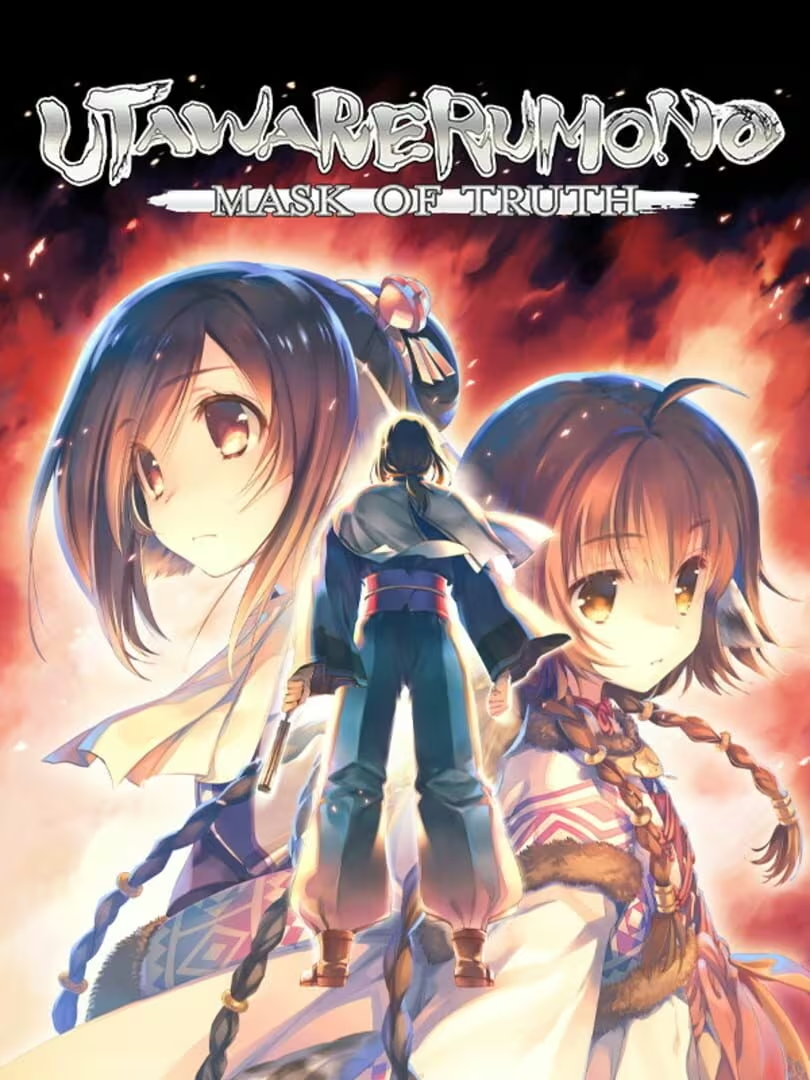
Utawarerumono: Prelude to the Fallen

PC (Microsoft Windows), Nintendo Switch, PlayStation 4, PlayStation Vita • 2021

Related articles

Quick resume

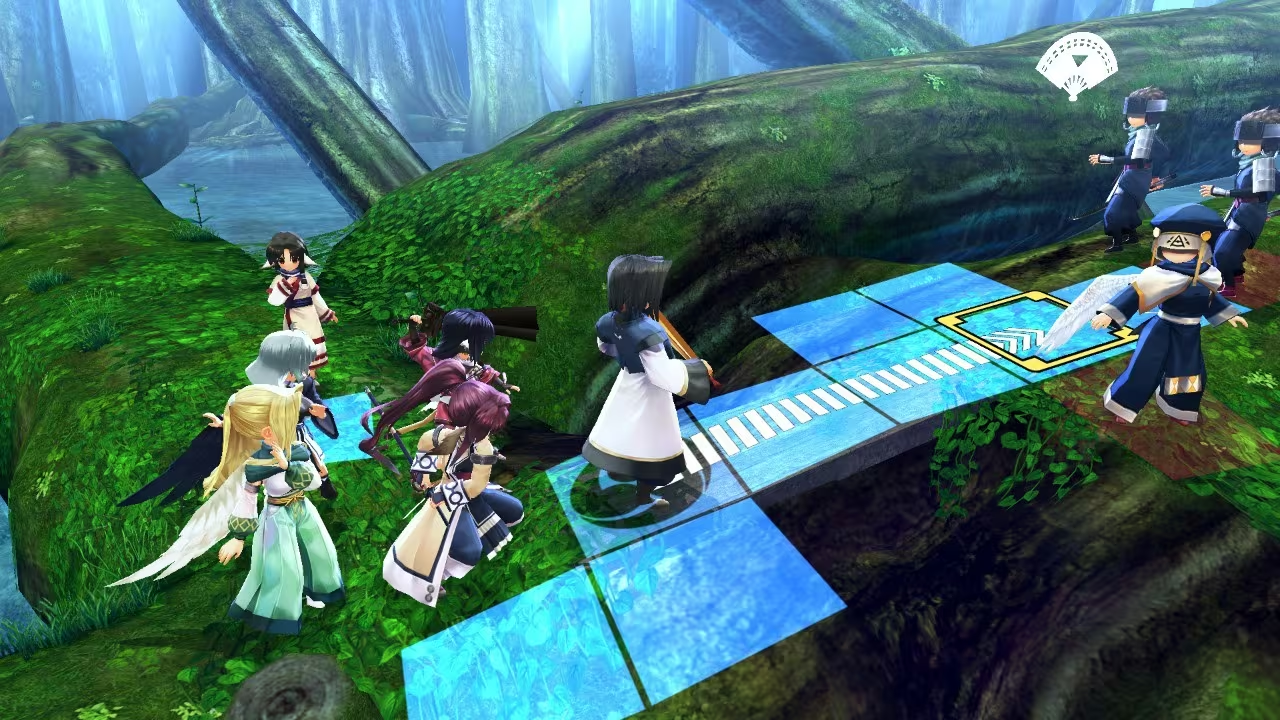
The first game in the Utawarerumono trilogy of story-rich tactics RPGs. Into a world filled with verdant nature, populated by folk with fluffy ears and fuzzy tails, awakens Hakuowlo, a man of masked mien and missing memory.

Global score

93/100

Genres

Adventure, Role-playing (RPG), Simulator, Strategy, Turn-based strategy (TBS), Visual Novel, Tactical

Similar games

    Pros

    • Deep and emotional story
    • Well-developed characters
    • Immersive fantasy world
    • Good voice acting and music
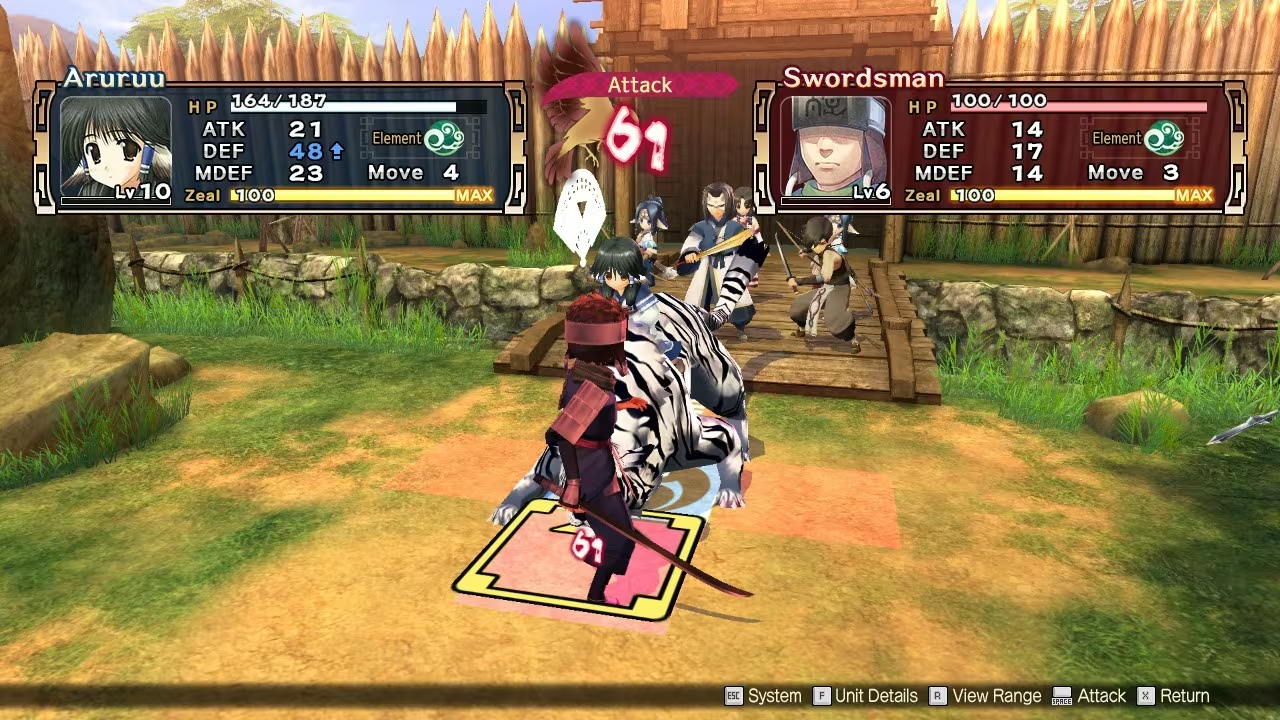
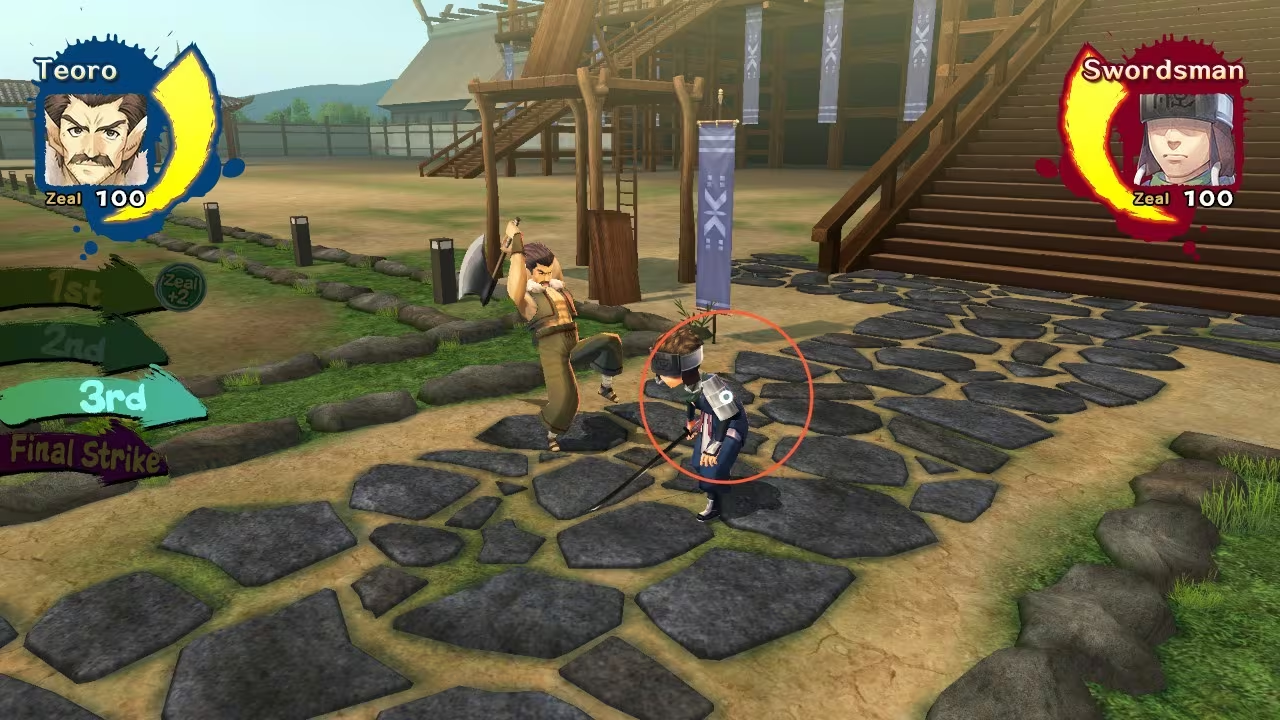
    • Accessible tactical combat

    Cons

    • Slow pacing at start
    • Linear narrative with no choices
    • Combat is easy and simplistic
    • Pc port locked at 720p/30fps
    • Some outdated visuals and fanservice

    Analysis

    Less representative of its motivational profile, with noticeable differences. Motivations that often define this kind of title include Intimacy, Survival, Violence, Competition. Here, the score leans higher than usual among comparable games on Leadership, Violence. It leans lower than usual among comparable games on Exploration.

    How to use the graph
    Similar games map

    Each dot is a game. They are arranged from the same motivation profile as in the “Motivations” section below. Closer dots usually mean more similar reasons to play (exploration, competition, relaxation, etc.)—not that one game is “better” than another.

    • Larger dot with a light outline: the game you are viewing.
    • Colour: groups of games with comparable motivation patterns (statistical clusters).
    • Hover a dot to see the game name; click to open its page.
    • Scroll or double-click the chart to zoom out and see more games.

    Why don’t the axes read like a score? This view uses t-SNE: it only keeps who is close to whom. The scales are not “good to bad” or hours played—they separate groups on the map. Read distance between dots, not the axis numbers.

    Motivations

    • Autonomy
      3

      "Players have freedom to explore story and combat choices, but the narrative is linear with no branching decisions."

    • Competence
      1

      "Combat is simple and easy, with limited challenge even on hard mode; some grinding possible but not required."

    • Competition
      -3

      "Focus is on personal story experience and character development rather than competing with others."

    • Continuation
      4

      "Players report long playtimes and emotional investment leading to habitual and extended play sessions."

    • Cooperation
      2

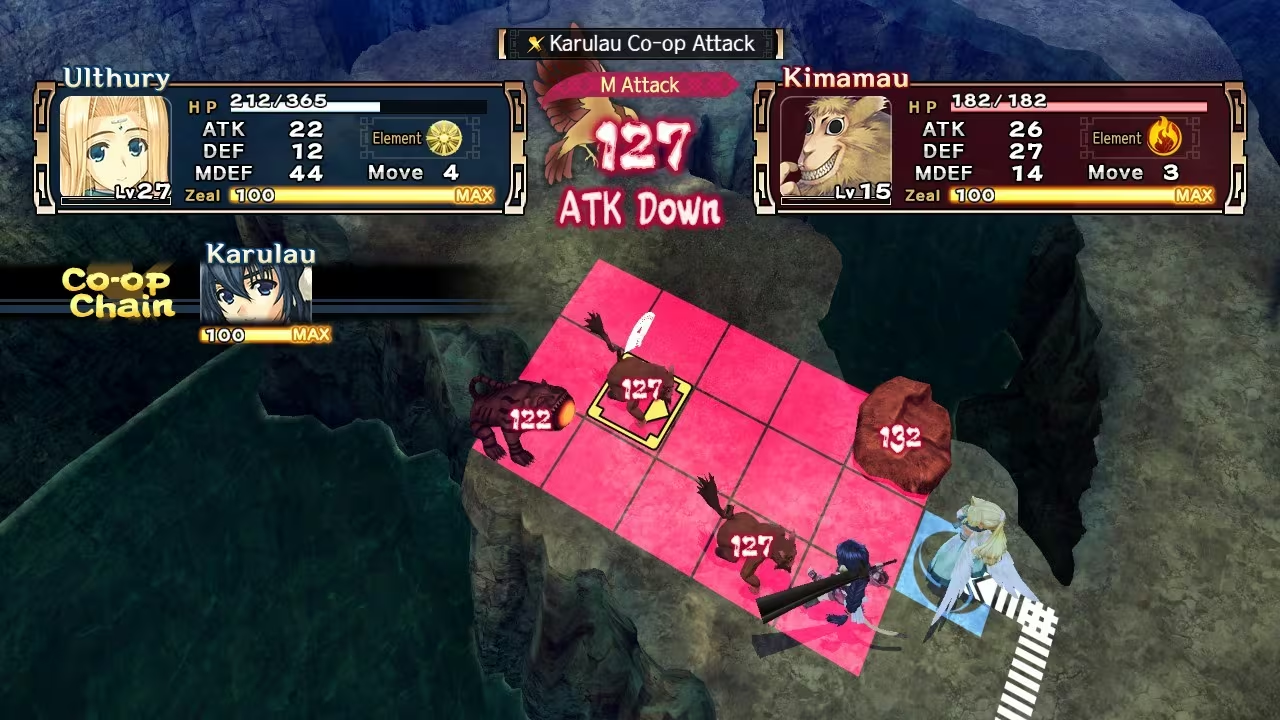
      "Some cooperative combat mechanics exist (e.g. co-op attacks), but mostly single-player experience."

    • Creativity
      1

      "Players can customize character stats and party composition, but combat and story follow preset structure."

    • Domination
      -4

      "Interactions emphasize mutual respect and shared narrative rather than dominance or power over others."

    • Escapism
      5

      "Strong emotional story and immersive world provide significant escape from real-life concerns."

    • Expectation
      -4

      "Players engage voluntarily out of intrinsic interest and love for story and characters."

    • Experimenting
      0

      "Limited experimentation possible; combat and story are mostly linear and predictable."

    • Exploration
      -2

      "Story and environments are mostly familiar and linear, with limited discovery or open-world elements."

    • Expression
      1

      "Some character customization and stat allocation allow personal expression within limits."

    • Fantasy
      5

      "Strong fantasy setting with anthropomorphic characters, mythical elements, and imaginative fiction."

    • Fellowship
      3

      "Players feel part of a community through shared story experience and character relationships."

    • Growth
      3

      "Players develop skills in combat and understanding of story, with character progression over time."

    • Health
      -5

      "Primarily sedentary gameplay with no physical activity or health-related features."

    • Idle
      -3

      "Requires focused attention during story and combat; not designed for background or casual play."

    • Intimacy
      3

      "Strong emotional connections with characters and story foster feelings of closeness and attachment."

    • Leadership
      2

      "Players lead a party in combat and make strategic decisions, but within a guided narrative."

    • Progression
      4

      "Character leveling, stat upgrades, and item collection provide clear sense of progression."

    • Relaxation
      3

      "Story and music create relaxing and emotional flow, though some pacing issues noted."

    • Sensation
      3

      "Enjoyable music, voice acting, and art provide sensory stimulation and emotional engagement."

    • Status
      -4

      "Focus is on personal narrative experience rather than social recognition or competition."

    • Story
      5

      "Highly praised narrative immersion with deep characters, worldbuilding, and emotional impact."

    • Strategy
      2

      "Tactical combat requires some planning but is relatively simple and easy compared to other SRPGs."

    • Thrill
      1

      "Some emotional suspense and plot twists, but gameplay risk and tension are low."

    • Value
      3

      "Players feel they receive good narrative and gameplay content for time invested, especially on sale."

    • Violence
      1

      "Combat involves battles and attacks, but violence is stylized and not gratuitous."

    • Survival
      -2

      "Combat is low risk and easy; survival elements and resource management are minimal."

    Last update: 29/04/2026