Keep Talking and Nobody Explodes Thumbnail

Keep Talking and Nobody Explodes similar games & best alternatives

Keep Talking and Nobody Explodes

PC (Microsoft Windows), Mac, PlayStation VR, SteamVR, Oculus Quest, PlayStation 4, Android, Meta Quest 2, Windows Mixed Reality, Xbox One, iOS, Gear VR, Nintendo Switch, Daydream, Oculus Rift, Linux • 2015

Related articles

Quick resume

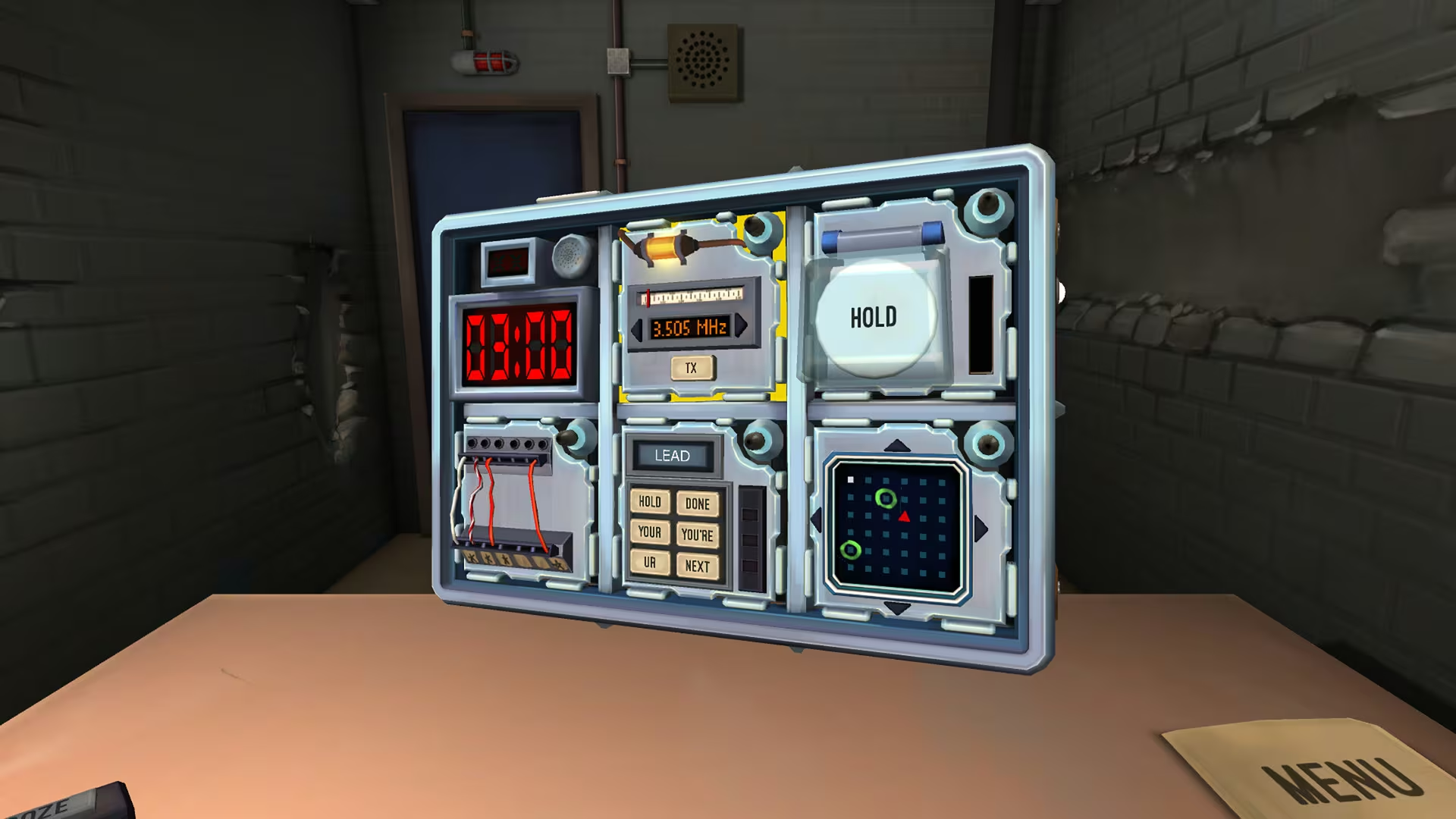
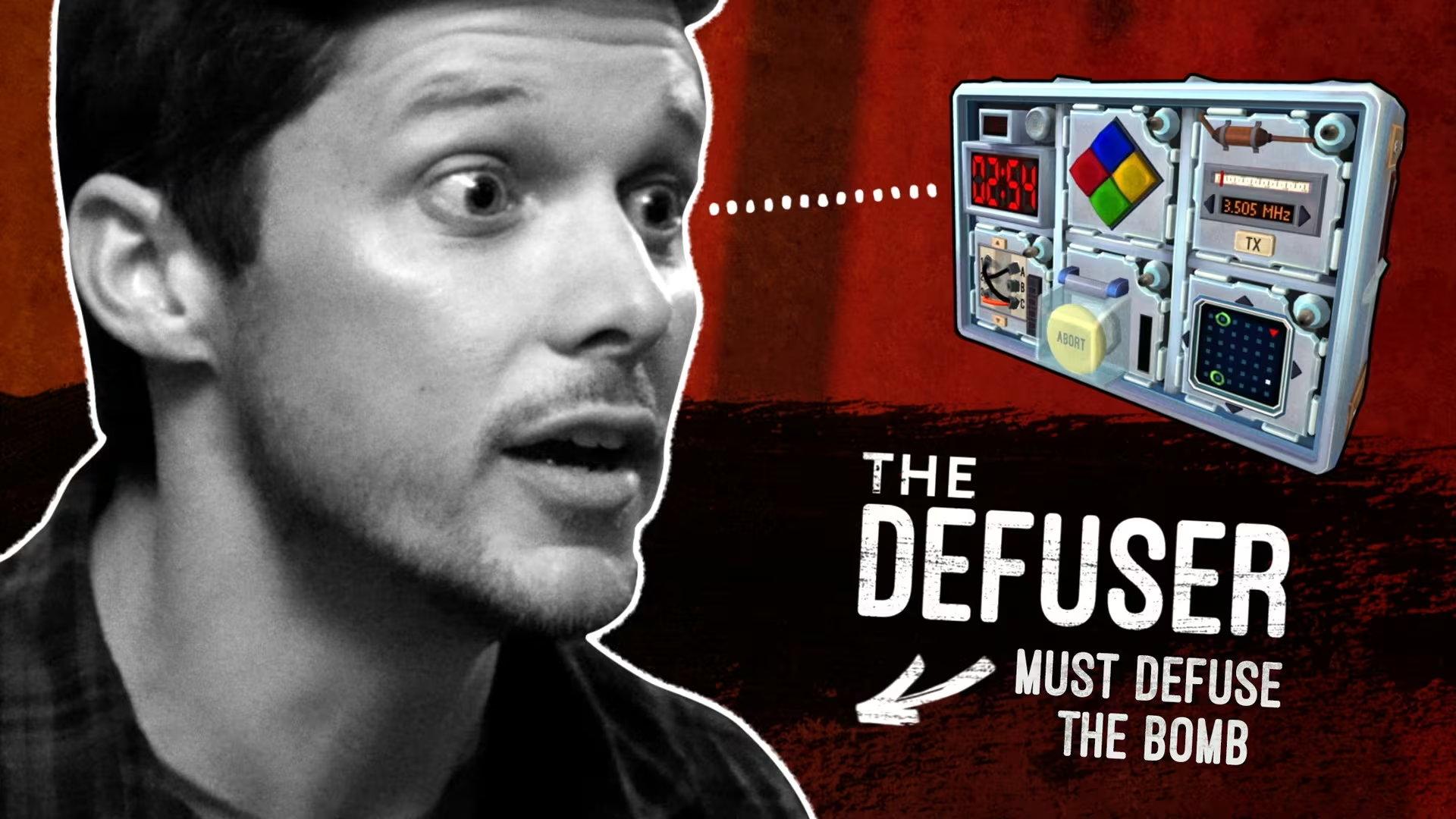
Find yourself trapped alone in a room with a ticking time bomb. Your friends have the manual to defuse it, but they can't see the bomb, so you're going to have to talk it out – fast!

Global score

97/100

Genres

Indie, Puzzle, Simulator

Similar games

    Pros

    • Innovative cooperative gameplay
    • High replayability with procedural generation and mods
    • Excellent communication skill development
    • Low system requirements
    • Great party and social game

    Cons

    • Requires at least two players
    • Can cause frustration and stress
    • Limited single-player appeal
    • No narrative or story
    • Some players find manual complex

    Analysis

    Less representative of its motivational profile, with noticeable differences. Motivations that often define this kind of title include Cooperation, Fellowship, Intimacy, Leadership. It leans lower than usual among comparable games on Story, Violence, Fantasy.

    How to use the graph
    Similar games map

    Each dot is a game. They are arranged from the same motivation profile as in the “Motivations” section below. Closer dots usually mean more similar reasons to play (exploration, competition, relaxation, etc.)—not that one game is “better” than another.

    • Larger dot with a light outline: the game you are viewing.
    • Colour: groups of games with comparable motivation patterns (statistical clusters).
    • Hover a dot to see the game name; click to open its page.
    • Scroll or double-click the chart to zoom out and see more games.

    Why don’t the axes read like a score? This view uses t-SNE: it only keeps who is close to whom. The scales are not “good to bad” or hours played—they separate groups on the map. Read distance between dots, not the axis numbers.

    Motivations

    • Autonomy
      4

      "Players have full control over communication and decision-making in bomb defusal; no fixed routines dictate actions."

    • Competence
      5

      "Game requires skillful communication, quick thinking, and puzzle solving under time pressure with clear feedback on success or failure."

    • Competition
      -3

      "Focus is on cooperative play and personal/team success rather than competing against others or leaderboards."

    • Continuation
      3

      "Players often engage in long sessions and repeatedly play due to procedural generation and mod support."

    • Cooperation
      5

      "Core gameplay revolves entirely around teamwork and communication between defuser and experts."

    • Creativity
      2

      "Players develop unique communication strategies and can use mods to add new modules, enhancing creative problem solving."

    • Domination
      -4

      "Interactions emphasize equal participation and mutual respect; no evidence of power imposition."

    • Escapism
      3

      "Players use the game as a fun distraction and stress relief, often playing socially to escape real life."

    • Expectation
      -4

      "Players engage voluntarily for fun and social interaction, not out of obligation or pressure."

    • Experimenting
      4

      "High novelty due to procedural bombs and modded content; players experiment with communication methods and puzzle solving."

    • Exploration
      3

      "Players explore many unique bomb configurations and modules, rarely encountering the same puzzle twice."

    • Expression
      -2

      "Limited character or environment customization; expression mainly through communication style rather than visuals."

    • Fantasy
      -3

      "Game simulates realistic bomb defusal scenarios with plausible mechanics, minimal fantasy elements."

    • Fellowship
      5

      "Strong sense of community and shared experience; game often played with friends, family, or social groups."

    • Growth
      4

      "Players develop communication skills, memory, and puzzle-solving abilities over time."

    • Health
      -5

      "Game is sedentary with no physical activity involved."

    • Idle
      -4

      "Requires constant attention and active communication; not suitable for passive or background play."

    • Intimacy
      4

      "Facilitates close social interaction and bonding through cooperative challenge and shared emotional experiences."

    • Leadership
      3

      "Some players take lead roles in communication or instruction, guiding others during bomb defusal."

    • Progression
      3

      "Players progress through increasingly difficult bombs and can unlock or access new modules via mods."

    • Relaxation
      -3

      "Game induces tension and stress due to time pressure and challenge, rather than relaxation."

    • Sensation
      2

      "Audio and visual cues create excitement and engagement, though graphics are simple and functional."

    • Status
      -3

      "Minimal focus on social recognition or status; emphasis on cooperative success rather than individual acclaim."

    • Story
      -5

      "No narrative or plot; gameplay is context-free puzzle solving."

    • Strategy
      4

      "Requires logical thinking, planning communication, and problem solving under pressure."

    • Thrill
      5

      "High suspense and adrenaline from ticking timer and risk of explosion create thrilling gameplay."

    • Value
      4

      "Highly praised for value; low cost with high replayability and social enjoyment."

    • Violence
      -5

      "No combat or destruction; focus is on constructive puzzle solving and cooperation."

    • Survival
      4

      "Players must avoid failure (bomb explosion) through careful resource and time management."

    Last update: 29/04/2026