Legend of Keepers: Career of a Dungeon Manager Thumbnail

Legend of Keepers: Career of a Dungeon Manager similar games & best alternatives

Legend of Keepers: Career of a Dungeon Manager

PC (Microsoft Windows) • 2021

Related articles

Quick resume

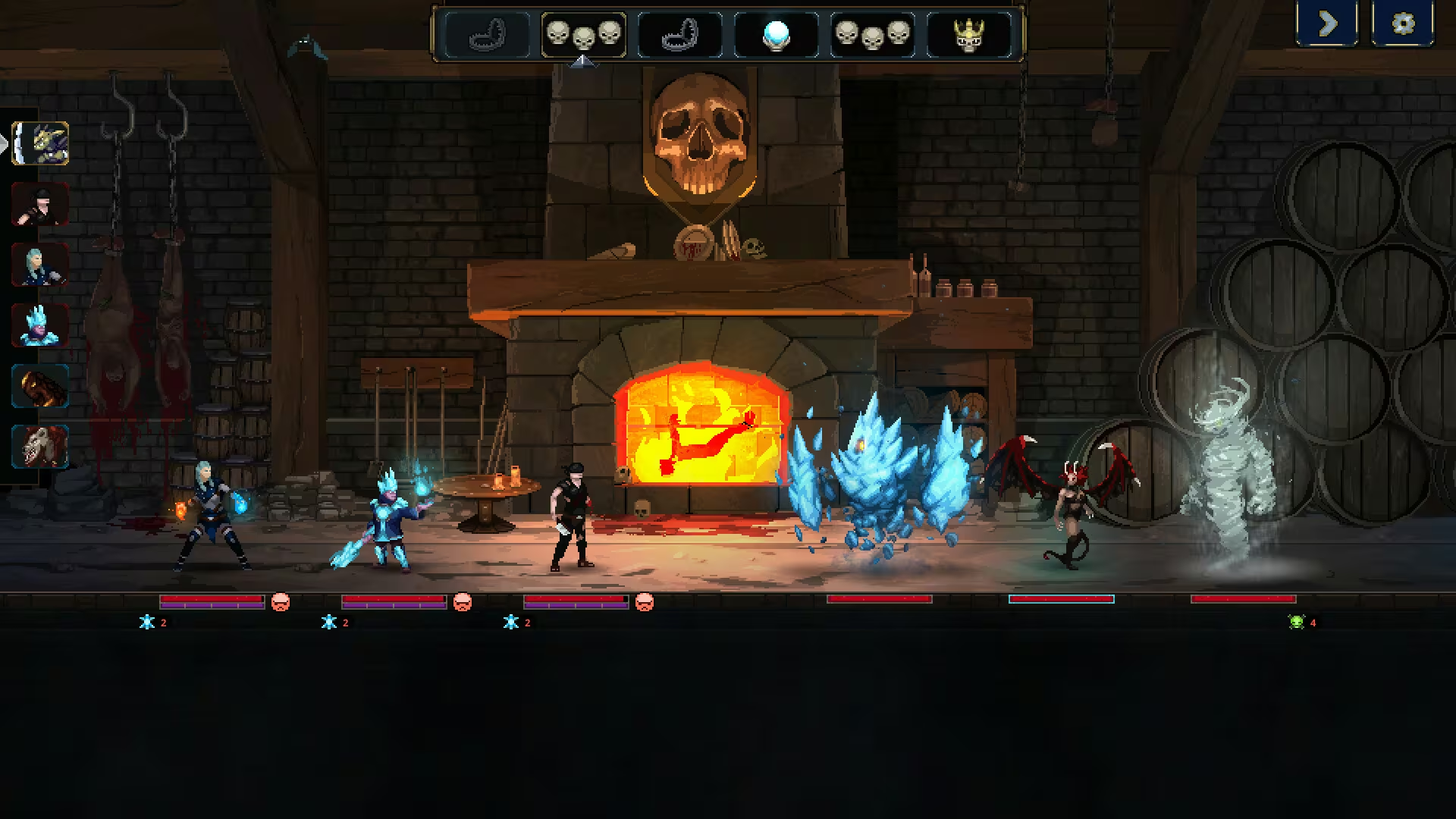
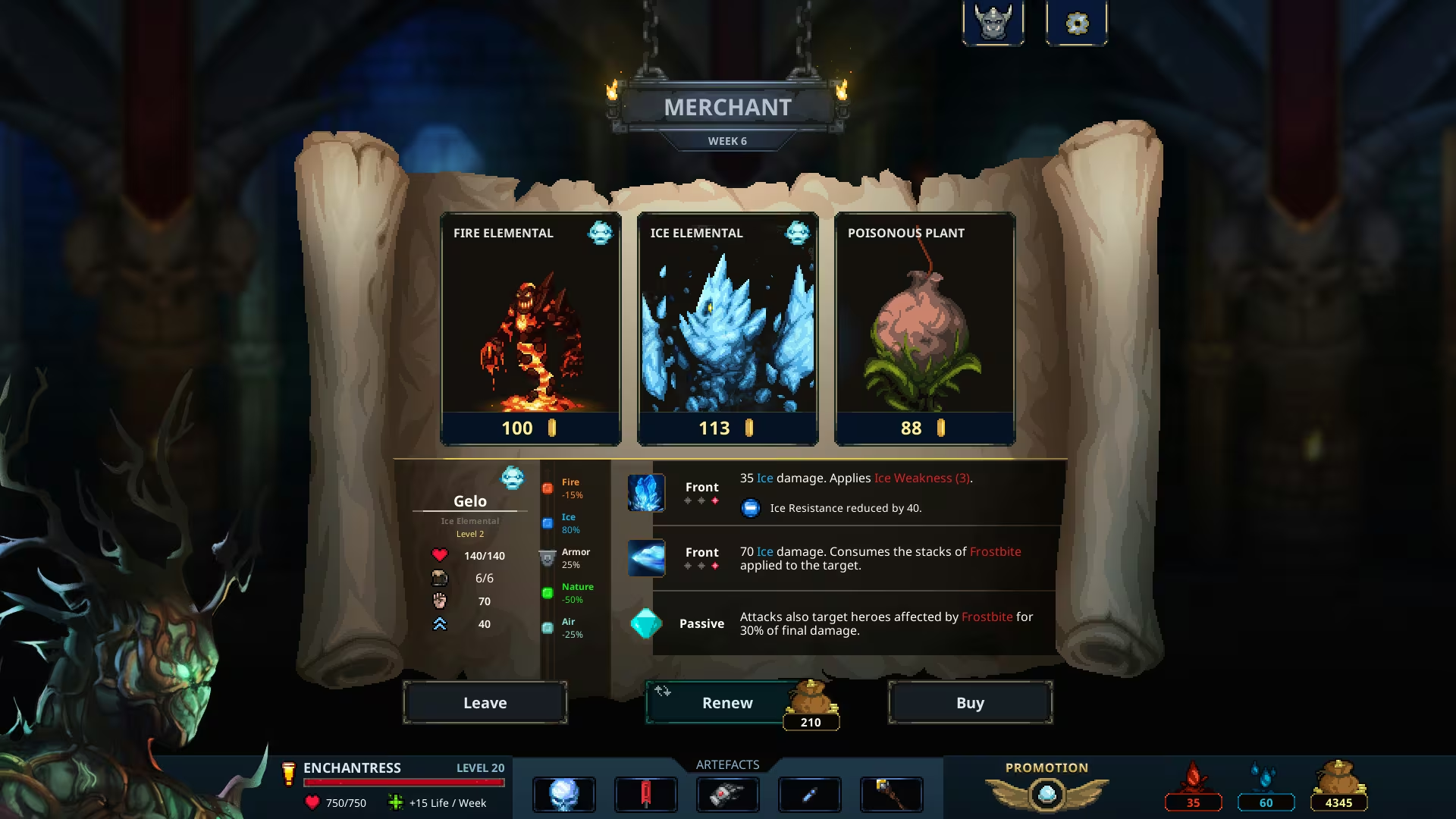
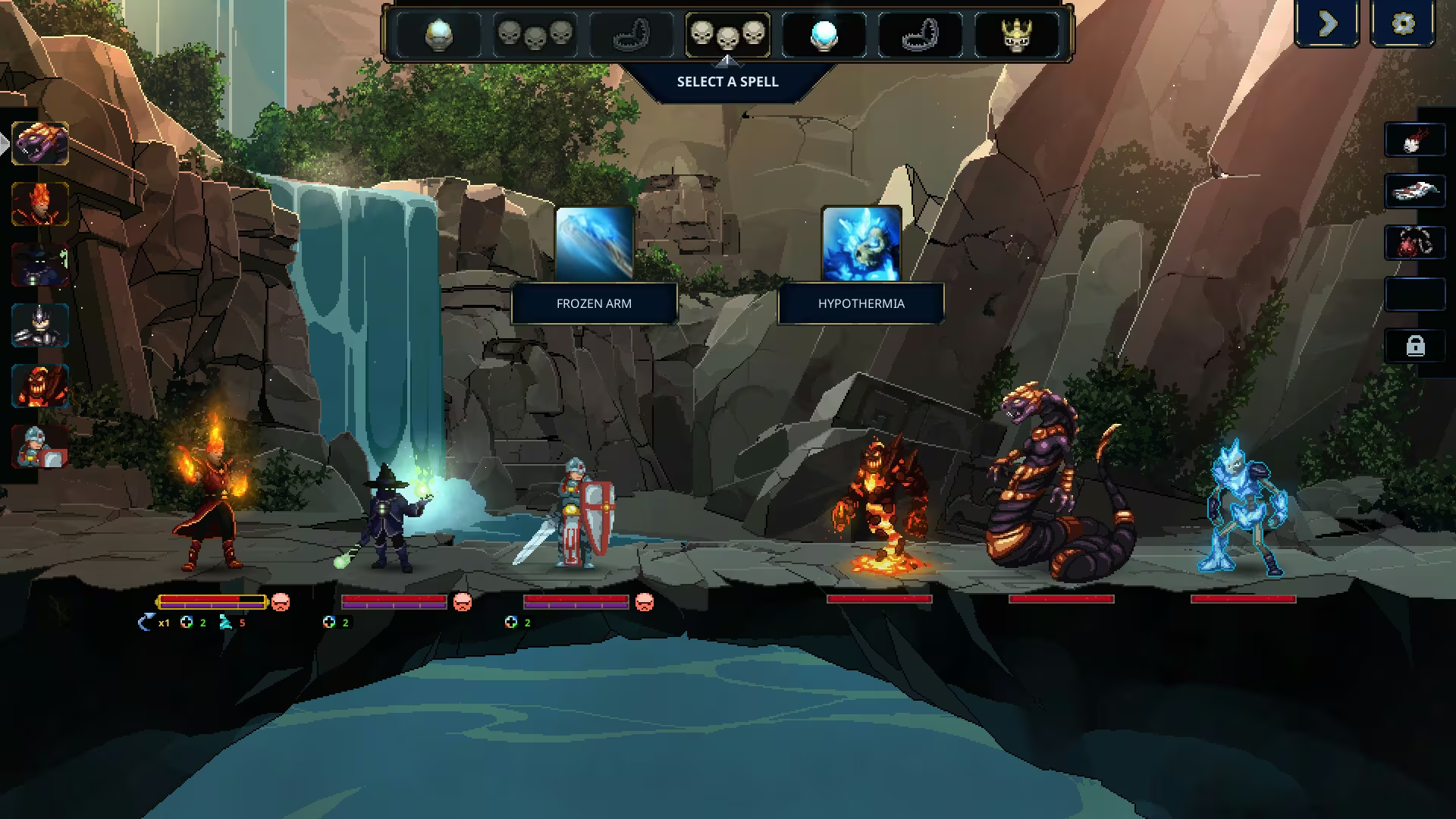
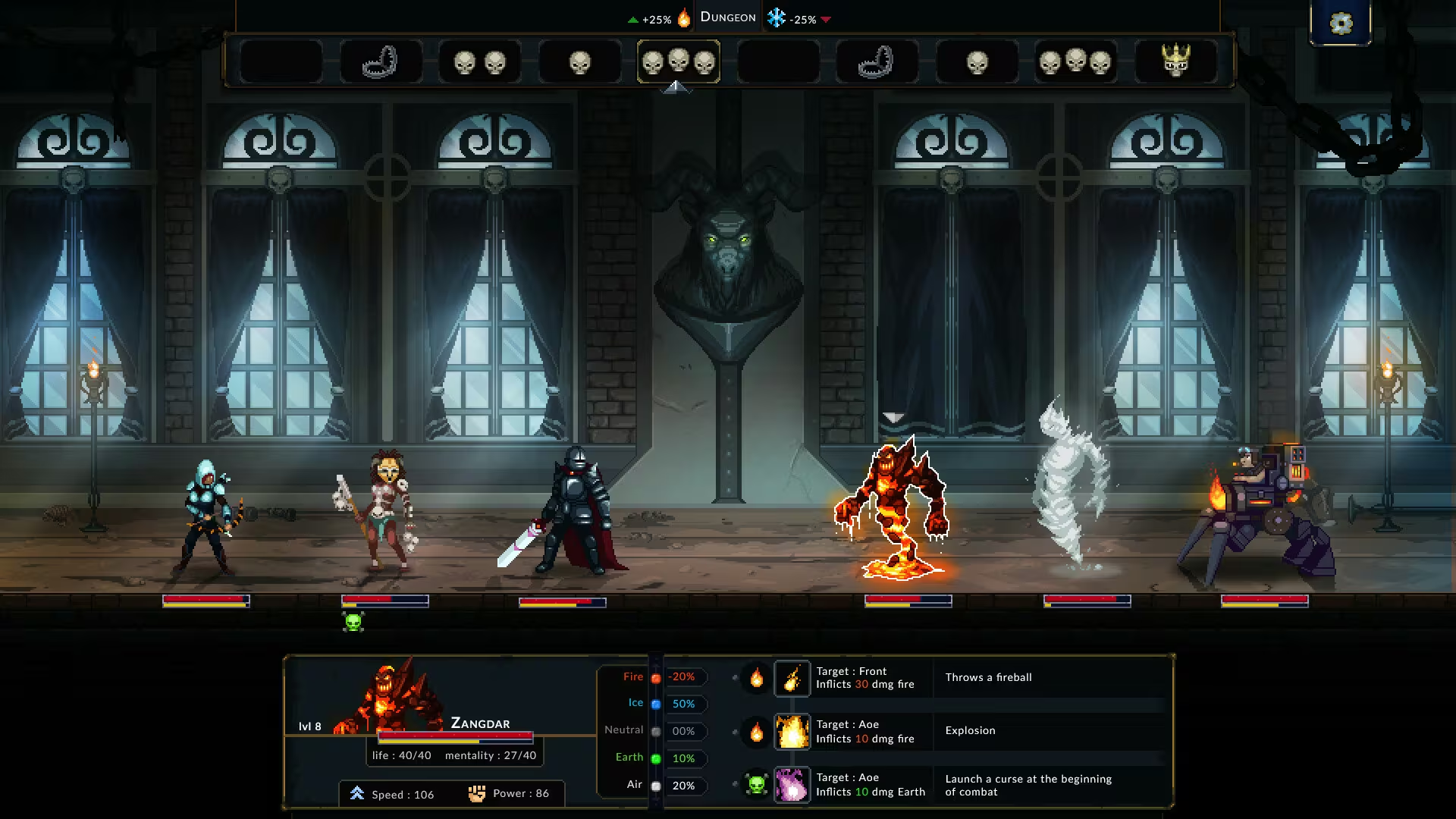
Legend of Keepers is the perfect mix between Dungeon Defender and Roguelite. You have been hired as a dungeon manager by the Dungeons Company. Your job is simple: protect their dungeons!

Global score

79/100

Genres

Indie, Role-playing (RPG), Strategy

Similar games

    Pros

    • Engaging strategic gameplay
    • Strong fantasy theme
    • Good progression and replayability
    • Polished pixel art and sound
    • Turn-based pacing allows flexible play

    Cons

    • Limited dungeon layout customization
    • Some balance and content depth issues
    • Repetitive after extended play
    • Lack of multiplayer or social features
    • Some rng frustration in encounters

    Analysis

    Broadly representative of its motivational profile, with a few distinct shifts. Motivations that often define this kind of title include Leadership, Survival, Violence, Strategy. Here, the score leans higher than usual among comparable games on Fantasy, Relaxation. It leans lower than usual among comparable games on Exploration.

    How to use the graph
    Similar games map

    Each dot is a game. They are arranged from the same motivation profile as in the “Motivations” section below. Closer dots usually mean more similar reasons to play (exploration, competition, relaxation, etc.)—not that one game is “better” than another.

    • Larger dot with a light outline: the game you are viewing.
    • Colour: groups of games with comparable motivation patterns (statistical clusters).
    • Hover a dot to see the game name; click to open its page.
    • Scroll or double-click the chart to zoom out and see more games.

    Why don’t the axes read like a score? This view uses t-SNE: it only keeps who is close to whom. The scales are not “good to bad” or hours played—they separate groups on the map. Read distance between dots, not the axis numbers.

    Motivations

    • Autonomy
      3

      "Players have meaningful choices in managing dungeon defenses, selecting monsters, traps, and upgrades, but dungeon layouts and some placements are predetermined."

    • Competence
      4

      "The game requires strategic planning, understanding of monster and hero abilities, and skillful deployment to overcome challenging encounters."

    • Competition
      -3

      "Focus is primarily on individual runs and personal progression rather than direct competition or leaderboards."

    • Continuation
      4

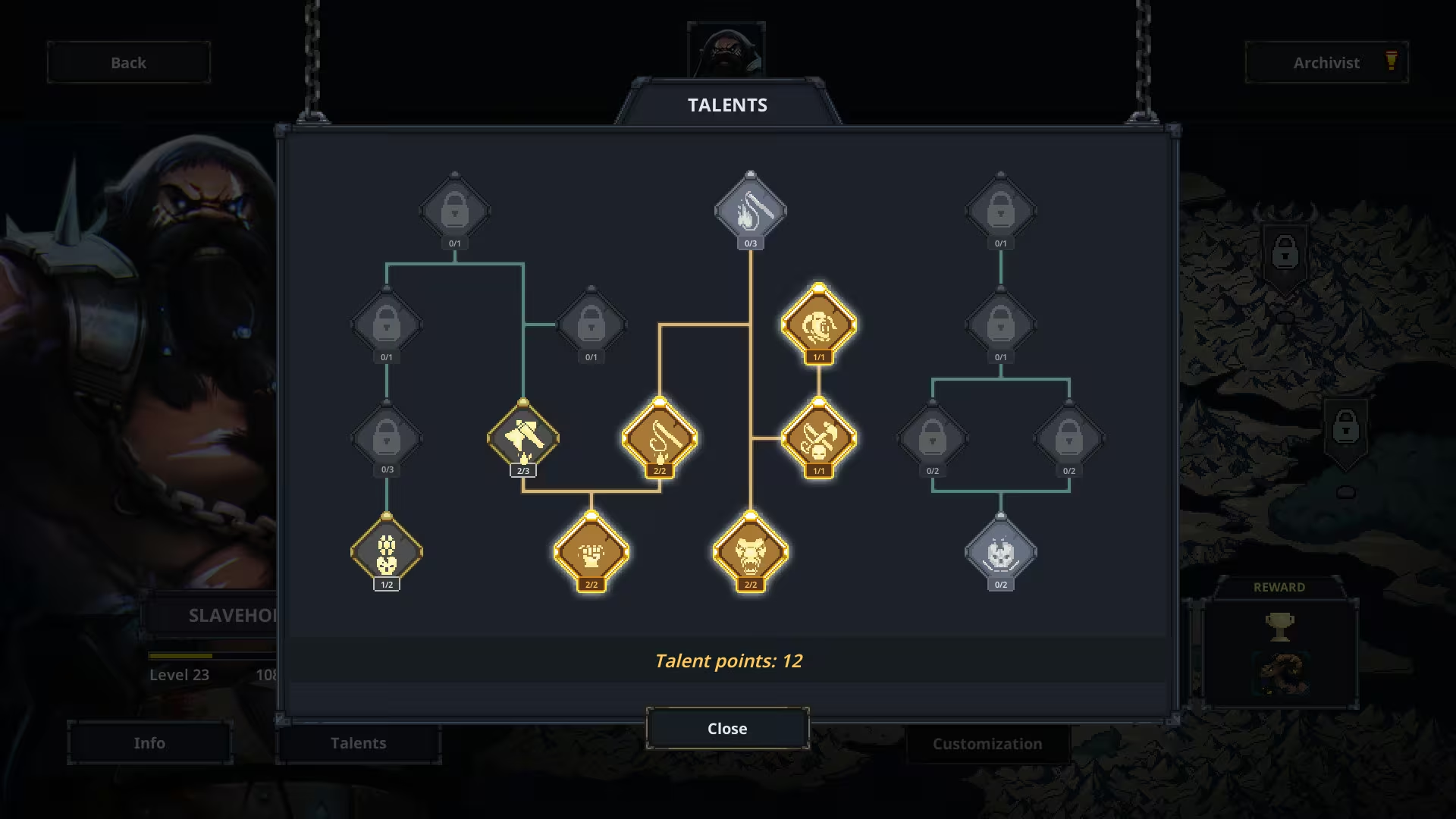
      "The roguelite progression, talent trees, and multiple modes encourage repeated play and long-term engagement."

    • Cooperation
      -4

      "Gameplay is single-player focused with no cooperative multiplayer elements."

    • Creativity
      3

      "Players customize monster and trap setups and experiment with synergies, though constrained by fixed dungeon layouts."

    • Domination
      -4

      "Interactions are balanced and respectful; no evidence of exerting control or superiority over others."

    • Escapism
      4

      "Players use the game as a fun distraction with immersive fantasy elements and engaging gameplay loops."

    • Expectation
      -4

      "Players engage voluntarily out of intrinsic interest and enjoyment rather than obligation or pressure."

    • Experimenting
      3

      "Players try different monster and trap combinations and strategies to adapt to random hero parties."

    • Exploration
      -2

      "Dungeon layouts are fixed and players face known hero types; limited discovery but some variety in encounters."

    • Expression
      2

      "Some customization of monster teams and talent trees allows personal expression within constraints."

    • Fantasy
      5

      "Strong fantasy theme with imaginative monsters, heroes, and dungeon management as an evil boss."

    • Fellowship
      -4

      "Primarily a solo experience with minimal social interaction or community involvement in gameplay."

    • Growth
      4

      "Players develop skills, learn synergies, and progress dungeon masters through talent trees and upgrades."

    • Health
      -5

      "Sedentary gameplay with no physical activity involved."

    • Idle
      -3

      "Requires focused attention during setup and combat phases; not designed for passive or background play."

    • Intimacy
      -5

      "No close social relationships or emotional sharing described; solitary gameplay."

    • Leadership
      3

      "Players lead their dungeon masters and manage teams of monsters and traps strategically."

    • Progression
      4

      "Strong progression through leveling up dungeon masters, unlocking monsters, traps, and artifacts."

    • Relaxation
      3

      "Turn-based pacing allows players to play at their own speed, balancing challenge and flow."

    • Sensation
      3

      "Enjoyable pixel art, animations, sound effects, and music provide sensory stimulation and fun."

    • Status
      -4

      "Achievements and progression are personal; no emphasis on social recognition or popularity."

    • Story
      2

      "Light narrative framing with humorous messages and thematic context, but limited story depth."

    • Strategy
      5

      "Core gameplay revolves around strategic planning, tactical deployment, and problem solving."

    • Thrill
      3

      "Some suspense and tension from challenging encounters and risk of failure, but controlled turn-based combat."

    • Value
      3

      "Generally perceived as good value for money, especially on sale, with many hours of gameplay."

    • Violence
      4

      "Combat and destruction of heroes is central to gameplay, with various attacks and effects."

    • Survival
      4

      "Players must manage resources and defenses to avoid failure and keep dungeon masters alive."

    Last update: 29/04/2026