Pajama Sam 2: Thunder And Lightning Aren't So Frightening Thumbnail

Pajama Sam 2: Thunder And Lightning Aren't So Frightening similar games & best alternatives
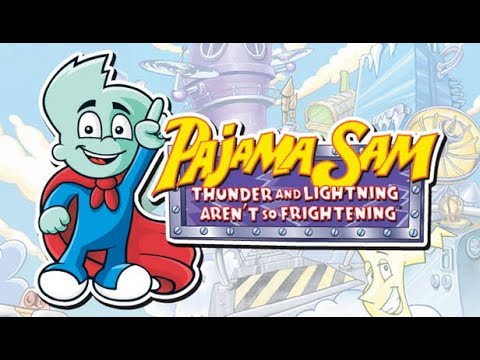
Pajama Sam 2: Thunder And Lightning Aren't So Frightening

PC (Microsoft Windows), Nintendo Switch, PlayStation 4 • 2014

Related articles

Quick resume

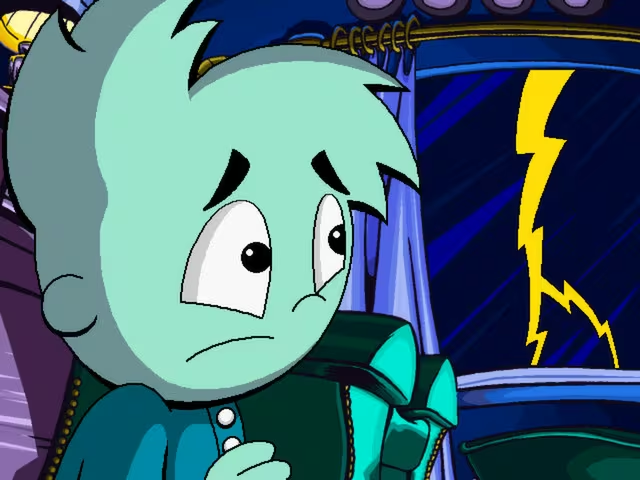
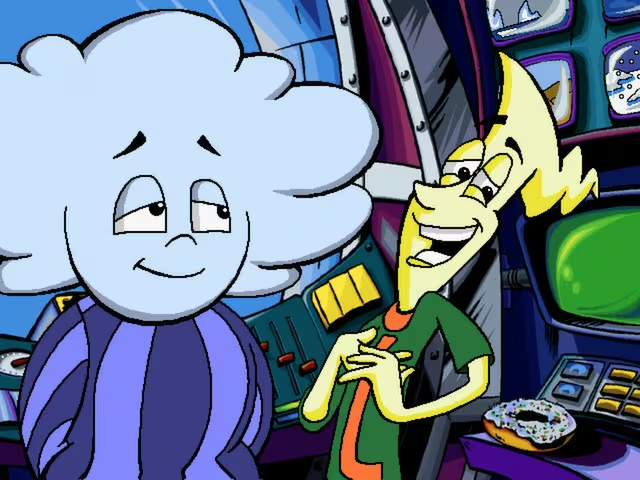
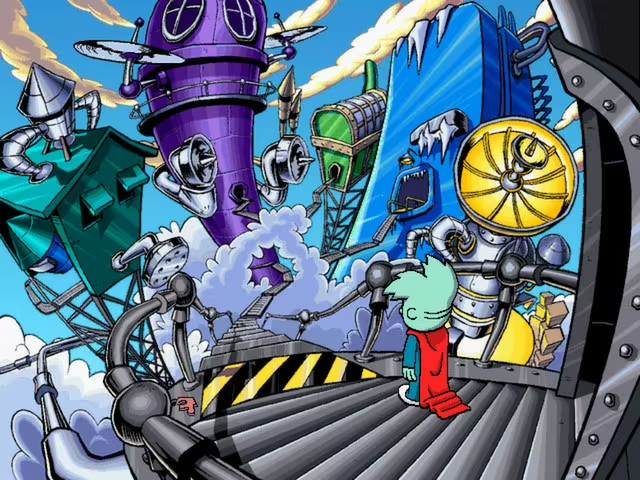
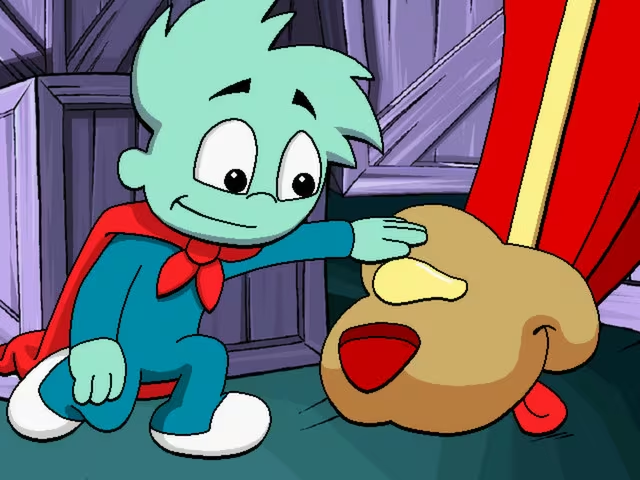
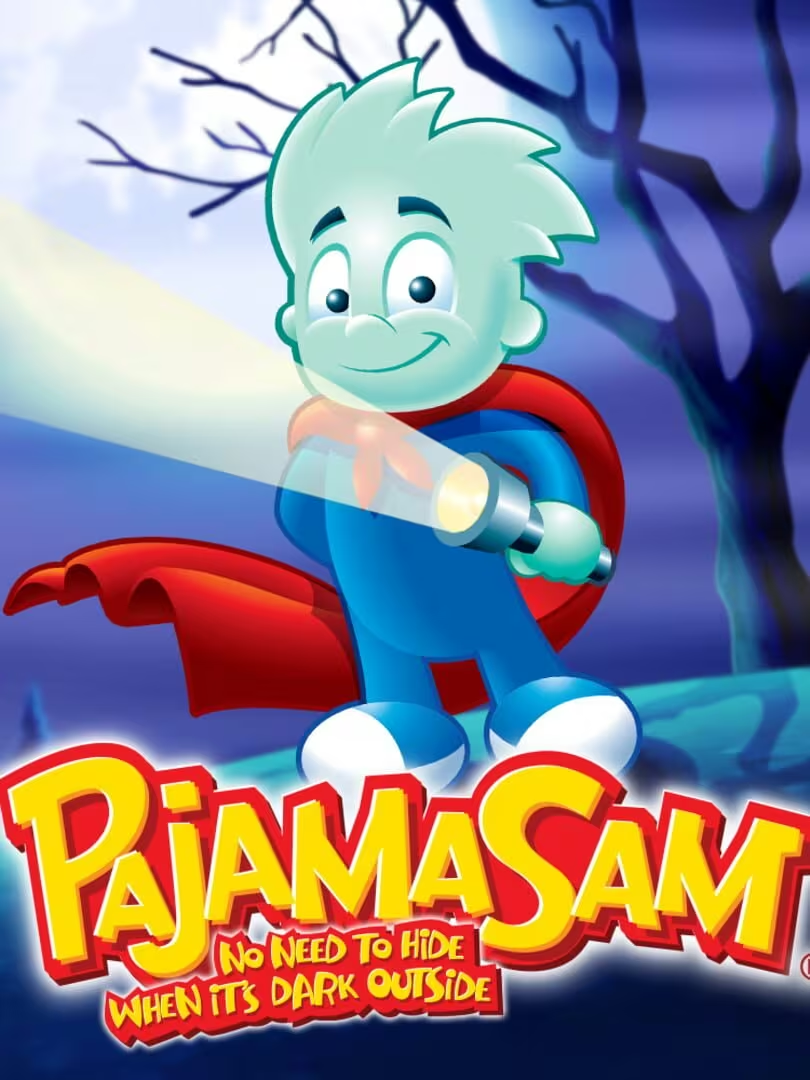
Join Pajama Sam, the world's youngest superhero as he journeys to World Wide Weather, the storm-stirring factory in the sky!

Global score

98/100

Genres

Adventure, Casual, Point-and-click

Similar games

    Pros

    • Strong nostalgic appeal
    • Imaginative and charming world
    • Good puzzle variety with replay value
    • Child-friendly and educational
    • High-quality voice acting and animation

    Cons

    • Short game length
    • Some puzzles can be confusing without hints
    • Limited appeal for modern children used to advanced games
    • No multiplayer or social features
    • Occasional technical issues with modern systems

    Analysis

    A very typical example of its motivational profile. Motivations that often define this kind of title include Survival, Violence, Fellowship, Expression. Here, the score leans higher than usual among comparable games on Fantasy, Cooperation. It leans lower than usual among comparable games on Thrill.

    How to use the graph
    Similar games map

    Each dot is a game. They are arranged from the same motivation profile as in the “Motivations” section below. Closer dots usually mean more similar reasons to play (exploration, competition, relaxation, etc.)—not that one game is “better” than another.

    • Larger dot with a light outline: the game you are viewing.
    • Colour: groups of games with comparable motivation patterns (statistical clusters).
    • Hover a dot to see the game name; click to open its page.
    • Scroll or double-click the chart to zoom out and see more games.

    Why don’t the axes read like a score? This view uses t-SNE: it only keeps who is close to whom. The scales are not “good to bad” or hours played—they separate groups on the map. Read distance between dots, not the axis numbers.

    Motivations

    • Autonomy
      4

      "Players freely explore the imaginative world, choose puzzle paths, and solve problems with minimal hand-holding."

    • Competence
      3

      "Puzzles require problem solving and critical thinking, offering a moderate challenge especially for children."

    • Competition
      -4

      "Focuses on individual exploration and puzzle solving without competitive elements or leaderboards."

    • Continuation
      3

      "High replay value due to randomized puzzle elements and multiple playthroughs encouraged."

    • Cooperation
      -3

      "Primarily a single-player experience with no multiplayer or cooperative gameplay."

    • Creativity
      4

      "Encourages exploration, interaction with environment, and imaginative engagement with characters and puzzles."

    • Domination
      -5

      "No elements of exerting control over others; gameplay is cooperative with the environment and self-driven."

    • Escapism
      4

      "Players immerse in a whimsical, imaginative world that offers a nostalgic and stress-relieving experience."

    • Expectation
      -4

      "Engagement driven by personal desire, nostalgia, and intrinsic interest rather than obligation."

    • Experimenting
      3

      "Randomized puzzle solutions and multiple paths encourage trying new approaches and exploration."

    • Exploration
      4

      "Encourages discovering new areas, interacting with many clickable elements, and uncovering secrets."

    • Expression
      -2

      "Limited character customization; expression mainly through interaction rather than avatar personalization."

    • Fantasy
      5

      "Strong imaginative fiction theme with a child’s fantasy world, anthropomorphic characters, and surreal settings."

    • Fellowship
      -3

      "Mostly solo play with minimal social interaction or community features."

    • Growth
      3

      "Promotes learning through puzzle solving and critical thinking, especially for children."

    • Health
      -5

      "Sedentary point-and-click gameplay with no physical activity elements."

    • Idle
      -3

      "Requires focused attention to solve puzzles and progress; not designed for passive or background play."

    • Intimacy
      -4

      "Limited social or emotional connections; interactions are with game characters rather than real people."

    • Leadership
      -5

      "No leadership or group management elements; purely single-player guided exploration."

    • Progression
      3

      "Progression through collecting puzzle pieces and unlocking new areas, providing a sense of achievement."

    • Relaxation
      4

      "Casual pace, lighthearted tone, and gentle challenge promote relaxation and flow."

    • Sensation
      3

      "Colorful visuals, charming animations, and sound effects provide moderate sensory stimulation."

    • Status
      -5

      "No social status or recognition systems; achievements are personal and private."

    • Story
      3

      "Narrative about overcoming fear and fixing the weather factory provides light story immersion."

    • Strategy
      2

      "Requires some planning and problem solving but puzzles are generally straightforward and child-friendly."

    • Thrill
      -3

      "Low risk and suspense; gameplay is calm and predictable without intense thrills."

    • Value
      3

      "Good nostalgic and entertainment value especially for fans and children, though game is short."

    • Violence
      -5

      "No violence; gameplay focuses on constructive problem solving and exploration."

    • Survival
      -5

      "No survival or threat elements; stable and safe game environment."

    Last update: 29/04/2026