Strangeland similar games & best alternatives

Strangeland
2021
Related articles
Quick resume
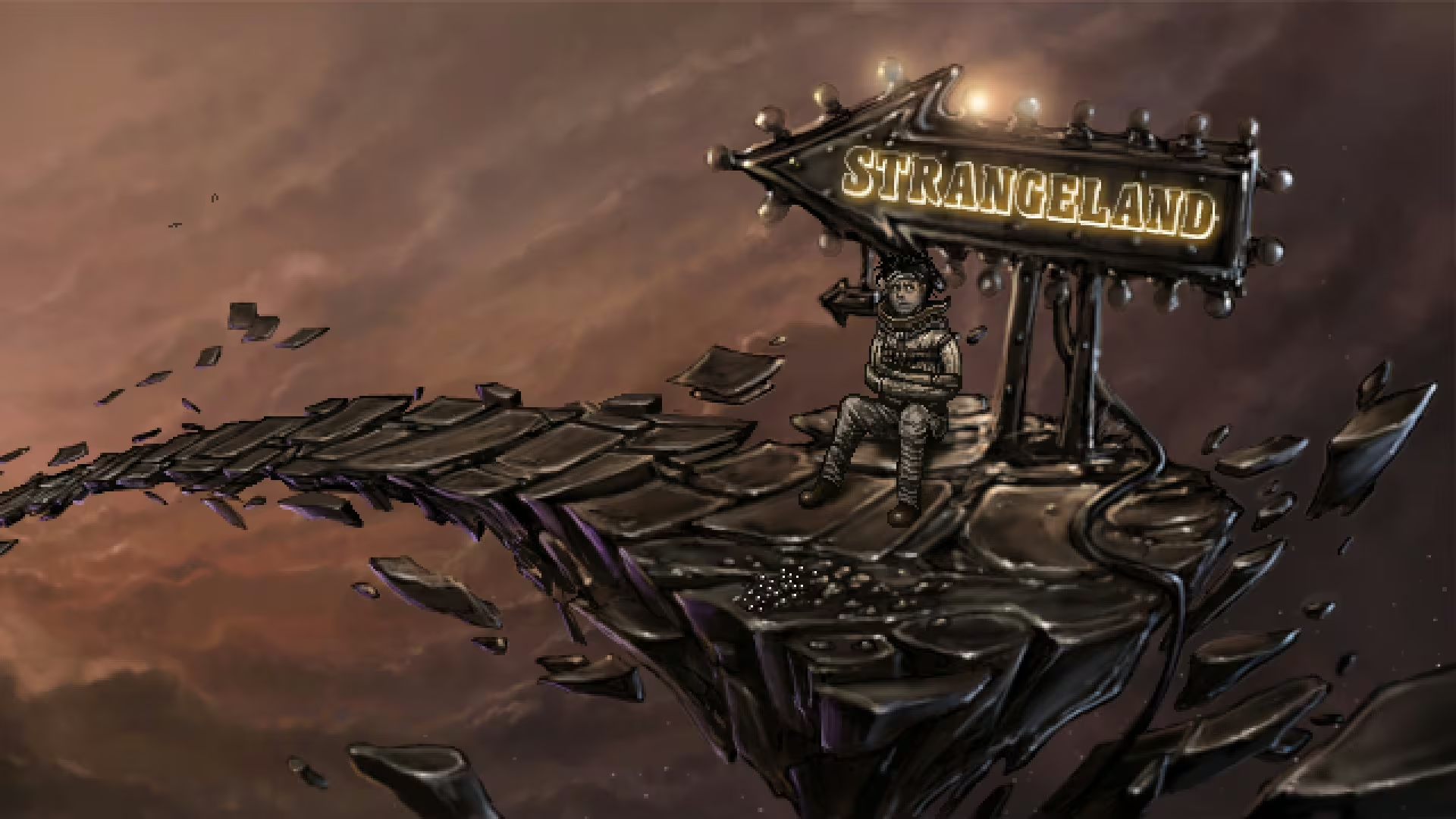
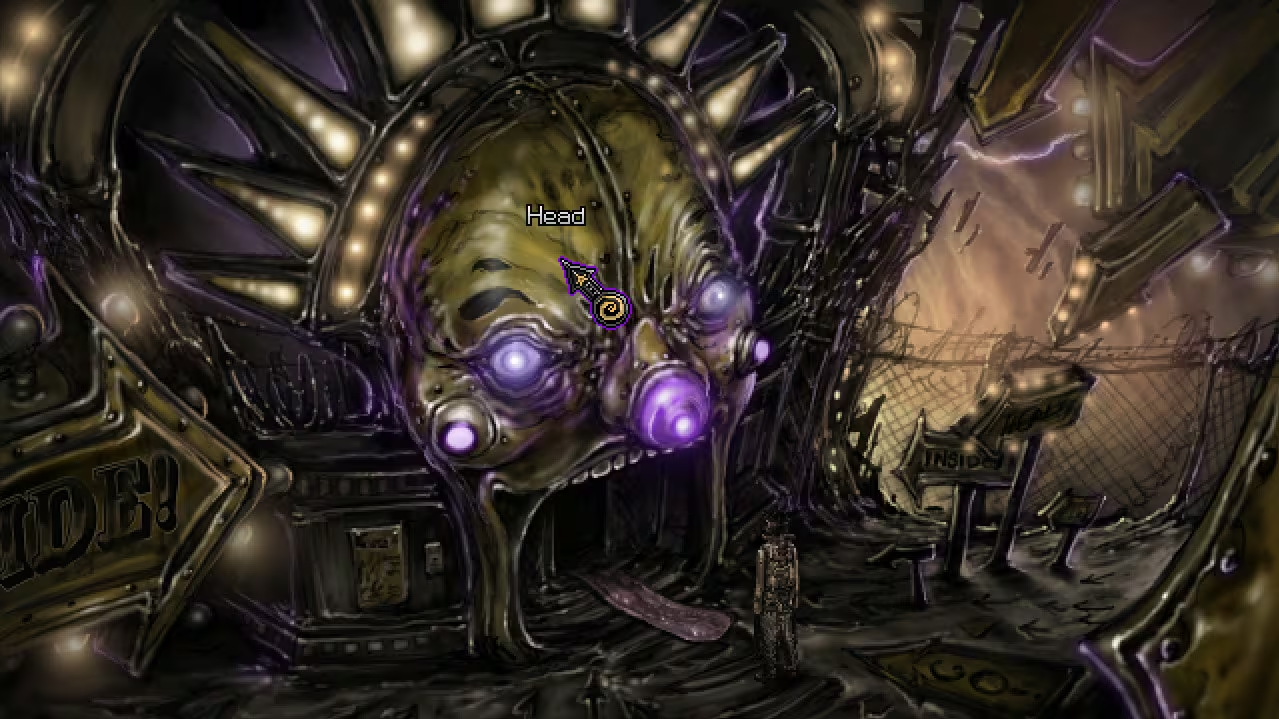
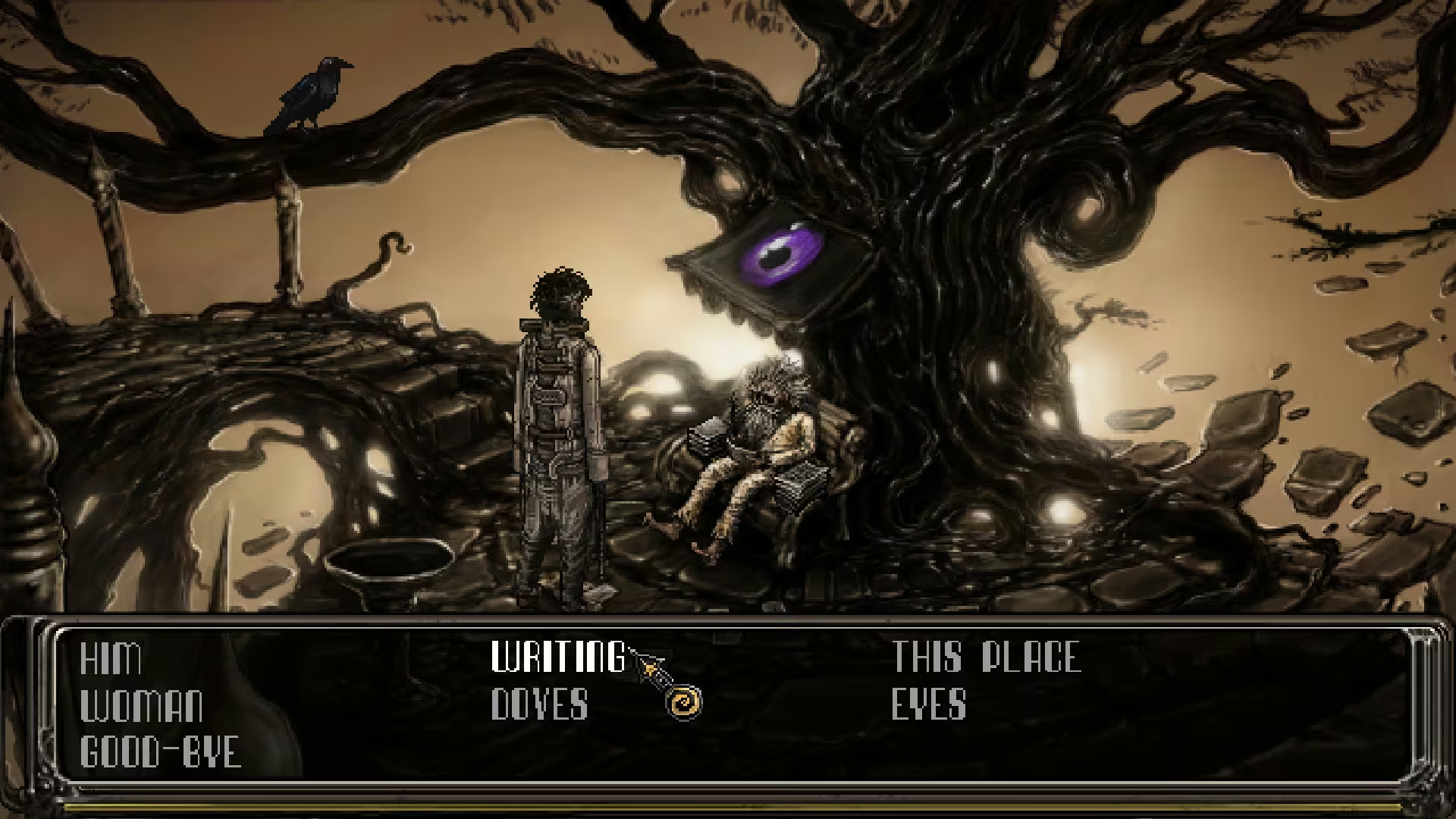
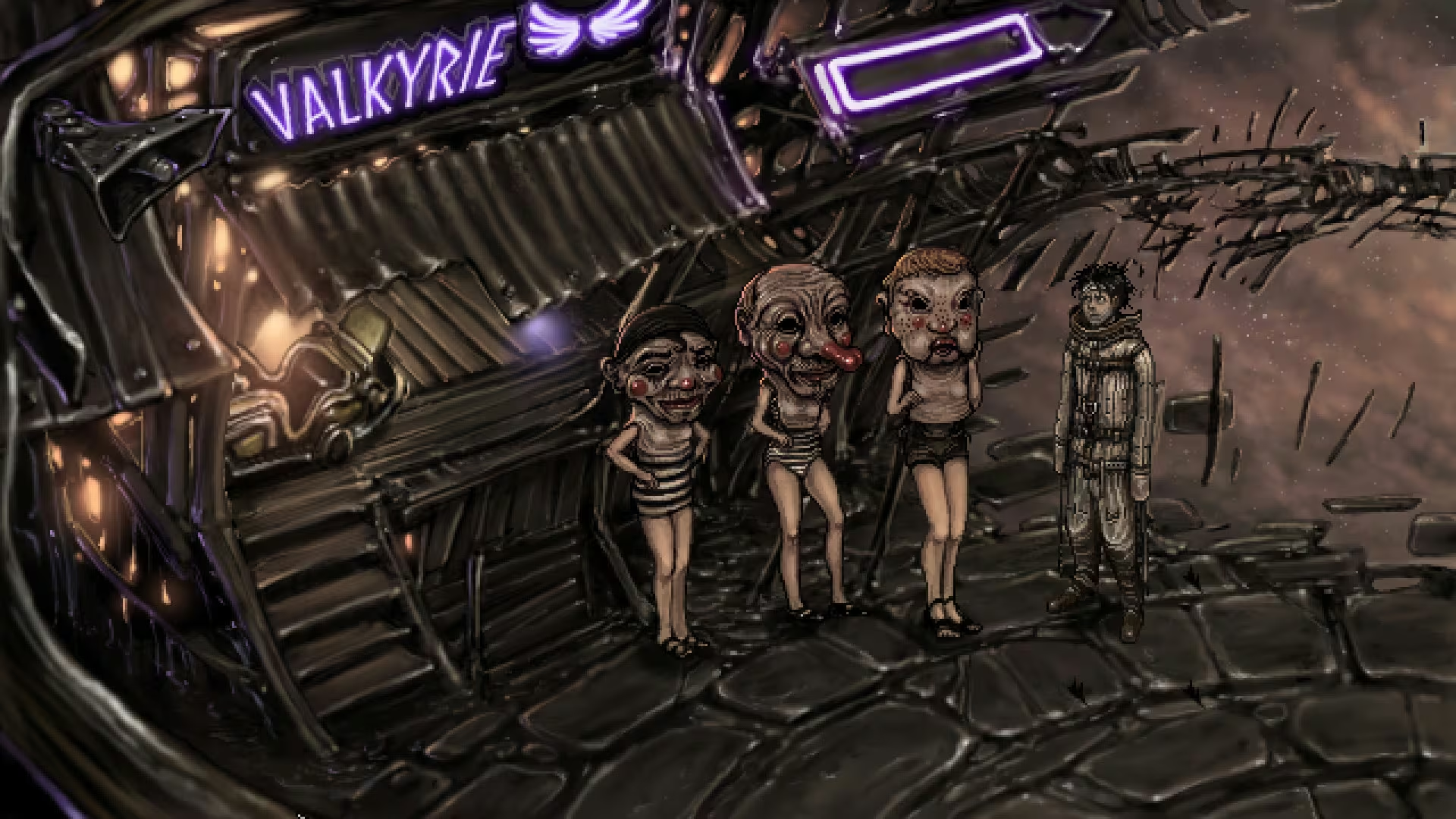
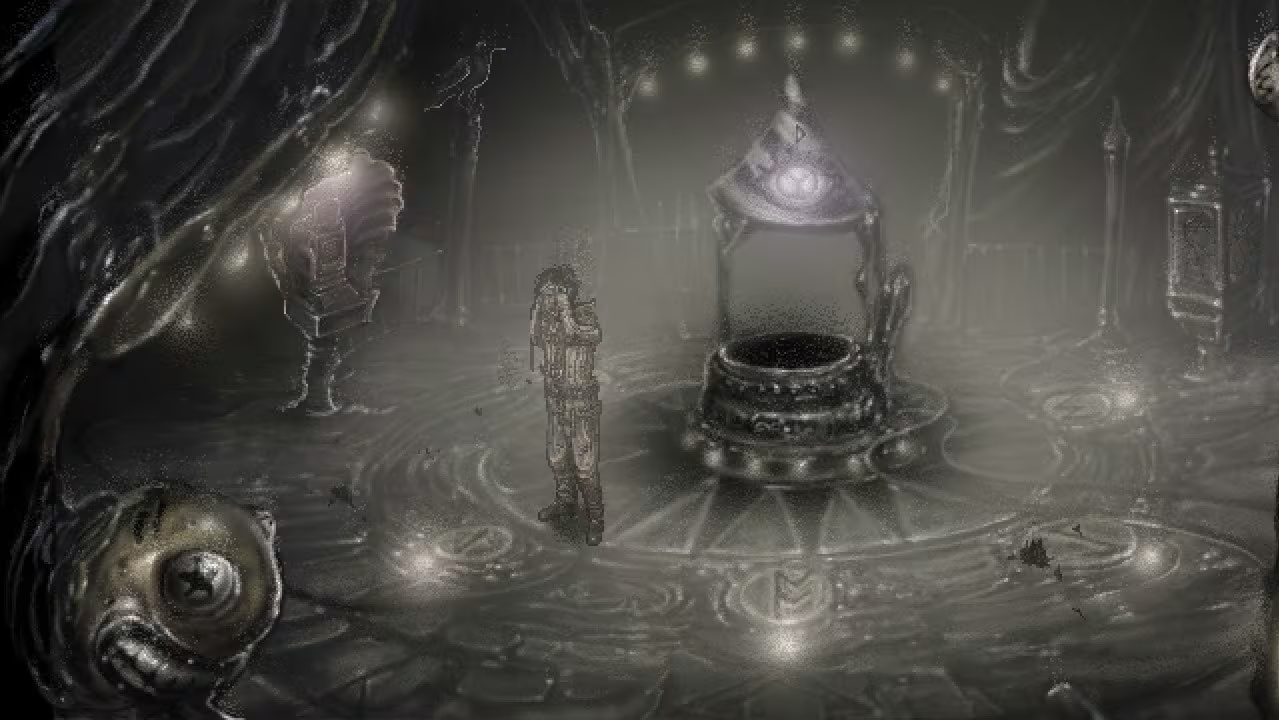
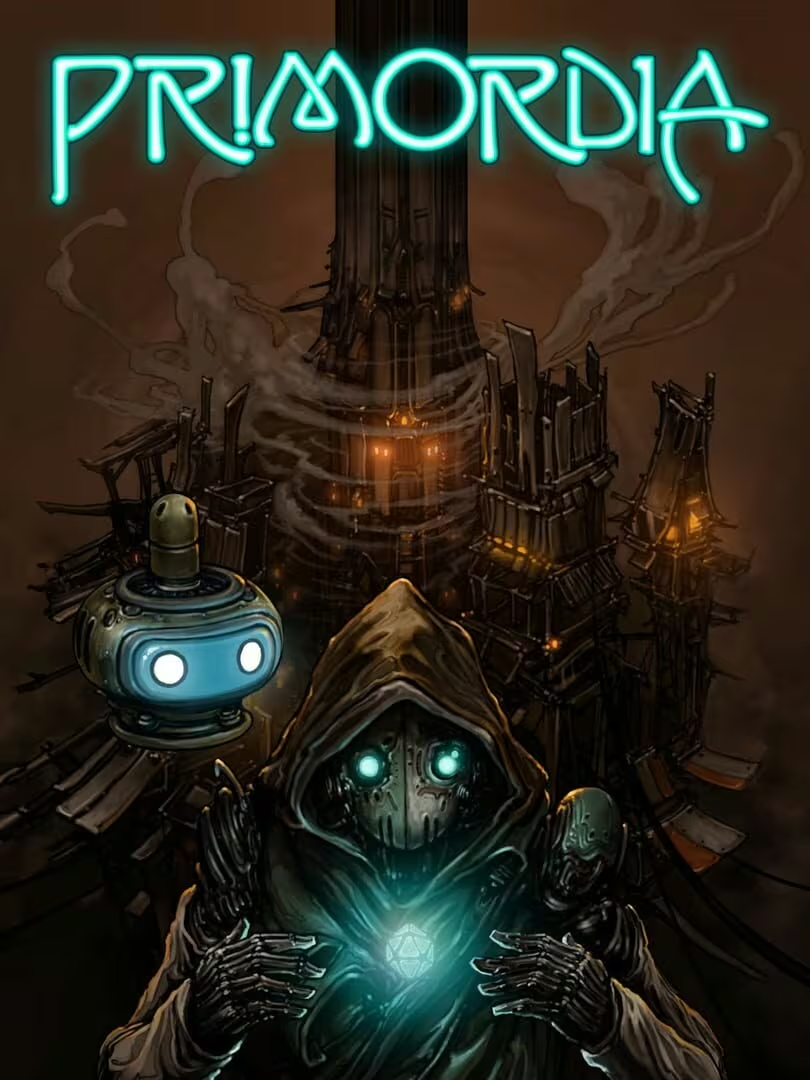
You wake in a surreal carnival, where a woman cries out to you before leaping to her death. Can either of you be saved? The denizens and devices of Strangeland answer with riddles, puzzles, and warnings of a Dark Thing lurking at the park’s peak. A new adventure from the creators of Primordia.
Global score
93/100
Genres
Adventure, Point-and-click
Similar games
Pros
- Beautiful and surreal art style
- Deep, symbolic narrative with strong voice acting
- Logical and fair puzzles with in-game hint system
- Immersive atmospheric sound design
- Multiple endings and replay value with commentary
Cons
- Relatively short gameplay length
- Some players may find story abstract or heavy
- Limited character customization and social interaction
- Some puzzle sections may feel repetitive or frustrating
- Not suitable for casual or lighthearted play
Analysis
A very typical example of its motivational profile. Motivations that often define this kind of title include Expression, Fellowship, Cooperation, Competition. Here, the score leans higher than usual among comparable games on Creativity, Story, Fantasy.
How to use the graph
Similar games map
Each dot is a game. They are arranged from the same motivation profile as in the “Motivations” section below. Closer dots usually mean more similar reasons to play (exploration, competition, relaxation, etc.)—not that one game is “better” than another.
- Larger dot with a light outline: the game you are viewing.
- Colour: groups of games with comparable motivation patterns (statistical clusters).
- Hover a dot to see the game name; click to open its page.
- Scroll or double-click the chart to zoom out and see more games.
Why don’t the axes read like a score? This view uses t-SNE: it only keeps who is close to whom. The scales are not “good to bad” or hours played—they separate groups on the map. Read distance between dots, not the axis numbers.
Motivations
-
Autonomy3
"Players can explore the carnival and solve puzzles in various orders before the story becomes linear, with multiple endings and some freedom in approach."
-
Competence3
"Puzzles are logical and fair, requiring some skill and problem solving but aided by an in-game hint system to prevent frustration."
-
Competition-5
"No evidence of competitive elements; focus is on personal experience and individual puzzle solving."
-
Continuation1
"Players engage in a single playthrough lasting about 4-6 hours with some replay value for alternate endings and commentary, but the game is relatively short."
-
Cooperation-5
"Single-player experience with no multiplayer or cooperative gameplay."
-
Creativity4
"Highly creative surreal world, puzzles, and narrative with symbolic and metaphorical content; players interpret and explore unique environments."
-
Domination-5
"No social dominance or power over others; interactions are solitary and introspective."
-
Escapism5
"Strong psychological horror and surreal themes provide a deep escape from reality into a dark, introspective carnival world."
-
Expectation-4
"Players engage voluntarily out of interest in story and atmosphere, with no obligation or external pressure."
-
Experimenting3
"Players explore surreal environments and try different puzzle solutions, with some freedom to experiment within the game's logic."
-
Exploration3
"Exploration of a surreal carnival with symbolic locations, though the game world is relatively small and focused."
-
Expression-3
"Limited character customization; expression mainly through narrative interpretation rather than avatar personalization."
-
Fantasy5
"Strongly imaginative and surreal fiction with dreamlike, symbolic, and nightmarish elements."
-
Fellowship-5
"Solo experience with minimal social interaction beyond narrative characters."
-
Growth3
"Players develop understanding of complex story and solve puzzles, gaining insight and skills during play."
-
Health-5
"Sedentary gameplay typical of point-and-click adventures with no physical activity."
-
Idle-4
"Requires focused attention to solve puzzles and follow story; not designed for background play."
-
Intimacy-4
"Emotional engagement is introspective and solitary rather than forming close social bonds."
-
Leadership-5
"No leadership or group management elements; player acts independently."
-
Progression2
"Progression through story and puzzle completion with some item collection and multiple endings."
-
Relaxation0
"Mixed experience: atmospheric and immersive but also emotionally intense and sometimes stressful."
-
Sensation3
"Strong sensory stimulation through visuals, sound design, and voice acting creating an emotional experience."
-
Status-5
"No social recognition or status mechanics; focus is on personal narrative."
-
Story5
"Narrative-driven game with deep psychological themes, voice acting, and layered storytelling."
-
Strategy2
"Puzzles require logical thinking and problem solving but are generally straightforward and supported by hints."
-
Thrill2
"Some suspense and tension from horror elements and puzzle challenges, but not high-risk gameplay."
-
Value3
"Generally considered good value for price given quality, though some note short length."
-
Violence1
"Includes death as a puzzle mechanic and dark themes but not focused on combat or destruction."
-
Survival1
"Avoiding death is part of puzzle solving, but death is not permanent and is integrated into gameplay."
Last update: 29/04/2026