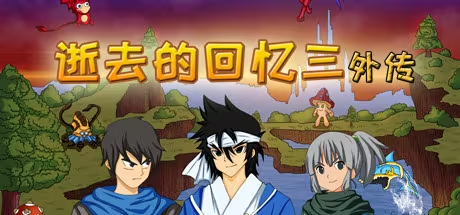
The Albino Hunter (Original) Thumbnail

The Albino Hunter (Original) similar games & best alternatives

The Albino Hunter (Original)

PC (Microsoft Windows) • 2015

Related articles

Quick resume

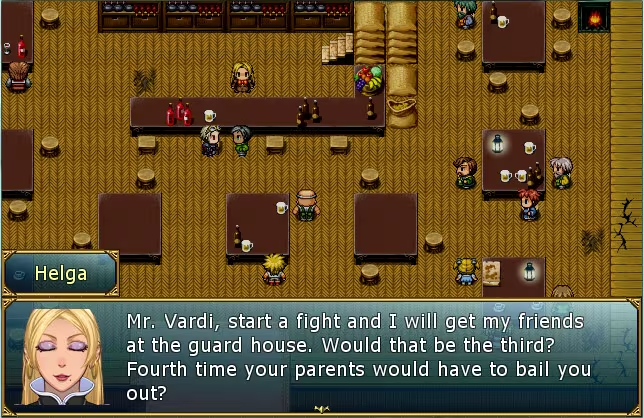
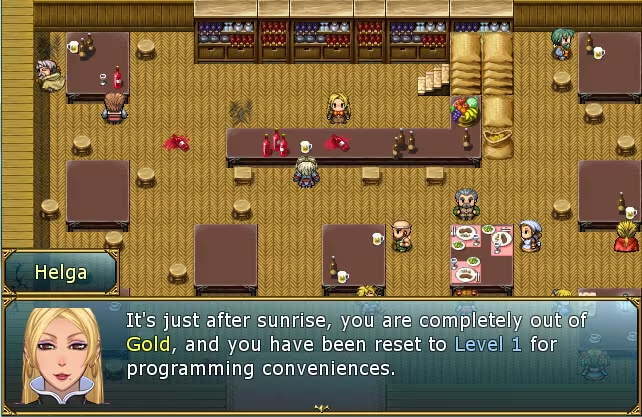
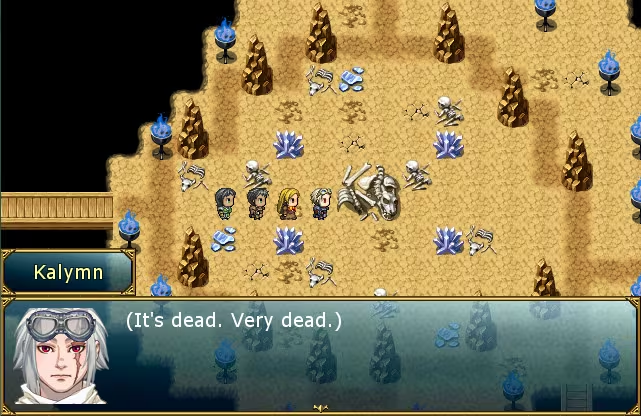
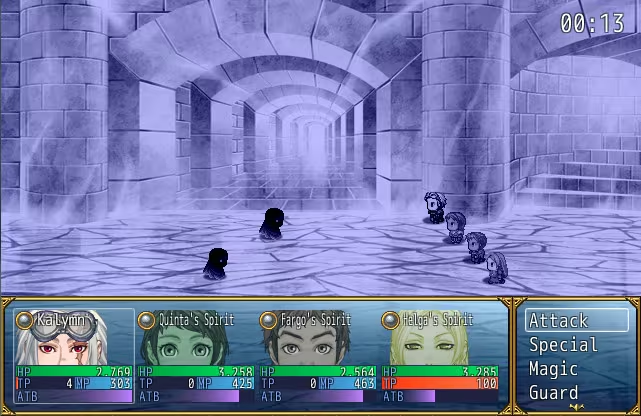
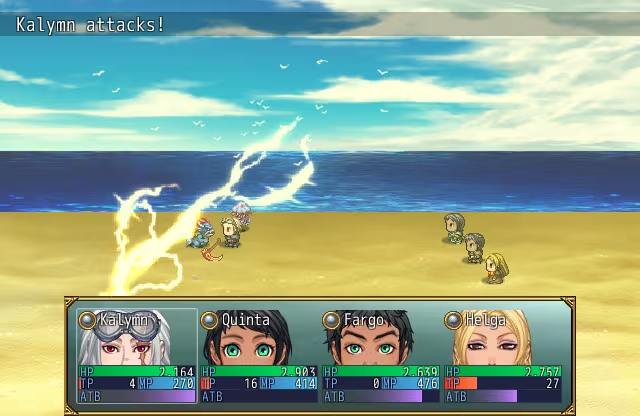
Kalymn Nox is the Albino Hunter; even his pretentious and slightly racist title can keep him from waking up broke after a night of drinking.

Global score

73/100

Genres

Adventure, Indie, Role-playing (RPG)

Similar games

    Pros

    • Humorous and well-written story
    • Multiple endings and branching paths
    • Classic turn-based combat
    • Active developer support and updates
    • Low price and good value

    Cons

    • Frequent crashes and bugs
    • Somewhat repetitive combat
    • Limited graphical originality
    • Short overall length
    • Lack of clear instructions at times

    Analysis

    Less representative of its motivational profile, with noticeable differences. Motivations that often define this kind of title include Leadership, Survival, Violence, Strategy. Here, the score leans higher than usual among comparable games on Intimacy. It leans lower than usual among comparable games on Survival, Cooperation.

    How to use the graph
    Similar games map

    Each dot is a game. They are arranged from the same motivation profile as in the “Motivations” section below. Closer dots usually mean more similar reasons to play (exploration, competition, relaxation, etc.)—not that one game is “better” than another.

    • Larger dot with a light outline: the game you are viewing.
    • Colour: groups of games with comparable motivation patterns (statistical clusters).
    • Hover a dot to see the game name; click to open its page.
    • Scroll or double-click the chart to zoom out and see more games.

    Why don’t the axes read like a score? This view uses t-SNE: it only keeps who is close to whom. The scales are not “good to bad” or hours played—they separate groups on the map. Read distance between dots, not the axis numbers.

    Motivations

    • Autonomy
      3

      "Players have freedom to choose quests, make decisions affecting endings, and select party members, indicating control over actions."

    • Competence
      2

      "Combat involves turn-based strategy with skill use and character progression, though battles are generally easy and some players find them repetitive."

    • Competition
      -4

      "Focus is on single-player experience with no mention of PvP or leaderboards; players progress at their own pace."

    • Continuation
      3

      "Many players report long play sessions and replayability due to multiple endings and branching paths."

    • Cooperation
      -5

      "Single-player RPG with no cooperative multiplayer or teamwork elements."

    • Creativity
      2

      "Players can customize party composition and make story choices; however, game uses RPG Maker stock assets limiting creative expression."

    • Domination
      -5

      "No evidence of exerting control over others; interactions are narrative and single-player focused."

    • Escapism
      4

      "Players use the game to immerse themselves in a humorous fantasy world, escaping real life through story and exploration."

    • Expectation
      -4

      "Players engage voluntarily for fun and humor; no indication of obligation or external pressure to play."

    • Experimenting
      2

      "Game encourages exploration of branching storylines and different endings, though combat mechanics are standard."

    • Exploration
      3

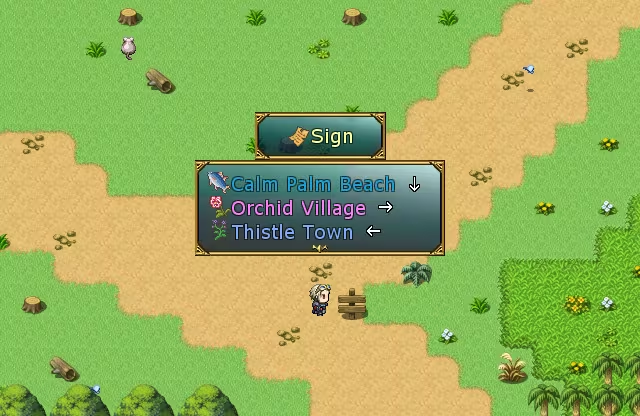
      "Players explore a small but varied map with quests and secrets; exploration is rewarded and encouraged."

    • Expression
      1

      "Limited character customization beyond equipment and party selection; no deep avatar personalization."

    • Fantasy
      5

      "Strong fantasy setting with elves, magic, monsters, and meta-fictional humor breaking the fourth wall."

    • Fellowship
      -4

      "Primarily a solo experience with minimal social interaction beyond community forums."

    • Growth
      3

      "Players develop characters through leveling, skill acquisition, and progressing through story branches."

    • Health
      -5

      "Typical sedentary gameplay with no physical activity elements."

    • Idle
      -3

      "Requires focused attention during combat and exploration; not designed for passive or background play."

    • Intimacy
      1

      "Some character relationships and dialogue depth, but limited to in-game narrative without real social bonding."

    • Leadership
      1

      "Players manage party composition and strategy but no leadership over other players."

    • Progression
      4

      "Character leveling, equipment upgrades, and multiple endings provide a sense of progression."

    • Relaxation
      2

      "Humorous tone and moderate challenge create a generally relaxed experience despite occasional frustration from bugs."

    • Sensation
      1

      "Simple pixel art and music provide modest sensory stimulation; not a focus on intense audiovisual effects."

    • Status
      -4

      "No social status or recognition systems; achievements exist but are personal rather than social."

    • Story
      4

      "Strong emphasis on narrative, character interactions, humor, and multiple endings."

    • Strategy
      2

      "Turn-based combat requires some tactical thinking, though battles are generally straightforward."

    • Thrill
      1

      "Some tension in boss fights and timed quests, but overall low risk and predictable outcomes."

    • Value
      4

      "Highly praised for low price, humor, and content; considered good value especially on sale."

    • Violence
      2

      "Combat involves fighting monsters with magic and weapons, but violence is cartoonish and not graphic."

    • Survival
      -2

      "No survival mechanics; combat is forgiving and death leads to reload rather than harsh penalties."

    Last update: 29/04/2026