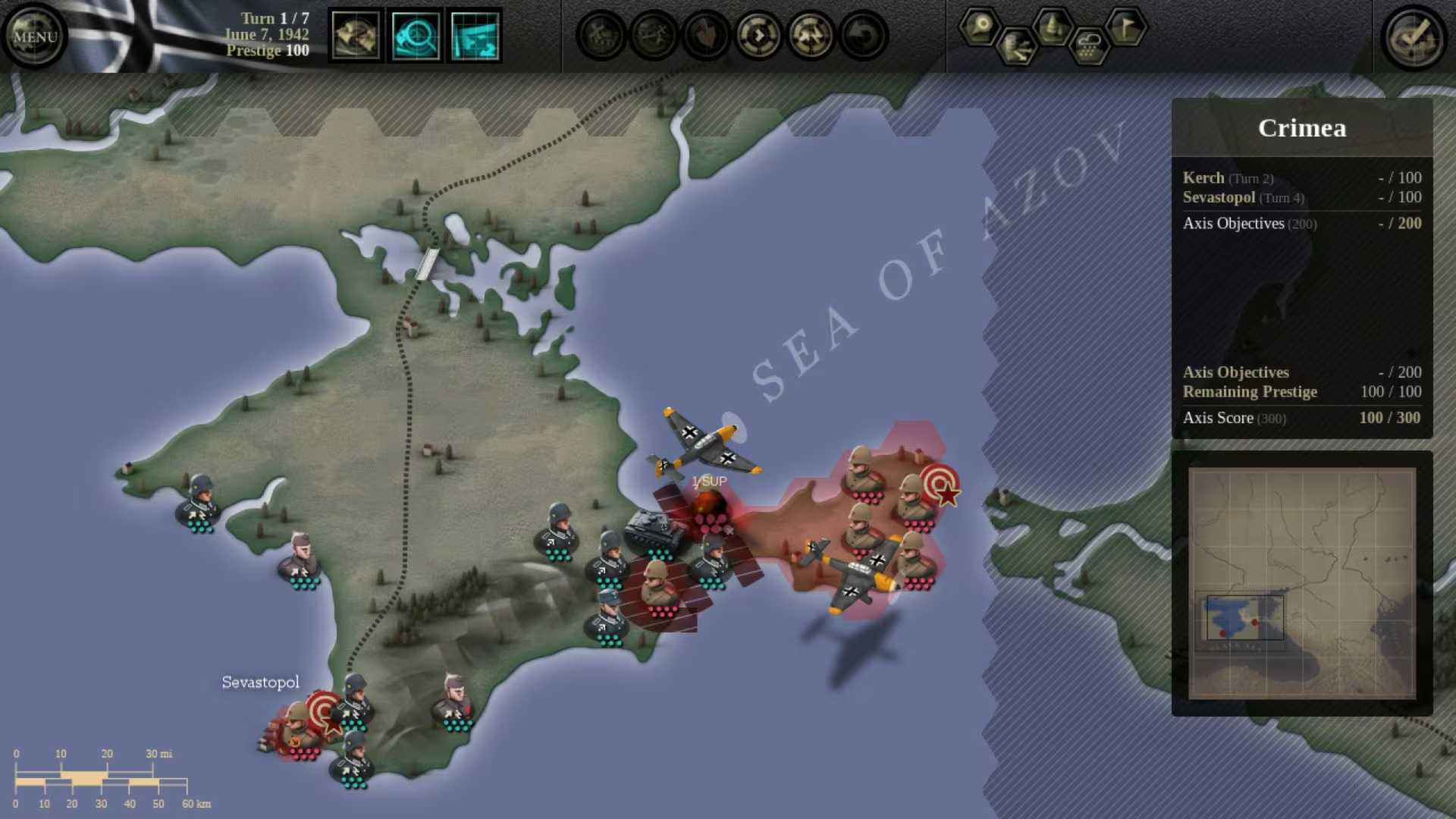
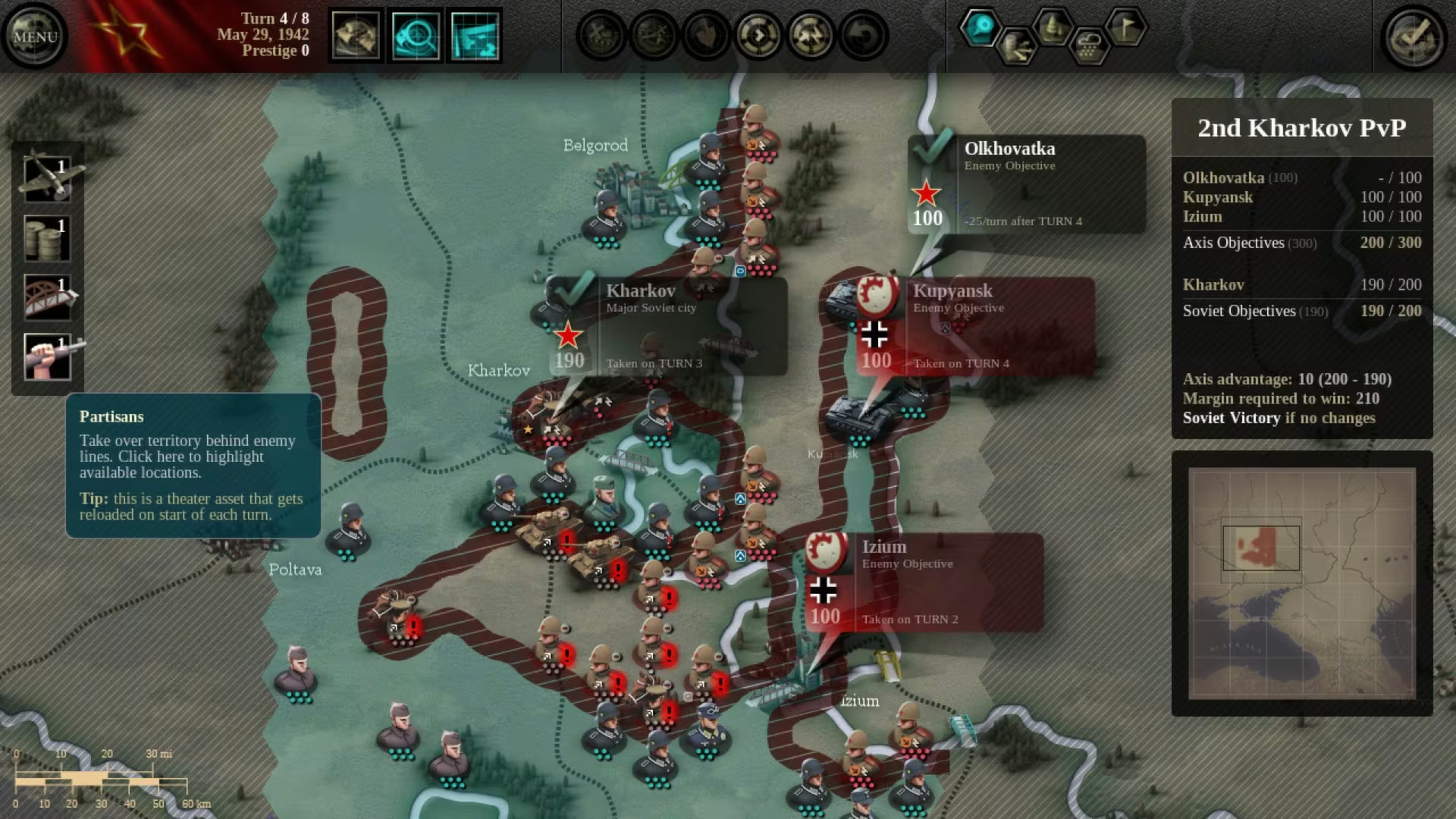
Unity of Command: Stalingrad Campaign Thumbnail

Unity of Command: Stalingrad Campaign similar games & best alternatives

Unity of Command: Stalingrad Campaign

PC (Microsoft Windows), Mac, Linux • 2012

Related articles

Quick resume

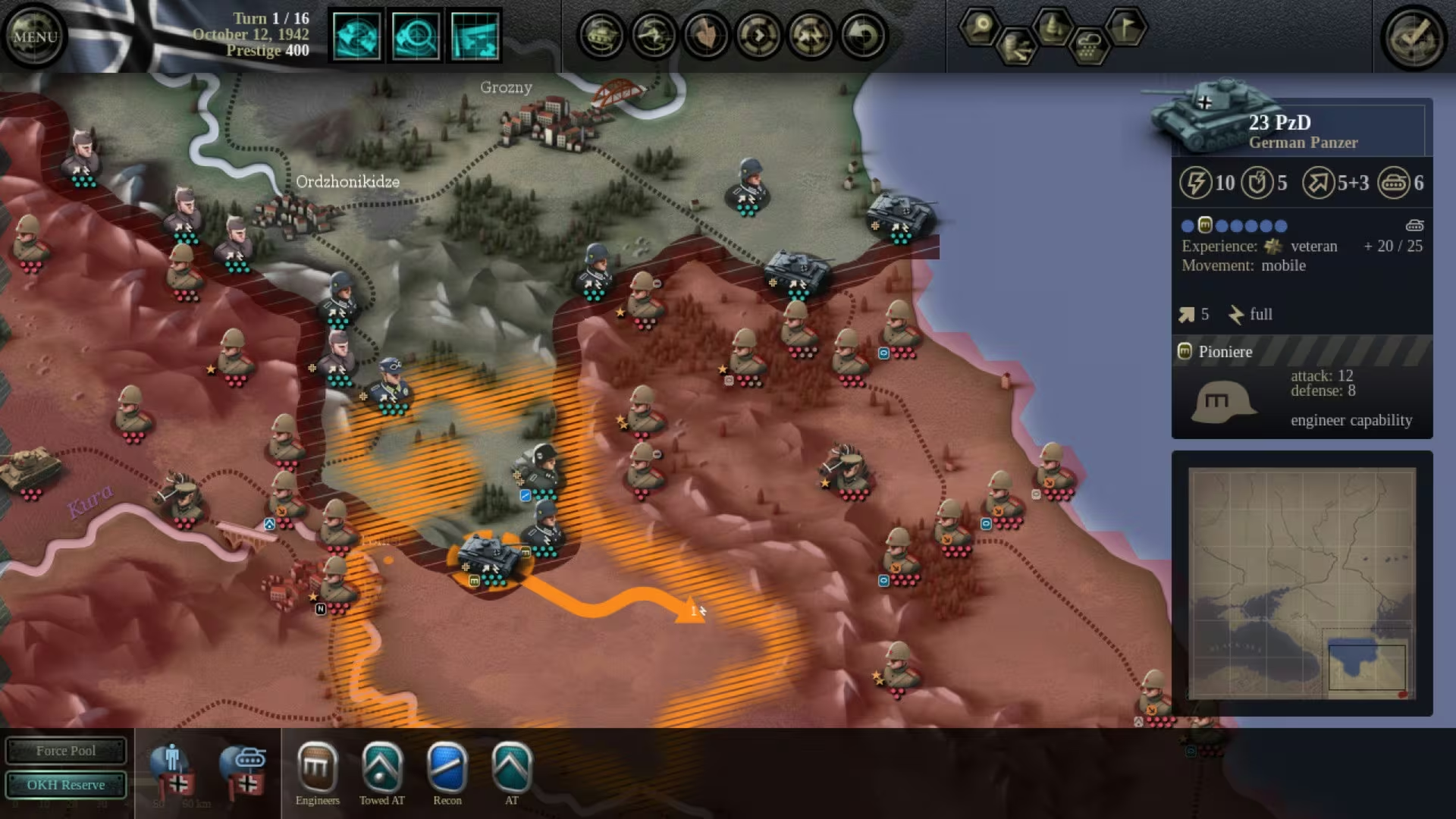
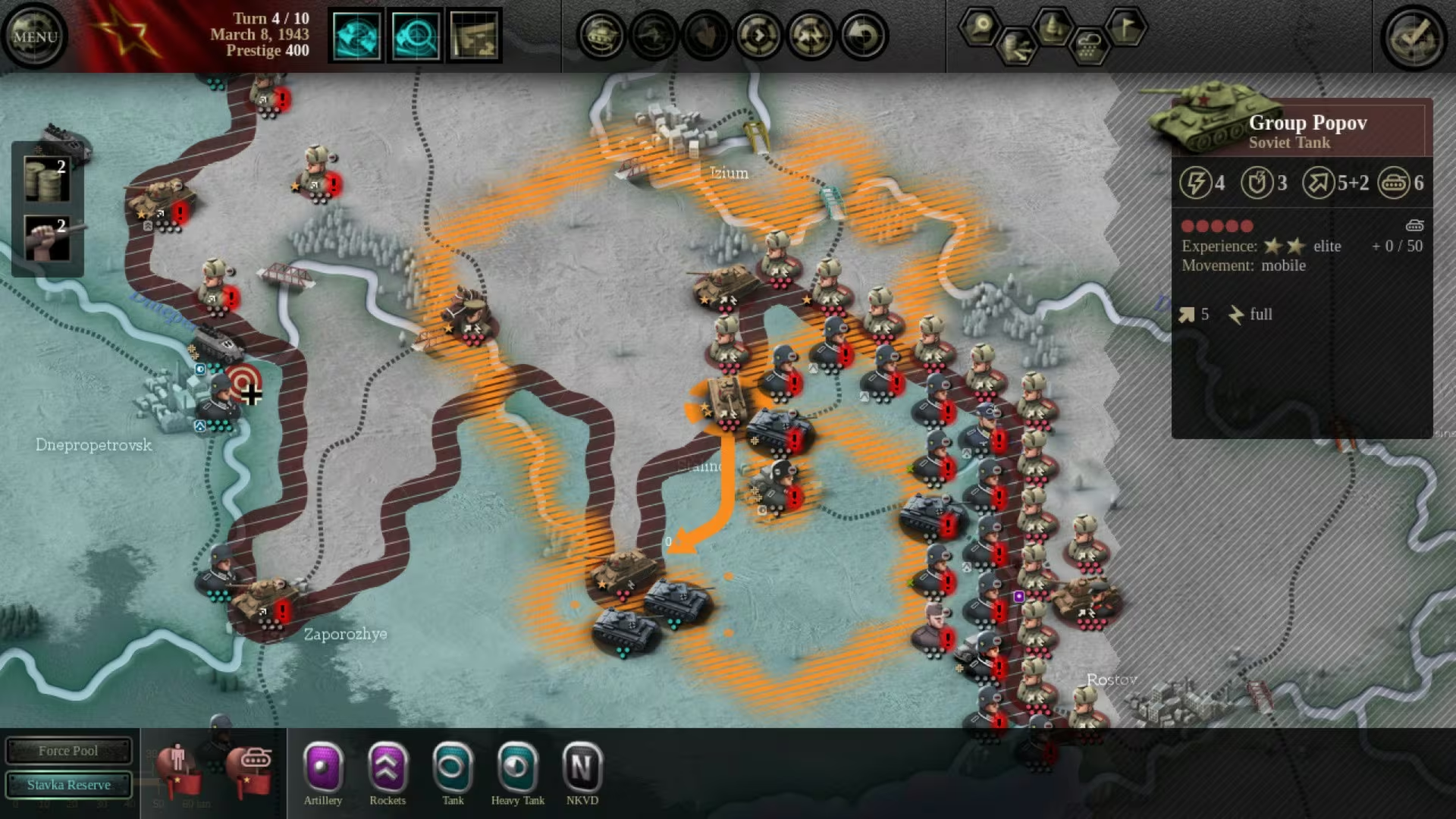
Unity of Command is an innovative and refreshing operational-level wargame that covers the entire 1942/43 Stalingrad Campaign on the Eastern Front.

Global score

78/100

Genres

Indie, Strategy

Similar games

    Pros

    • Challenging and rewarding strategic gameplay
    • Intuitive and clean user interface
    • Historically accurate and immersive scenarios
    • Scenario editor and user-generated content
    • Good ai and multiplayer options

    Cons

    • Strict turn limits can feel punishing and puzzle-like
    • Limited campaign scope and scenario variety
    • Lack of save/load during missions
    • Minimal customization and social features
    • Some randomness can frustrate perfect runs

    Analysis

    Less representative of its motivational profile, with noticeable differences. Motivations that often define this kind of title include Creativity, Exploration, Expression, Story. Here, the score leans higher than usual among comparable games on Leadership. It leans lower than usual among comparable games on Fantasy, Autonomy.

    How to use the graph
    Similar games map

    Each dot is a game. They are arranged from the same motivation profile as in the “Motivations” section below. Closer dots usually mean more similar reasons to play (exploration, competition, relaxation, etc.)—not that one game is “better” than another.

    • Larger dot with a light outline: the game you are viewing.
    • Colour: groups of games with comparable motivation patterns (statistical clusters).
    • Hover a dot to see the game name; click to open its page.
    • Scroll or double-click the chart to zoom out and see more games.

    Why don’t the axes read like a score? This view uses t-SNE: it only keeps who is close to whom. The scales are not “good to bad” or hours played—they separate groups on the map. Read distance between dots, not the axis numbers.

    Motivations

    • Autonomy
      -2

      "Gameplay is scenario-based with fixed objectives and turn limits, limiting player freedom; some tactical choices exist but overall progression is constrained."

    • Competence
      4

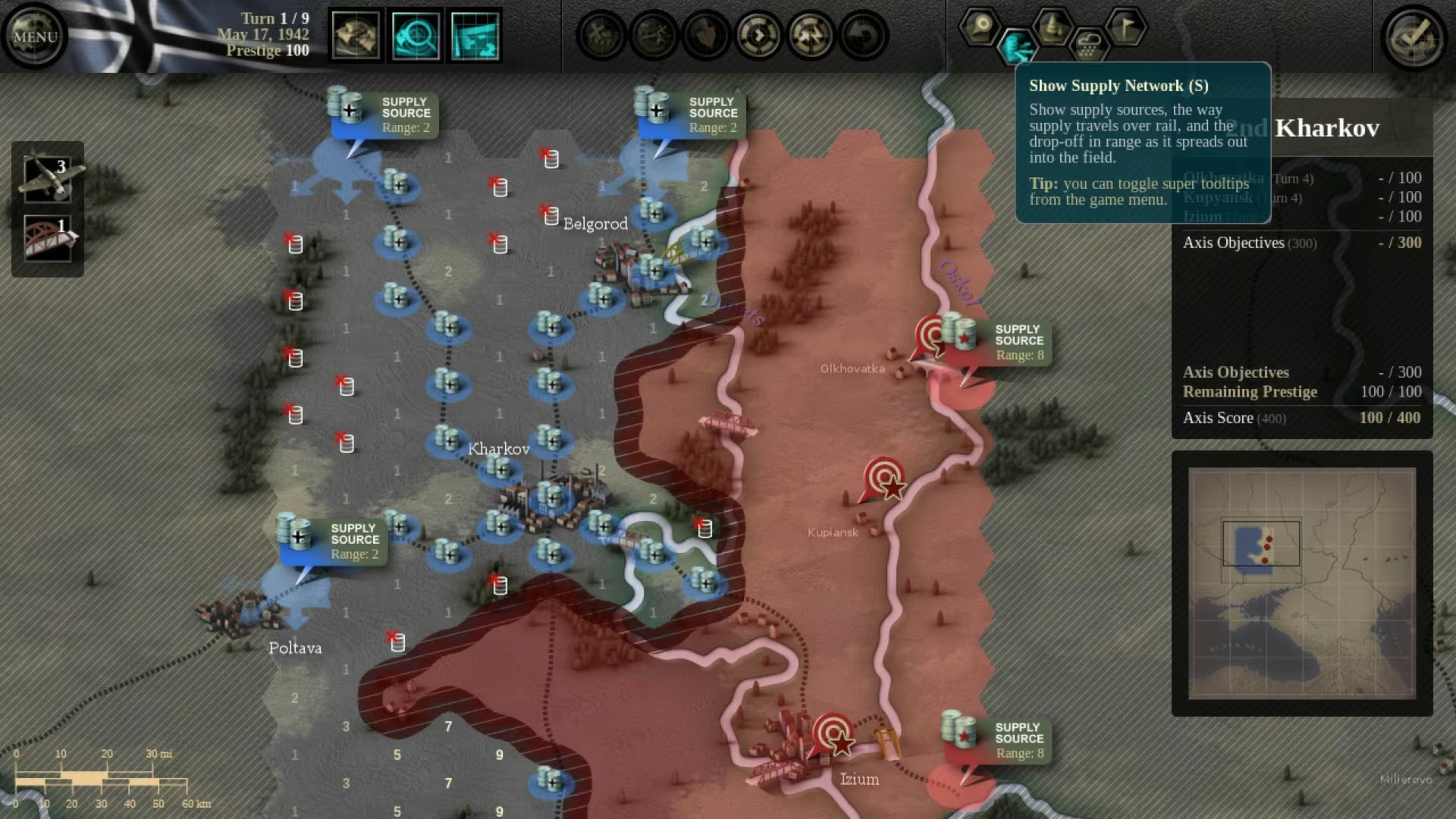
      "Players must master supply lines, terrain, and timing; game punishes mistakes and rewards skillful planning and execution."

    • Competition
      1

      "Includes multiplayer and leaderboards, but much focus is on single-player challenge and personal mastery rather than direct competition."

    • Continuation
      3

      "High replay value with challenging scenarios and DLCs; players often return to improve victories and try different strategies."

    • Cooperation
      0

      "Multiplayer modes exist but cooperation is limited; mostly focused on individual play and competition."

    • Creativity
      2

      "Scenario editor and user-generated content allow creative map design; tactical creativity encouraged within scenario constraints."

    • Domination
      -3

      "Gameplay emphasizes balanced tactical play and supply management rather than dominating or trash-talking others."

    • Escapism
      3

      "Players engage in historical WWII scenarios offering immersive distraction and strategic challenge."

    • Expectation
      -4

      "Players engage voluntarily out of interest and intrinsic motivation; no evidence of obligation or external pressure."

    • Experimenting
      2

      "Players experiment with supply lines, unit placement, and timing; however, scenario structure limits broad experimentation."

    • Exploration
      -3

      "Maps and scenarios are fixed and historically based; limited discovery or open-world exploration."

    • Expression
      -4

      "Minimal customization or avatar personalization; standardized unit representations and map aesthetics."

    • Fantasy
      -5

      "Strong focus on realistic WWII operational warfare; no fantasy or imaginative fiction elements."

    • Fellowship
      0

      "Some community engagement via multiplayer and scenario sharing, but social connection is not a core focus."

    • Growth
      4

      "Players develop strategic thinking and operational planning skills; mastering game mechanics requires learning and improvement."

    • Health
      -5

      "Typical sedentary computer game with no physical activity or health-related features."

    • Idle
      -3

      "Requires focused attention and planning; not designed for casual or background play."

    • Intimacy
      -4

      "Limited social interaction; multiplayer is competitive or hotseat but lacks deep emotional or close relationship building."

    • Leadership
      3

      "Players command and manage large operational forces, making strategic decisions and guiding units."

    • Progression
      3

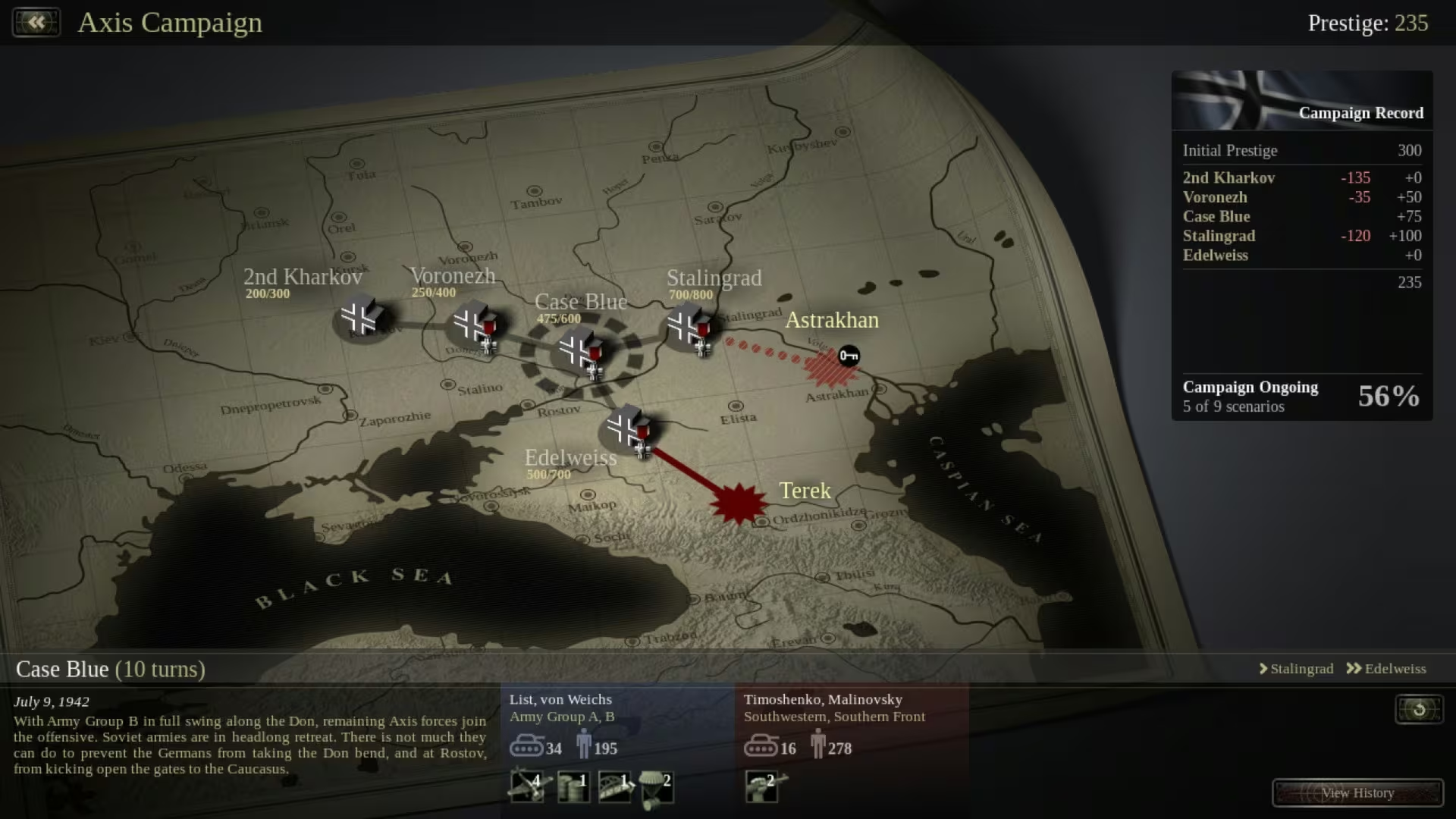
      "Players accumulate prestige points and unlock scenarios; unit status and campaign progress reflect advancement."

    • Relaxation
      -1

      "Game is challenging and sometimes frustrating; not primarily designed for relaxation or flow."

    • Sensation
      1

      "Visuals and sound are minimalist but effective; some emotional engagement through tension and victory satisfaction."

    • Status
      0

      "No strong emphasis on social recognition or popularity; achievements and multiplayer exist but are not central."

    • Story
      2

      "Historical narrative and context are present; scenarios reflect real battles and campaigns."

    • Strategy
      5

      "Core gameplay revolves around strategic planning, supply management, and tactical problem solving."

    • Thrill
      3

      "Tight turn limits and punishing AI create suspense and tension; weather and RNG add unpredictability."

    • Value
      4

      "Highly praised for quality and replayability at a reasonable price, especially with DLC bundles and sales."

    • Violence
      4

      "Focus on combat and destruction of enemy units; tactical warfare with realistic military engagements."

    • Survival
      4

      "Managing supply lines and avoiding encirclement are key to keeping units operational and alive."

    Last update: 29/04/2026