When The Past Was Around Thumbnail

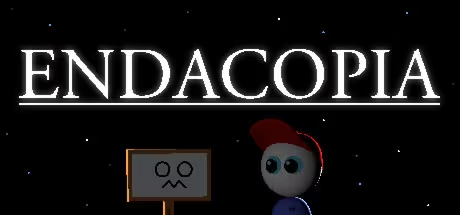
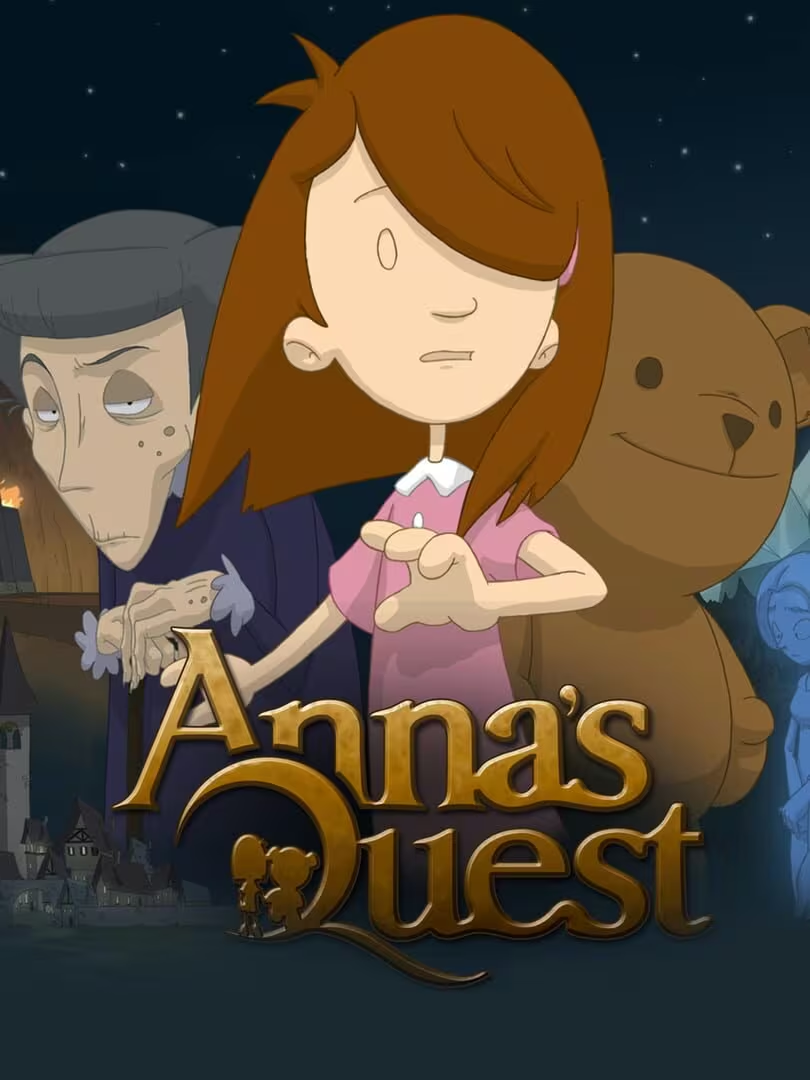
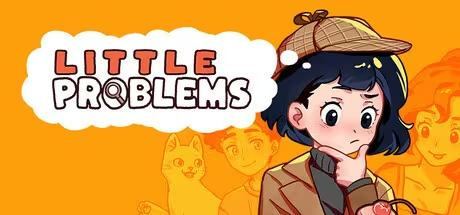
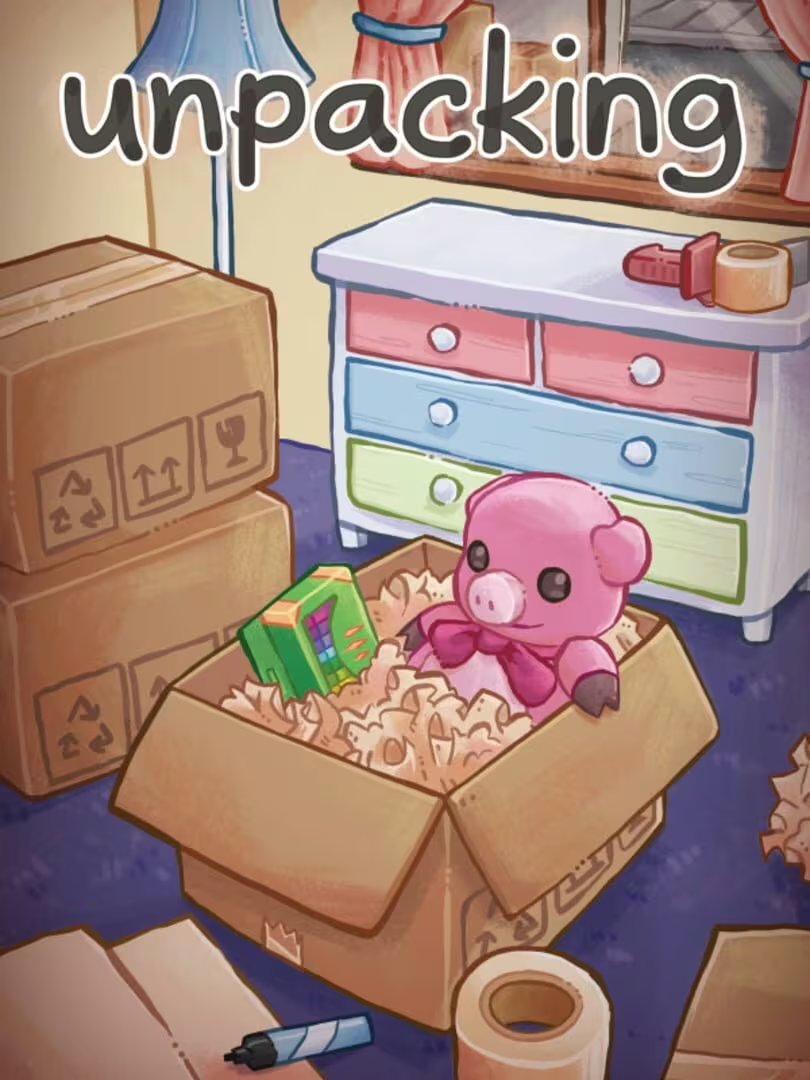
When The Past Was Around similar games & best alternatives
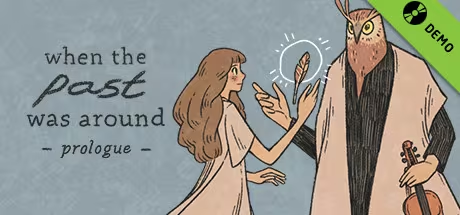
When The Past Was Around

PC (Microsoft Windows), Mac, iOS, PlayStation 4, Xbox One, Android, Nintendo Switch • 2020

Related articles

Quick resume

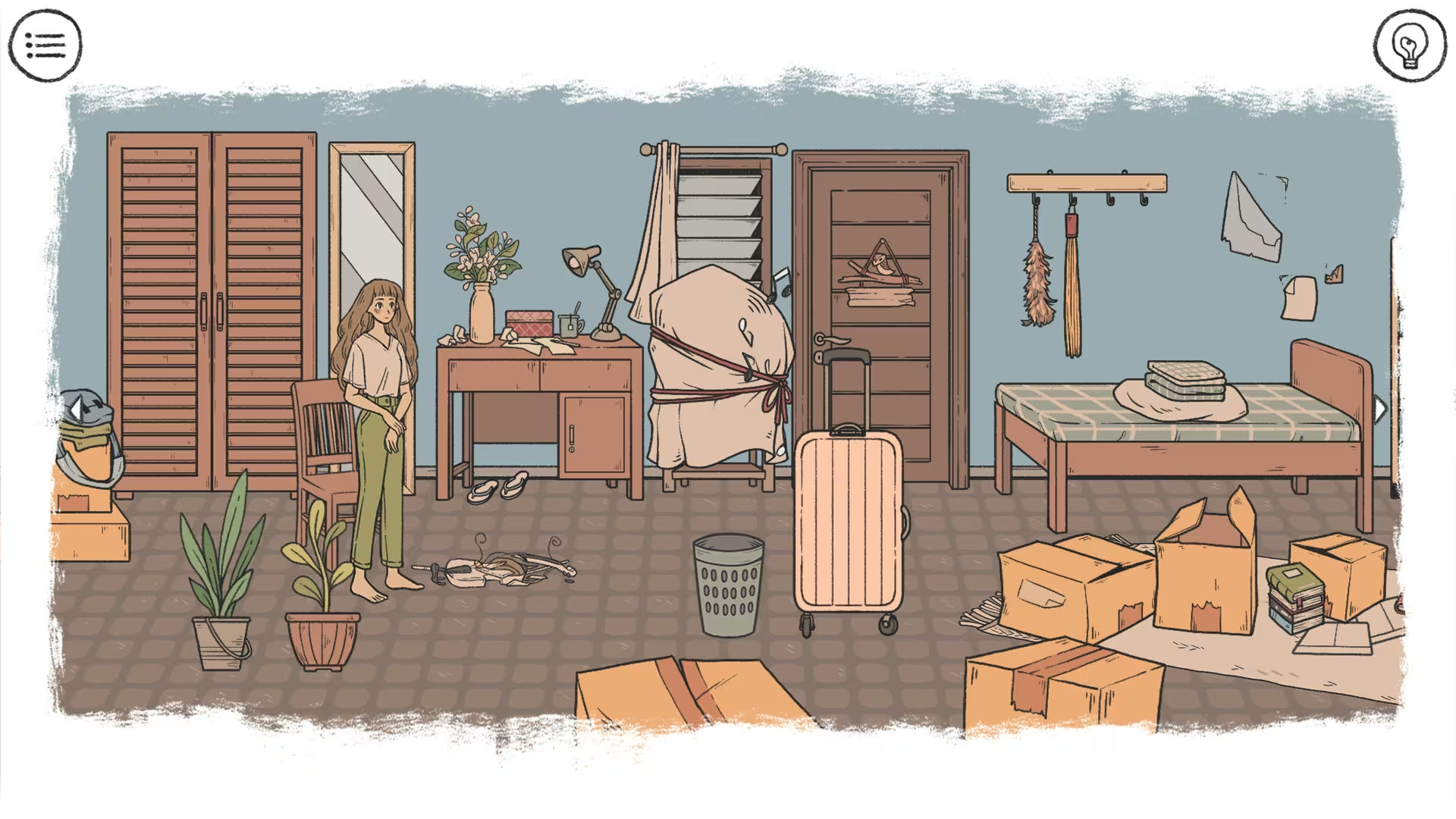
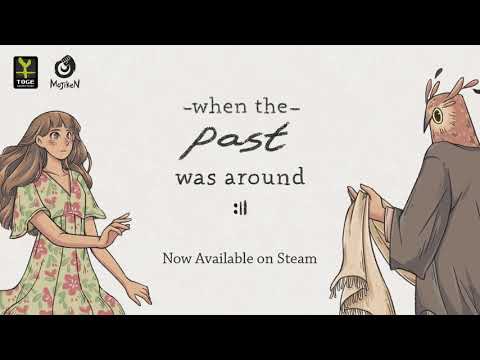
When the Past was Around is an adventure point-and-click puzzle game about love, moving on, letting go, and the joy and pain of everything in between.

Global score

95/100

Genres

Adventure, Casual, Indie, Point-and-click, Music, Puzzle

Similar games

    Pros

    • Beautiful hand-drawn art
    • Emotional and poignant story
    • Soothing and memorable soundtrack
    • Accessible yet thoughtful puzzles
    • Meaningful exploration of grief and healing

    Cons

    • Short gameplay length
    • Some puzzles can be too easy or slightly unclear
    • Repetitive soundtrack for some players
    • Limited replay value beyond achievements
    • Lack of explicit narrative clarity for some

    Analysis

    A very typical example of its motivational profile. Motivations that often define this kind of title include Intimacy, Survival, Violence, Competition. It leans lower than usual among comparable games on Fellowship, Thrill, Cooperation.

    How to use the graph
    Similar games map

    Each dot is a game. They are arranged from the same motivation profile as in the “Motivations” section below. Closer dots usually mean more similar reasons to play (exploration, competition, relaxation, etc.)—not that one game is “better” than another.

    • Larger dot with a light outline: the game you are viewing.
    • Colour: groups of games with comparable motivation patterns (statistical clusters).
    • Hover a dot to see the game name; click to open its page.
    • Scroll or double-click the chart to zoom out and see more games.

    Why don’t the axes read like a score? This view uses t-SNE: it only keeps who is close to whom. The scales are not “good to bad” or hours played—they separate groups on the map. Read distance between dots, not the axis numbers.

    Motivations

    • Autonomy
      3

      "Players direct their own actions through point-and-click puzzles and exploration, with freedom to interact with many objects and revisit chapters."

    • Competence
      2

      "Puzzles provide moderate challenge and require some problem solving, but are generally accessible and not overly difficult."

    • Competition
      -5

      "No competitive elements; focus is on personal emotional experience and story."

    • Continuation
      1

      "Short game with some replay value for achievements and emotional revisiting, but overall brief play sessions."

    • Cooperation
      -5

      "Single-player experience focused on individual reflection and story engagement."

    • Creativity
      1

      "Players solve puzzles creatively and explore symbolic elements, though within a structured narrative."

    • Domination
      -5

      "No elements of control or superiority over others; experience is personal and empathetic."

    • Escapism
      4

      "Strong emotional immersion offering escape into a poignant narrative about grief and healing."

    • Expectation
      -4

      "Players engage voluntarily driven by personal interest in emotional storytelling and art."

    • Experimenting
      2

      "Players explore puzzles and symbolic interactions, encouraging experimentation within the game world."

    • Exploration
      2

      "Players discover new scenes, objects, and memories, encouraging curiosity and discovery."

    • Expression
      2

      "Artistic style and symbolic storytelling allow personal interpretation and emotional expression."

    • Fantasy
      1

      "Contains some surreal and symbolic elements (e.g., Owl character), blending realistic emotional themes with imaginative presentation."

    • Fellowship
      -5

      "Primarily a solitary experience focused on personal emotional journey."

    • Growth
      3

      "Players experience emotional growth and reflection on grief and healing through narrative progression."

    • Health
      -5

      "Sedentary gameplay with no physical activity involved."

    • Idle
      -3

      "Requires focused attention to solve puzzles and engage with story; not a background or idle game."

    • Intimacy
      4

      "Strong emotional connection to characters and story, evoking empathy and personal reflection."

    • Leadership
      -5

      "No leadership or group management elements; purely individual experience."

    • Progression
      3

      "Narrative and puzzle progression advance the story and emotional development."

    • Relaxation
      3

      "Calm, soothing music and gentle pacing create a relaxing atmosphere despite emotional themes."

    • Sensation
      3

      "Enjoyable sensory experience through beautiful art and evocative music."

    • Status
      -5

      "No social recognition or status elements present."

    • Story
      5

      "Core focus on narrative immersion telling a poignant story of love, loss, and healing without words."

    • Strategy
      1

      "Puzzles require some problem solving and logical thinking but are generally straightforward."

    • Thrill
      -3

      "Emotional tension present but no suspense or risk-based thrills."

    • Value
      2

      "Good perceived value for emotional impact and artistic quality, though some note short length."

    • Violence
      -5

      "No violence; focus on constructive emotional experience."

    • Survival
      -5

      "No survival or threat avoidance mechanics."

    Last update: 29/04/2026