Cyber Manhunt Thumbnail

Cyber Manhunt similar games & best alternatives

Cyber Manhunt

PC (Microsoft Windows), Mac • 2021

Related articles

Quick resume

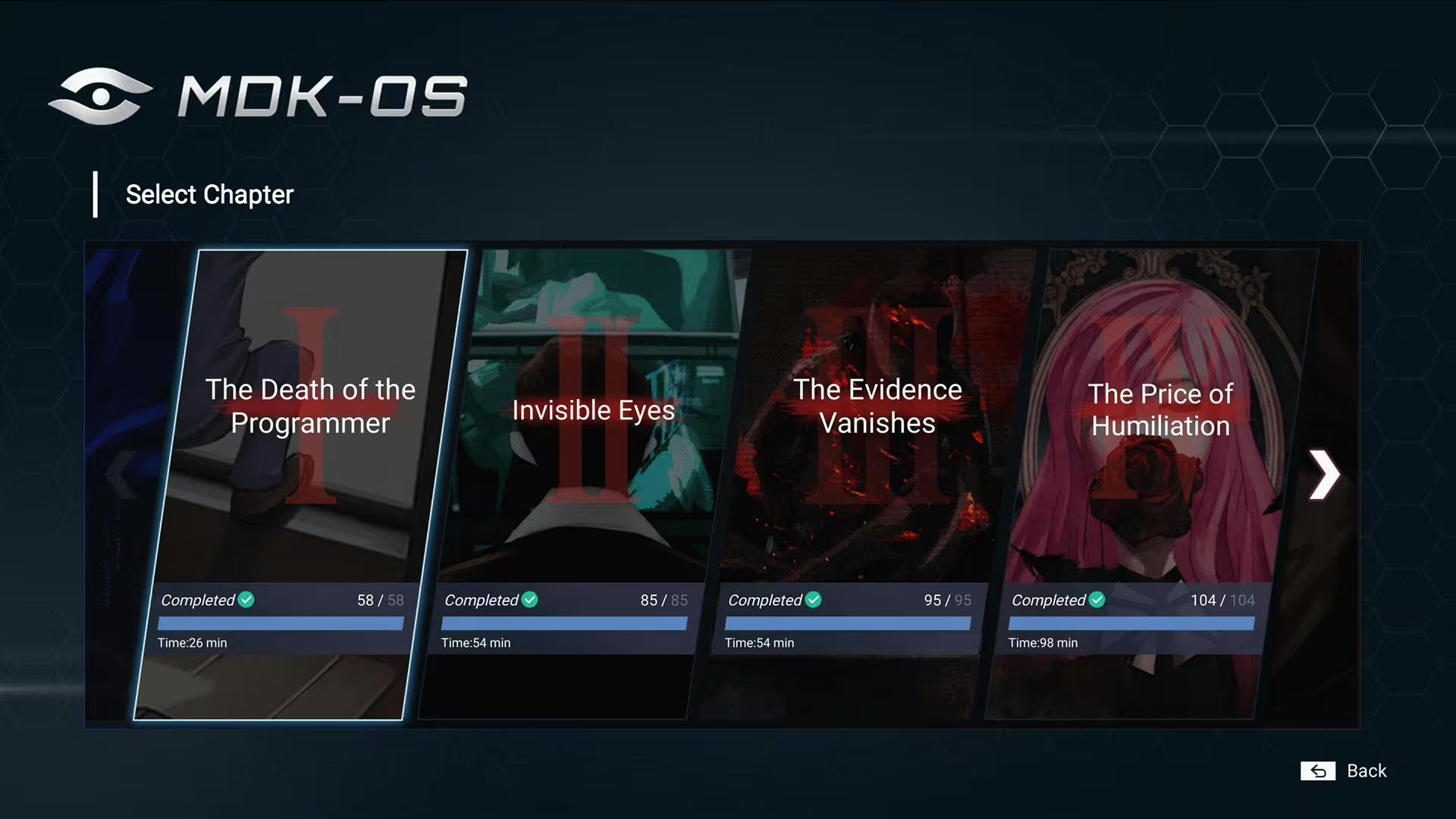
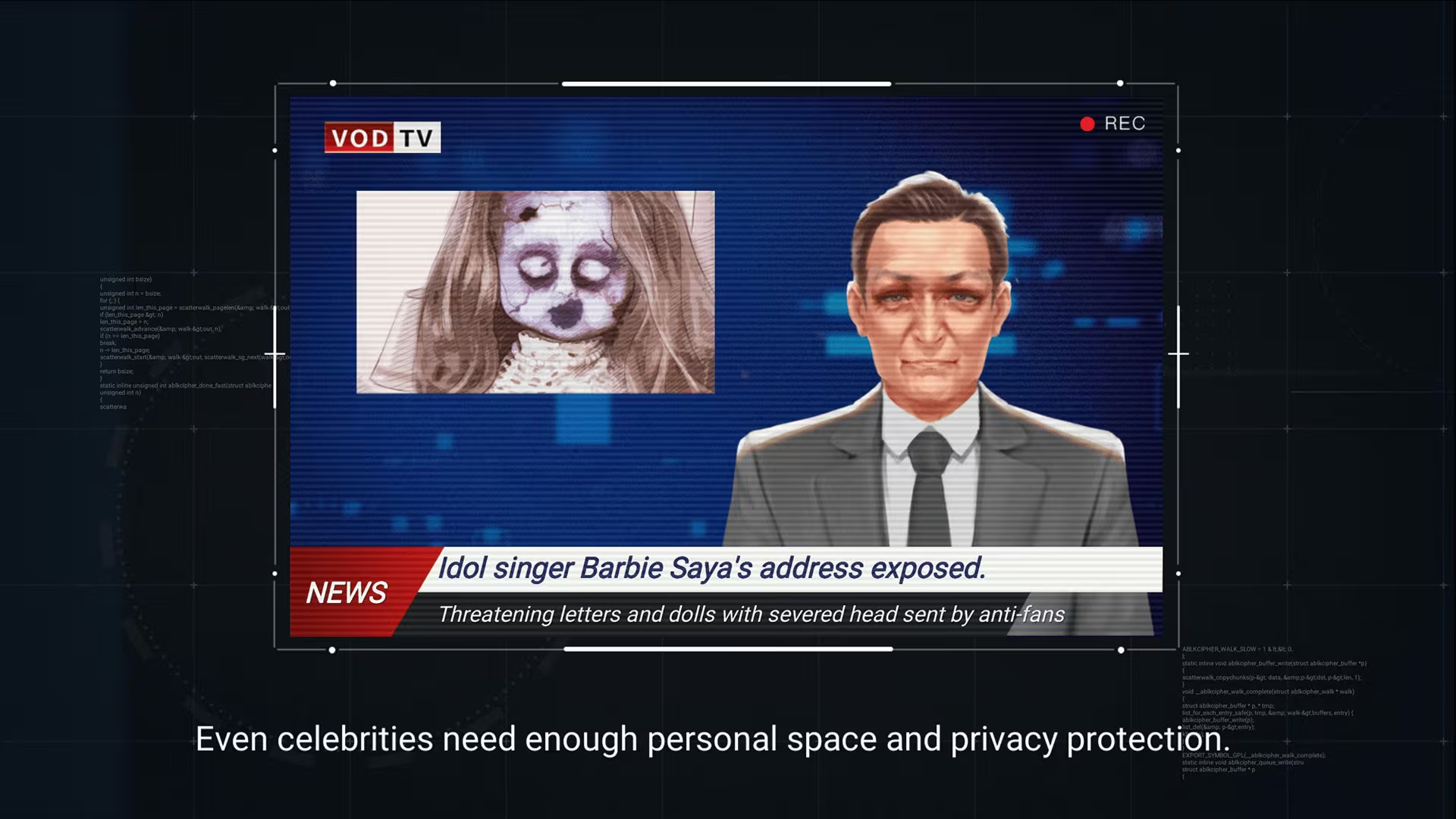
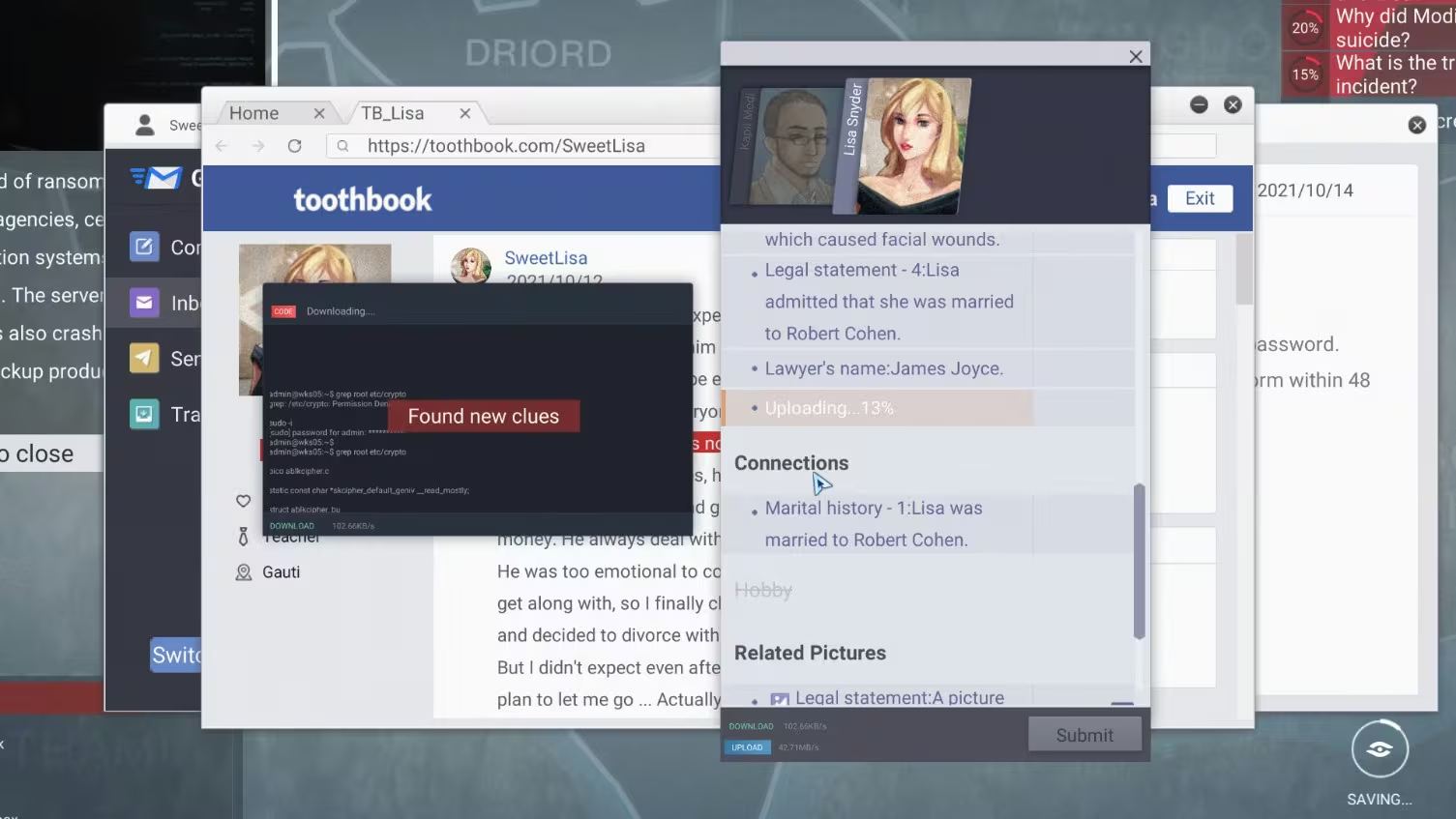
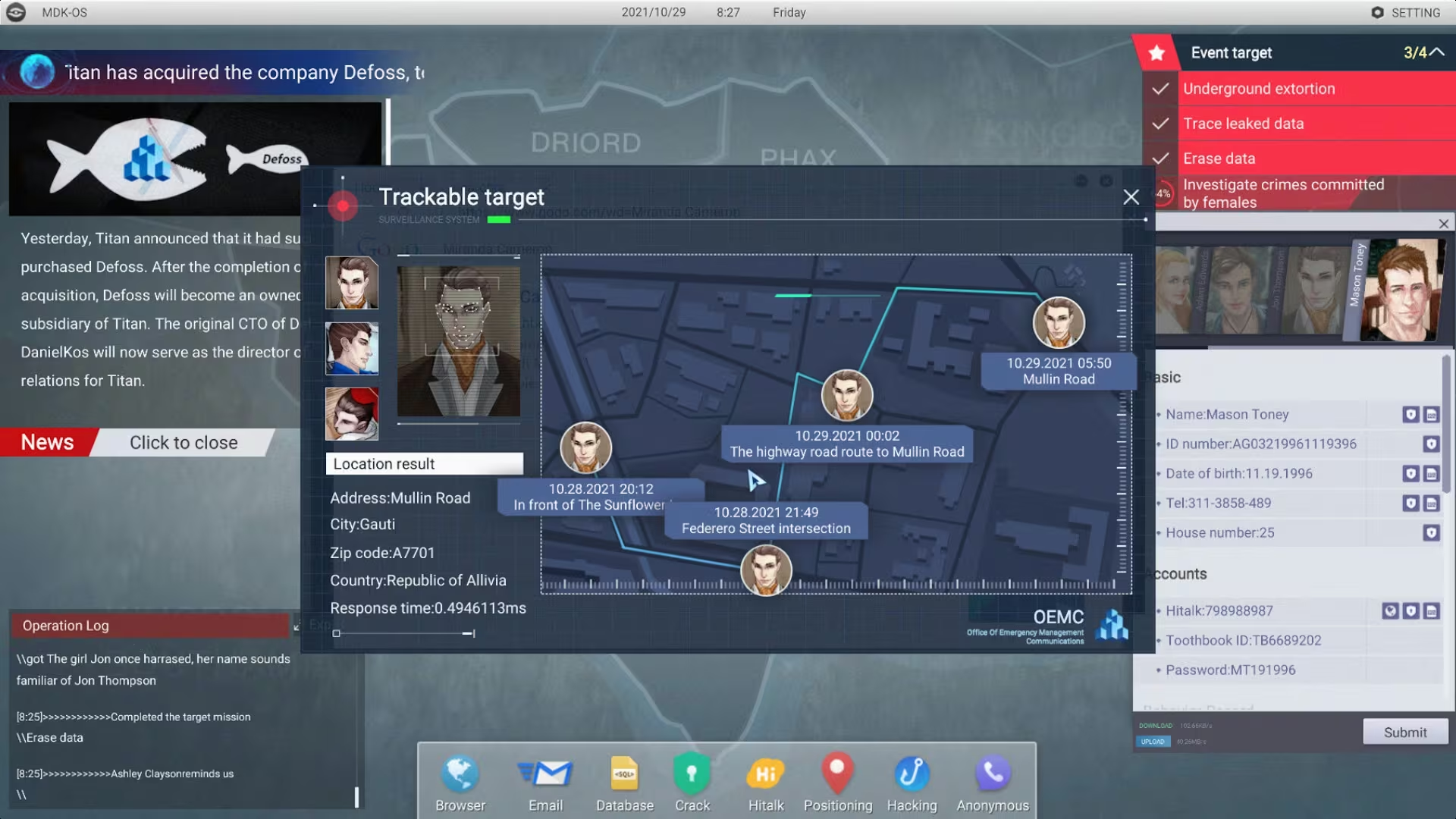
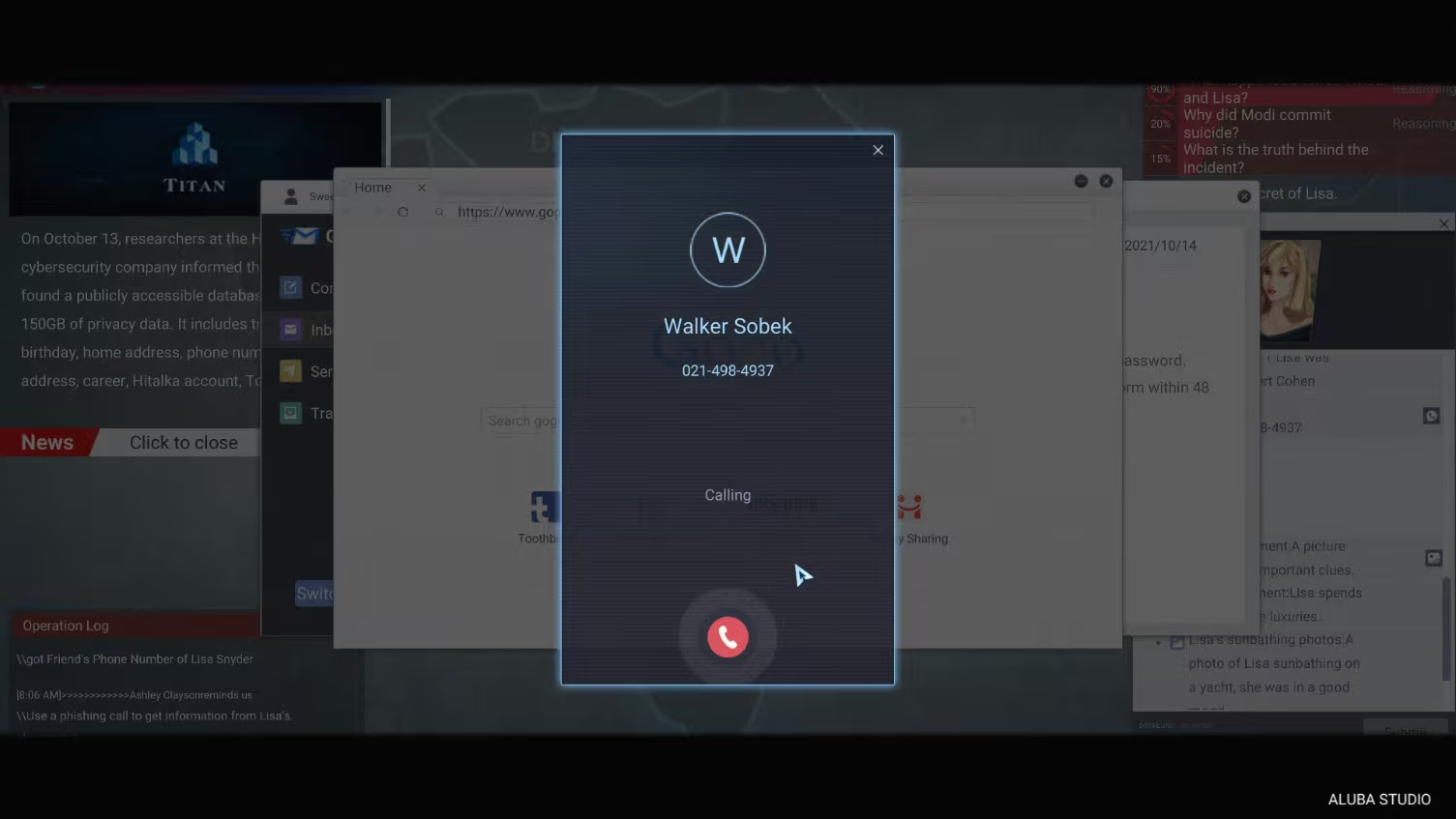
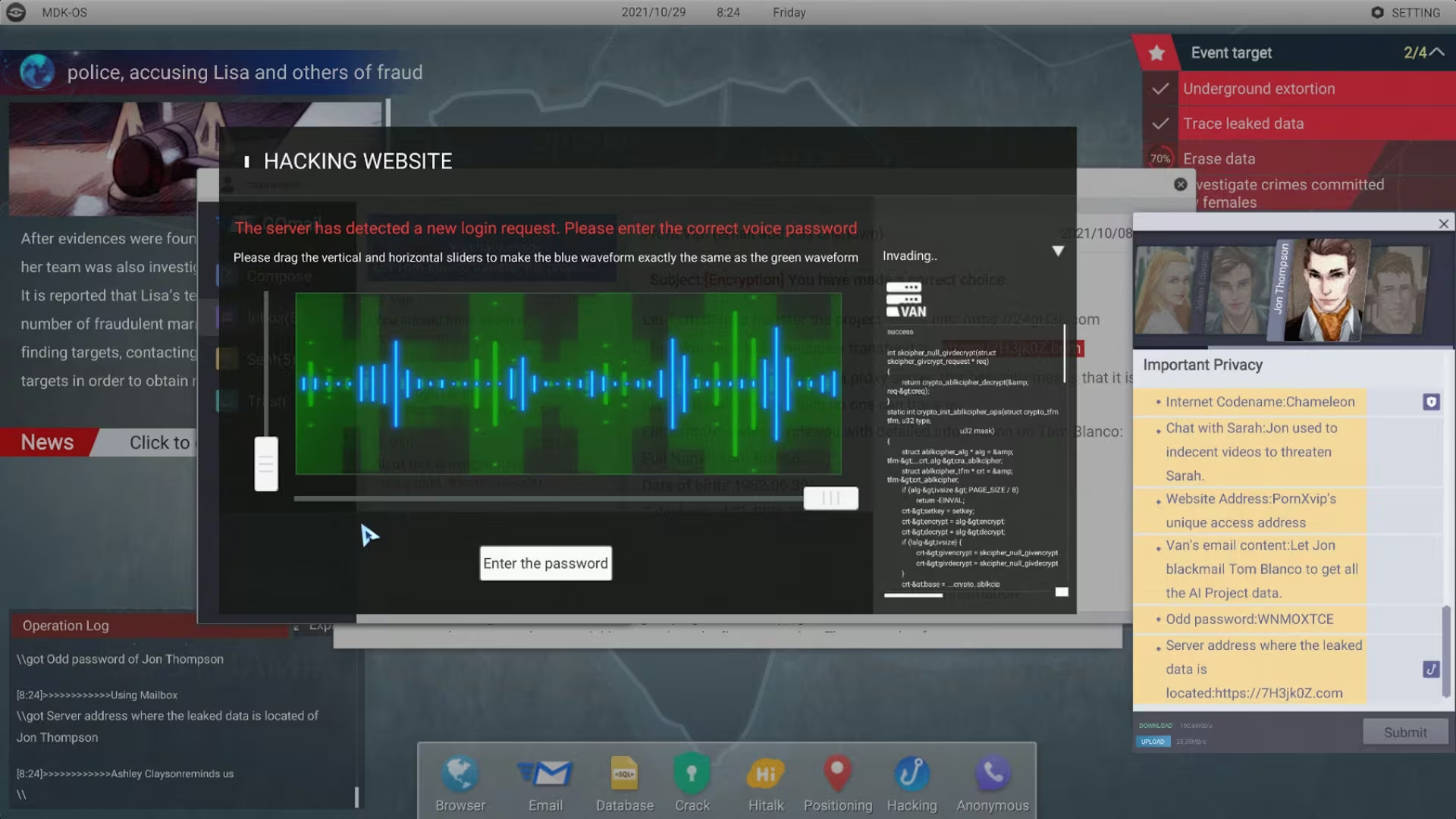
Cyber Manhunt is a story-oriented puzzle game focusing on big data, hacking, citizen privacy, and social workers. It focuses on social issues such as cyber violence and privacy breaches.

Global score

93/100

Genres

Indie, Role-playing (RPG), Simulator, Puzzle

Similar games

    Pros

    • Engaging and mature storyline
    • Unique cyber-investigation gameplay
    • Challenging puzzles and deduction
    • Immersive digital interface
    • Thought-provoking social themes

    Cons

    • Frequent translation and grammar errors
    • Some frustrating or obscure puzzles
    • Voice acting quality inconsistent
    • Bugs and ui quirks
    • Linear progression limits freedom

    Analysis

    Less representative of its motivational profile, with noticeable differences. Motivations that often define this kind of title include Expression, Fellowship, Cooperation, Competition. Here, the score leans higher than usual among comparable games on Strategy. It leans lower than usual among comparable games on Survival, Fantasy.

    How to use the graph
    Similar games map

    Each dot is a game. They are arranged from the same motivation profile as in the “Motivations” section below. Closer dots usually mean more similar reasons to play (exploration, competition, relaxation, etc.)—not that one game is “better” than another.

    • Larger dot with a light outline: the game you are viewing.
    • Colour: groups of games with comparable motivation patterns (statistical clusters).
    • Hover a dot to see the game name; click to open its page.
    • Scroll or double-click the chart to zoom out and see more games.

    Why don’t the axes read like a score? This view uses t-SNE: it only keeps who is close to whom. The scales are not “good to bad” or hours played—they separate groups on the map. Read distance between dots, not the axis numbers.

    Motivations

    • Autonomy
      3

      "Players have freedom to explore clues and choose investigation paths, but progression is largely linear and constrained by narrative structure."

    • Competence
      4

      "The game challenges players with puzzles and deduction tasks requiring skillful information gathering and reasoning."

    • Competition
      -4

      "Focuses on individual investigation and puzzle solving without competitive or ranked elements."

    • Continuation
      3

      "Players report long play sessions and engagement with story and puzzles, though some frustration with difficulty and bugs."

    • Cooperation
      -5

      "Single-player experience focused on individual detective work without multiplayer or cooperative features."

    • Creativity
      2

      "Players creatively piece together clues and use various in-game tools, but within a fixed narrative and puzzle framework."

    • Domination
      -5

      "No elements of exerting control or superiority over others; interactions are solitary and investigative."

    • Escapism
      4

      "Players use the game as a mental escape into a cyber-investigation world, engaging with dark themes and complex stories."

    • Expectation
      -3

      "Players engage voluntarily out of interest in the genre and story rather than obligation or external pressure."

    • Experimenting
      3

      "Encourages trying different investigative approaches and puzzle solving, though within a structured narrative."

    • Exploration
      3

      "Players explore various fake social media, websites, and digital environments to uncover clues."

    • Expression
      -4

      "Limited customization or personalization; players interact with predefined characters and environments."

    • Fantasy
      1

      "While fictional, the game is grounded in realistic cybercrime and social engineering scenarios."

    • Fellowship
      -5

      "No social or community features; experience is solitary."

    • Growth
      3

      "Players develop investigative skills and learn about cybercrime and social engineering concepts."

    • Health
      -5

      "Sedentary gameplay with no physical activity or health-related features."

    • Idle
      -4

      "Requires focused attention and active engagement with puzzles and investigation."

    • Intimacy
      -4

      "Interactions are limited to surface-level data gathering; no close social relationships formed."

    • Leadership
      -5

      "No leadership or group management elements; purely individual gameplay."

    • Progression
      3

      "Players accumulate clues and unlock story chapters, progressing through narrative and puzzles."

    • Relaxation
      -1

      "Some players find the game tense and challenging, though others find it engaging and immersive."

    • Sensation
      2

      "The game provides emotional engagement through story and atmosphere, with moderate sensory stimulation."

    • Status
      -5

      "No social recognition or status systems present."

    • Story
      5

      "Strong narrative focus with interconnected plots, character development, and mature themes."

    • Strategy
      4

      "Requires logical thinking, problem solving, and planning to uncover clues and solve puzzles."

    • Thrill
      3

      "Tense moments and suspenseful storytelling create a sense of thrill and urgency."

    • Value
      4

      "Players perceive good value in story depth and gameplay despite some bugs and translation issues."

    • Violence
      1

      "Game contains mature themes including violence, but gameplay focuses on investigation rather than combat."

    • Survival
      -3

      "No survival mechanics; gameplay occurs in stable, low-risk digital environments."

    Last update: 29/04/2026