FORM Thumbnail

FORM similar games & best alternatives

FORM

PC (Microsoft Windows) • 2017

Related articles

Quick resume

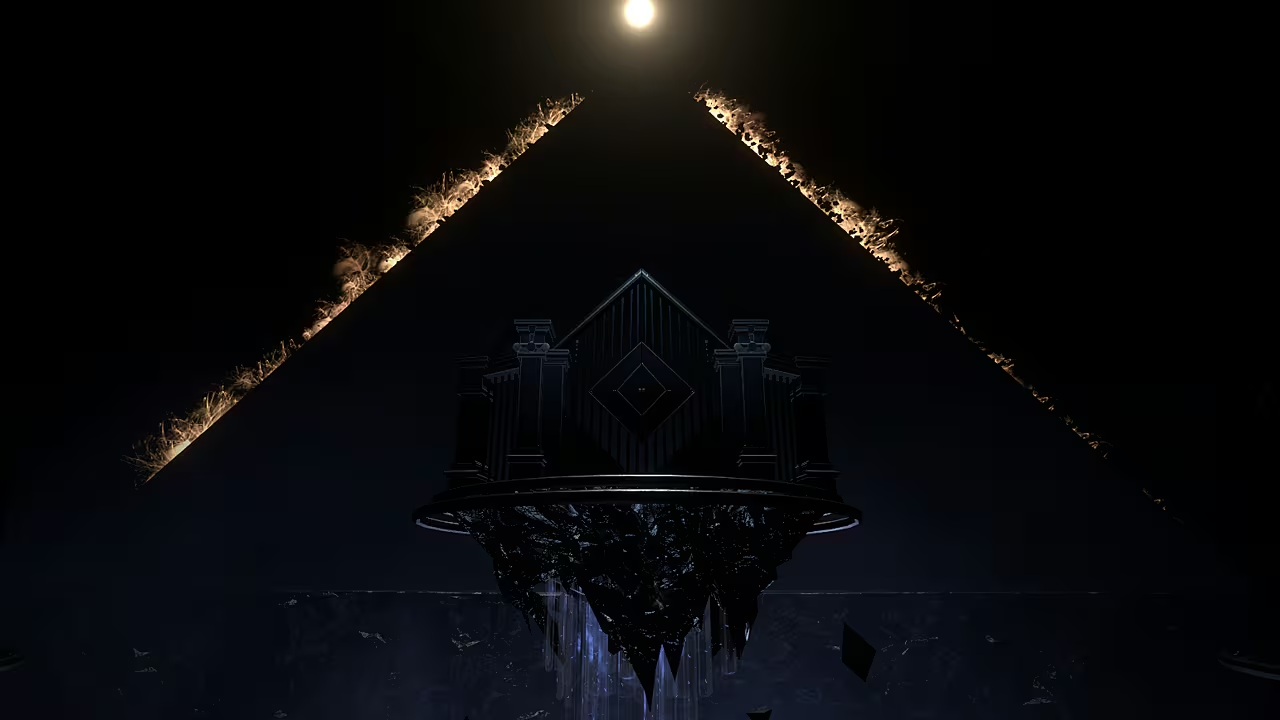
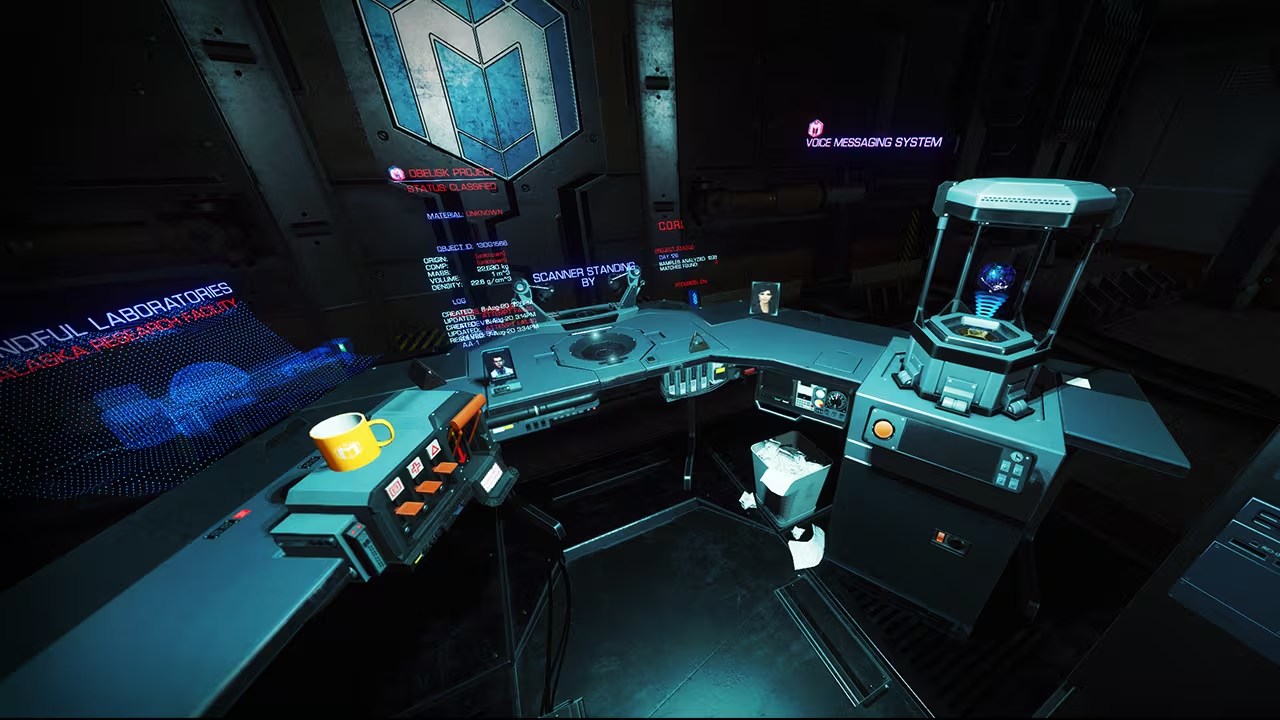
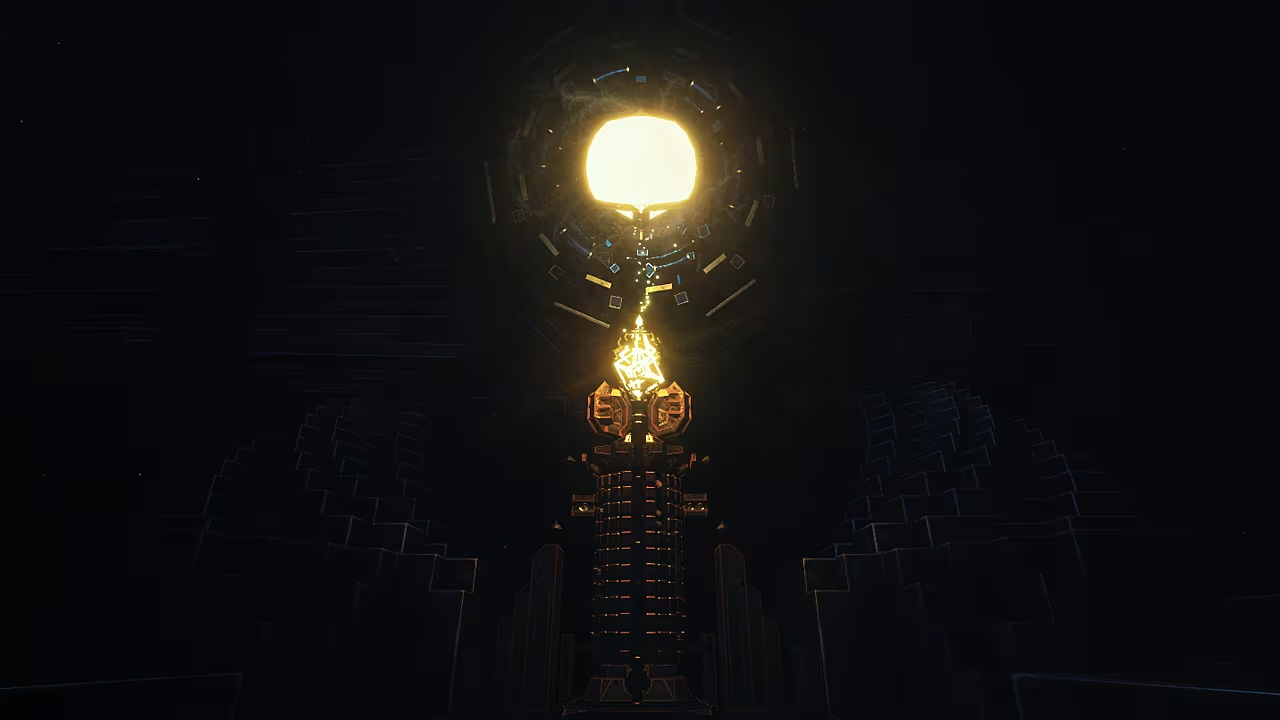
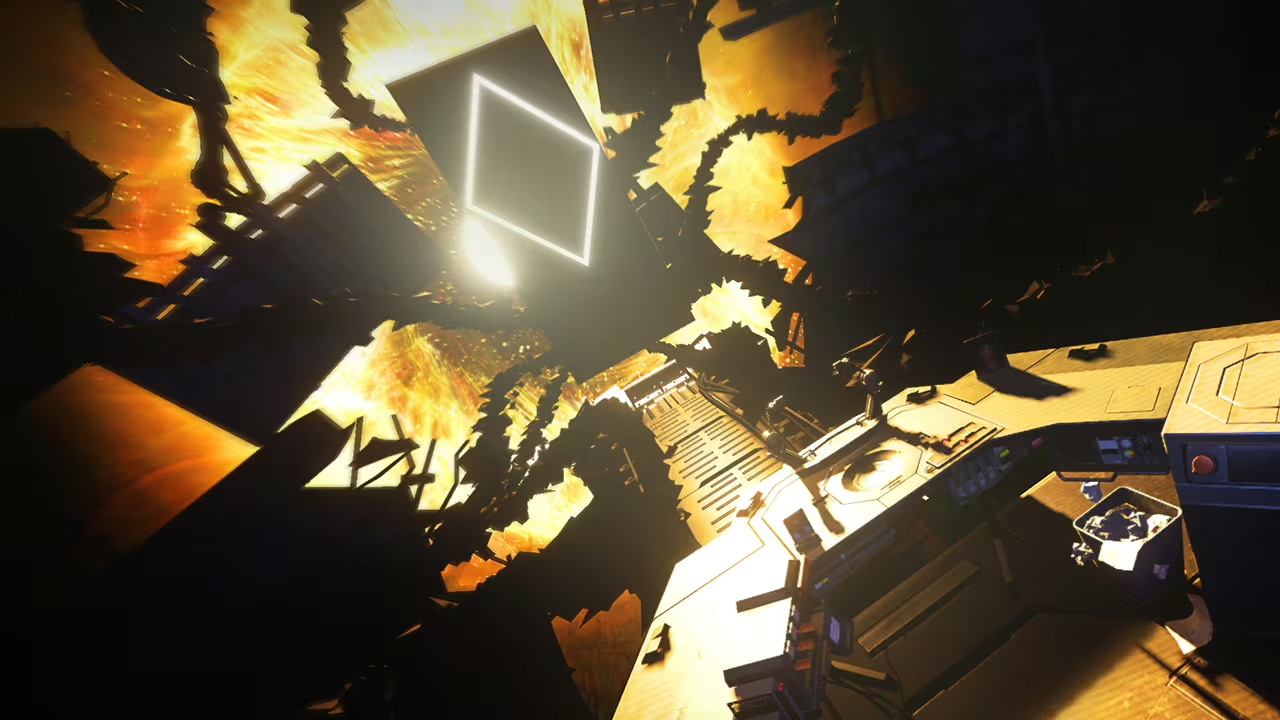
Enter a surreal adventure where puzzles are built from dreams and memories. Solve the mystery behind an ancient artifact. Advance through a world that transforms around you. Transcend this existence.

Global score

91/100

Genres

Adventure, Casual, Indie, Puzzle

Similar games

    Pros

    • Stunning visuals and immersive vr environment
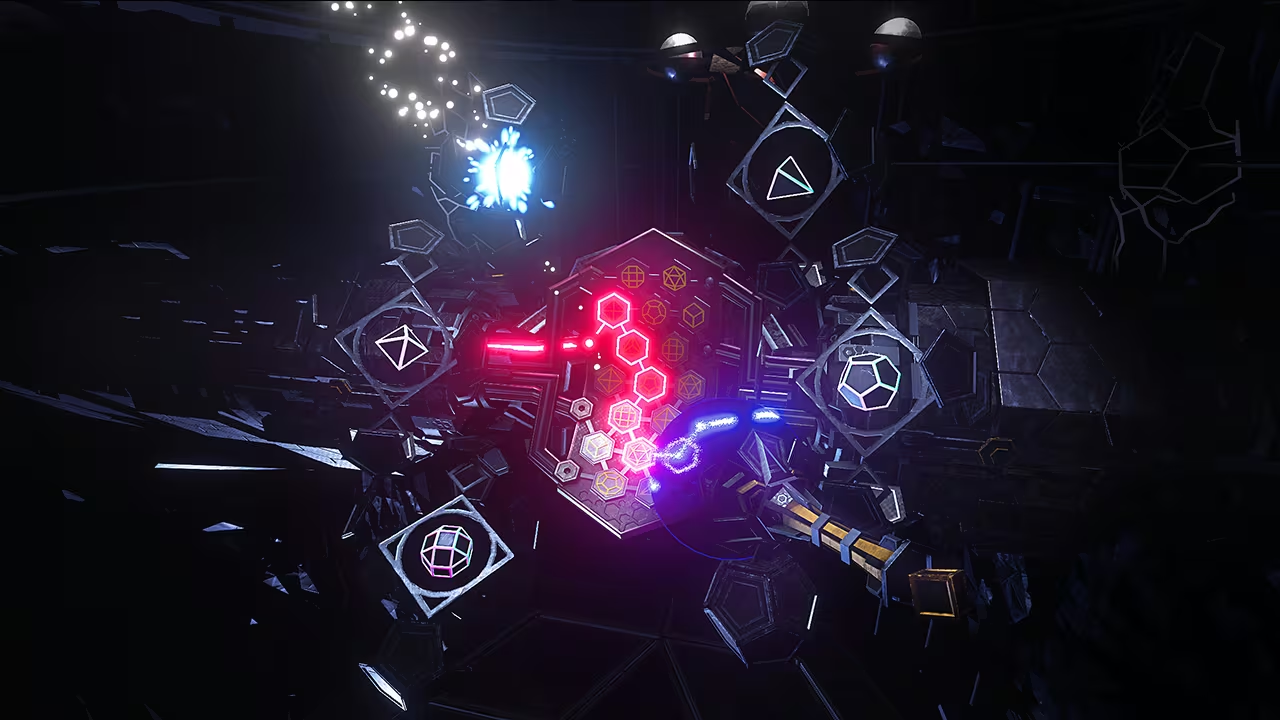
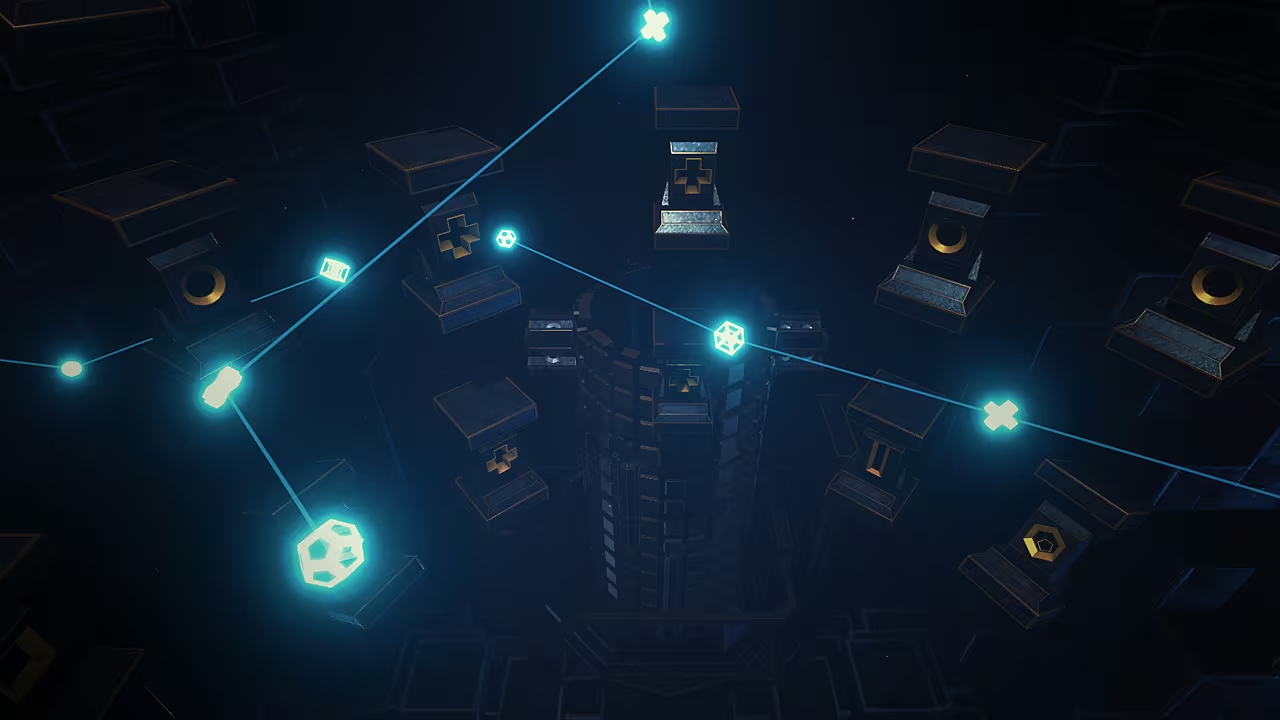
    • Intuitive and creative puzzle design
    • Excellent sound design and atmosphere
    • Unique surreal sci-fi fantasy experience
    • Well polished and smooth gameplay

    Cons

    • Very short playtime (~1 hour)
    • Puzzles are generally easy and not challenging
    • Low replayability
    • Minimal narrative depth
    • No multiplayer or social features

    Analysis

    Less representative of its motivational profile, with noticeable differences. Motivations that often define this kind of title include Survival, Violence, Fellowship, Expression. It leans lower than usual among comparable games on Continuation, Value, Thrill.

    How to use the graph
    Similar games map

    Each dot is a game. They are arranged from the same motivation profile as in the “Motivations” section below. Closer dots usually mean more similar reasons to play (exploration, competition, relaxation, etc.)—not that one game is “better” than another.

    • Larger dot with a light outline: the game you are viewing.
    • Colour: groups of games with comparable motivation patterns (statistical clusters).
    • Hover a dot to see the game name; click to open its page.
    • Scroll or double-click the chart to zoom out and see more games.

    Why don’t the axes read like a score? This view uses t-SNE: it only keeps who is close to whom. The scales are not “good to bad” or hours played—they separate groups on the map. Read distance between dots, not the axis numbers.

    Motivations

    • Autonomy
      3

      "Players freely manipulate puzzle elements and explore the environment intuitively with VR controls, indicating a good degree of control over actions."

    • Competence
      1

      "Puzzles are generally easy and intuitive, providing some skill engagement but not challenging enough to strongly emphasize competence."

    • Competition
      -5

      "No evidence of competitive elements; focus is on personal puzzle solving and immersive experience."

    • Continuation
      -3

      "Short playtime (~1 hour) and low replayability lead to limited habitual play or long sessions."

    • Cooperation
      -5

      "Single-player experience with no cooperative or multiplayer elements."

    • Creativity
      4

      "Unique puzzle designs and surreal environments encourage creative problem solving and exploration."

    • Domination
      -5

      "No social dominance or power dynamics present; experience is solitary and equal."

    • Escapism
      5

      "Strong immersive VR environment and surreal narrative provide a powerful escape from reality."

    • Expectation
      -4

      "Players engage voluntarily for intrinsic interest and enjoyment rather than obligation."

    • Experimenting
      3

      "Players try various puzzle mechanics and interact with novel VR elements, encouraging experimentation."

    • Exploration
      3

      "Players explore surreal, alien environments and discover puzzle elements, though movement is limited."

    • Expression
      -4

      "No customization or avatar personalization; presentation is fixed and standardized."

    • Fantasy
      5

      "Strong sci-fi and surreal fantasy themes with imaginative alien worlds and abstract puzzles."

    • Fellowship
      -5

      "No social or community features; purely individual experience."

    • Growth
      1

      "Some learning occurs through puzzle solving, but puzzles are mostly simple and do not strongly emphasize skill growth."

    • Health
      -3

      "Primarily seated or standing VR play with minimal physical activity; no exercise or rehab focus."

    • Idle
      -4

      "Requires focused attention during play; not designed for background or casual idle gaming."

    • Intimacy
      -5

      "No social interactions or relationship building; experience is solitary."

    • Leadership
      -5

      "No leadership or group management elements present."

    • Progression
      2

      "Progression through puzzles and unlocking new areas, but no item collection or upgrades."

    • Relaxation
      4

      "Calm, immersive atmosphere with balanced challenge provides a relaxing flow state."

    • Sensation
      4

      "Strong sensory stimulation through visuals, sound design, and immersive VR environment."

    • Status
      -5

      "No social recognition or status systems involved."

    • Story
      2

      "Light narrative present but story is vague and secondary to puzzle experience."

    • Strategy
      1

      "Puzzles require some problem solving but are mostly straightforward and not deeply strategic."

    • Thrill
      -3

      "Experience is more contemplative and calm than suspenseful or thrilling."

    • Value
      0

      "Mixed user sentiment on value; high polish and experience quality but short length leads to divided opinions."

    • Violence
      -5

      "No violence or destructive gameplay; focus on constructive puzzle solving."

    • Survival
      -5

      "No survival or threat avoidance mechanics; stable and safe environment."

    Last update: 29/04/2026