Introvert: A Teenager Simulator Thumbnail

Introvert: A Teenager Simulator similar games & best alternatives
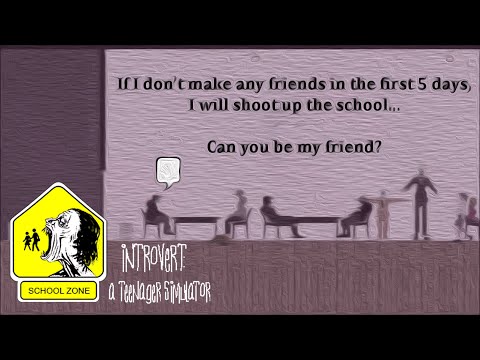
Introvert: A Teenager Simulator

PC (Microsoft Windows) • 2021

Related articles

Quick resume

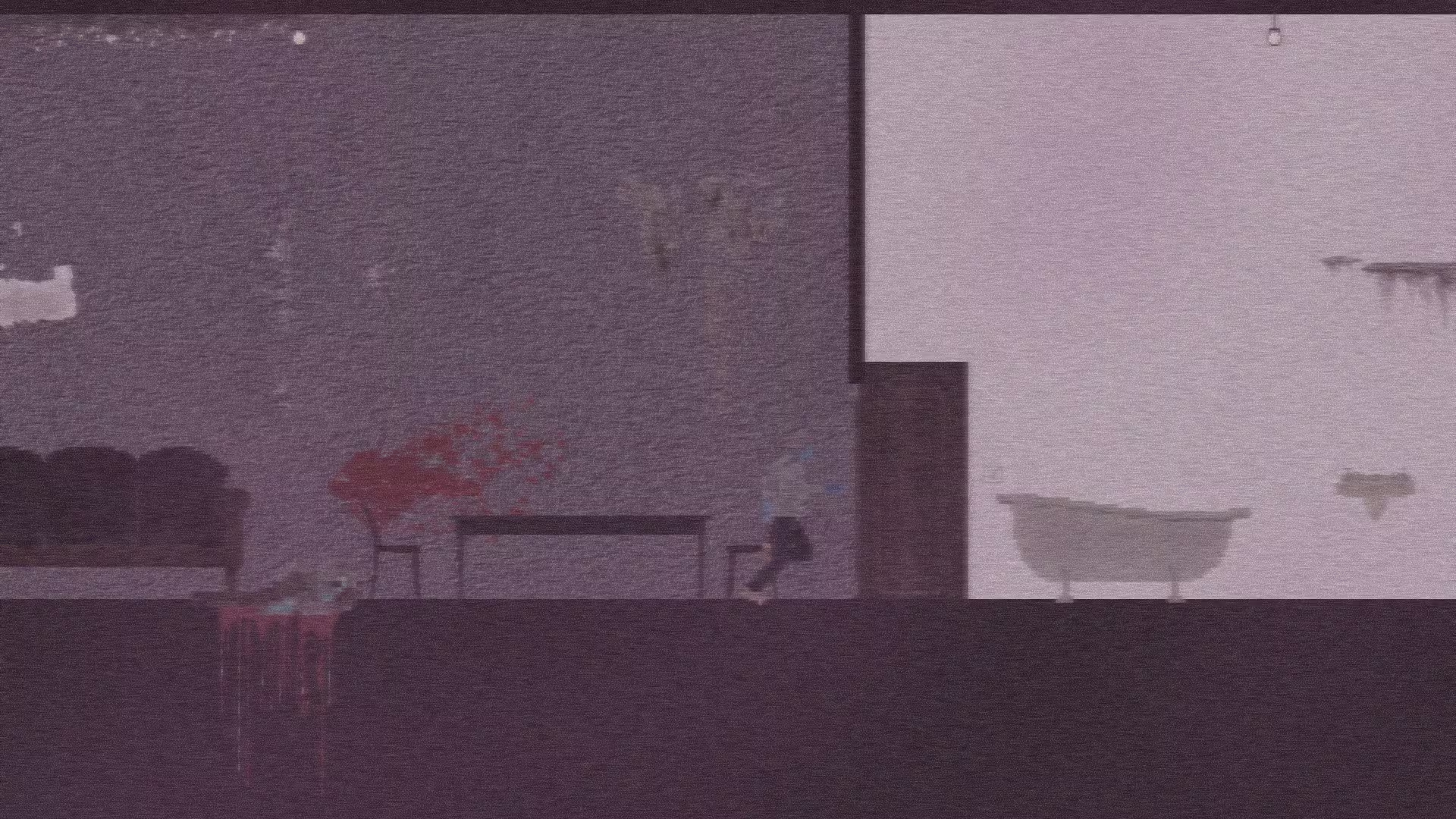
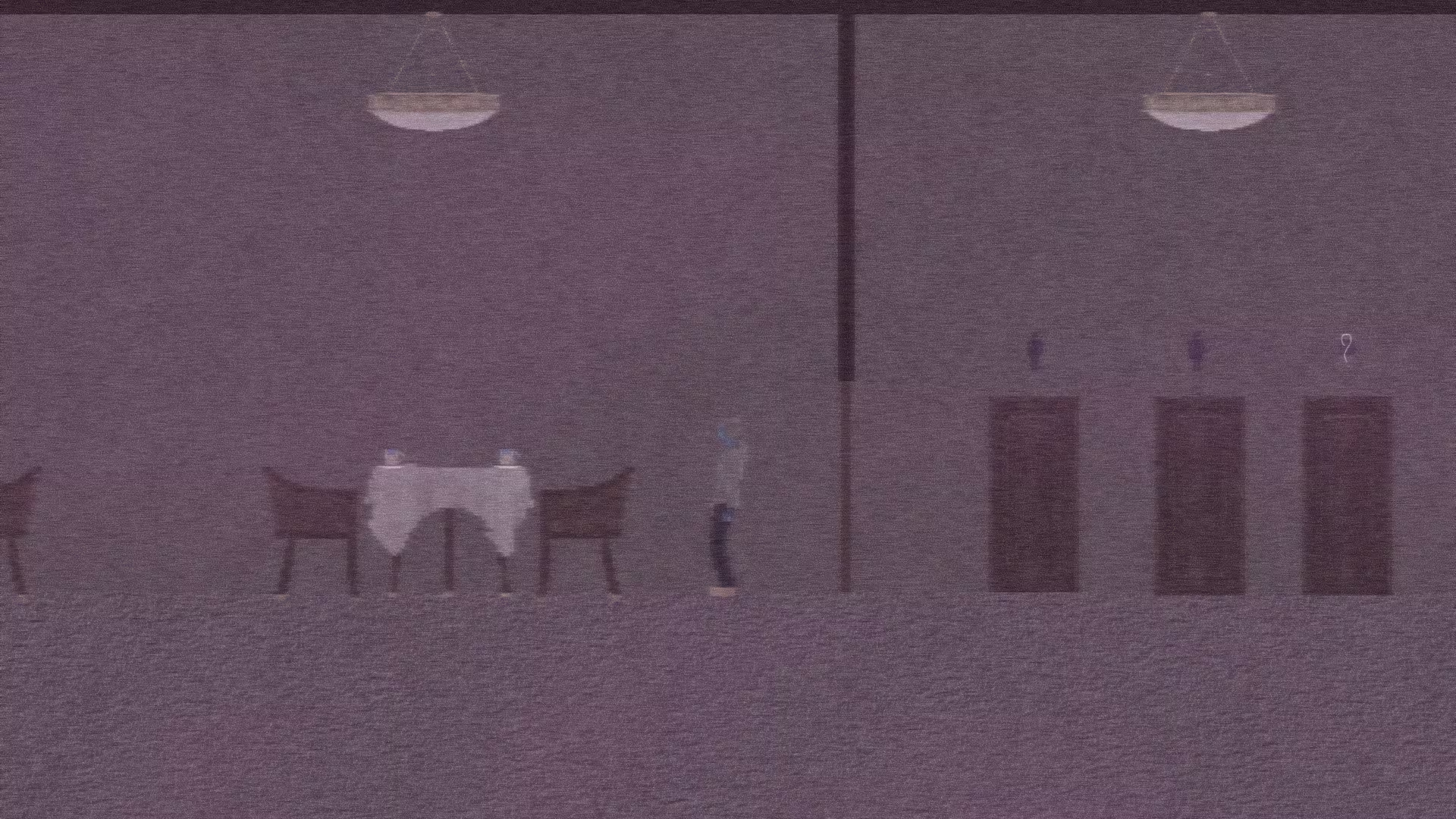
One of the new guys in school tells you he’s going to shoot up the school if he doesn’t make friends in 5 days. Discover the decisions, people, situations you will encounter while playing and trying to make friends of your own and living your own life.

Global score

72/100

Genres

Action, Adventure, Casual, Indie, Role-playing (RPG), Simulator, Free To Play, Fighting

Similar games

    Pros

    • Unique and emotional narrative
    • Free to play
    • Atmospheric music and art style
    • Multiple endings
    • Thought-provoking themes

    Cons

    • Short gameplay length
    • Some bugs and glitches
    • Limited player agency
    • Inconsistent tone with humor and serious themes
    • Minimal gameplay depth

    Analysis

    Broadly representative of its motivational profile, with a few distinct shifts. Motivations that often define this kind of title include Strategy, Survival, Competence, Violence. Here, the score leans higher than usual among comparable games on Violence, Survival, Thrill.

    How to use the graph
    Similar games map

    Each dot is a game. They are arranged from the same motivation profile as in the “Motivations” section below. Closer dots usually mean more similar reasons to play (exploration, competition, relaxation, etc.)—not that one game is “better” than another.

    • Larger dot with a light outline: the game you are viewing.
    • Colour: groups of games with comparable motivation patterns (statistical clusters).
    • Hover a dot to see the game name; click to open its page.
    • Scroll or double-click the chart to zoom out and see more games.

    Why don’t the axes read like a score? This view uses t-SNE: it only keeps who is close to whom. The scales are not “good to bad” or hours played—they separate groups on the map. Read distance between dots, not the axis numbers.

    Motivations

    • Autonomy
      2

      "Players have some choices affecting minor story elements but overall the narrative is linear and outcomes are mostly fixed, indicating limited personal control."

    • Competence
      -2

      "Gameplay is simple and involves basic walking and dialogue choices with minimal skill or challenge."

    • Competition
      -5

      "No competitive elements or player comparison; focus is on individual experience and story."

    • Continuation
      1

      "Short playtime (~30-45 minutes) with some replay value due to multiple endings, but limited long-term engagement."

    • Cooperation
      -4

      "Single player experience focused on individual narrative; no multiplayer or teamwork."

    • Creativity
      1

      "Some exploration and minor customization (e.g., collecting hats), but mostly predefined story and environments."

    • Domination
      -5

      "No elements of exerting control or superiority over others; interactions are narrative-driven."

    • Escapism
      4

      "Players use the game to explore heavy emotional themes and personal reflection, providing a form of emotional escape."

    • Expectation
      -4

      "Players engage voluntarily out of personal interest in story and themes, not due to obligation or pressure."

    • Experimenting
      1

      "Some minor experimentation with choices and exploration, but limited impact on overall story."

    • Exploration
      2

      "Players can explore the town and discover secrets, though the map is small and exploration is limited."

    • Expression
      1

      "Minor character customization (e.g., hats) allows some self-expression, but mostly standardized presentation."

    • Fantasy
      3

      "Includes surreal and imaginative elements (e.g., werewolves, monsters) mixed with realistic themes."

    • Fellowship
      -3

      "Focus on solitary experience with limited social connection; no multiplayer or community features."

    • Growth
      2

      "Players learn about characters and story through multiple playthroughs, gaining insight and reflection."

    • Health
      -5

      "Sedentary gameplay with no physical activity or health-related features."

    • Idle
      -3

      "Requires active attention to progress; no background or idle gameplay elements."

    • Intimacy
      1

      "Some emotional connection to characters and story, but limited deep relationship building."

    • Leadership
      -5

      "No leadership or management roles; player follows a set narrative."

    • Progression
      -2

      "Minimal progression mechanics; story advances linearly with few collectables."

    • Relaxation
      3

      "Chill music and atmosphere provide a relaxing experience despite heavy themes."

    • Sensation
      1

      "Some sensory stimulation from music and visuals, but overall subdued and calm presentation."

    • Status
      -5

      "No social recognition or status systems present."

    • Story
      5

      "Strong narrative focus with emotional and thematic depth driving player engagement."

    • Strategy
      -3

      "Limited strategic or problem-solving elements; gameplay is straightforward and choice-driven."

    • Thrill
      2

      "Some suspense and emotional tension from story events, but no high-risk gameplay."

    • Value
      5

      "Free game with meaningful content and emotional impact, providing high value for time invested."

    • Violence
      3

      "Game includes themes of school shooting and violence as narrative elements, though not player-driven combat."

    • Survival
      1

      "Some elements of avoiding negative outcomes in story, but no traditional survival mechanics."

    Last update: 29/04/2026