Mahjong Soul similar games & best alternatives

Mahjong Soul
2024
Related articles
Quick resume
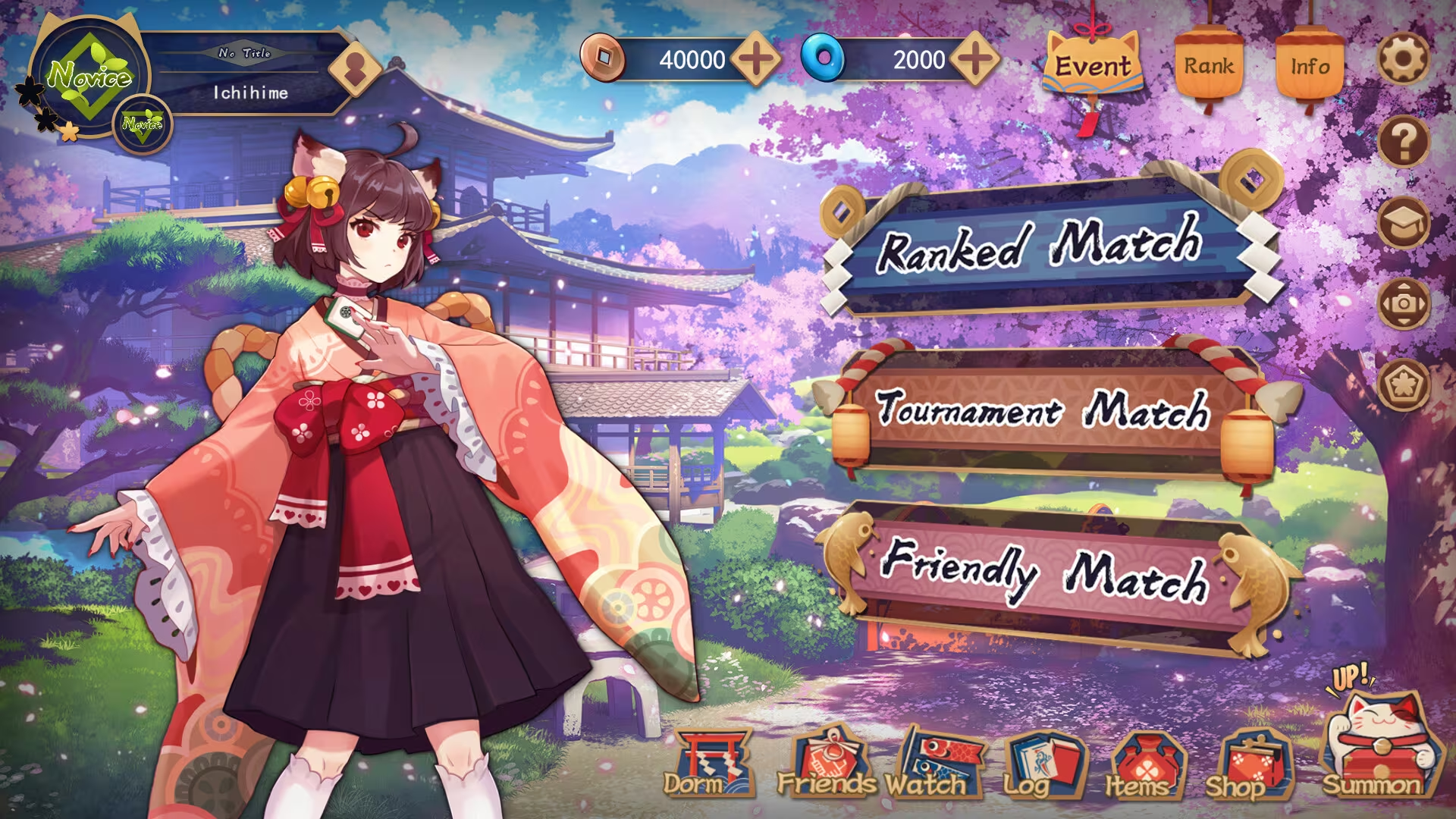
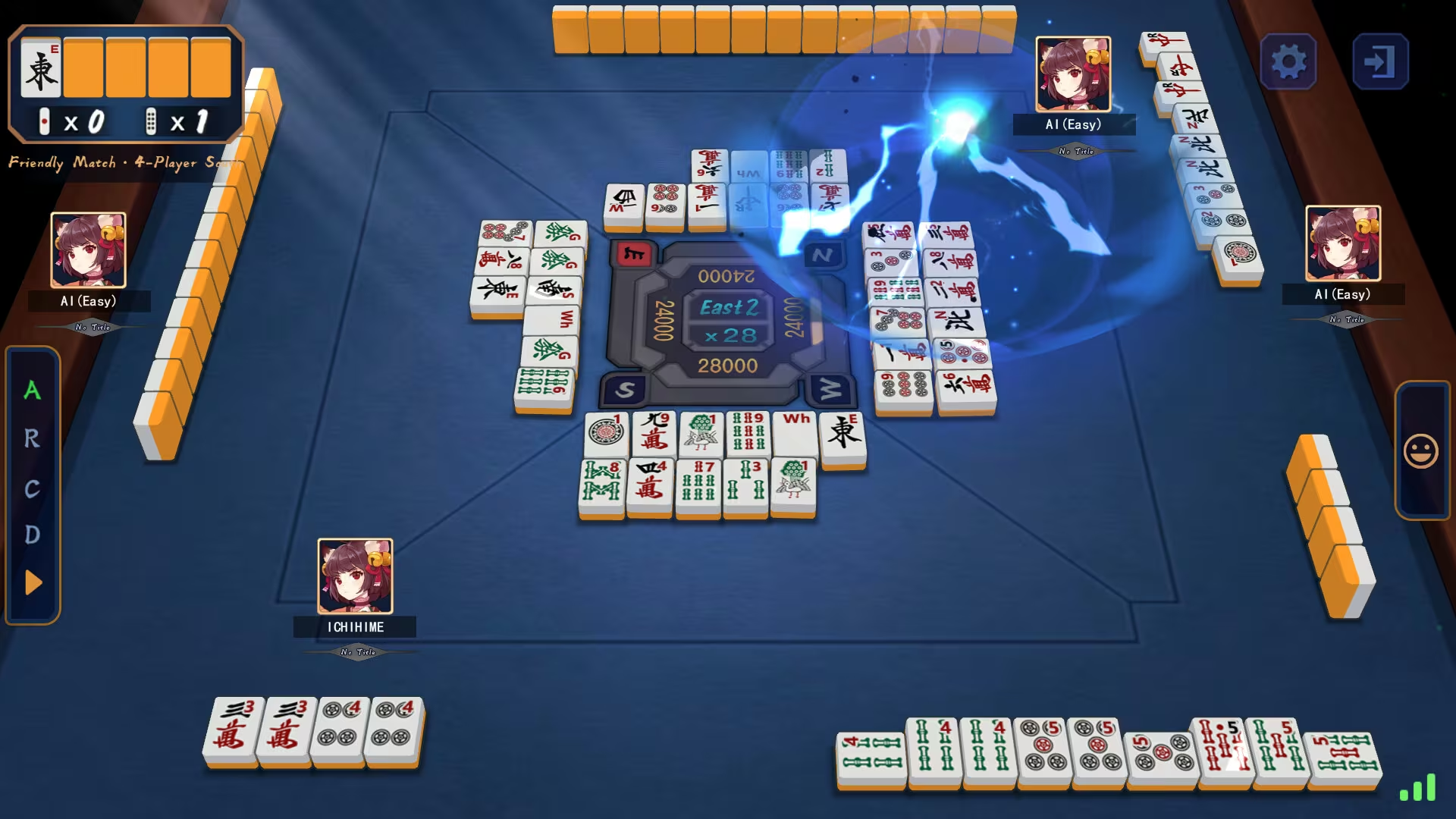
Mahjong Soul is an online game that adopted the classic Japanese Mahjong gameplay. Here, you can hone your mahjong skills with players from worldwide or spend leisure time with friends, bond with various charismatic characters, and experience an abundance of unique stories.
Global score
85/100
Genres
Casual, Strategy, Card & Board Game
Similar games
Pros
- Free to play
- Excellent tutorial for beginners
- Fast matchmaking with global playerbase
- Cosmetic gacha does not affect gameplay
- Frequent events and game modes
Cons
- Stingy and expensive gacha system
- Steep learning curve can frustrate new players
- Matchmaking can be harsh for beginners
- Some players report psychological stress
- Limited social and cooperative features
Analysis
A very typical example of its motivational profile. Motivations that often define this kind of title include Competition, Status, Story, Expression. Here, the score leans higher than usual among comparable games on Fellowship. It leans lower than usual among comparable games on Violence, Exploration.
How to use the graph
Similar games map
Each dot is a game. They are arranged from the same motivation profile as in the “Motivations” section below. Closer dots usually mean more similar reasons to play (exploration, competition, relaxation, etc.)—not that one game is “better” than another.
- Larger dot with a light outline: the game you are viewing.
- Colour: groups of games with comparable motivation patterns (statistical clusters).
- Hover a dot to see the game name; click to open its page.
- Scroll or double-click the chart to zoom out and see more games.
Why don’t the axes read like a score? This view uses t-SNE: it only keeps who is close to whom. The scales are not “good to bad” or hours played—they separate groups on the map. Read distance between dots, not the axis numbers.
Motivations
-
Autonomy4
"Players have control over their tile discards, calls, and strategies with freedom to choose characters and cosmetic customizations."
-
Competence4
"The game offers a steep learning curve with tutorials and ranked play that challenge players to improve skill and strategy."
-
Competition4
"Strong emphasis on ranked matches, leaderboards, and competitive matchmaking against other players worldwide."
-
Continuation3
"Players report habitual play, long sessions, and repeated attempts to improve rank despite frustration."
-
Cooperation-4
"Gameplay is primarily individual and competitive with limited cooperative or team-based elements."
-
Creativity1
"Customization of characters and cosmetics is available, but gameplay follows established mahjong rules without creative modification."
-
Domination-3
"Interactions are balanced and respectful; no evidence of trash talk or exerting superiority beyond competition."
-
Escapism4
"Players use the game as a stress relief and distraction, often describing psychological impact and immersion."
-
Expectation-4
"Engagement is voluntary and driven by personal interest and enjoyment rather than obligation or pressure."
-
Experimenting2
"Players explore different strategies, game modes, and character emotes, though core gameplay is consistent."
-
Exploration-2
"Mahjong is played on known tile sets and boards; limited discovery but some event modes add variety."
-
Expression3
"Extensive character customization, emotes, and cosmetic options allow for personal expression."
-
Fantasy2
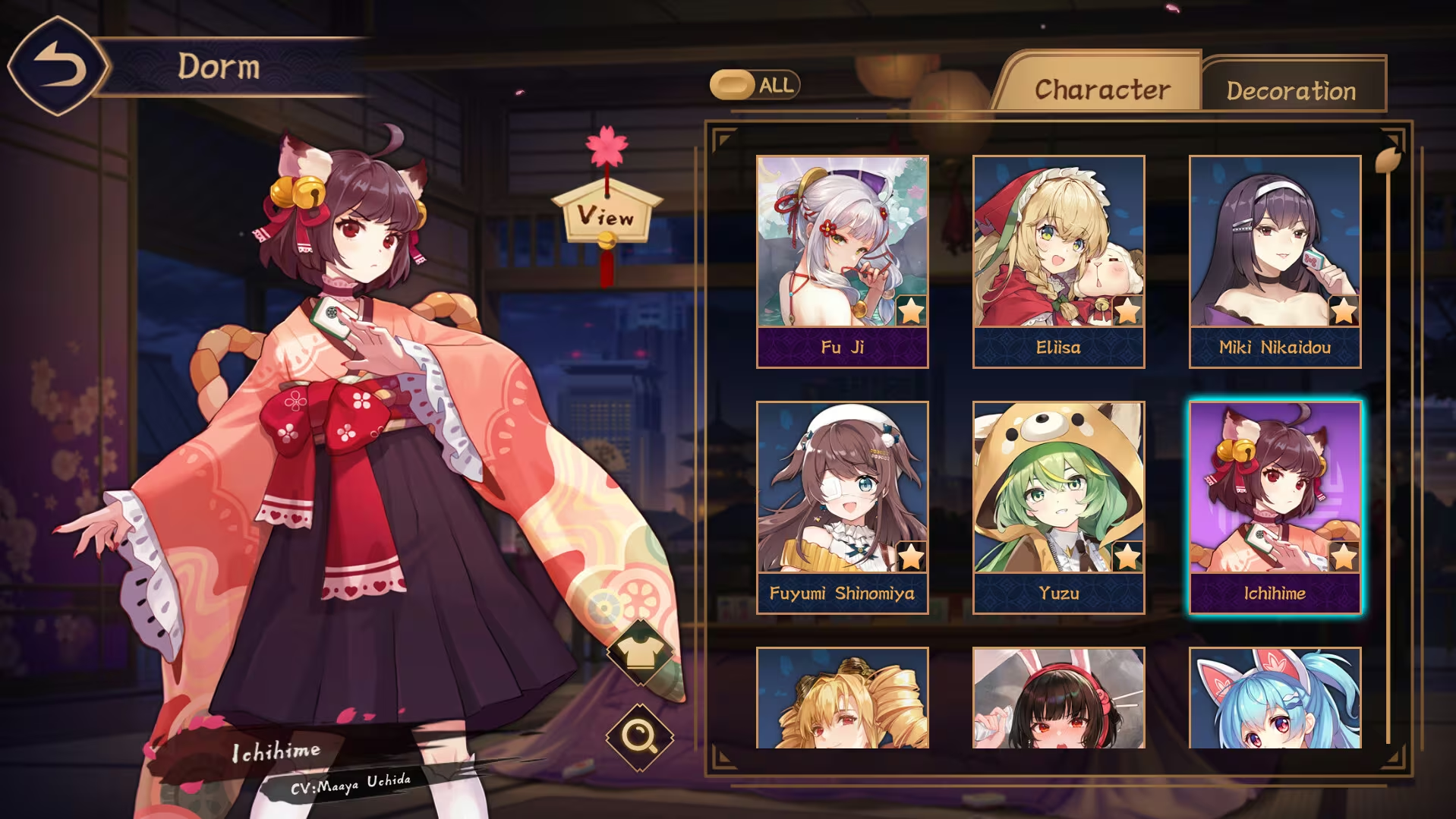
"Anime-style characters and voice acting add a fantasy layer, though gameplay is based on realistic mahjong."
-
Fellowship2
"Community aspects exist through chat emotes and friend rooms, but social connection is moderate."
-
Growth4
"Strong focus on learning, skill improvement, and mastering complex mahjong rules and strategies."
-
Health-5
"Sedentary gameplay with no physical activity or health-related features."
-
Idle-3
"Requires focused attention during matches; not suited for background or idle play."
-
Intimacy-3
"Social interactions are surface-level via emotes; no evidence of deep emotional connections."
-
Leadership-4
"No leadership or management roles; players act independently or as equals in matches."
-
Progression3
"Players accumulate ranks, characters, cosmetics, and event rewards, showing clear progression."
-
Relaxation1
"Some players find relaxation and flow, but many describe tension and frustration from gameplay."
-
Sensation2
"Visual and auditory stimulation from anime art, voice acting, and animations enhance emotional engagement."
-
Status3
"Ranked play and cosmetic items provide social recognition and status within the community."
-
Story1
"Limited narrative elements through character stories and event lore, but core gameplay is context-free."
-
Strategy5
"Highly strategic gameplay requiring planning, probability assessment, and tactical decision-making."
-
Thrill4
"Players experience suspense, tension, and excitement from unpredictable outcomes and high-stakes plays."
-
Value3
"Free-to-play with optional cosmetic purchases; good value for gameplay but gacha is stingy."
-
Violence-5
"Non-violent gameplay focused on tile matching and strategy without combat or destruction."
-
Survival2
"Players manage risk and avoid losing points, but no direct survival or threat mechanics."
Last update: 29/04/2026