Race for the Galaxy Thumbnail

Race for the Galaxy similar games & best alternatives

Race for the Galaxy

PC (Microsoft Windows), iOS, Android • 2017

Related articles

Quick resume

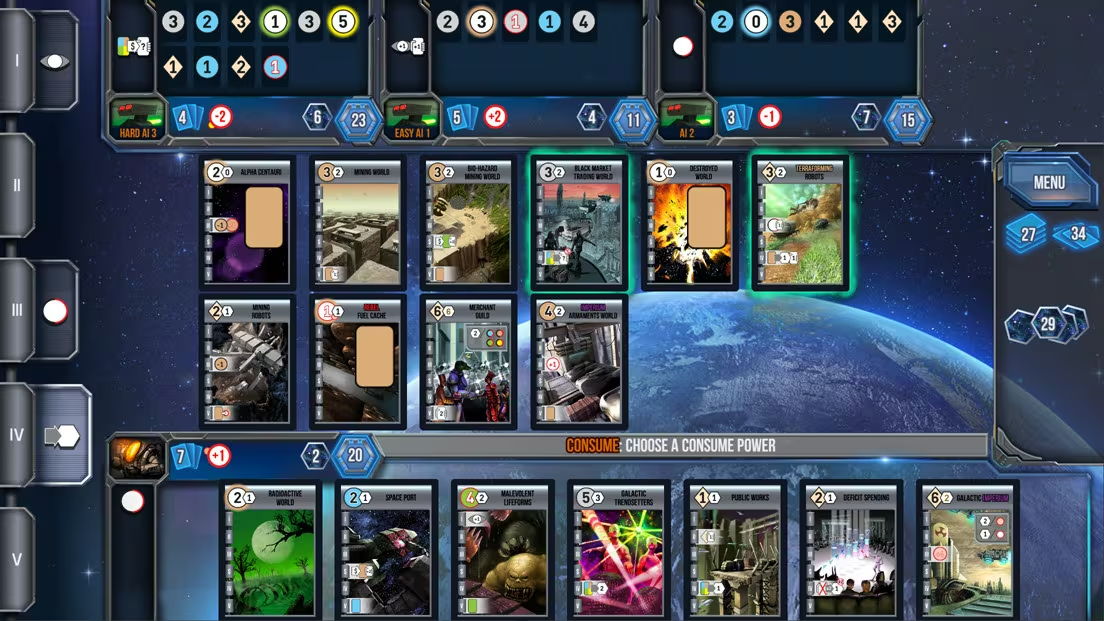
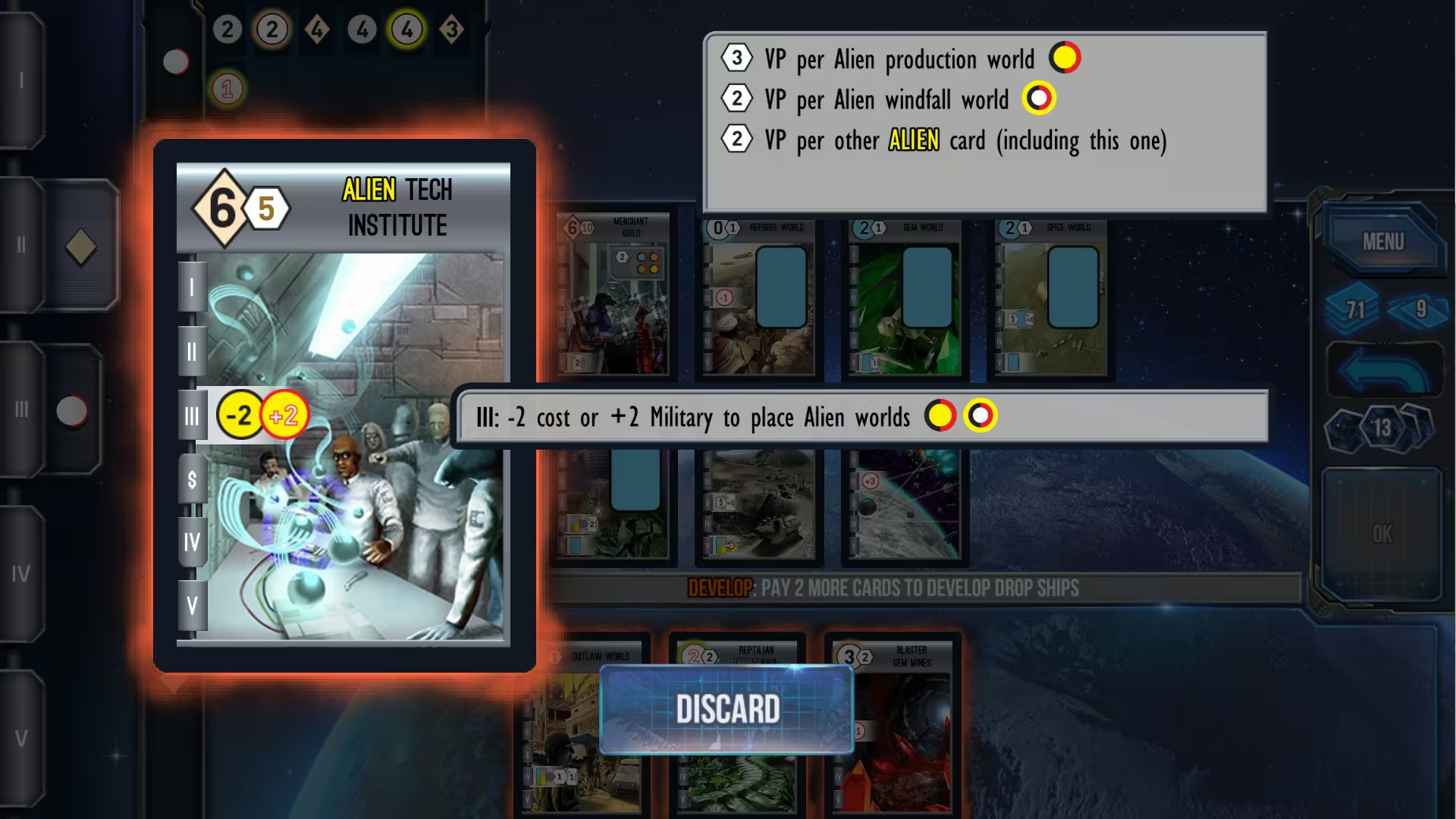
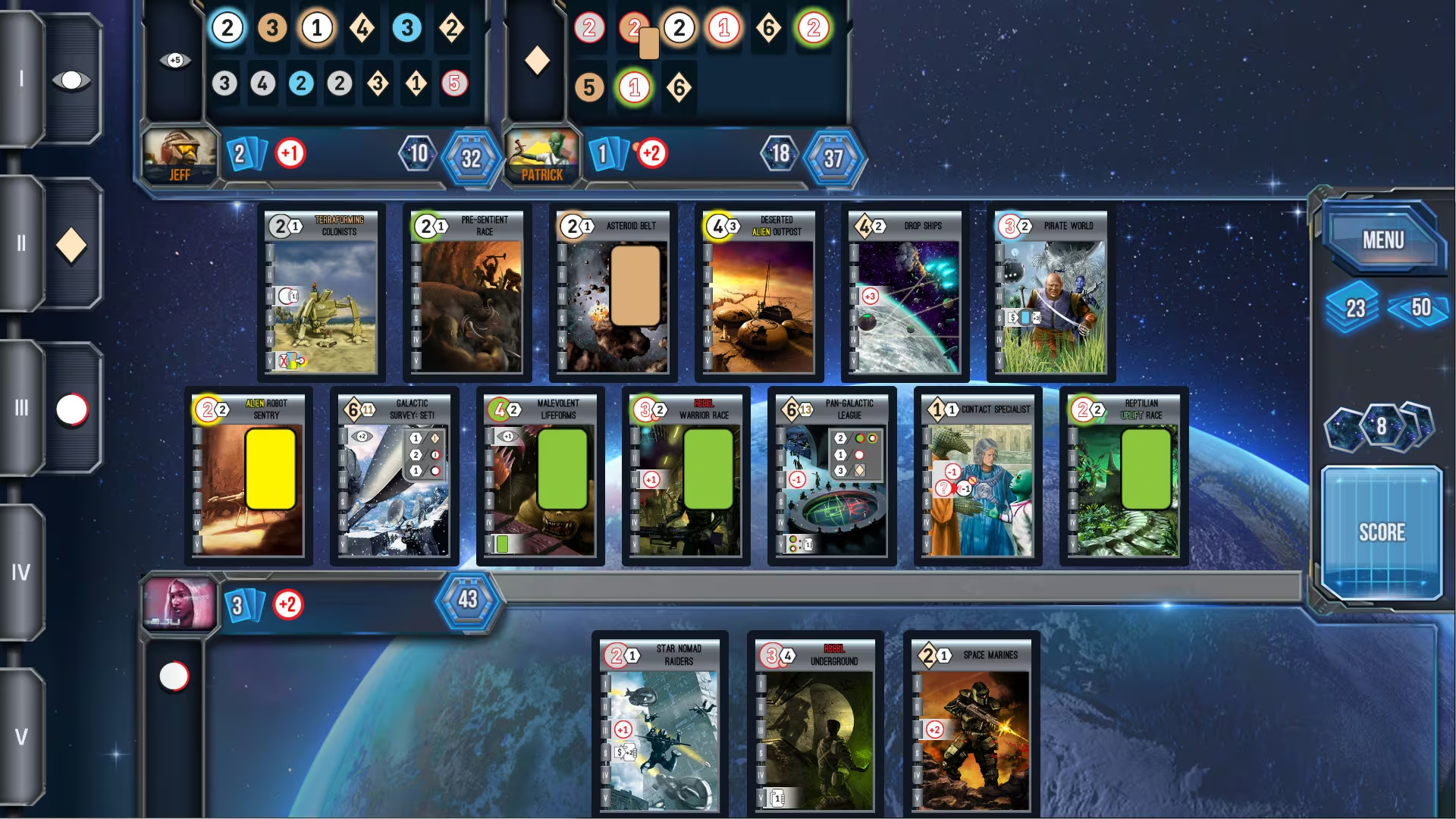
Explore, Settle, Develop, Trade, Consume, or Produce? Which do you need most? Which of Earth's former colonies will be most successful at settling the galaxy, now that JumpDrive exists? Who will discover the secrets of the mysteriously vanished Alien Overlords? Your goal: to build the most prosperous and powerful space empire!

Global score

93/100

Genres

Strategy, Card & Board Game

Similar games

    Pros

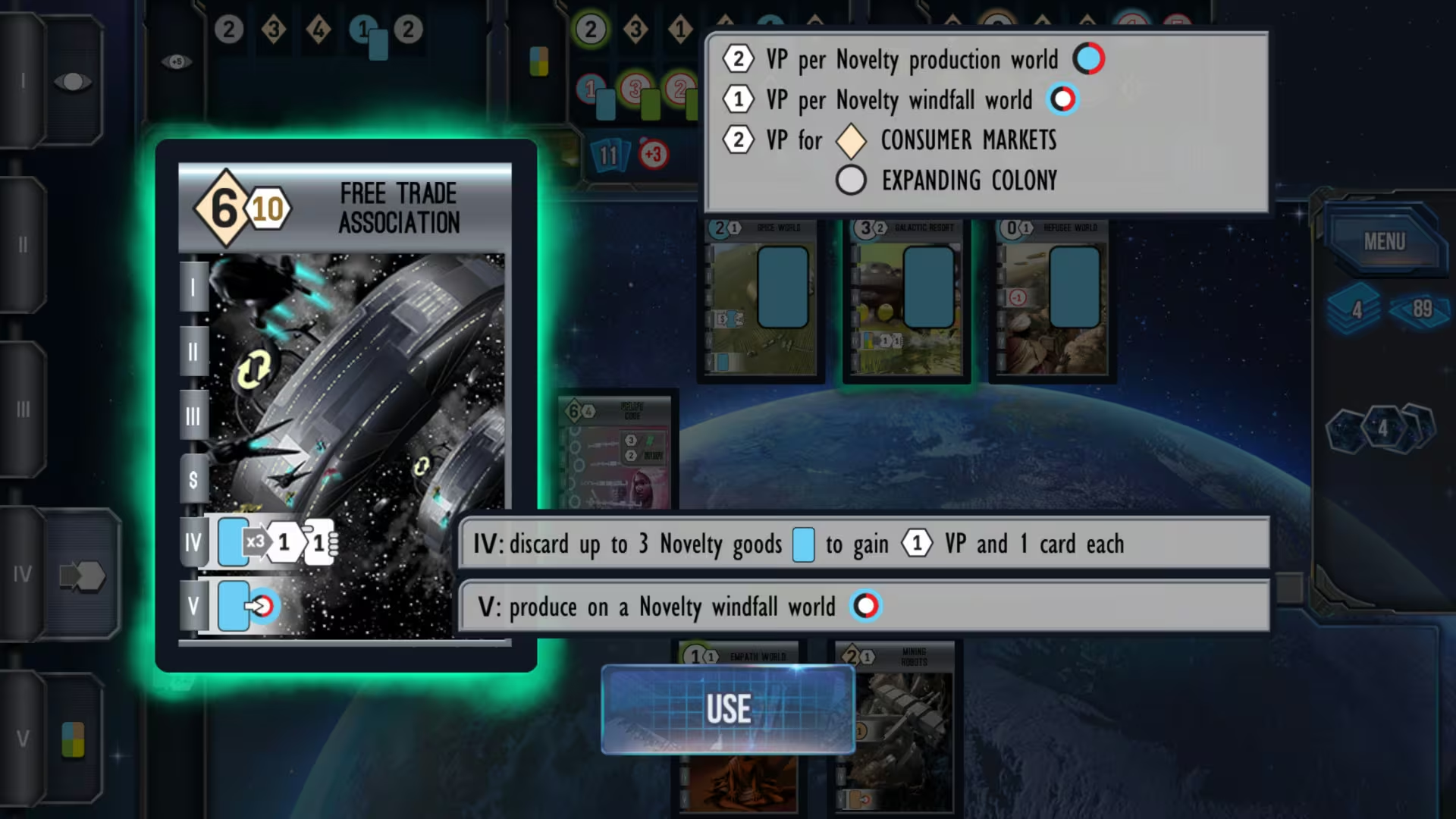
    • Faithful digital adaptation of a deep card game
    • Challenging ai with multiple difficulty levels
    • Quick game sessions with high replayability
    • Cross-platform multiplayer support
    • Clean ui with helpful tooltips

    Cons

    • Steep learning curve for new players
    • Small online player base and limited multiplayer features
    • Ui designed primarily for mobile can feel awkward on pc
    • Lack of extensive tutorials and narrative immersion
    • Some minor bugs and occasional crashes reported

    Analysis

    Broadly representative of its motivational profile, with a few distinct shifts. Motivations that often define this kind of title include Competition, Status, Story, Expression. It leans lower than usual among comparable games on Expression, Violence, Sensation.

    How to use the graph
    Similar games map

    Each dot is a game. They are arranged from the same motivation profile as in the “Motivations” section below. Closer dots usually mean more similar reasons to play (exploration, competition, relaxation, etc.)—not that one game is “better” than another.

    • Larger dot with a light outline: the game you are viewing.
    • Colour: groups of games with comparable motivation patterns (statistical clusters).
    • Hover a dot to see the game name; click to open its page.
    • Scroll or double-click the chart to zoom out and see more games.

    Why don’t the axes read like a score? This view uses t-SNE: it only keeps who is close to whom. The scales are not “good to bad” or hours played—they separate groups on the map. Read distance between dots, not the axis numbers.

    Motivations

    • Autonomy
      4

      "Players choose phases and cards freely each turn, requiring strategic decision-making and adaptation."

    • Competence
      5

      "High skill ceiling with complex strategies, tough AI opponents, and meaningful feedback on performance."

    • Competition
      3

      "Includes multiplayer with ranked matches and leaderboards, but also supports solo play against AI."

    • Continuation
      4

      "Highly replayable with short game sessions and expansions that keep players returning."

    • Cooperation
      -4

      "Focuses on individual play and competing against others or AI; minimal cooperative gameplay."

    • Creativity
      3

      "Players build unique card engine combinations and adapt strategies each game."

    • Domination
      -3

      "Competitive but respectful interactions; no evidence of trash talk or power imposition."

    • Escapism
      3

      "Players use the game as a strategic distraction and stress relief with immersive sci-fi theme."

    • Expectation
      -4

      "Players engage voluntarily out of intrinsic interest and enjoyment rather than obligation."

    • Experimenting
      4

      "Encourages trying new strategies and adapting to changing game states each play."

    • Exploration
      2

      "Some discovery in exploring card synergies and strategies, but no physical world exploration."

    • Expression
      -2

      "Limited customization; players express strategy through card choices rather than avatar or environment."

    • Fantasy
      3

      "Sci-fi theme with imaginative empire building and futuristic elements."

    • Fellowship
      1

      "Some community interaction via multiplayer lobbies but mostly individual play."

    • Growth
      4

      "Players improve skills over time learning complex mechanics and strategies."

    • Health
      -4

      "Sedentary gameplay with no physical activity involved."

    • Idle
      -3

      "Requires focused attention during short, fast-paced games."

    • Intimacy
      -3

      "Minimal social interaction; mostly surface-level multiplayer connections."

    • Leadership
      -4

      "No leadership roles; players act independently without managing others."

    • Progression
      4

      "Players accumulate cards and build engines to gain victory points and upgrades."

    • Relaxation
      2

      "Balanced challenge with moments of flow, but some tension from strategic decisions."

    • Sensation
      1

      "Moderate sensory stimulation with clean UI and sound effects but no intense sensory input."

    • Status
      2

      "Online multiplayer and leaderboards provide social recognition opportunities."

    • Story
      -3

      "Minimal narrative immersion; gameplay focuses on abstract mechanics rather than story."

    • Strategy
      5

      "Deep mental challenge requiring planning, logic, and adapting to opponents' moves."

    • Thrill
      3

      "Tense decision-making and risk of losing create suspense and excitement."

    • Value
      4

      "High replay value and challenging AI provide good return on time and money invested."

    • Violence
      -4

      "Focus on constructive engine building and resource management rather than combat."

    • Survival
      1

      "Some elements of avoiding failure and managing resources, but low-risk overall."

    Last update: 29/04/2026