Sense - 不祥的预感: A Cyberpunk Ghost Story Thumbnail

Sense - 不祥的预感: A Cyberpunk Ghost Story similar games & best alternatives

Sense - 不祥的预感: A Cyberpunk Ghost Story

PC (Microsoft Windows) • 2020

Related articles

Quick resume

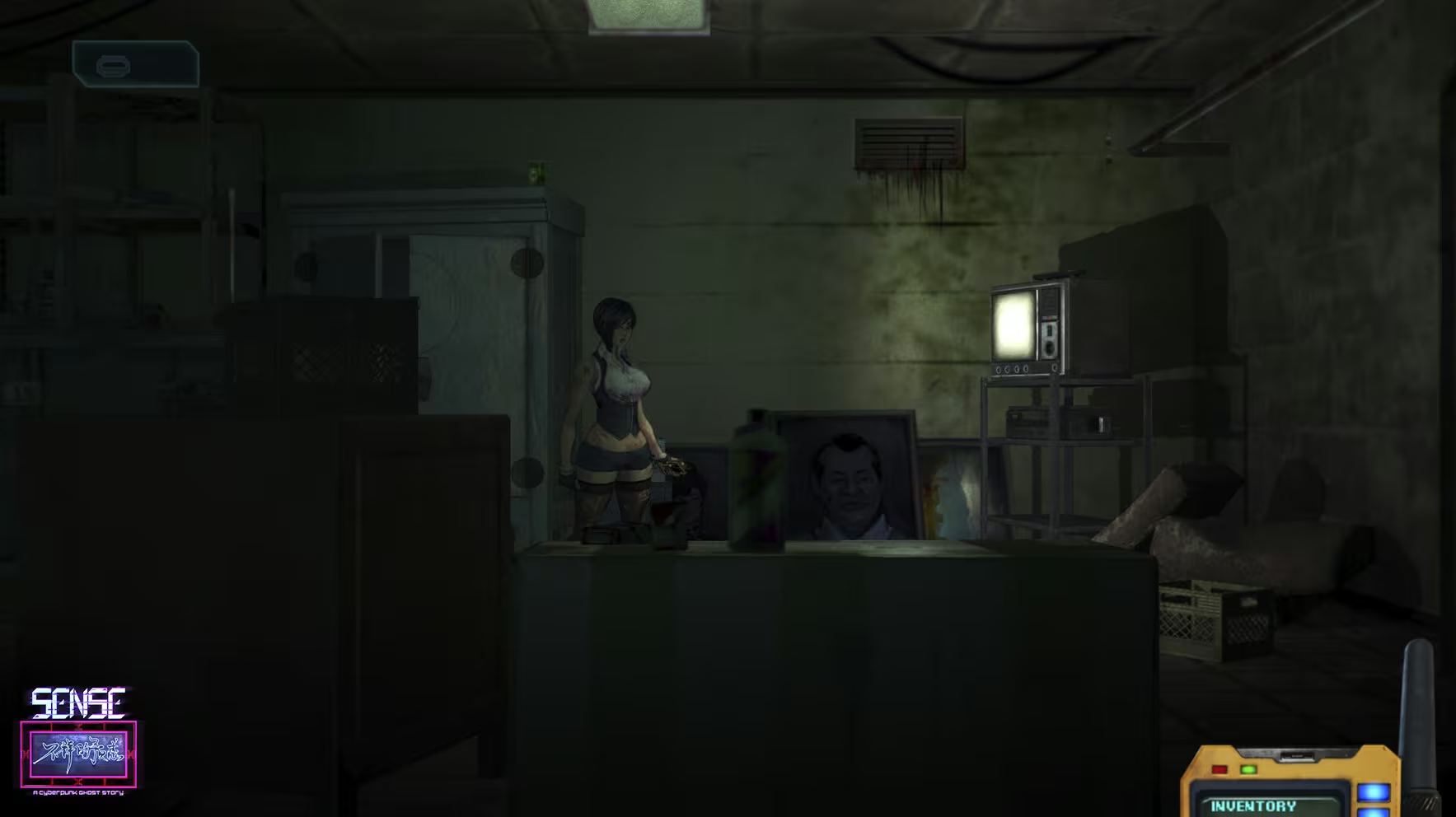
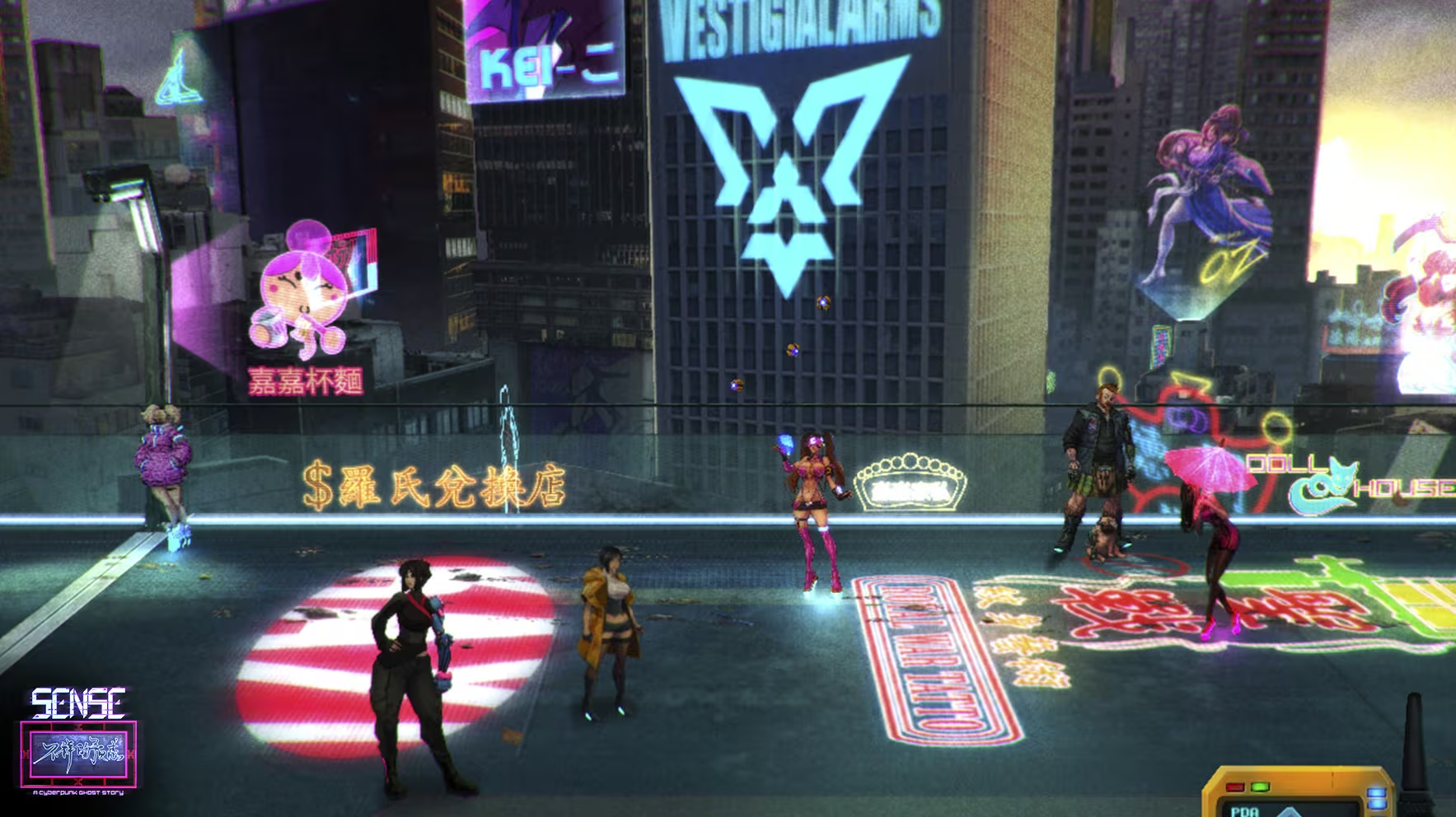
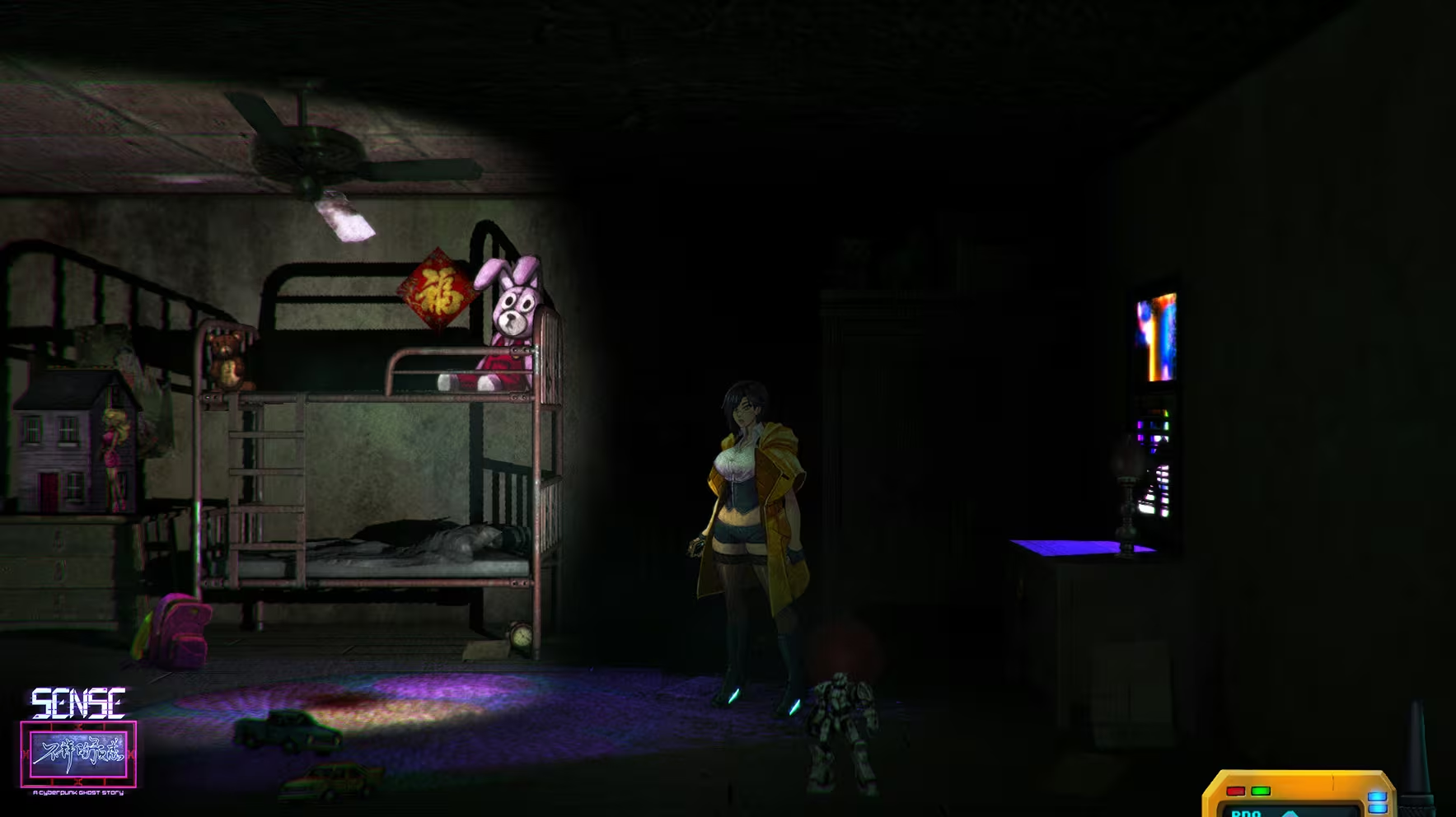
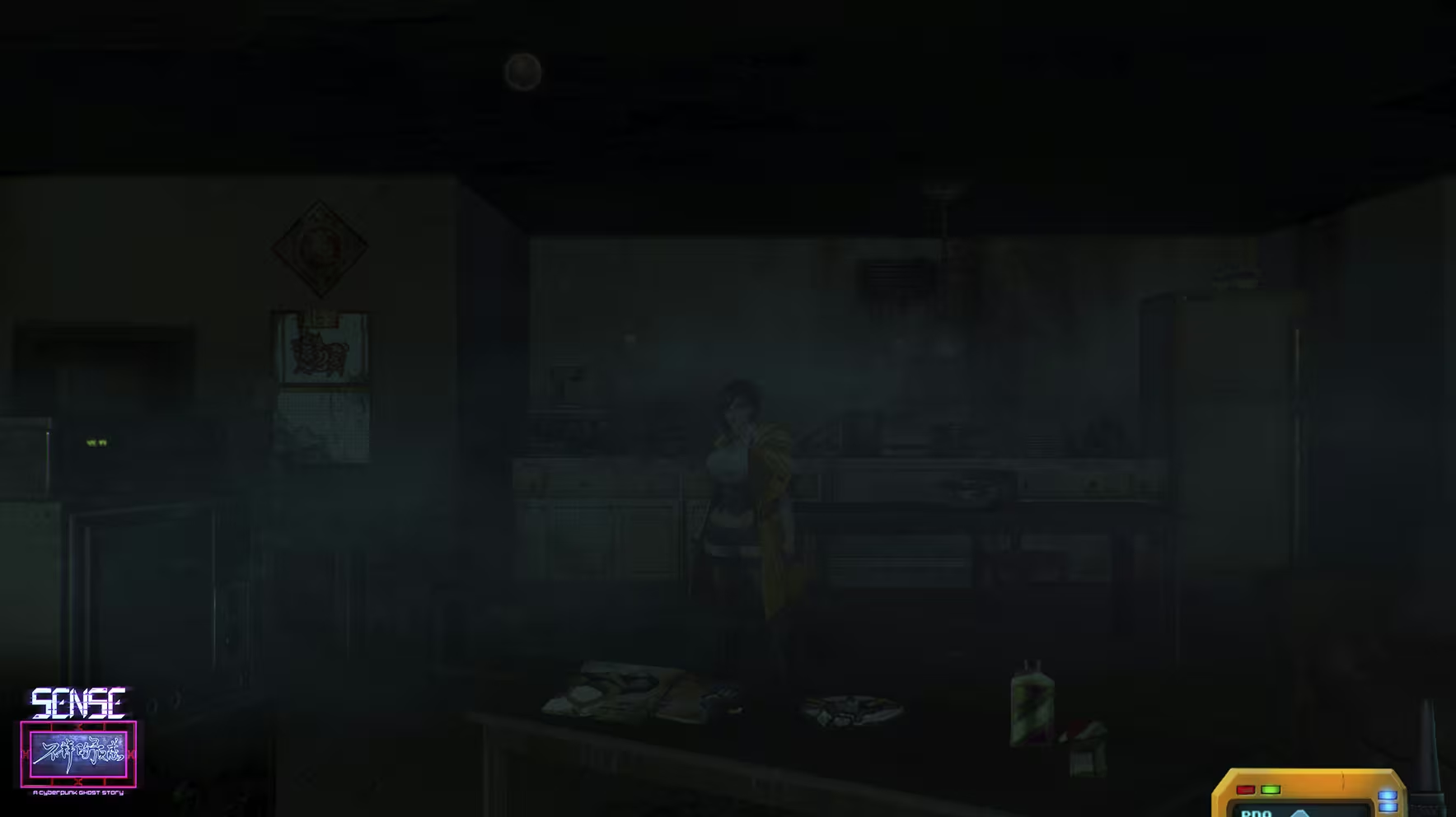
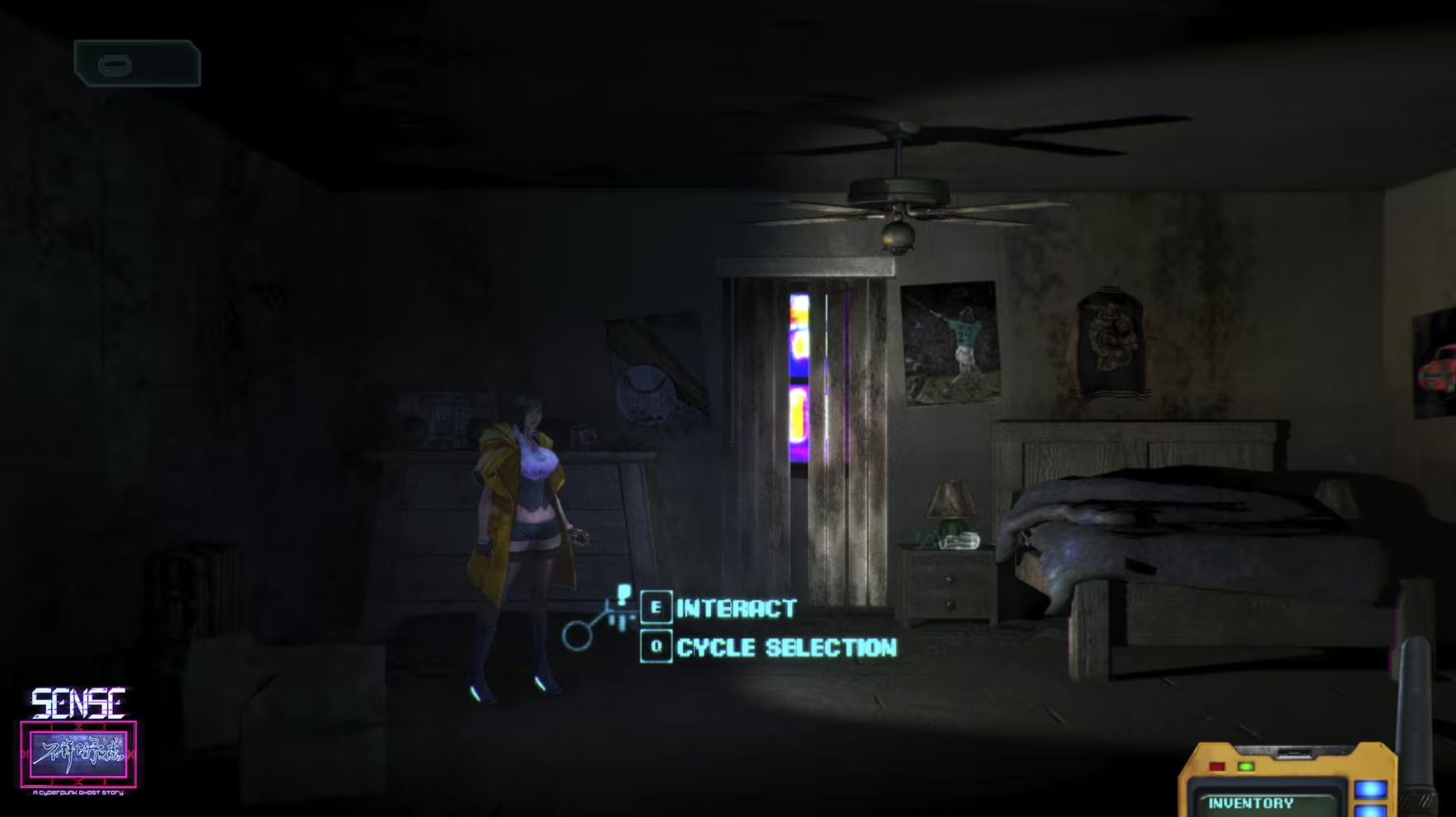
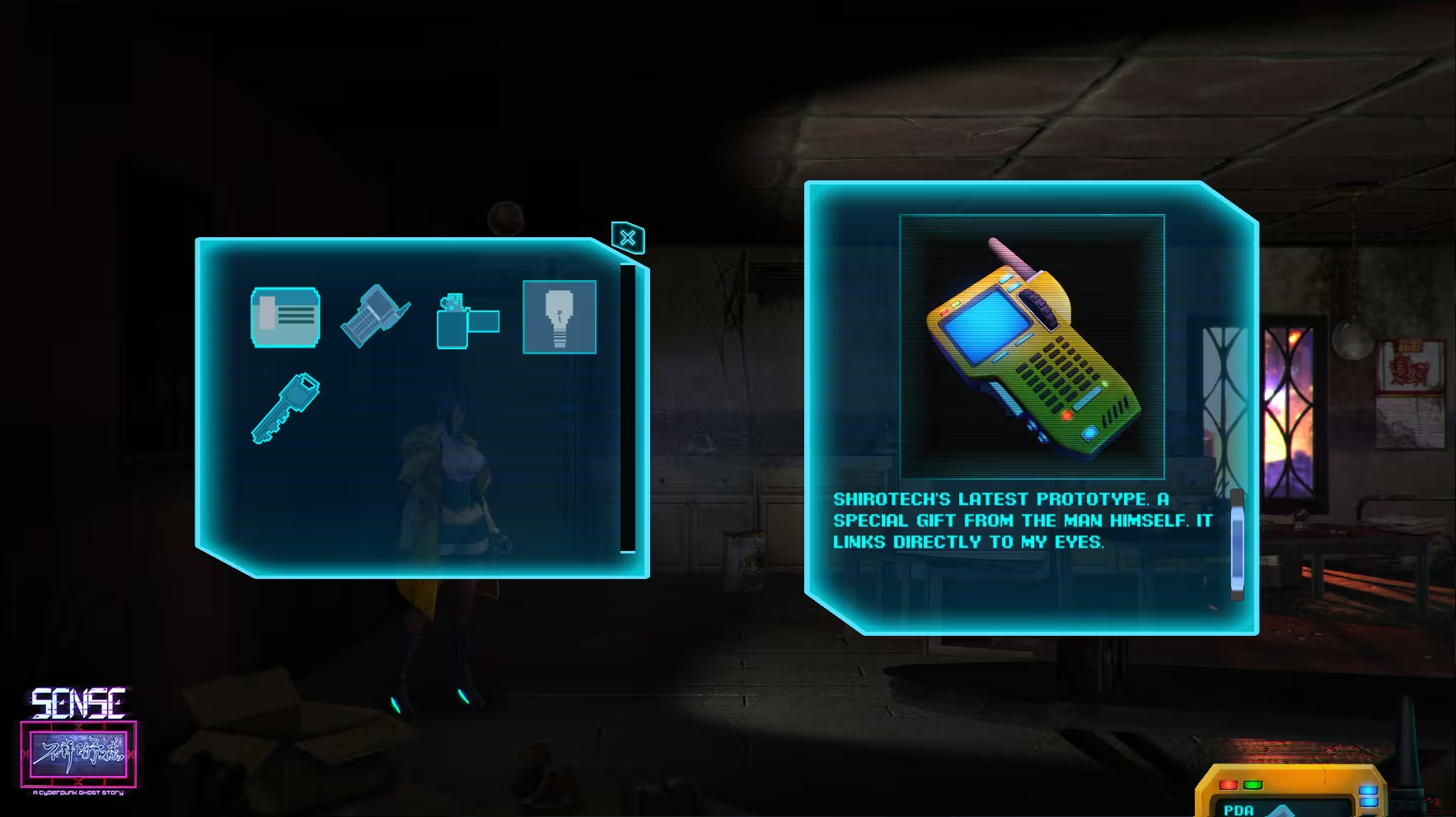
A 2.5D horror game inspired by Clock Tower and Fatal Frame, mixing cyberpunk with traditional Cantonese folklore. With careful attention to pacing, atmosphere and storytelling, Sense hopes to return the horror genre to its roots by celebrating visceral horror and the slow, fearful creep of dread.

Global score

79/100

Genres

Adventure, Indie, Role-playing (RPG)

Similar games

    Pros

    • Unique blend of cyberpunk and cantonese folklore
    • Strong developer stance against censorship
    • Atmospheric art and sound design
    • Engaging narrative and lore
    • Character customization with costumes

    Cons

    • Tedious backtracking and linear gameplay
    • Basic and sometimes janky combat
    • Limited cyberpunk elements in gameplay
    • Some bugs and control issues reported
    • Replayability requires multiple playthroughs

    Analysis

    Broadly representative of its motivational profile, with a few distinct shifts. Motivations that often define this kind of title include Autonomy, Strategy, Experimenting, Competence. Here, the score leans higher than usual among comparable games on Expression, Exploration, Strategy.

    How to use the graph
    Similar games map

    Each dot is a game. They are arranged from the same motivation profile as in the “Motivations” section below. Closer dots usually mean more similar reasons to play (exploration, competition, relaxation, etc.)—not that one game is “better” than another.

    • Larger dot with a light outline: the game you are viewing.
    • Colour: groups of games with comparable motivation patterns (statistical clusters).
    • Hover a dot to see the game name; click to open its page.
    • Scroll or double-click the chart to zoom out and see more games.

    Why don’t the axes read like a score? This view uses t-SNE: it only keeps who is close to whom. The scales are not “good to bad” or hours played—they separate groups on the map. Read distance between dots, not the axis numbers.

    Motivations

    • Autonomy
      -3

      "Gameplay is linear with strict progression and limited player freedom; players must follow preset puzzle sequences and cannot pick up items until the character 'knows' they need them."

    • Competence
      2

      "Puzzles require some thought and exploration, but combat and other mechanics are basic and sometimes janky; some players find the challenge mild but engaging."

    • Competition
      -5

      "No evidence of competitive elements; game focuses on individual exploration and story."

    • Continuation
      1

      "Some players report being pulled in to complete multiple playthroughs for full story and costumes, though others find repeated playthroughs tedious."

    • Cooperation
      -5

      "Single-player experience with no cooperative or multiplayer features."

    • Creativity
      3

      "Unique blend of cyberpunk and Cantonese folklore with artistic freedom in character design; however, gameplay follows established adventure game conventions."

    • Domination
      -5

      "No social dominance or power-over interactions; gameplay is solitary and narrative-driven."

    • Escapism
      4

      "Players use the game to immerse in a spooky, atmospheric world distinct from reality, with horror and mystery elements providing distraction."

    • Expectation
      -4

      "Players purchase and play out of personal interest and support for developer stance, not obligation or external pressure."

    • Experimenting
      -2

      "Gameplay is mostly linear with limited room for experimentation; some minor variation in puzzle approach but overall routine."

    • Exploration
      3

      "Exploration of haunted apartment floors and uncovering ghost backstories is a core element, though environments are somewhat repetitive."

    • Expression
      3

      "Character customization via unlockable costumes allows some self-expression; art style is distinctive and personalized."

    • Fantasy
      4

      "Strong supernatural and ghost story elements combined with cyberpunk fiction create an imaginative narrative experience."

    • Fellowship
      -5

      "No social or community features; experience is solitary."

    • Growth
      2

      "Players learn about puzzles, ghost lore, and game mechanics; some skill development in exploration and puzzle solving."

    • Health
      -5

      "Typical sedentary gameplay with no physical activity or health-related features."

    • Idle
      -3

      "Requires focused attention and active puzzle solving; backtracking can be tedious but not idle or background play."

    • Intimacy
      -5

      "No evidence of close social relationships or emotional sharing; single-player narrative focus."

    • Leadership
      -5

      "No leadership or group management elements present."

    • Progression
      3

      "Players collect items, unlock costumes, and progress through story chapters; some replayability with NG+ modes."

    • Relaxation
      1

      "Atmospheric and immersive but with moments of tension and horror; some players find it relaxing, others find backtracking tedious."

    • Sensation
      3

      "Visual art style, sound design, and music provide sensory stimulation and mood enhancement."

    • Status
      -5

      "No social recognition or status systems; focus is on individual experience."

    • Story
      4

      "Narrative-driven game with strong story focus, character development, and lore exploration."

    • Strategy
      1

      "Puzzles require some reasoning but overall gameplay is straightforward and linear."

    • Thrill
      2

      "Some moments of suspense and tension from horror elements, but scares are mild and infrequent."

    • Value
      3

      "Players perceive good value especially when purchased on sale; appreciation for developer stance adds to perceived worth."

    • Violence
      -2

      "Limited combat mostly involves exorcising ghosts rather than destructive violence; more constructive and investigative."

    • Survival
      1

      "Some survival horror elements with resource management and avoiding death, but generally low risk and forgiving."

    Last update: 29/04/2026