The Happy Hereafter Thumbnail

The Happy Hereafter similar games & best alternatives

The Happy Hereafter

PC (Microsoft Windows) • 2014

Related articles

Quick resume

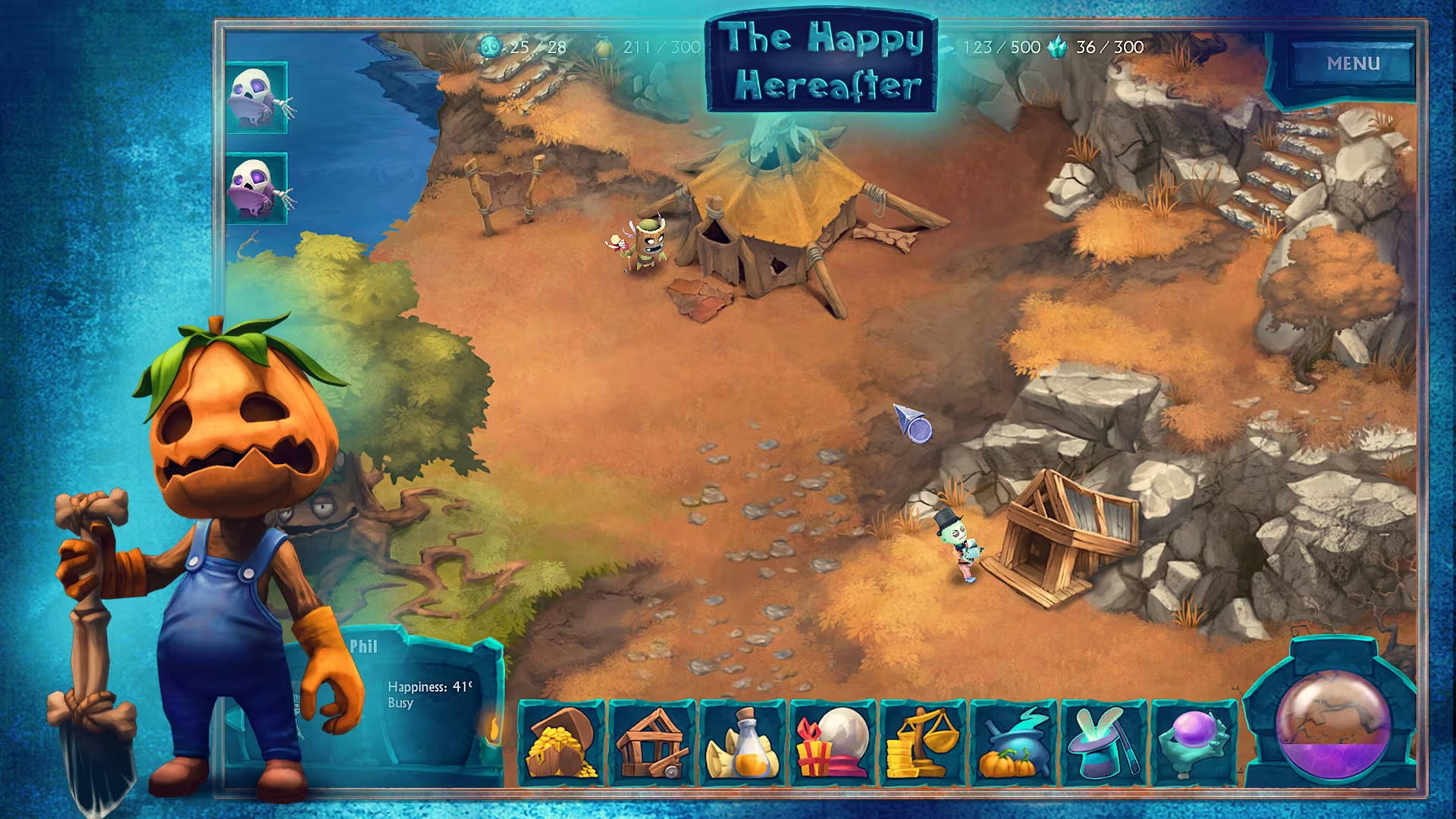
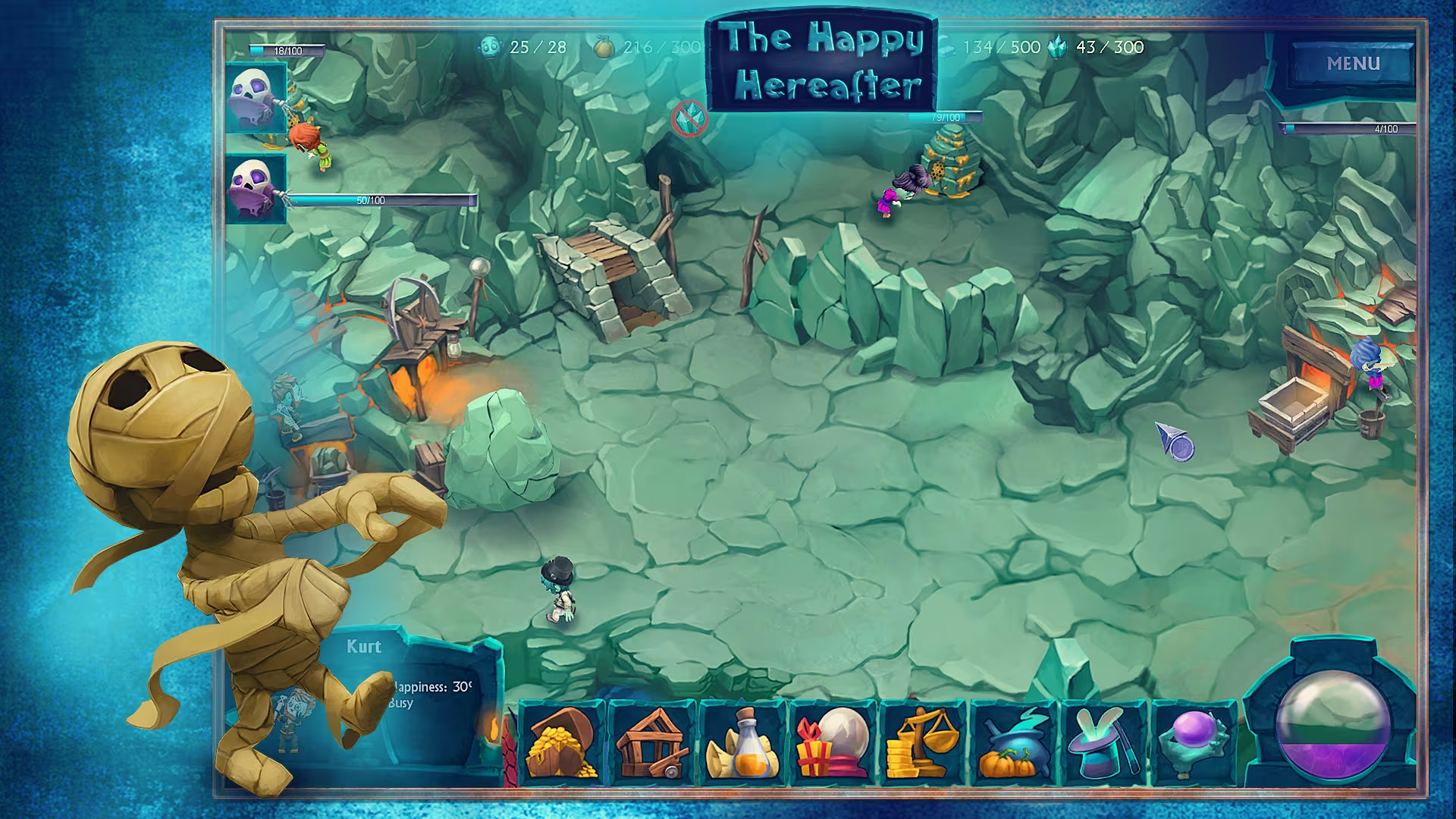
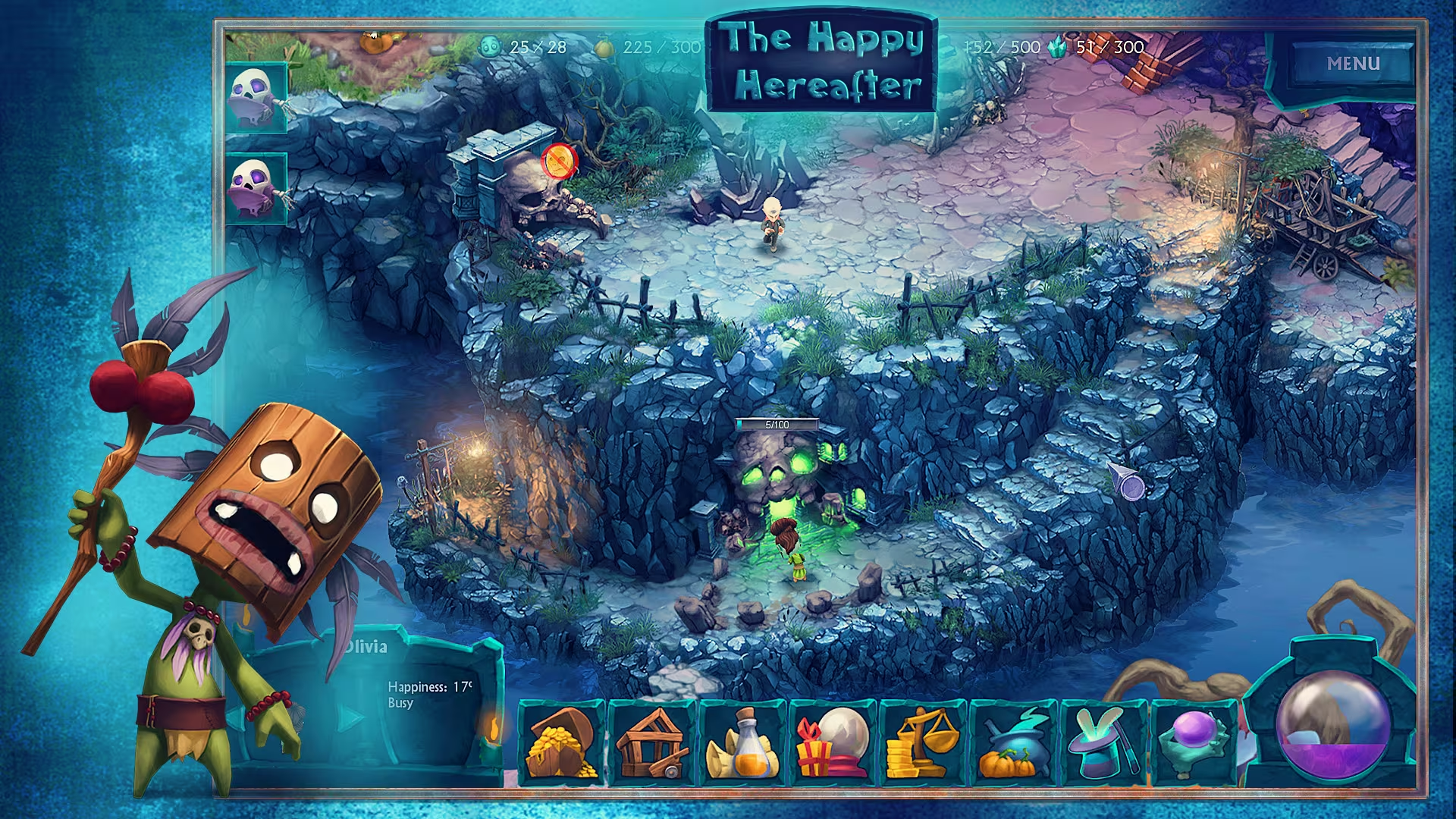
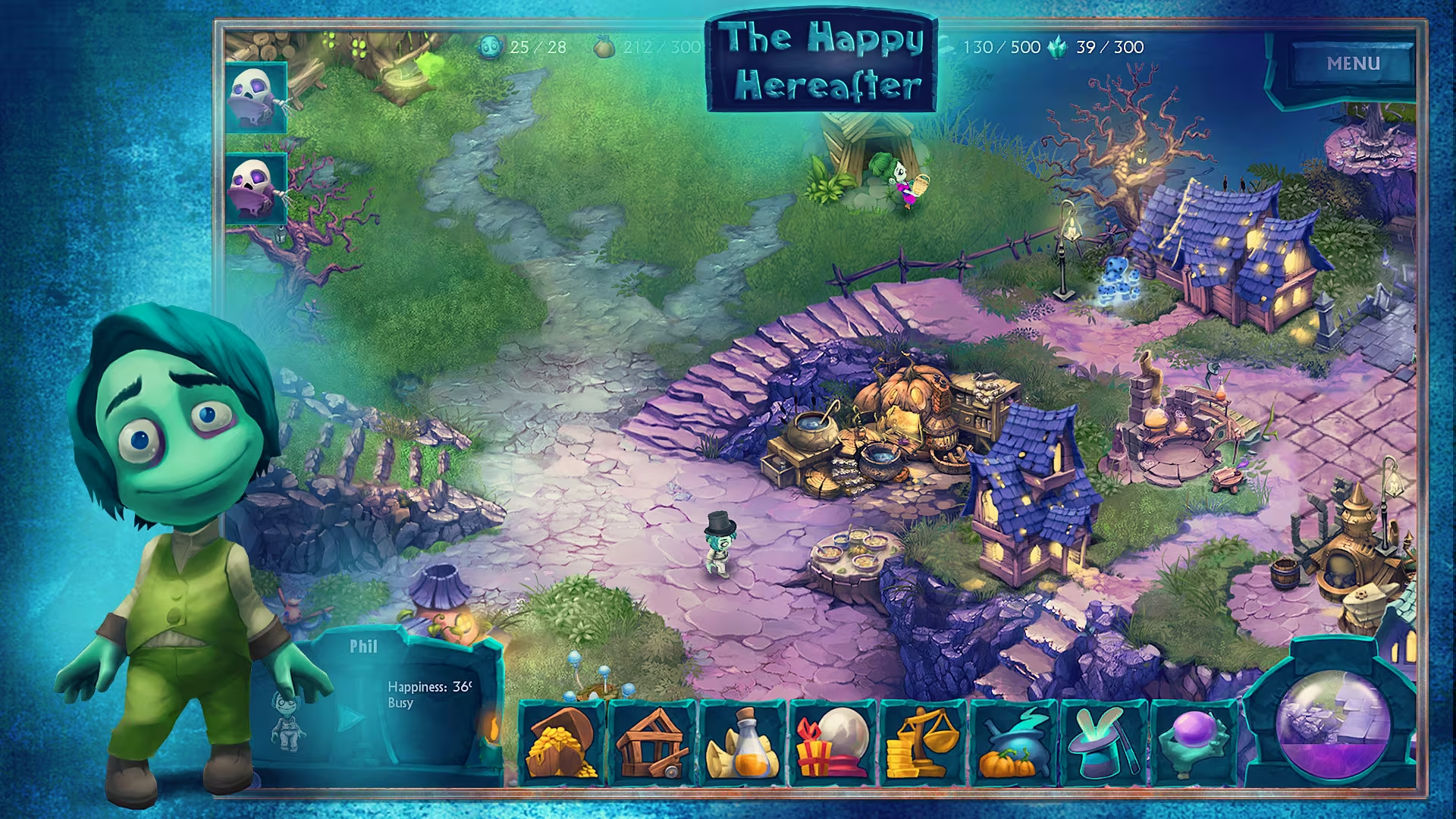
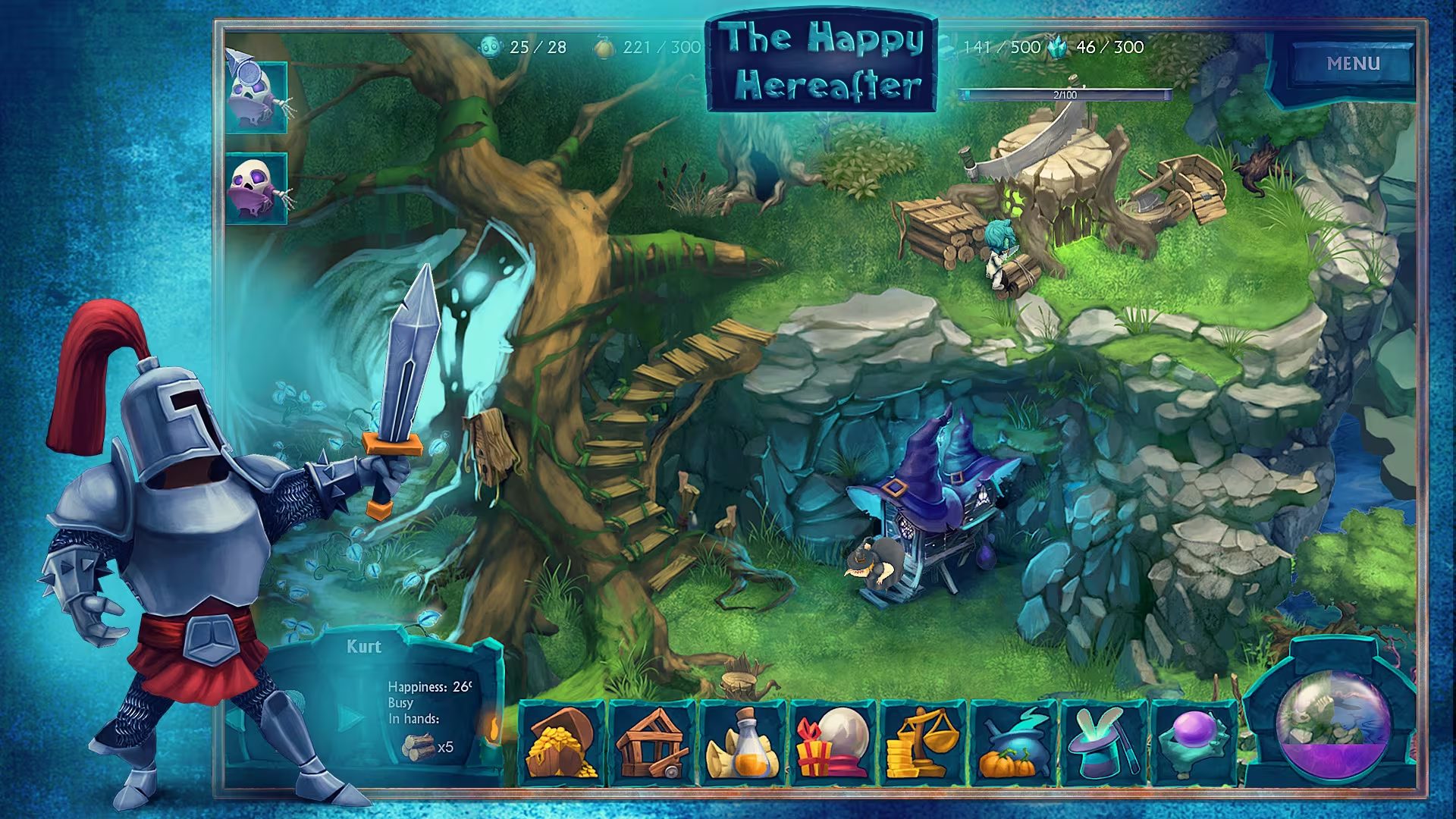
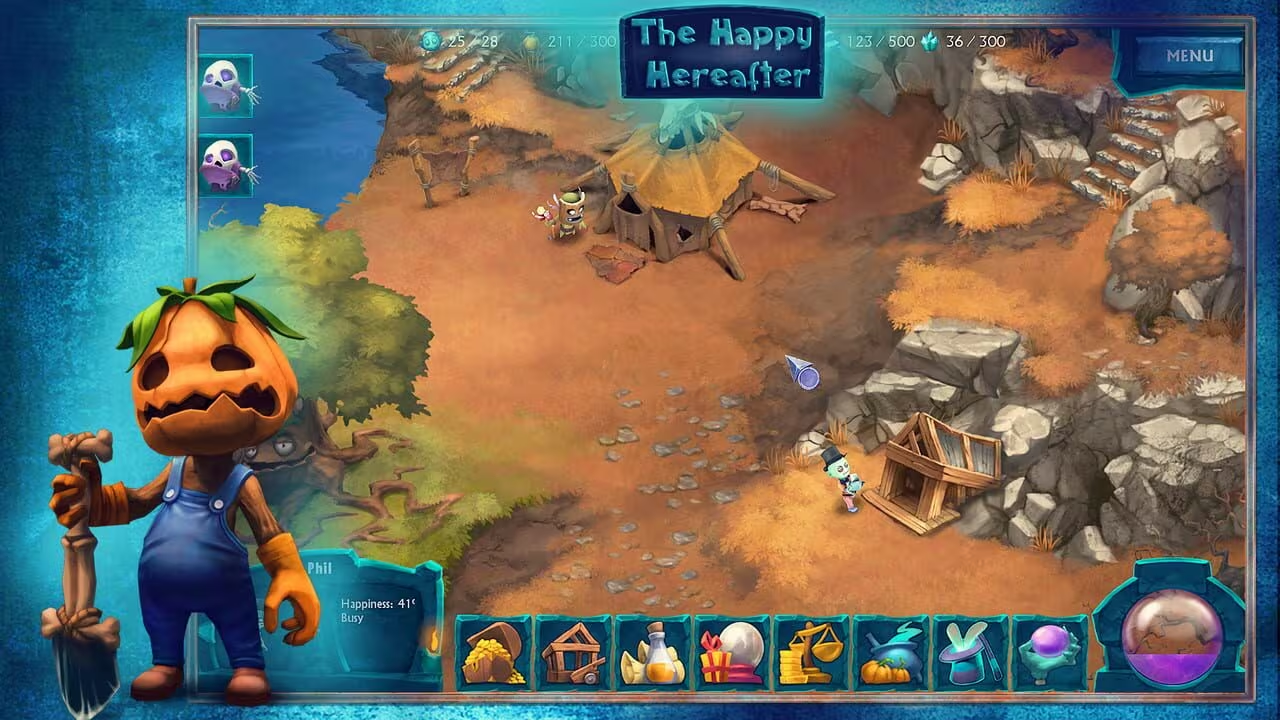
Welcome to The Happy Hereafter, a casual sim in which you guide the newly dead as they build an afterlife for themselves and their fellow lost souls. There will be no rest for the wickedly funny as you put them to work building a village to rival Paradise!

Global score

78/100

Genres

Casual, Strategy, Simulator

Similar games

    Pros

    • Cute and charming graphics
    • Relaxing and casual gameplay
    • Low price and good value on sale
    • Simple and accessible for beginners
    • Pleasant music and atmosphere

    Cons

    • Short game length
    • Limited player freedom and creativity
    • Some bugs and minor glitches
    • Minimal strategic depth
    • Lack of achievements and replay value

    Analysis

    Broadly representative of its motivational profile, with a few distinct shifts. Motivations that often define this kind of title include Autonomy, Strategy, Experimenting, Competence. Here, the score leans higher than usual among comparable games on Strategy. It leans lower than usual among comparable games on Intimacy, Creativity.

    How to use the graph
    Similar games map

    Each dot is a game. They are arranged from the same motivation profile as in the “Motivations” section below. Closer dots usually mean more similar reasons to play (exploration, competition, relaxation, etc.)—not that one game is “better” than another.

    • Larger dot with a light outline: the game you are viewing.
    • Colour: groups of games with comparable motivation patterns (statistical clusters).
    • Hover a dot to see the game name; click to open its page.
    • Scroll or double-click the chart to zoom out and see more games.

    Why don’t the axes read like a score? This view uses t-SNE: it only keeps who is close to whom. The scales are not “good to bad” or hours played—they separate groups on the map. Read distance between dots, not the axis numbers.

    Motivations

    • Autonomy
      -3

      "Building locations and progression are mostly predetermined with limited player choice, indicating following established routines."

    • Competence
      1

      "Players engage in resource management and task completion with some mild challenges but overall low difficulty and limited skill variation."

    • Competition
      -5

      "No competitive elements or player comparison; focus is on personal pace and casual play."

    • Continuation
      2

      "Some players report spending multiple hours and enjoying habitual play, though the game is short and can be completed in one or two sessions."

    • Cooperation
      -5

      "Single-player experience with no multiplayer or cooperative gameplay."

    • Creativity
      -4

      "Limited creativity as building placement and progression are fixed; minimal customization options."

    • Domination
      -5

      "No elements of exerting control or superiority over others; purely individual gameplay."

    • Escapism
      3

      "Casual, relaxing gameplay with cute graphics and music offers a pleasant escape from real life."

    • Expectation
      -4

      "Players engage voluntarily for casual enjoyment without obligation or pressure."

    • Experimenting
      -3

      "Gameplay follows a linear, guided progression with little opportunity for novel experimentation."

    • Exploration
      1

      "Players unlock new map areas gradually, but the map is fixed and exploration is limited."

    • Expression
      -3

      "Minimal character or environment customization; mostly standardized presentation."

    • Fantasy
      4

      "Set in a whimsical undead afterlife with zombies and magic, providing an imaginative fictional experience."

    • Fellowship
      -5

      "No social or community features; solo play only."

    • Growth
      2

      "Players learn resource management and progression mechanics, though depth is limited."

    • Health
      -5

      "Typical sedentary gameplay with no physical activity involved."

    • Idle
      3

      "Gameplay includes waiting periods for resource gathering and building, allowing for casual, intermittent attention."

    • Intimacy
      -5

      "No social or emotional relationship building; interactions are limited to gameplay mechanics."

    • Leadership
      -2

      "Players assign workers to tasks but there is no complex leadership or group management."

    • Progression
      3

      "Players accumulate resources, upgrade buildings, and unlock new content as part of linear progression."

    • Relaxation
      4

      "Game is described as relaxing, casual, and stress-free with soothing music and cute visuals."

    • Sensation
      2

      "Pleasant visual and audio design provides mild sensory stimulation without intense excitement."

    • Status
      -5

      "No social recognition or status systems present."

    • Story
      1

      "Contains a light, simple storyline with quests and cutscenes but no deep narrative immersion."

    • Strategy
      0

      "Basic resource management and task assignment with minimal strategic depth."

    • Thrill
      -3

      "No significant suspense or risk; gameplay is predictable and low pressure."

    • Value
      3

      "Many players find the game worth its low price, especially on sale, given its charm and gameplay length."

    • Violence
      -4

      "Gameplay focuses on building and resource management; combat is minimal and non-violent in nature."

    • Survival
      -3

      "No real threat or failure state; players operate in stable, low-risk conditions."

    Last update: 29/04/2026