The Room Syndrome similar games & best alternatives
The Room Syndrome

PC (Microsoft Windows) • 2019

Should you play it?

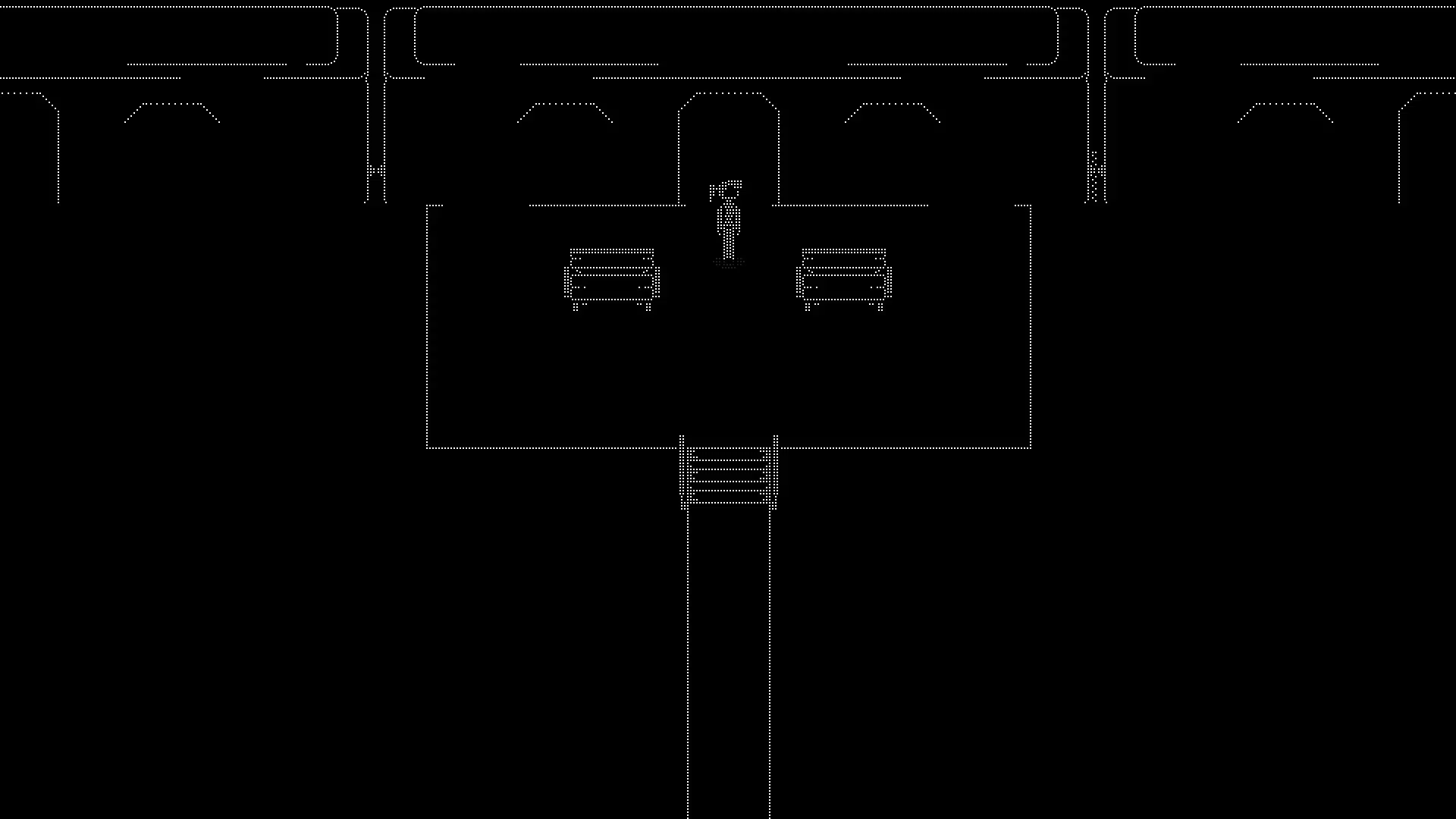
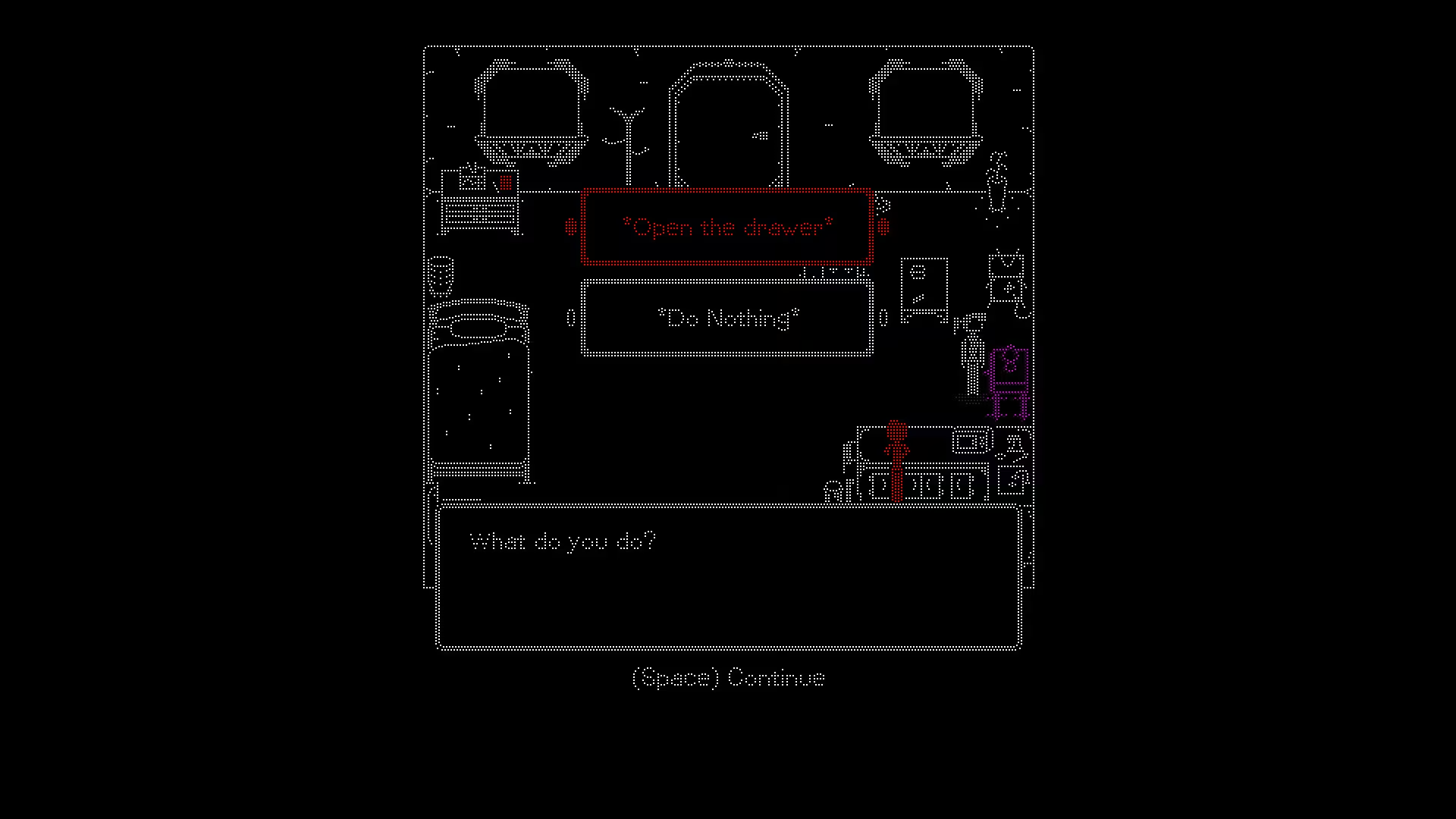
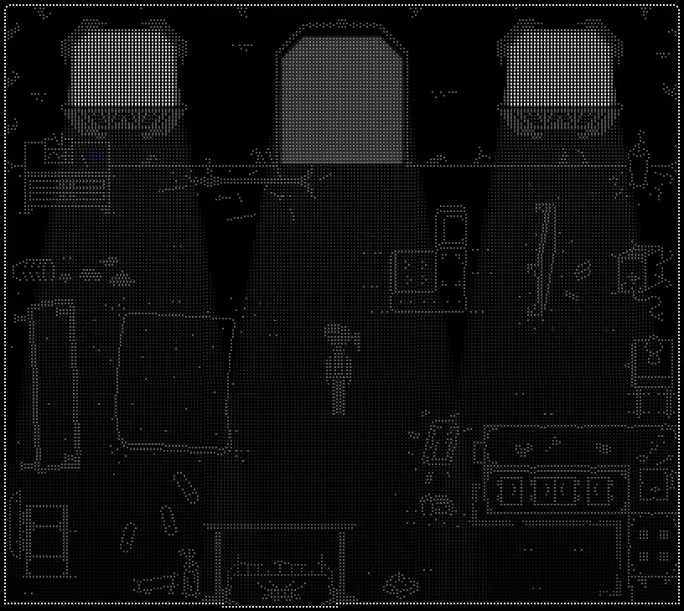
Explore the mysterious room by traversing time, while you watch a man succumb to the room syndrome.

What works

  • Unique time travel and puzzle mechanics
  • Multiple endings and replayability
  • Engaging and mysterious story
  • Free to play with good content
  • Atmospheric pixel art and sound design

Things to keep in mind

  • No save feature initially causing frustration
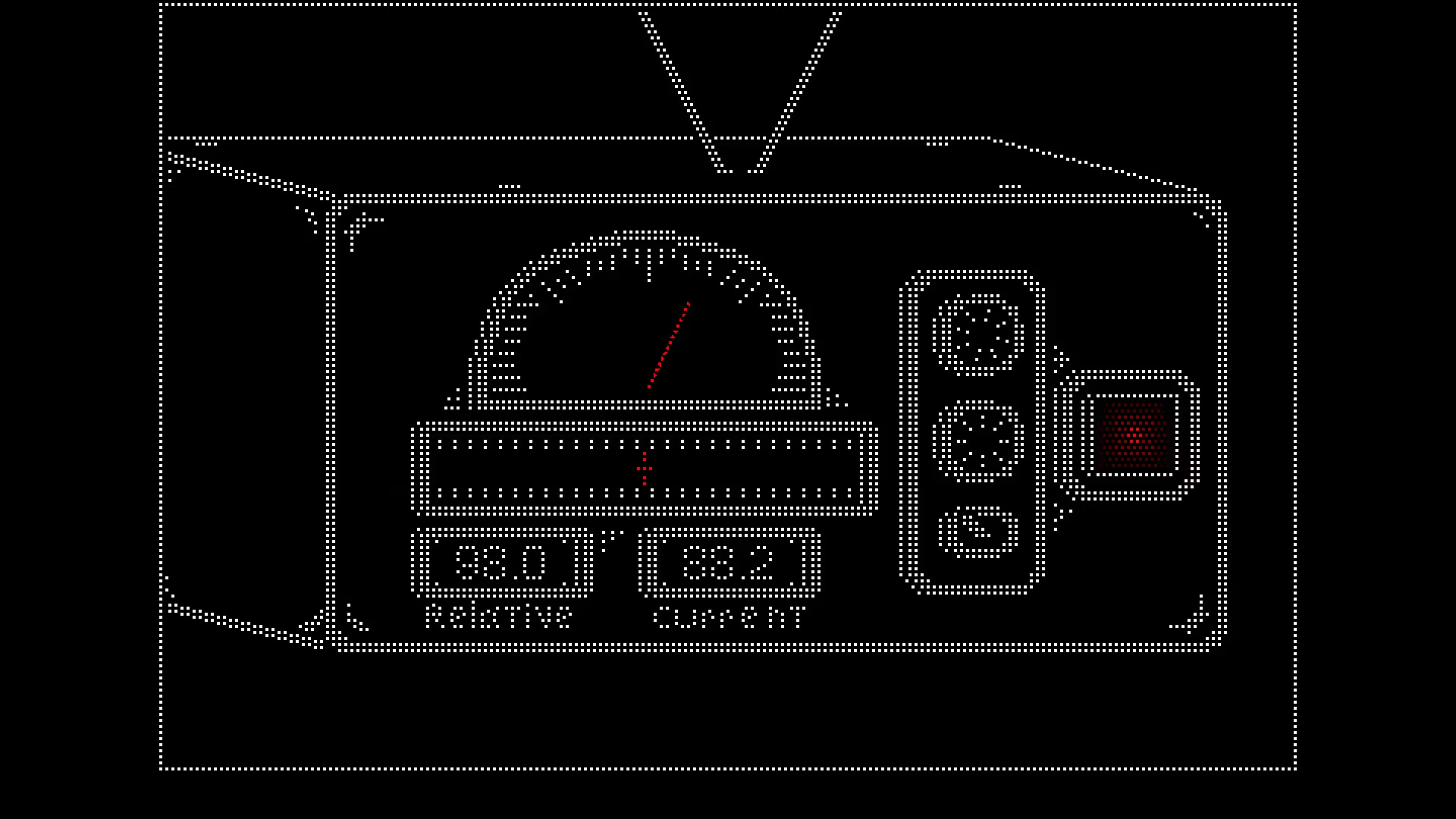
  • Confusing controls especially radio dials
  • Some trial and error and obscure puzzle solutions
  • Repetitive gameplay for multiple endings
  • Minimalistic graphics causing eye strain for some

What to play next

Top picks

Games that feels the closest overall

  • Chronoquartz

  • Cube Escape: Paradox

  • Submachine: Legacy

  • Instruction

  • A Random Maze 某个迷宫

  • Low Oxygen

More expressive

Games that feels like The Room Syndrome but with more self-expression and customization

  • Project Kat - Paper Lily Prologue

  • Hello Charlotte EP2: Requiem Aeternam Deo

  • The Horror Of Salazar House

  • Free Will

  • ElecHead

  • FEZ

More violent

Games that feels like The Room Syndrome but with more combat and destruction

  • The Boogie Man

  • Just Ignore Them

  • FAITH: The Unholy Trinity

  • Close Your Eyes [Old Version]

  • Ministry of Broadcast

  • White Dove 白雀

More intimate

Games that feels like The Room Syndrome but with more focus on close relationships

  • OneShot: World Machine Edition

  • Have a Nice Dream

  • My Big Sister

  • Press Any Button

  • The Rewinder

  • Space Pilgrim Episode IV: Sol

Choose your own criteria ->

Similarity map

How to compare these games

Compare nearby games

Each card is a nearby game on the similarity map, compared with The Room Syndrome. Swipe sideways to move between games. Titles already listed in What to play next are left out.

  • Cover and title: open that game’s page.
  • What works / keep in mind: the same highlights as the desktop comparison panel.
  • Bars: the main motivational differences versus this game.
How to use the graph

Similarity map

Each dot is a game placed from its motivation profile relative to this page’s game. Direction shows which motivation differs most; distance along that axis shows how large the gap is.

  • Purple star: this page’s game at the centre — everything is relative to it.
  • Direction: each axis is a main motivational difference vs this game (e.g. more / less competitive).
  • Distance on an axis: how large that difference is (ring scales show +/− points).
  • Coloured chips: click to highlight games that mainly differ on that motivation; click again to reset.
  • Dotted line: link between this page’s game and the one selected for comparison.
  • Hover a dot to preview that game in the panel on the right; click to keep that comparison.
  • Scroll or double-click the chart to zoom.

How to read the map This is a polar difference map: direction = which motivation differs, and distance = how much (same units as the sidebar deltas).

Swipe to compare nearby games with The Room Syndrome. These titles are not in What to play next.

The Room Syndrome: Broadly representative of its motivational profile, with a few distinct shifts. Motivations that often define this kind of title include Expression, Fellowship, Cooperation, Competition. Here, the score leans higher than usual among comparable games on Exploration. It leans lower than usual among comparable games on Violence, Survival.

Last update: 21/08/2026